
Personality in Focus
2023 NAOSNP National Security Conference: Panelists Proffer Solutions to Arms Proliferation, Call for Synergy

- /home/rhoncare/pointblank.ng/wp-content/plugins/mvp-social-buttons/mvp-social-buttons.php on line 27
https://pointblank.ng/wp-content/uploads/2023/09/IMG-20230922-WA0120-1000x600.jpg&description=2023 NAOSNP National Security Conference: Panelists Proffer Solutions to Arms Proliferation, Call for Synergy', 'pinterestShare', 'width=750,height=350'); return false;" title="Pin This Post">
- Share
- Tweet /home/rhoncare/pointblank.ng/wp-content/plugins/mvp-social-buttons/mvp-social-buttons.php on line 69
https://pointblank.ng/wp-content/uploads/2023/09/IMG-20230922-WA0120-1000x600.jpg&description=2023 NAOSNP National Security Conference: Panelists Proffer Solutions to Arms Proliferation, Call for Synergy', 'pinterestShare', 'width=750,height=350'); return false;" title="Pin This Post">
By Eric Elezuo
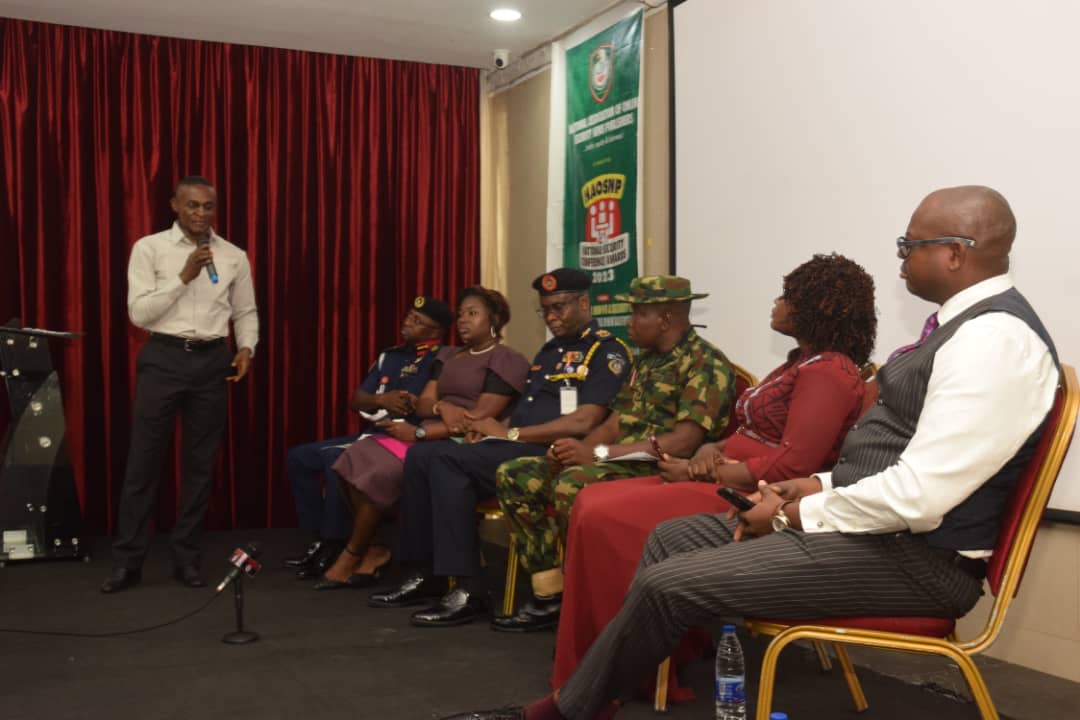
The main hall of the Civic Centre in Lagos was a beehive of activities as stakeholders, experts, security practitioners and the general public gathered to proffer solutions to an age long challenge of proliferation of small arms and light weapons.
The event was the 2023 edition of the National Association of Online Security News Publishers’ (NAOSNP) National Security Conference with the theme Uptick of Lethal Weapons As a Threat: Arm-full, Harm-full in New Dispensation under the chairmanship of the Chairman of the Police Service Commission (PSC) IGP Solomon Arase (Retd).
The cynosure of the high profile event was the showcasing of a panel session of highly rated society security professionals comprising the Acting Commandant, Nigerian Army School of Public Relations and Information (NASPRI) Lt. Col AY Ngulde; Assistant Controller General, Federal Fire Service, Zone F, South West, Chika Njoku; Force Publice Relations Officer, ACP Olumuyiwa Adejobi, Commandant, Lagos State Nigerian Security and Civil Defence Corps (NSCDC), Ahmed Alfadarai; Director, Public Affairs, West African Examination Council (WAEC) National Office, Ms Moyosola Adesina; Managing Director, Safety Signatures, Dr. Cynthia Gregg; Head of Enforcement, Lagos State Traffic Management Authority (LASTMA), Kayode Odunuga, and Head of Security, Leadway Assurance, Mr Ufot.
Moderating the panel discussions, the Editor of the Boss Newspaper and Public Relations Officer of NAOSNP, Mr. Eric Elezuo, took the discussants on a round robin journey of proffering assessment of the security situation of the country, with special emphasis on the proliferation and use of light weapons in the perpetuation of crimes and criminality by non state actors.
Lt. Col. Ngulde, who set the ball rolling identified non cooperation from the members of the public to enhance the security agencies’ efforts in ending criminality occasioned by prevalent of illegal weapons in the public space. He called on the public, especially the media to rise to the occasion, join hands with the security agencies, who are already on top of their game, to curb the menace.
In his remarks, Commandant Alfadarai lauded the efforts of NAOSNP in leading the way to ending insecurity. He enumerated the achievements of his agency in arresting the activities of the criminals as it regards the protection of national assets and infrastructure.
Security expert, Cynthia Gregg, identified the inordinate ambition of certain individuals to intimidate and dominate their fellow man as one of the reasons for the proliferation of small arms and light weapons in the Nigerian Civil space, thereby resulting in insecurity and unsafe habitation.
She also advised the security agencies to up their games in manning the borders, which according to her, have become so porous that anything and anyone can go in and out with little or no restrictions.
In his assessment, Adejobi, who stood in for the Inspector General of Police, Kayode Egbetokun as the special guest of honour, went down memory lane to expose the activities of the members of the underworld. He called on diverse security operators to harness their energies as one indivisible unit to fight the scourge. He frowned at the idea of the agencies acting without synergy, noting that criminals are attacking and killing everyone irrespective of the agency they belong to, using the recent Imo attack as a case study where soldiers, policemen and NSCDC officials were slaughtered.
Adejobi also called on residents and community leaders to be vigilant in the area of security stating that individuals can arrest offenders where necessary, according to the Criminal Code, in section 12. He warned however, that arresting offenders by civilians should be with discretion since they don’t bear arms, and that mobbing and beating up of suspects is not part of ‘arresting’.
He added that anyone, who wishes to possess fire arms must have them licenced by the appropriate authority.
“The law empowers military personnel, and law enforcement agencies to carry arms. It’s however frightening to see many individuals possessing firearms without being licensed by the authority.
“In Nigeria, everybody wants to posses firearm for one reason or the other which is the basis of the current problem we have now,” he said.
He further informed that dane guns, as used by hunters in villages across the country, ought to be licensed, but because they are seen as part of culture, law agencies do not arrest the owners, stressing that such guns still need to be licensed.
Adejobi raised the alarm, saying that most light weapons are not imported, but fabricated within the Nigerian space by locals just as unfavorable landscape has remained a prohibiting factor in tracking offenders, most of whom domicile in the interior parts of the communities.
Speaking from the perspective of conducting exams, Ms Adesina, recounted how exams, which involves five West African countries could have been stalled by activities of criminal elements in whose hands light weapons and arms are rested. She lamented that the activities of criminals place extra task of re-setting exams each time they attack men and materials of the exam body.
In his contribution, LASTMA’s Odunuga lamented that the spread of light arms is the reason behind ‘one chance’ incidents frequently experienced on the highway. He advised commuters to always board their bases at the right garages and bus stops where a certain element of security is guaranteed.
All the panel members agreed that the issue the curbing of proliferation of arms and light weapons is a collective responsibility involving all the security agencies, the media and the general public. They concluded that everyone should operate on the policy of ‘see something, say something’.


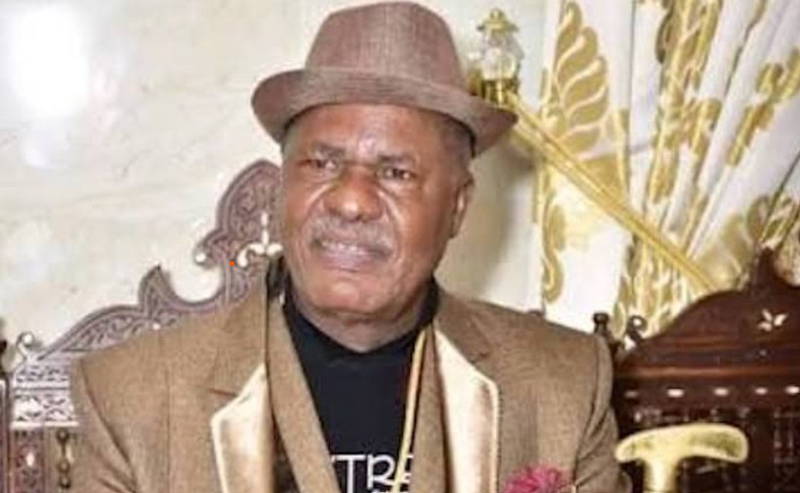
Gunmen who kidnapped the chairman of Jezco Group, Chief Joseph Ezeokafor, have reportedly increased their ransom demand from N700 million to N1.5 billion for his release.
Ezeokafor, a septuagenarian businessman, was reportedly abducted in Anambra State about a week ago.
The kidnappers initially demanded N700 million from the businessman’s family.
Unofficial reports quoting an anonymous source said the kidnappers had established contact with the family after the abduction.
The source said the family accepted the initial N700 million demand as part of efforts to secure Ezeokafor’s release.
However, the kidnappers later increased the ransom to N1.5 billion.
The source said the family remains willing to negotiate with the abductors, but the kidnappers have allegedly stopped further communication.
The development has reportedly left the family in a difficult situation, as attempts to restore contact with the abductors have not yielded results.
Ezeokafor was kidnapped on Tuesday at about 2am after he reportedly left his home for a prayer ground as part of his annual spiritual rejuvenation.
He was said to have left his security details behind when he stepped out of his residence, which the kidnappers capitalized on, to abduct him.
One week after the incident, the police and the State government authorities have yet to make any official statement on the businessman’s abduction.
The Anambra State Police Command has also not publicly commented on the incident.
Personality in Focus
Lessons from Dickem Farms: Two Decades of Pioneering Innovation in Nigeria’s Aquaculture Industry
By Ayo Oyoze Baje
“Our philosophy has always been simple: innovation should solve real problems, create opportunities and improve livelihoods.”
Introduction
For over two decades, Dickem Farms has remained committed to transforming Nigeria’s aquaculture industry through innovation, technology, enterprise development and human capacity building. What began in 1999 as a vision to improve fish production has evolved into one of the country’s respected aquaculture enterprises, recognized for pioneering practical solutions that have strengthened fish farming and empowered the next generation of agripreneurs.
Dickem Farms was the first to introduce mobile fish ponds into the Nigerian market, making fish farming more flexible, affordable and accessible to investors and smallholder farmers. The company also pioneered the local production of a floating fish feed extruder that uses locally available materials, reducing dependence on imported technology while lowering production costs for fish farmers. In addition, Dickem Farms has invested in modern hatchery systems that produce healthy, high-quality fingerlings to support commercial fish production.
Our philosophy has always been simple: innovation should solve real problems, create opportunities and improve livelihoods.
Recent experiences and initiatives
To get more important information about the farm there were questions on the different aspects, starting with the experiences in the past five years. Let us glean from the horse’s mouth. According to the Managing Director, Godwin Emaketenemi, “Over the last five years, we have continued to strengthen our production systems for both catfish and tilapia. Our focus has been on improving fingerling quality, enhancing pond management practices and maintaining strict water-quality monitoring to maximise fish survival and productivity.
“We also introduced better feeding programmes and comprehensive record-keeping systems that enable us to monitor growth performance, feed conversion efficiency and mortality rates.
Rather than pursuing rapid expansion, we have adopted a disciplined strategy of scaling only after achieving consistent operational results.
“This measured approach has enabled Dickem Farms to build a resilient business capable of supplying quality fish and aquaculture services to customers in Lagos and across Nigeria.”
Overcoming challenges:
On the challenges faced and how they were overcome, he stated that: “Like every agricultural enterprise, we have encountered significant challenges. Rising feed costs, unreliable electricity supply and disease management remain major concerns within the aquaculture industry. Instead of allowing these obstacles to limit our growth, we viewed them as opportunities for innovation.
Producing our own quality fish feed has significantly reduced production costs while giving us greater control over feed quality and formulation. We have also improved water-management systems and operational planning to minimize the effects of power instability.
“At the farm level, stronger biosecurity measures, improved hygiene and proactive fish-health monitoring have substantially reduced disease outbreaks and production losses.”
Marketing strategies
With regards to marketing he explained that; “Production alone does not guarantee success; a reliable market is equally important. Dickem Farms has therefore, built long-term relationships with wholesalers, retailers, restaurants and institutional buyers. We grade our fish according to customer specifications and schedule harvesting to coincide with periods of stronger market demand.”
Training programs
Furthermore, with the focus on training he explained that: “Our reputation has been built on dependable supply, consistent quality and customer trust.
One of our proudest achievements is our investment in people. We believe that sustainable agriculture depends not only on technology but also on developing competent professionals and entrepreneurs.
Over the years, Dickem Farms has trained hundreds of staff, industrial attachment (IT) students, graduates and aspiring fish farmers in practical aquaculture.
“Our training covers hatchery management, pond construction and management, fish nutrition, water-quality management, fish-health monitoring, biosecurity and business record-keeping.
More importantly, we do not stop at training. We mentor young graduates and entrepreneurs, providing technical guidance and business support until they are confident enough to establish and successfully manage their own enterprises. Seeing former trainees become successful employers and business owners remains one of our greatest rewards.
“Continuous learning has also shaped our growth. Through partnerships with foreign organisations and technical visits to leading aquaculture companies, we have gained valuable knowledge in modern hatchery technology, fish-health management, production efficiency and operational excellence.”
Government ‘s support
Coming to the need for government’s support he beamed light on it this way:
“These experiences have strengthened our technical capacity and enabled us to transfer global best practices to Nigerian farmers.
Nigeria possesses enormous potential to become a leading aquaculture producer in Africa. However, unlocking that potential requires stronger collaboration between government and the private sector.
We recommend tax exemptions or significant tax incentives for fish farming and aquaculture value-chain businesses to encourage investment.
“Farmers also need affordable financing with realistic repayment terms, reliable access to quality fingerlings, improved energy support and stronger extension services that provide timely technical guidance on fish health and disease prevention. Organized marketing systems that connect producers directly with institutional buyers will further strengthen the industry’s competitiveness.”
Piece of advice to the younger generation:
His piece of advice to young people who might be interested to go into fish farming:
“To young people considering aquaculture as a career or business, my advice is straightforward: seek proper training and find a credible mentor. Fish farming is a science and a business that rewards discipline, knowledge and patience. Begin with manageable investments, keep accurate records, master water-quality management and learn from experienced practitioners before expanding.
“A good mentor can save years of costly mistakes and accelerate the journey to success.”
As the future beckons:
As for plans for the future he highlighted that: “Looking ahead, Dickem Farms will continue to invest in innovation, local technology development, commercial hatchery expansion, fish-feed production, modern aquaculture equipment and practical capacity building. Our ambition is not only to grow our business but also to contribute meaningfully to food security, employment creation and economic development.
Our long-term vision extends beyond Nigeria.
“We believe Africa possesses the resources, talent and entrepreneurial spirit to feed itself and compete globally. Through innovation, strategic partnerships and investment in people, Dickem Farms will continue to play its part in building a modern aquaculture industry that delivers prosperity for farmers, affordable nutrition for families and sustainable growth for the continent.
Our mission remains unwavering: to inspire a future where Africans feed Africa through innovation, enterprise and excellence in agriculture.”
These indeed, are brilliant submissions for us all to learn from now and always.

The Chairman of First HoldCo, Femi Otedola, has strengthened his stake in the financial institution after acquiring an additional 1.77 billion shares valued at N222.20 billion.
Details contained in a disclosure filed with the Nigerian Exchange (NGX) showed that the shares were purchased on Thursday through his investment company, Calvados Global Services Limited.
The latest transaction raised Otedola’s shareholding in First HoldCo from 9.99 billion shares to 11.77 billion shares, with his ownership increasing from 21.96 per cent to 25.88 per cent.
The purchase marks Otedola’s second major investment in the company this July, following his acquisition of 706.13 million shares worth N77.58 billion on July 22.
With the fresh acquisition, Otedola’s total investment in First HoldCo has climbed to N1.47 trillion, making him the institution’s largest shareholder.


