
Headlines
2023 Presidency: Northern Elders Agree to Work with Other Regions


The Northern Elders Forum on Wednesday made a U-turn on its earlier position on northern presidency in 2023 with a promise that the North would work with other ethnic groups in Nigeria to produce a competent leader that would restore confidence in the system.
The organisation also noted that the ongoing debate about labelling bandits as terrorists is a waste of energy, adding that it would only support such if it would lead to improved security.
The spokesperson for NEF, Dr Hakeem Baba-Ahmed, said these in a statement on Wednesday after a meeting convened by its leader, Prof. Ango Abdullahi.
The statement said the meeting was also of the view that scrapping of the State Independent National Electoral Commissions should be included in the ongoing constitutional amendment.
It reads partly, “The Forum salutes all Nigerians who toiled to restore a level playing field to our democratic system. It is now left to politicians and other leaders to conduct the type of politics that builds into it real equity, fairness, competence and justice, through inclusive campaigns and responsible approach towards the 2023 elections. The people of the North want to work with other Nigerians to produce a competent and committed Nigerian leadership that will restore confidence in our country’s capacity to survive and rebuild itself for the next generations.”
The NEF noted the Peoples Democratic Party and All Progressives Congress dominated the political landscape, adding that Nigerians would benefit from additional options.
“The NEF looks forward to the emergence and consolidation of other parties in the political environment. The continued existence of State Electoral Commissions which conduct elections into local government councils is damaging the democratic process. The NEF advises that the on-going constitutional amendments should include the scrapping of these commissions and the assumption of their duties by INEC.”
The organisation urged Nigerians, especially northerners, to register and prepare to vote for new and more competent leaders in the 2023 elections.
“The Forum took note of the worsening security situation in the country. Boko Haram insurgency continues to be a major threat in the North-East, while kidnapping and large scale banditry in many other parts of the North are taking over lives of large portions of the population. The IPOB (Indigenous People of Biafra) threatens to eradicate the influence of legitimate authority in the South-East. Politicians and influential people are worsening the nation’s fault lines by the manner they seek political advantages through threats to our unity and peaceful co-existence.
“Poverty and poor governance are fueling widespread alienation from mainstream social existence.
“The Forum joins the nation in its outrage over the fact that Maiduguri, Borno State capital has been without power from the national grid for 10 months, and is alarmed by signs that its population could be forced to resign to living with this additional assault on their lives and livelihood. This situation must be reversed at all cost.
“The planned closure of Internally Displaced Persons’ camps should be carefully considered so that it does not place more victims in avoidable peril.
“The Forum regrets that the argument over labelling bandits as terrorists is a waste attention and energy. If labeling bandits as terrorists will substantially improve the capacity of the Nigerian state to eliminate this expanding scourge, the Forum supports it without reservation,” the statement added.
The Punch


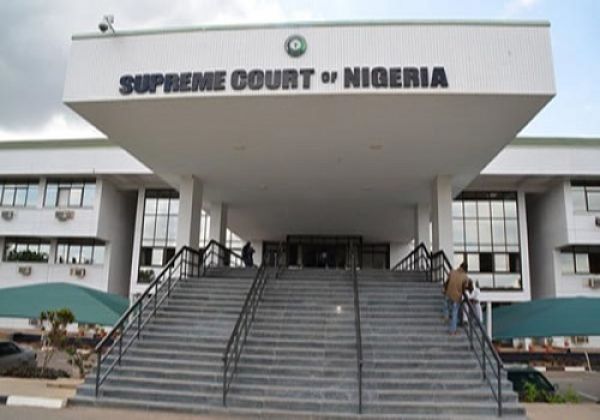
The Supreme Court has dismissed the appeal of the son of a former Jigawa State governor, challenging the decision of the trial court, which convicted him for failing to declare $40,000 at Kano airport.
In a unanimous decision, the apex court panel dismissed the appeal of Aminu Sule Lamido, the son of former governor Sule Lamido, for lack of merit.
Operatives of the Economic and Financial Crimes Commission (EFCC) arrested Aminu on December 11, 2012, at the Mallam Aminu Kano International Airport while preparing to travel to Cairo, Egypt.
The prosecution said Aminu declared $10,000 to the Nigeria Customs Service (NCS), but was found with an additional $40,000, which was not disclosed on his currency declaration form.
The EFCC charged him before the Federal High Court in Kano on a one-count offence of false declaration of foreign currency, contrary to provisions of the Money Laundering (Prohibition) Act.
On July 12, 2015, the court convicted Aminu and ordered him to forfeit 25 per cent of the undeclared sum to the Federal government.
Dissatisfied with the ruling, Aminu approached the Court of Appeal in Kaduna to overturn the conviction and set aside the forfeiture order.
In a judgment delivered on December 7, 2015, however, the Court of Appeal dismissed the appeal.
Meanwhile, the Supreme Court has ordered that the trial of former governor Lamido, his two sons, and others, over alleged N1.35billion fraud, should continue before the Federal High Court in Abuja.
A five-member panel of the apex court issued the directive in two unanimous judgments, in the two appeals filed by the Economic and Financial Crimes Commission (EFCC).
The Supreme Court upheld the decision of the trial court, which dismissed the no-case submission filed by the Lamidos and held that the defendants had a case to answer.
Both appeals were against the July 25, 2023, judgments of the Court of Appeal in Abuja, which upheld the no-case submission made by Lamido and others and struck out the 37-count charge on which they were being prosecuted, on the grounds that the Federal High Court in Abuja lacked the jurisdiction to hear the case.
In the lead judgments of the Supreme Court, Justice Abubakar Umar set aside the July 25, 2023 judgments of the Court of Appeal and affirmed the earlier decision by Justice Ijeoma Ojukwu of the Federal High Court, Abuja, which overruled the no-case submissions by Lamido and others and ordered them to enter their defence.
The EFCC, in the 37-count charge, among others, accused Lamido of abusing his position as a governor between 2007 and 2015, allegedly laundering sums of money received as kickbacks from companies that were awarded contracts by the Jigawa State Government under his leadership.
The other defendants charged alongside Lamido are his two sons – Aminu and Mustapha; Aminu Wada Abubakar and their companies – Bamaina Holdings Ltd and Speeds International Ltd.

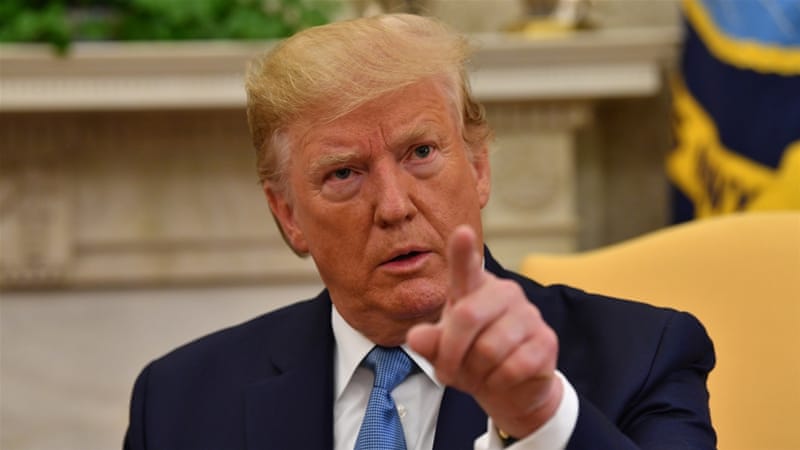
President Donald Trump vowed on Sunday that the United States would take Greenland “one way or the other,” warning that Russia and China would “take over” if Washington fails to act.
Trump says controlling the mineral-rich Danish territory is crucial for US national security given increased Russian and Chinese military activity in the Arctic.
“If we don’t take Greenland, Russia or China will, and I’m not letting that happen,” Trump told reporters aboard Air Force One, despite neither country laying claim to the vast island.
Trump said he would be open to making a deal with the Danish self-governing territory “but one way or the other, we’re going to have Greenland.”
Denmark and other European allies have voiced shock at Trump’s threats over the island, which plays a strategic role between North America and the Arctic, and where the United States has had a military base since World War II.
A Danish colony until 1953, Greenland gained home rule 26 years later and is contemplating eventually loosening its ties with Denmark.
The vast majority of its population and political parties have said they do not want to be under US control and insist Greenlanders must decide their own future — a viewpoint continuously challenged by Trump.
“Greenland should make the deal, because Greenland does not want to see Russia or China take over,” Trump warned, as he mocked its defenses.
“You know what their defense is, two dog sleds,” he said, while Russia and China have “destroyers and submarines all over the place.”
Denmark’s prime minister warned last week that any US move to take Greenland by force would destroy 80 years of transatlantic security links.
Trump waved off the comment saying: “If it affects NATO, it affects NATO. But you know, (Greenland) need us much more than we need them.”
AFP


