
Personality in Focus
2023 Women CEOs: Onyeali-Ikpe, Olusanya Make Top 10

- /home/rhoncare/pointblank.ng/wp-content/plugins/mvp-social-buttons/mvp-social-buttons.php on line 27
https://pointblank.ng/wp-content/uploads/2022/12/Fidelity-Bank-CEO-Mrs-Nneka-Onyeali-Ikpe-scaled-e1675317812921-1000x600.jpg&description=2023 Women CEOs: Onyeali-Ikpe, Olusanya Make Top 10', 'pinterestShare', 'width=750,height=350'); return false;" title="Pin This Post">
- Share
- Tweet /home/rhoncare/pointblank.ng/wp-content/plugins/mvp-social-buttons/mvp-social-buttons.php on line 69
https://pointblank.ng/wp-content/uploads/2022/12/Fidelity-Bank-CEO-Mrs-Nneka-Onyeali-Ikpe-scaled-e1675317812921-1000x600.jpg&description=2023 Women CEOs: Onyeali-Ikpe, Olusanya Make Top 10', 'pinterestShare', 'width=750,height=350'); return false;" title="Pin This Post">
The third annual Africa.com Definitive List of Women Chief Executive Officers (CEOs) was revealed on April 19.
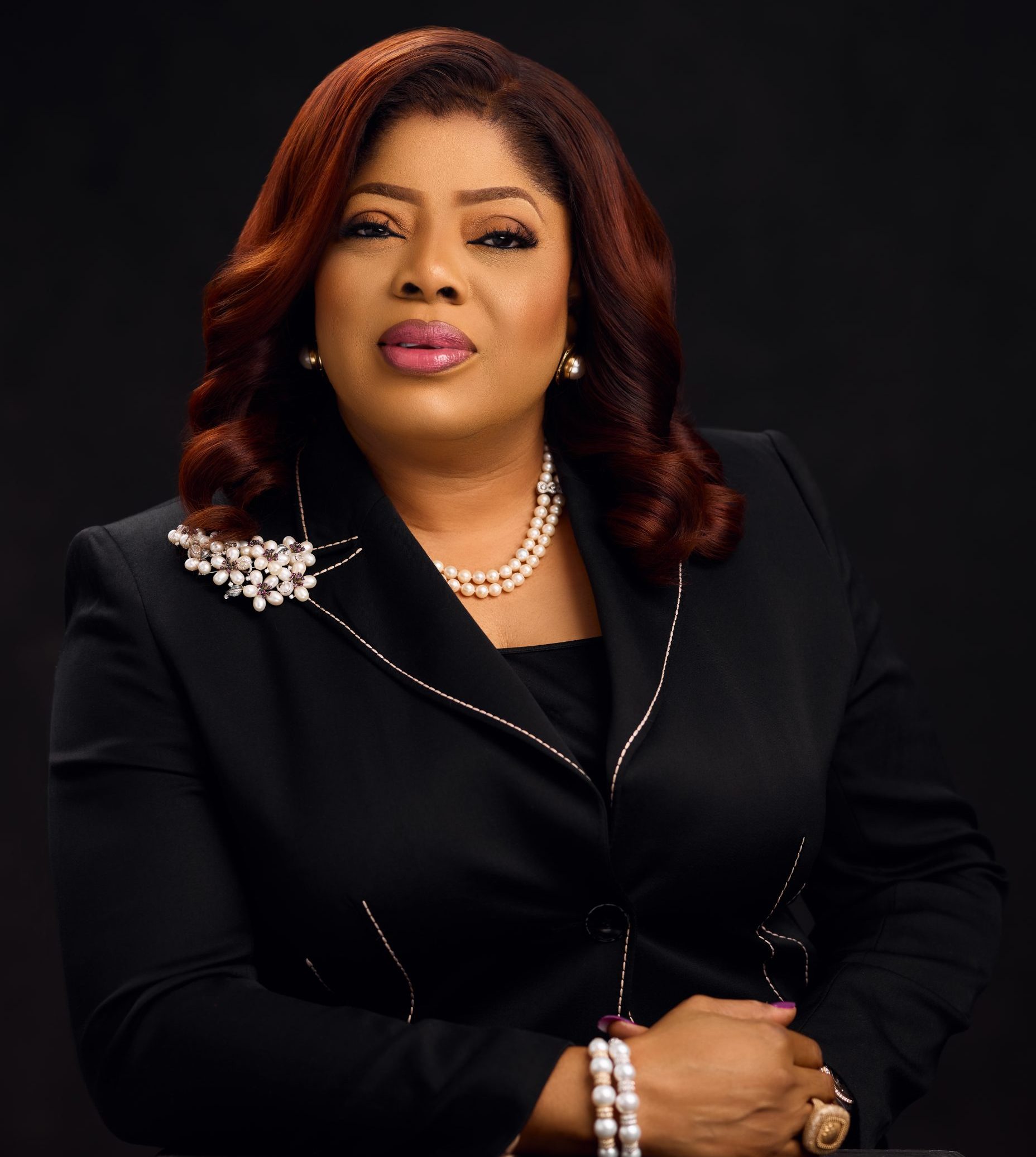
Nneka Onyeali-Ikpe, Managing Director/CEO, Fidelity Bank Plc and Miriam Chidiebele Olusanya, Managing Director, Guaranty Trust Holding Company made the top 10 list. Both companies are listed on the Nigerian Exchange Limited (NGX).
The list is unique in that it is based on data-driven research. Sponsored by Standard Bank Group, it represents one of the first analyses of the performance of publicly listed companies in Africa conducted through a gender lens.
This year’s list of 93 women represents 17 countries who have qualified based on either large-scale revenue or large-scale market capitalisation.
BusinessDay check shows the list includes 40 women from South Africa, 12 from Nigeria, and 6 from Egypt, Ghana and Kenya respectively.
Africa.com analysed 2,020 companies listed on the 24 African stock exchanges. Of the 2,020 companies, Africa.com screened for those companies with revenue of $100 million or more, or a market cap of $150 million or more, which yielded a list of 787 companies.
The public websites of all 787 companies were examined to identify female C-suite executives. The team then researched each woman to determine those who have a title of chief executive officer or managing director or president AND conducted a review to confirm that these executives have bottom line, profit and loss responsibility for the companies. This resulted in 40 women CEOs on group 1.
The methodology for group 2 is identical to the methodology for Group 1, except that the entities evaluated were the divisions of the 787 companies, such that the divisions themselves have standalone revenue of $100 million or more.
The women running these divisions must have a title that clearly demonstrates that they are the chief executive with profit and loss responsibility for the division. This analysis yielded 28 women division heads.
Group 3 started with an analysis of global corporations with revenue over $10 billion who have operations in one or more countries on the African continent.
The regional heads of these companies were analysed to identify women executives for an Africa region or an African country, with profit and loss responsibility for the country or region. This analysis yielded 25 women. Women in this group are ranked by prioritizing those who run the Africa region ahead of those who run a single African country.
The three groups make up the final Definitive List of 93 women listed below. The 40 women from Group I are: Natascha Viljoen, CEO, Anglo American Plc, a company listed on Johannesburg Stock Exchange; Nompumelelo Zikalala, CEO, Kumba Iron Ore Ltd, also listed on Johannesburg Stock Exchange. Others are: Mpumi Madisa, CEO, Bidvest Group, a Johannesburg Stock Exchange listed company;
Bertina Engelbrecht, CEO, Clicks Group Ltd, also listed on Johannesburg Stock Exchange.
Also on the top 10 list include Nombasa Tsengwa, CEO, Exxaro Resources, listed on the
Johannesburg Stock Exchange; Albertinah Kekana, CEO, Royal Bafokeng Holdings, listed on the Johannesburg Stock Exchange; Jane Karuku, Group Managing Director & CEO, East African Breweries, listed on Nairobi Stock Exchange; Ntombi Felicia Msiza, CEO, Raubex Group Ltd, listed on the Johannesburg Stock Exchange,
Africa.com is a media holding company with an extensive array of platforms that reach a global audience interested in African content and community.
Culled from www.businessday.ng


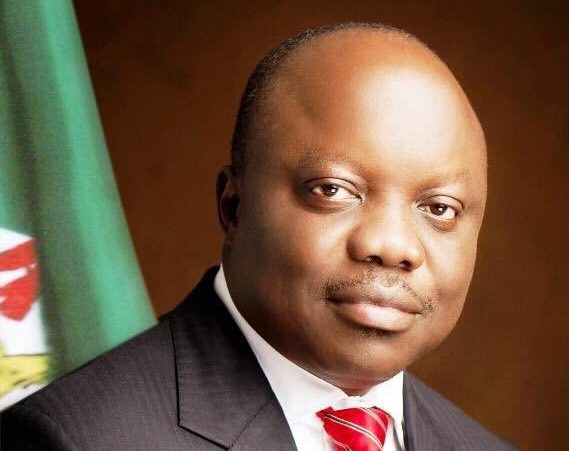
A former Governor of Delta State, Dr. Emmanuel Uduaghan is dead.
He died after a brief illness at the age of 71.
The Uduaghan family announced his death in a statement signed by Toju Andre Uduaghan, on Monday.
The statement, titled, ‘ANNOUNCEMENT OF THE PASSING OF HIS EXCELLENCY, DR. CHIEF EMMANUEL EWETA UDUAGHAN’, read:
“It is with hearts weighed down by immeasurable grief and profound sorrow that we announce the passing to glory of our beloved Father, Brother, Uncle, and Patriarch, His Excellency, Dr. Chief Emmanuel Eweta Uduaghan, former Governor of Delta State, who departed this world on the morning of 19th October 2026.
“His passing has left us devastated. Words can hardly express the depth of our sorrow at the loss of a man who meant so much to our family and whose life and service touched countless others across Delta State and Nigeria.
“He was a source of strength, a father figure, a beloved brother and uncle, and a respected elder. We will deeply miss his presence and forever cherish the memories and legacy he leaves behind.
“He served as Commissioner for Health from 1999 to 2003, Secretary to the Delta State Government from 2003 to 2007, and Governor of Delta State from 2007 to 2015. Throughout his years in public service, he demonstrated a commitment to the human and infrastructural development of Delta State.
“His passing is a profound loss to our family, the people of Delta State, and Nigeria at large. We are grateful to Almighty God for his life, his service, and the legacy he leaves behind.
“We pray that Almighty God, in His infinite mercy, will grant his soul eternal rest and comfort our family, friends, associates, former colleagues, and all who mourn this painful loss.
“Rest well, our beloved Father, Brother, and Uncle. Your memory will forever remain in our hearts, and your legacy will endure in the lives of those you touched.
“May your gentle soul rest in perfect peace. Amen.”
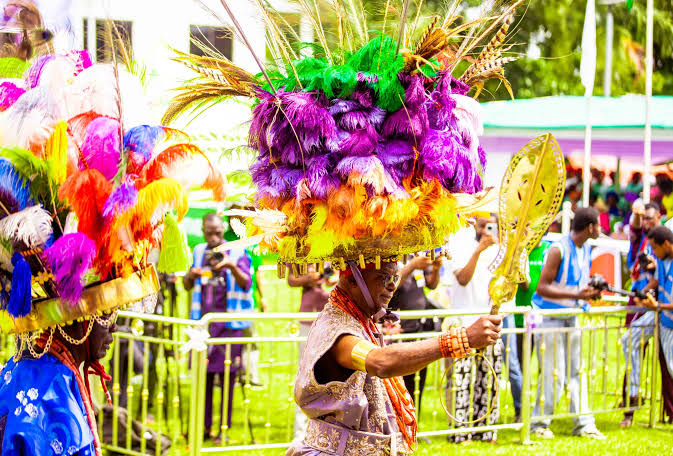
The Obi of Onitsha, His Majesty Igwe Alfred Nnaemeka Achebe, has commended Globacom for its unwavering commitment to the preservation and promotion of Nigeria’s cultural heritage, noting that the telecommunications company’s sustained support has helped transform the Ofala Festival into a world-renowned cultural celebration.
Speaking on the 2026 edition of the festival, held at Ime Obi, Onitsha, Anambra State, on Friday, the monarch paid a glowing tribute to Globacom for its longstanding role as the principal sponsor of the festival, a partnership that has spanned fifteen consecutive years since 2011.
According to the monarch, “Their partnership has transformed the festival from a palace ritual to a world-renowned cultural festival owes a great deal to purposeful partnership. Since 2011, Globacom has stood with us as our principal partner – now fifteen consecutive years of unwavering commitment.” He added that “In good times and challenging times, Globacom has helped us preserve the authenticity of Ofala while enhancing its presentation, documentation, broadcast and global reach. They have helped take a living heritage to the global stage”.
Igwe Achebe also applauded the vision of Globacom’s Chairman, Dr Mike Adenuga Jr., whose commitment to cultural preservation, he noted, reflects a profound appreciation of the role of indigenous traditions in strengthening national identity and social cohesion.
“I thank Globacom and its Chairman, Otunba (Dr) Mike Adenuga Jr., GCON, a true man of culture, for his vision and belief that culture is not a luxury but a foundation for unity,” the monarch said.
Commenting on the theme of this year’s festival, “Igba Mbo, Iga N’Iru” — Strive and Advance — Igwe Achebe described it as a compelling call to diligence, excellence, self-improvement and collective progress. He explained that the theme embodied the enduring spirit of the forebears who built the Onitsha kingdom on the banks of the Niger, while challenging younger generations to preserve that legacy through enterprise, purposeful endeavour and a commitment to progress.
In his goodwill message to the monarch and the people of Onitsha, Dr Adenuga described Globacom’s association with the Ofala Festival “since 2011 has been much more than a corporate partnership. It has been a relationship which we cherish deeply and regard as a privilege”. He expressed profound appreciation to Igwe Achebe for the opportunity afforded Globacom to contribute to the preservation, celebration and wider projection of the community’s priceless cultural heritage.
He noted that the annual festival provides a valuable platform for showcasing the rich cultural traditions, dignity and enduring values of the Onitsha people to audiences across Nigeria, Africa and the wider world.
Through its longstanding partnership with Ofala, Globacom continues to demonstrate that corporate citizenship extends beyond commercial enterprise to the preservation of the cultural foundations that give communities their identity, strengthen their unity and connect generations.
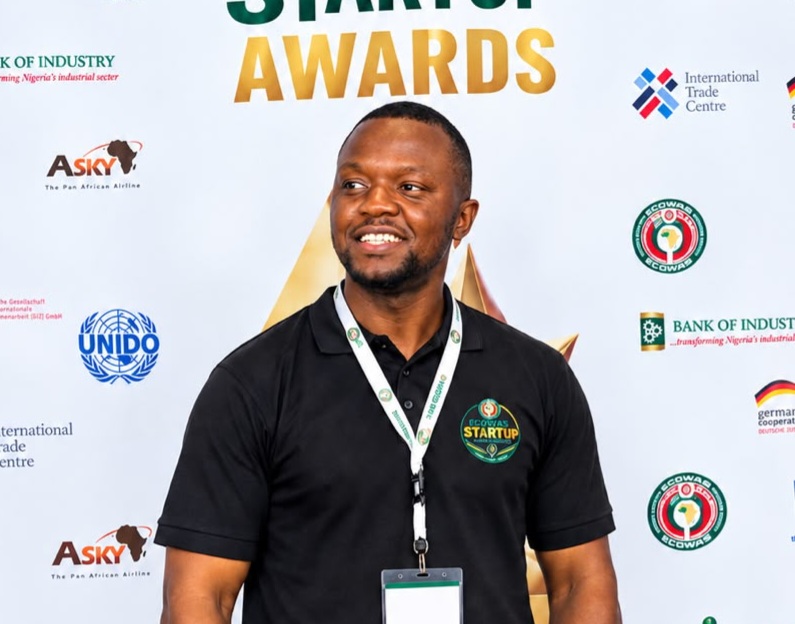
Kardinal Business Travel, a travel technology company with African and global focus, was among 60 startups that pitched at the 2nd edition of the Economic Community of West African States (ECOWAS) Startup Awards, held at the ECOWAS Commission headquarters in Abuja recently.
The company’s Chief Executive Officer and Founder, Cornelius Ugwunwa, presented the company’s case at the three-day event. The awards was part of an ECOWAS initiative to help West African businesses and startups scale through digital transformation, regional integration and sustainable value chains, with the aim of widening access to global markets.
Temitope Kareem, founder of Nigerian healthtech firm HubPharm Africa, won the top prize of $30,000. Senegal’s Gaynako took home $20,000 as first runner-up, while Steve Bah Blesson’s MyOpinion from Côte d’Ivoire won $15,000 as second runner-up.
Speaking during his pitch, Ugwunwa said Africa needs a new system for business travel. He cited a market with $75 billion in inbound travel spending and a strong business travel component in 2025, while travel and tourism as a whole contributed $228 billion to the regional economy.
“When a company sends its employees across Africa for a business engagement, we at Kardinal noticed the challenges of countless inboxes, spreadsheets and emails, mostly after the trip.
Businesses keep asking: How much did we spend? Who did we spend it on? Was it above or below budget? Can we reconcile everything on one platform?” he said.
He described African business travel as a $30 billion market that is largely fragmented and overly dependent on manual processes.
According to him, many businesses lose over $1 billion to manual travel processing and cannot track spending in real time. “That is why Kardinal exists: to solve this entrenched problem,” he said.
Ugwunwa said GoKardinal is an artificial intelligence-driven platform built to track expenses for African businesses. It brings the entire business travel lifecycle (planning, budgeting, booking, financing and expense tracking) onto one platform, in real time.
“GoKardinal is not another travel platform. It is an infrastructure for business travel, powered by AI for expense management,” he said, adding that the idea is to help businesses move without delay from one location to another to do their best work, expand and make profit.
On the company’s performance, he said the platform serves over 51 businesses in Nigeria and across Africa, with estimated weekly profit of $10,000 and gross merchandise value of over $1 million, growing at 65 per cent annually. he added.
He noted that about 80 per cent of African businesses still run their business travel manually, without any form of expense tracking, in a market worth over $30 billion annually. “African business travel is not just travelling for the fun of it.
It is an ecosystem with the potential to generate over $70 billion when digitalised,” Ugwunwa said.


