
Business
Abacha Loot: UK Govt Seizes N82bn from Late Dictator’s Account

- /home/rhoncare/pointblank.ng/wp-content/plugins/mvp-social-buttons/mvp-social-buttons.php on line 27
https://pointblank.ng/wp-content/uploads/2019/06/Abacha.png&description=Abacha Loot: UK Govt Seizes N82bn from Late Dictator’s Account', 'pinterestShare', 'width=750,height=350'); return false;" title="Pin This Post">
- Share
- Tweet /home/rhoncare/pointblank.ng/wp-content/plugins/mvp-social-buttons/mvp-social-buttons.php on line 69
https://pointblank.ng/wp-content/uploads/2019/06/Abacha.png&description=Abacha Loot: UK Govt Seizes N82bn from Late Dictator’s Account', 'pinterestShare', 'width=750,height=350'); return false;" title="Pin This Post">
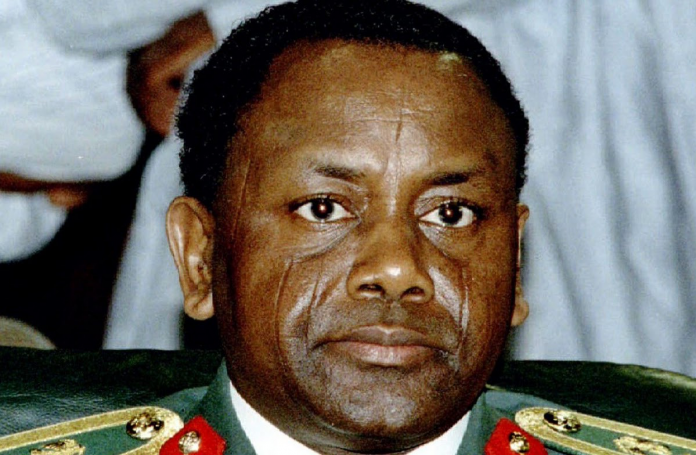
The United Kingdom Government has seized £211,000,000, about N81.9billion, from a Jersey bank account that belonged to the late Nigerian dictator, Sani Abacha.
Mr Abacha died on June 8, 1998, after more than five years in office as Nigerian military head of state.
According to a report by UK Metro news medium, the money was put in accounts held in Jersey by Doraville Properties Corporation, a British Virgin Islands company.
The report further stated that the money is now being held by the government until authorities in Jersey, the US and Nigeria agree on how it should be distributed.
“Any money that Jersey does keep will be put into the Criminal Confiscation Fund, which is used to pay for a variety of projects. In the past, the fund has been used for the new police station and developments at La Moye Prison.
“It is expected that even more money held by Doraville is likely to be seized and paid into the Civil Asset Recovery Fund in the future,” the report said.
In 2014, at the request of the US authorities, the Island’s Attorney-General applied for, and the Royal Court granted, a restraining order over the Jersey bank account balance of Doraville.
“The purpose of the restraining order was to preserve the money until a final civil asset recovery order could be registered in the Royal Court. ”
Doraville applied to the Royal Court for the restraint order to be discharged, but the Royal Court dismissed the application in 2016.
Then in 2017, Doraville challenged the Royal Court’s decision, taking the case to Jersey’s Court of Appeal.
“That challenge was again rejected. Finally, following the decision of Jersey’s Court of Appeal, Doraville made an application to appeal against the restraint order before the Privy Council – Jersey’s ultimate appellate court.”
“In February 2018 the Privy Council announced its rejection of this final legal challenge. Last week, Solicitor General Mark Temple gave a presentation in Vienna, Austria, about Doraville at a UN conference on corruption.”
Mr Buhari on several occasions questioned the veracity of reports that Mr Abacha looted billions of dollars from the Nigerian treasury.
Premium Times


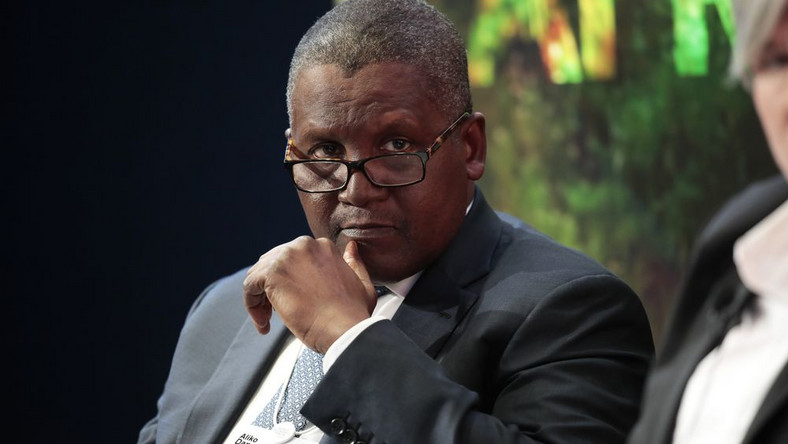
Africa’s richest man, Aliko Dangote, has revealed that he would be investing over $10 billion dollars in the coming years to tackle the power crisis in Nigeria and drive industrialisation.
He spoke during an interview with Al Jazeera, where he identified inconsistent government policies and inadequate electricity supply as major challenges discouraging Africans from investing in the continent.
He disclosed that the group is considering redirecting funds from certain businesses, including steel, towards electricity generation and other power-related investments.
“And I’m telling you in the next three to four years, there will be a major transformation in Africa, and that’s why we’re looking at power. We are going to invest in power. There are one or two businesses that we might cancel, like steel, and we will put the money in power. We want to invest over $10billion alone in power.”
He expressed concern that more than 600 million Africans continued to live without electricity, describing the situation as one that the continent must address, saying, “We Africans should not really allow over 600 million of our people to remain in darkness.”
The industrialist linked electricity supply to economic development and argued that governments that successfully deliver power to their citizens may not need to go for campaigns again during elections.
“You know, if some politicians work hard and have a plan, when you deliver power, you don’t need to go for a campaign when you’re going for an election. Power is key; we will never create growth without power. That’s why they say power is growth. When I say power, I mean electricity is growth.”
He said Africa would be unable to create jobs and achieve sustainable economic growth without industrialisation, stressing that the continent must reduce its dependence on imported goods.
On what some are saying about not investing in Africa, he said: “The problem really is, it takes two to tango. I think in the past, there’s been a lot of flip-flops in government policies. Government policies are changing every day, and then, the lack of electricity is also there.
“So, these two issues haven’t gone away. They are still there. But for some of us that really mean business, we are here, and we know that yes, without our intervention, Africa will never be able to create jobs. If there’s no industrialisation, how do you create jobs? You can’t,” he said.
Dangote warned that Africa could eventually lack the financial resources to continue importing the goods it consumes, making industrial development and local production necessary for the continent’s future.
“One day we will not have money to import what we are consuming. So how can we remain an import continent? It has to change. But that change can only happen when Africans believe in Africa, and they invest in Africa,” he stated.
According to the businessman, a growing number of investors are showing interest in supporting African businesses because of the opportunities available on the continent. He added that his investment approach was focused on spreading wealth, expanding participation in businesses and strengthening corporate governance.
“We want to make sure it’s about spreading the wealth. It’s about getting more people in the business. It’s also about corporate governance. So that’s the direction.”
Responding to accusations that his business activities were creating a monopoly, Dangote said he would remain focused on his objectives rather than be distracted by his critics.
He used football star Lionel Messi as an example, explaining that a player must concentrate on the ball rather than the audience while playing.
“Well, you know, if I’m going to listen to that, have you ever seen a footballer looking at the audience? He has to continue looking at the ball. If I’m Messi, for example, I’m kicking the ball, and I’m looking at the audience, do you think I won’t miss the ball? I will miss the ball,” he stated.
Dangote argued that people would not always be satisfied with the activities of businesses, adding that accusations of monopoly would not stop him from pursuing his investment plans.
“If I’m going to make my continent great and people want to call me a monopoly for no reason, so be it. I mean, it’s not going to reduce the colour of my face or whatever. You can call me whatever you want to call me; I didn’t stop anybody; it is an opportunity given to everybody, every one of us has that opportunity whether Africans, foreigners or whoever,” he stressed.
He said the government had not granted his businesses exclusive rights to operate in any sector, maintaining that opportunities were available to investors who were willing to participate.
“There’s nothing that the government gave us and say, ‘this is only for Dangote ’. The government will create a policy around a sector, and they will blow a whistle and say, ‘ Yes, this is it,” he noted.
Using a 100-metre race as an illustration, Dangote said investors who had chosen not to participate should not blame those who entered and won.
“If there’s a 100-metre race, some people were on the bench while I’m on the track, and I agreed to run that race, and I won that race alone, are you going to blame me or are you going to blame people who just sat on the bench?” he asked.
The businessman added that businesses and individuals needed to believe in Africa and invest in its development if they want to benefit from the continent’s economic opportunities.
“They’re not ready, they’re not prepared, they don’t even believe in Africa itself. If you don’t invest, you are not going to get fruit of that labour,” he replied to those accusing him of monopoly.
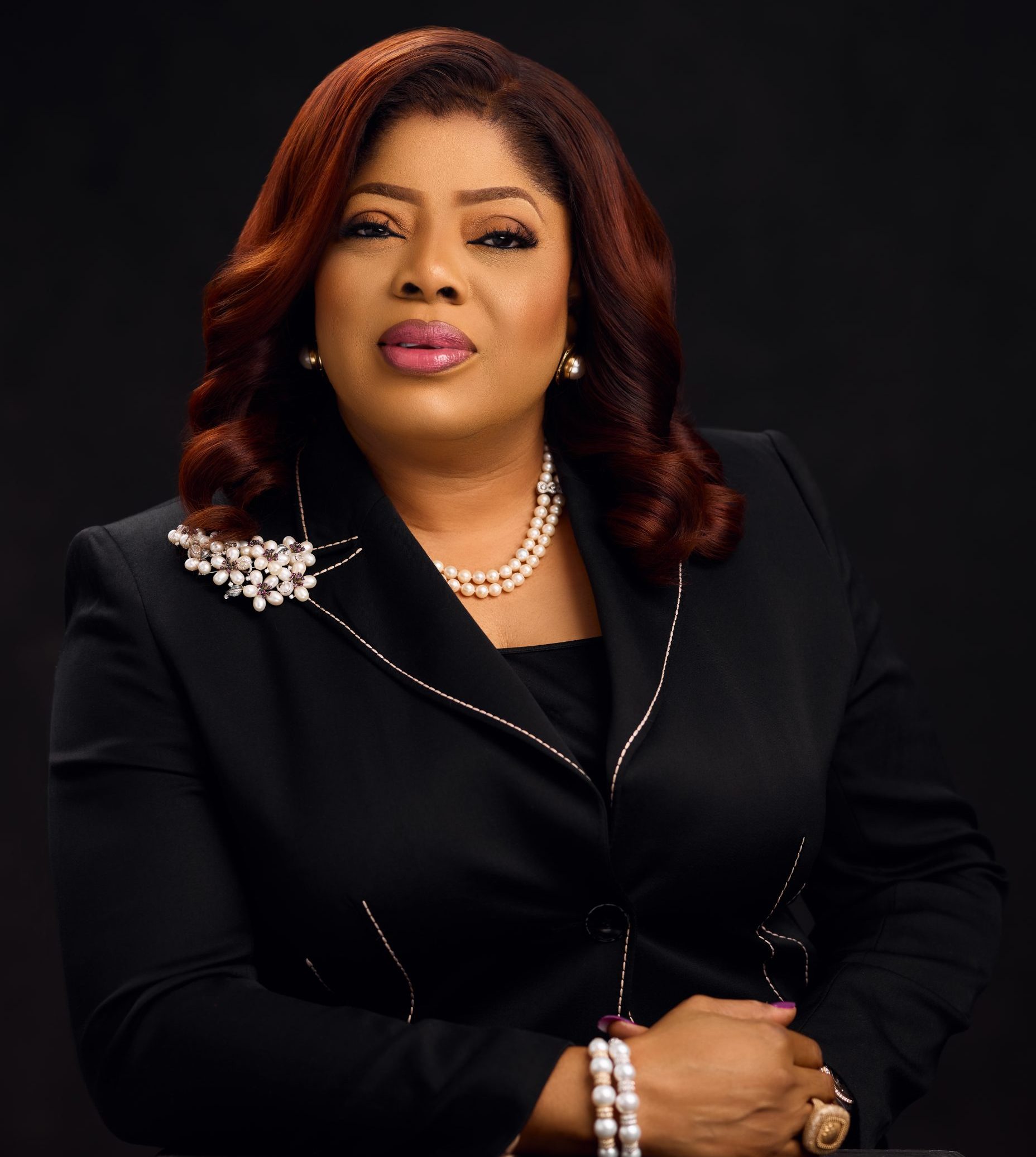
Leading financial institution, Fidelity Bank Plc, has announced the promotion of 433 employees through its 2026 Promotion and Notch Award Exercise.
Approximately 13 per cent of the Bank’s workforce benefited from the exercise, reflecting a steady increase from the 12 per cent and 11 per cent recorded in 2025 and 2024, when 376 and 337 employees were promoted, respectively.
The initiative reflects the Bank’s unwavering commitment to recognizing excellence, rewarding outstanding performance, and fostering a high-performance culture across the organization.
Since assuming office as Managing Director and Chief Executive Officer, Nneka Onyeali Ikpe has overseen annual promotion exercises designed to recognise employee contributions, strengthen institutional capabilities and build a robust leadership pipeline.
Beyond promotions, Fidelity Bank has continued to invest in employee welfare through initiatives aimed at improving productivity, workplace satisfaction and overall staff wellbeing.
The Bank increased salaries across all categories and grade levels in 2022, 2024 and 2025. It also deployed staff buses to ease commuting, enhanced medical support and expanded learning and development programmes. In addition, the Bank extended its mortgage loan and home ownership scheme to employees from Assistant Banking Executive to Deputy Manager cadres, while increasing the applicable mortgage limits for qualified staff in line with current market realities. This positions Fidelity Bank among the few institutions that provide mortgage support to employees below the Manager cadre.
The Bank has also sustained initiatives that promote employee engagement, collaboration, work-life balance, professional certification, and continuous upskilling, underscoring its focus on building a motivated and future-ready workforce.
Industry observers note that these investments have helped reinforce Fidelity Bank’s reputation as a great place to work and a preferred employer within Nigeria’s financial services industry.
The 2025 promotion exercise reflects Fidelity Bank’s broader people strategy to attract, develop, reward and retain top talent by recognising discipline, professionalism, innovation, customer-focus and sustained performance, while preparing employees for greater responsibilities and strengthening the Bank’s position as an employer of choice.
Ranked among the best banks in Nigeria, Fidelity Bank Plc is a full-fledged Commercial Deposit Money Bank serving over 10 million customers through digital banking channels, its 255 business offices in Nigeria and United Kingdom subsidiary, FidBank UK Limited.
The Bank is a recipient of multiple local and international awards, including the 2025 Development Bank of Nigeria (DBN) Innovation Award for MSME support; Best Retail and SME Bank Award from Independent Newspapers; Best Bank for Export & Trade Finance and Most Innovative Bank of the Year at the 2025 BusinessDay Banks and Financial Institutions (BAFI) Awards; and Nigeria’s Best Private Bank at the 2025 Euromoney Awards. The Bank also received the inaugural Most Improved Commercial Bank of the Year award by Nairametrics, the SME Bank of the Year award by NewsDirect, and the Straight-Through Processing (STP) Excellence Award by Citi Group, in addition to recognition by Global Brands Magazine for Excellence in Community Empowerment.
Business
Ecobank Announces Sales of Dangote Shares Across Africa for Retail and Institutional Investors
Ecobank is enabling the sale of Dangote Petroleum Refinery shares across Africa, providing retail and institutional investors with convenient access to participate in the ongoing share offer through its extensive digital and branch banking channels. The offer opened on 14 September 2026 and is scheduled to close on 13 October 2026.
Through its extensive pan-African network and digital banking platforms across 33 African countries and international offices in London, Paris, Beijing and Dubai, Ecobank is providing investors with convenient access to the Dangote Petroleum Refinery share offer, further strengthening its role in connecting African investors with major investment opportunities across the continent.
In Nigeria, customers and non-customers can subscribe through the Ecobank Mobile App, Internet Banking, Ecobank website and any Ecobank branch nationwide.
The offer provides investors with an opportunity to acquire a stake in the Dangote Petroleum Refinery, one of Africa’s significant industrial projects. The shares are available at ₦525 per share, with a minimum subscription of 10 shares.
Speaking on the offer, Austen Osokpor, Head, Marketing and Corporate Communications, Ecobank Nigeria, reiterated the Bank’s commitment to connecting customers and the wider public with opportunities that support wealth creation and broader participation in the capital market.
He noted that Ecobank’s digital platforms and extensive branch network have been positioned to provide a seamless, convenient and accessible subscription experience for interested investors.
Prospective investors are encouraged to carefully read the Prospectus and seek professional advice where necessary before making any investment decision.
Interested members of the public can visit any Ecobank branch nationwide or subscribe through the Bank’s digital channels.


