
Personality in Focus
Adeduntan: Banks, Customers Must Approach 2023 with Partnership Mindset


- /home/rhoncare/pointblank.ng/wp-content/plugins/mvp-social-buttons/mvp-social-buttons.php on line 27
https://pointblank.ng/wp-content/uploads/2020/03/Dr.-Adesola-Adeduntan-FirstBank-CEO-1000x600.jpg&description=Adeduntan: Banks, Customers Must Approach 2023 with Partnership Mindset', 'pinterestShare', 'width=750,height=350'); return false;" title="Pin This Post">
- Share
- Tweet /home/rhoncare/pointblank.ng/wp-content/plugins/mvp-social-buttons/mvp-social-buttons.php on line 69
https://pointblank.ng/wp-content/uploads/2020/03/Dr.-Adesola-Adeduntan-FirstBank-CEO-1000x600.jpg&description=Adeduntan: Banks, Customers Must Approach 2023 with Partnership Mindset', 'pinterestShare', 'width=750,height=350'); return false;" title="Pin This Post">
The Managing Director/Chief Executive Officer of First Bank Nigeria Limited, Dr. Adesola Adeduntan, in this interview with THISDAY reviewed the performance of the global economy in 2022 and advised businesses and their bankers to approach 2023 with a partnership mindset to ensure that a win-win outcome is achieved despite the anticipated macroeconomic challenges. Excerpts:
What are your forecasts and anticipations for the global economy in 2023?
I would like to start by noting that 2022 was indeed a turbulent year for the global economy. In 2022, the global economy witnessed record high inflation rates with the attendant high cost of living across several economies. The elevated inflationary rates were attributed to the aftereffects of the Covid-19 pandemic as well as the Russian-Ukraine crisis. In its last World Economic Outlook report, the IMF projected a 2.7 per cent global growth rate in 2023, lower than the 3.2 per cent in 2022. The 2023 projection will be the weakest global growth profile since 2001 except for the global financial crisis year and the acute phase of the Covid-19 pandemic in 2020. In my view, in 2023, we will likely witness slower growth across several global economies due to lingering trade tensions as the impact of the Russia-Ukraine crisis will still weigh heavily on global trade flows. However, we may witness a decline in commodity prices as more import-dependent countries explore alternative sourcing options for these commodities. Inflationary pressures will however reduce as the impact of rising monetary policy rates continues to yield expected outcomes. The removal of COVID-19 restrictions in China should lead to a boost in global economic output. Oil prices are expected to remain largely elevated as tensions between Russia and Ukraine lingers, so energy prices will remain high. The transition to other sustainable forms of energy may also be accelerated by the prolonged crisis.
Given the tepid growth associated with the global economy in 2022, developing countries have been having difficulties in refinancing their foreign debt, do you see a gloomy impact on the economies of the developing countries in 2023 as a result?
With slowing growth and elevated inflation rates, the sustainability of foreign debts, especially for developing nations, is likely to call for a re-evaluation by lenders given the increased likelihood of default. When this is juxtaposed with the higher interest rate environment at which these debts are likely to be refinanced, you will observe a scenario where further strain is exerted on the debt repayment capacity of these economies. However, this situation does not necessarily translate to an automatic economic doom for developing nations. The actual impact on each developing economy will depend on the economy’s level of fiscal discipline and revenue generating capacity. Developing nations who are able, in the short term, to increase revenues either from taxes or sale/refinancing of idle/sub-optimal assets will be able to negotiate reasonable refinancing terms from lenders and prevent further economic turmoil. Nonetheless, all concerned nations need to take the issue of debt sustainability more seriously by limiting fiscal wastages, reducing inefficiencies, growing revenues, and aggressively working down unsustainable debt-to-GDP levels that may worsen the impacts of external shocks.
Do you think that the corporate default and NPL would increase in 2023 due to the current economic headwinds?
Expectedly, rising cost of debt and contracting demand will exacerbate the challenges that businesses will face in 2023, particularly for players operating in small-margins sectors of the economy. Locally, the surging inflation rate is sure to reduce disposable income of most consumers and demand for non-essential goods and services may dip. To prevent rising non-performing loans (NPLs), businesses and their bankers will have to collaborate more and ensure timely flow of information to prevent surprises. Banks on their part will have to improve monitoring of their loan portfolio to quickly identify early warning signals for attention before a full-scale loan deterioration. Overall, businesses and their bankers must approach 2023 with a partnership mindset to ensure that a win-win outcome is achieved despite the anticipated macroeconomic challenges.
With the tightening financial conditions which has partly led to slow global economic growth, what opportunities do you think exist in 2023 for players in the financial services industry?
Despite the expected macroeconomic challenges in 2023, there are also emerging business and revenue opportunities that can be exploited by discerning players in the financial services industry. Specifically, the following areas will provide significant opportunity to players in the financial services industry:
Payments: The Central Bank of Nigeria’s renewed drive on cashless policy has provided an opportunity for players in the financial services industry to enhance existing digital product offerings and create more attractive product offerings that will further reduce frictions in the payment process. This will help to reduce the financial exclusion gap, increase fees and commissions revenues, and improve overall viability and stability of the financial system.
Digital Security: Increasing adoption of digital payments platforms will necessitate increased requirement for the security of payment channels. Thus, opportunities exist for players in the financial services industry to leverage robotics and artificial intelligence to improve security protocols on digital payment channels.
M & A Opportunities: with the anticipated pressures on earnings, opportunities exist for big and liquid players to gain additional scale and market share through outright acquisition of fringe players with the right strategic fit. There is also an opportunity for two or more small and/or medium size players to merge their operations/businesses to obtain scale advantage.
Partnerships across Segments: The growing number of Fintechs and licensed Payment Service Banks also presents an opportunity for improved partnerships across various categories of players in the financial services industry for both mutual and industry-wide benefits.
Consumer Lending: Tightening financial conditions of the average household will create opportunities for consumer loans in several variants such as buy-now-pay-later (BNPL), salary advance, consumer asset finance, etc. The industry is already witnessing a rising trend in the creation of digital consumer loan product offerings. This is likely to intensify in 2023.
What are the key events that will shape 2023 domestic economic outlook and how strategically positioned is FirstBank to manage the challenges and opportunities?
Three key events will shape the 2023 macroeconomic outlook of Nigeria: The outcome of the 2023 general elections and peaceful political power transition; government’s ability to curb crude oil theft and increase production to meet OPEC quota; and successful removal of petrol subsidy. For us at FirstBank, we are strategically positioned to take advantage of and harness the opportunities that the three key events will bring as well as successfully ride the waves of any challenges that may arise. For over 128 years, FirstBank has built the capabilities and competencies required to succeed and thrive in any macroeconomic situation. As a Bank, our belief and commitment to the domestic economy is unwavering – FirstBank is truly woven into the fabric of the society.
How will you define the trends we saw in the banking sector landscape in 2022?
2022 was quite an eventful year and some visible trends emerged. I would like to classify the trends as follows:
Financial System Trends: The Monetary Policy Committee (MPC) raised the monetary policy rate and the cash reserve ratio, cumulatively, by 500 basis points to 16.5 per cent and 32.5 per cent, respectively as a way of enforcing liquidity tightening measures to curb rising inflation. In the same vein, the interest rate on savings accounts was restored to the pre-pandemic levels of 30% of MPR within the year thereby increasing the interest expense profile of banks. In addition, the paucity of foreign exchange exerted considerable pressure on banks’ foreign currency (FCY) trade lines in the course of the year, forcing banks to explore alternative ways to meet customers’ foreign currency needs, including deliberate focus on supporting and promoting non-oil export businesses and transactions.
Technological Trends: The banking sector witnessed an increase in technological innovations, as the industry strived to meet the ever-evolving customer needs. In Nigeria, FirstBank was at the forefront of the technological trend, as we successfully launched a Digital Experience Center, a fully automated branch to meet our customer needs, while providing a unique and wholesome experience. FirstBank also launched robotics process automation initiative, FirstRobotics, that uses artificial intelligence and machine learning to handle high volume transactions The industry also witnessed increasing collaboration of banks and fintechs in 2022; enhanced digital product offerings, especially the rise in digital loans and advances; and an overall increase in acceptance of digital product offerings by banks and other financial services players.
Customer Trends: In 2022, we witnessed an increasing shift in emphasis from consumer banking to lifestyle banking in a bid to capture more of the customers’ journey. This shift has been hugely supported by technology as customer trends can now be easily identified, and new product offerings developed to meet customer needs. The emigration trend witnessed in the past year also led to a boost in the industry’s diaspora customer base, leading to increased focus on meeting the needs of this peculiar customer segment.
Employee Trends: The banking industry, probably like any other industry in Nigeria, has seen significant attrition in the number of employees due to increased relocation to other countries (popularly known as Japa) in 2022. This has impacted the industry’s skill base and execution capabilities especially in critical areas of the industry. While this may be a national challenge, more creative ways must be explored to retain scarce talents for national development.
The Central Bank of Nigeria and the Federal Government have set a target of 95 per cent financial inclusion by 2024, how realistic is this target and what role will First Bank be playing to support the government achieve this target?
Financial inclusion is usually seen as the gateway to economic prosperity as it signals the first step in the journey to financial freedom. In 2012, the Central Bank of Nigeria (CBN) had unveiled its National Financial Inclusion Strategy with the principal goal of reducing the nation’s financial exclusion rate to 20 per cent of the adult population by 2020. Although this goal was not achieved (as financial exclusion rate stood at 35.9 per cent at the end of that period), the nation had nonetheless made giant strides in raising financial inclusion levels from that take-off point. As such, while the CBN’s revised target of 95 per cent financial inclusion rate by 2024 may be audacious, it is achievable given the level of financial awareness that has already been created in previous years which has raised financial literacy among the average citizenry. In addition, in view of the additional investments and infrastructural base that is available in the country, more mileage can be made now than ever before. It should also be noted that the Central Bank of Nigeria has been deliberate in pursuing its financial inclusion agenda through the licensing of several players/operators in the financial services industry, including fintechs, mobile money operators, Payment Service Banks (PSBs), Microfinance Banks/institutions, new deposit money banks (DMBs), etc. As such, several players are making various attempts at solving the same problem which will significantly increase the likelihood of success. As the foremost financial institution in Nigeria, FirstBank has always collaborated with the Central Bank and the Nigerian government to push several national initiatives, particularly as it relates to the financial services industry. Specifically, FirstBank’s Firstmonie Agent Network is fully aligned with improving financial inclusion in Nigeria. With over 196,000 agents spread across 772 Local Government Areas (LGAs) in Nigeria and many of the agents operating from 512 LGAs without a FirstBank branch, the Bank has been a clear partner to the Central Bank of Nigeria in improving financial inclusion in the country. FirstBank’s USSD (*894#) product, which is demographically positioned for the unbanked, has over 14 million users with more than 261 million unique transactions, worth over NGN1.1 trillion processed on the platform. FirstBank has been at the forefront of increasing financial inclusion in Nigeria and will continue to play its part until every adult in Nigeria is adequately banked.
What is your take on two recent policies of the CBN – the naira redesign and the cash withdrawal limits?
The CBN as the apex regulator of the financial services industry has overall responsibility to ensure the soundness of the nation’s financial systems. In discharging this responsibility, it develops policies that are meant to strengthen the monetary environment and stimulate further economic development of the country – the recent naira redesign and cash withdrawal limits policies are part of its core mandate. As noted by the CBN, the naira redesign will improve both the integrity of the local legal tender and the efficiency of its supply, thus addressing a situation where 80 per cent of currency in circulation is outside the banking system. To aid its implementation, the CBN has also suspended charges on cash deposits to encourage everyone to deposit old naira notes in the Banks. The new N200, N500 & N1000 notes which came into circulation on 15th December 2022 will co-exist with the old notes until 31st January 2023 when the old notes will cease to be legal tender in Nigeria.
Similarly, the cash withdrawal policy which will limit weekly cash withdrawals by individuals and companies to N500,000.00 and N5,000,000.00 respectively, is expected to accelerate Nigeria’s transition to a digital economy. The policy which comes into effect from January 9, 2023, will present the added advantage of bringing more people into the banking system thus improving financial inclusion. At FirstBank, we view both policies as business enablers with bright prospects and we are poised to take maximum advantage of the opportunities they bring to improve our service offerings and the overall experience of our customers.
FirstBank has a lot of Firstmonie agents scattered around the country, how will the cash withdrawal limit affect their operations?
As at November 2022, FirstBank has over 196,000 Firstmonie agents spread across 772 Local Government Areas (LGAs) in Nigeria. These agents have also processed over 1.16 billion transactions valued at N26.52 trillion. About 45 per cent of our Firstmonie Agent network are in rural areas, 18 per cent located in semi-urban areas and only 37 per cent are in urban areas. Beyond Cash-in-Cash-Out (CICO) transactions, these agents also render other services such as account opening, airtime purchase, bill payment, government-revenue collection, transfer and disbursement, mobile-money (wallet creations, deposits, withdrawals), bank verification number (BVN) enrollment and other non-bank ecosystem value-added support services, in line with CBN’s guideline for Mobile Money and Agent Banking businesses. These services have helped to bring banking services closer to local communities thereby empowering them and facilitating their economic development. Through Firstmonie, FirstBank provides convenient low-cost financial access for millions of Nigerians in rural areas. Therefore, given the spread of our agent banking network and the scope of services they offer, the cash withdrawal limit is not likely to have an adverse effect on their operations. In reality, we see it as an enabler that will bring more people into the banking system. The new cash withdrawal limit will help to drive the penetration and uptake of digital/mobile wallet offerings in the industry.
FBN Holdings doubled its Q3 2022 profit to N105 billion and the performance by the bank was the major contributor, can you take us through the drivers of the impressive Q3 result?
FirstBank’s Q3 2022 results reflect the robustness of our business model and go-to market approach even in a challenging business and operating environment. The impressive profitability performance was driven by the resilient execution of our strategy and transformation program. Specifically, FirstBank delivered a 42.4 per cent year-on-year (yoy) increase in interest income on the back of yield optimisation on existing assets and addition of about N700 billion to the risk asset portfolio. Also, the bank recorded a decent 6.8 per cent growth in fees and commission within the period driven by significant improvements in LC commissions, account maintenance charges etc. The bank also recorded over 47 per cent y-o-y increase in other operating income within the same period. Overall, I would say that the results are a clear outcome of the collective efforts and resilience of the entire staff and the Board of Directors of the FirstBank Group in deliberately executing on our transformation agenda. We remain confident that our growth trajectory is sustainable, and we are focused on delivering on our 2020 – 2024 strategic ambition of accelerated growth in profitability through customer-led innovation and disciplined execution.
What is the level of non-performing loans and what has the bank been doing to reduce it?
FirstBank Group has achieved great strides in reducing its NPL from double-digit in 2016 to below regulatory benchmark of five per cent in Q3 2022, which attest to the fact that the bank is strong and resilient. FirstBank has, in the recent years, built an enduring risk culture and governance systems, as well as strengthened its risk management infrastructure through technology, process automation and specialised training.
Few years ago, FirstBank embarked on a business expansion drive within the continent, can you take us through the performance of your subsidiaries in the continent?
FirstBank embarked on its African expansion in 2011. Today, the Bank is present in six other African markets namely: Ghana, Senegal, Sierra Leone, The Gambia, Democratic Republic of Congo, and Guinea. As part the 2020 – 2024 strategic plan, FirstBank refreshed its vision to be “Africa’s Bank of First Choice” to serve as an anchor for its renewed African expansion drive. As such, the Bank is exploring entry into additional high-impact African markets. While the growth journey of each African subsidiary is different, we are extremely proud of the investments that we have made in these markets and the positive contributions we are beginning to see from each subsidiary. Overall, I would like to note that all our African subsidiaries are making positive contributions to the Group in terms of profitability.
How is the bank positioning to take advantage of the AfCFTA?
The African Continental Free Trade Area (AfCFTA) agreement has created the largest free trade area in the world (measured by the number of participating countries) as it involves most of the 55-member countries of the African Union with a combined Gross Domestic Product (GDP) of $3.4 trillion and connects 1.3 billion people across the continent. According to the World Bank, the AfCFTA has the potentials to lift 30 million people out of extreme poverty and raise the incomes of 68 million others who live on less than $5.50 per day. It also has the potentials to drive $292 billion in income gains for participating members. FirstBank is already actively playing in seven African countries with plans to enter additional high-impact African markets in the short to medium term. The bank has also institutionalised a collaboration framework across all operating jurisdictions to ensure clients operating in multiple African jurisdictions can be effectively served across the network. The bank has developed special products (known as First Global Transfer) to facilitate regional payments for our pan-African clients in addition to our online and digital platforms. On the part of the customers, FirstBank has conducted several non-oil export seminars to raise awareness levels on the opportunities presented by AfCFTA and equip our clients with the right knowledge to exploit these opportunities. As a bank, we view AfCFTA as an enabler of our corporate vision and we will continue to ensure the right investments are made to capture the opportunities it presents.
Your UK subsidiary recently marked its 40th anniversary, what was the journey like in that 40 years and looking ahead, what should customers be expecting from FirstBank in UK?
FirstBank’s foray into the United Kingdom (UK) forty years ago is a clear demonstration of uncommon foresight by the leadership of the Bank. Given the burgeoning trade relations between Nigeria and the then European Union (which included the UK) and the growing status of London as a leading global financial center, the decision to establish a subsidiary of FirstBank in the UK could not have been better made. Since commencement of operations in the UK, FBNBank UK has provided a bridge for Nigerian firms with interests in the UK to achieve their financial goals and meet their banking needs. FBNBank UK has provided trade and correspondent banking relationships that have facilitated the achievements of several Nigerian and indeed other African entities’ trade objectives. This is in addition to offering other services such as advisory, mortgage and investment products to its clientele base. FBNBank UK has also provided access to foreign capital markets to African firms and countries to raise much-needed capital that have contributed to the economic transformation of the African continent. As we look to the future, customers of FBNBank UK can be assured of the same excellent services they have become accustomed to with more innovative products that will help them solve their emerging needs.
We saw the licencing of a few banks in 2022 and the industry becoming more competitive, why should your customers continue to bank with FirstBank?
Indeed, the industry has changed and will continue to evolve at a faster pace with the competitive landscape becoming more challenging because of the inter-play of several actors – new banks, fintechs, etc. However, customers will continue to gravitate towards institutions that provide the best digital banking services that address their changing needs for convenience, speed, and security. With over 128 years’ experience in this market, we believe that FirstBank is well positioned to continue to delivery excellent customer experience and thrive. Our customers can bank on our commitment to continuously re-invent our processes and products to meet both their present and future financial needs. The bank will intensify ongoing efforts to simplify banking for every customer segment leveraging cutting-edge digital capabilities and platforms that make banking more seamless. Combining our deep local knowledge of this market with our unmatched physical presence, FirstBank customers will always have an edge over their competitors. Our rich bouquet of products and service offerings also guarantees there will always be the right product for every customer, with each customer interaction constantly made better through data-driven insights. Our “You First” brand promise to our customers is a commitment that will always keep us on our toes until every customer’s financial needs are excellently satisfied. Overall, to the customers, we commit to provide the best value proposition and deliver exceptional customer experience.
FirstBank has made good progress in positively impacting the communities where it operates. Can you speak about some of these?
At FirstBank, we are committed to nation-building and have been driving sustainable social, economic and environmental growth for over 128 years of our existence. Our community development initiatives are anchored on our strategic Education, Health and Welfare pillars. Our engagement in sustainable business practices is based on our promise of enhancing social and economic development as well as contributing to environmental sustainability for the present and future generation.
Our key programmes include Infrastructure Development programme; Endowment programme; Future First (Financial Literacy, Entrepreneurship and Career Counseling); E-Learning Initiative; SPARK (Start Performing Acts of Random Kindness) and CRS Week. First Bank Infrastructural Development programme is aimed at promoting infrastructure development under its identified areas of support. This includes providing infrastructure facilities in schools, hospitals and environmental infrastructure projects. This is in recognition of the importance of these facilities in improving the quality of life. We have built over 16 infrastructure projects which include universities and secondary and primary schools. The FutureFirst programme in partnership with Junior Achievement Nigeria has impacted Over 1,000,000 people across the regions of the country including Lagos, Port Harcourt and Abuja with knowledge of financial literacy and entrepreneurship. Over 175,000 students have benefitted from the E-learning initiative thus far. This include 20,000 indigent students that have received free low-end devices preloaded with accredited content. SPARK which was introduced in the maiden edition of the Corporate Responsibility & Sustainability (CR&S) week in 2017 espouses reigniting our values which appear to be eroding fast.
The initiative focuses on creating and reinforcing an attitude of going beyond just meeting the material needs of people who are unable to help themselves to showing compassion, empathy, affection. In 2022, over 8 million people were impacted including students underprivileged including widows in 8 countries including United Kingdom, Ghana, DRC, Guinea, Sierra Lone, Senegal & Nigeria. We had partnerships with over 100 Charities / NGOs including LEAP Africa; International Women Society; UNGC; UN Women; Junior Achievement Nigeria. In addition, one of our long-term approaches to sustainability includes minimising the bank’s direct and indirect impact on the environment. So, beyond our education and health interventions, the bank has been employing international best practices tools to manage risks in the lending process in accordance with our subsisting Environmental Social and Governance Management System. Over N6.2 trillion worth of transactions were screened for ESG risks. We are partnering at the moment with the National Conservation Foundation on the Green Recovery Nigeria (GRN), as part of the Bank’s climate initiative which includes driving afforestation and reforestation.
Culled from ThisDay



President Bola Tinubu has sent warm greetings to the Executive Secretary/CEO of the Lagos State Security Trust Fund (LSSTF) Dr. Ayodele Ogunsan, on the occasion of his 50th birthday on October 6, 2026.
In a statement released by the Special Adviser to the President (Information and Strategy), Bayo Onanuga, the President indicated acknowledged Dr. Ogunsan’s commitment to institution-building and promoting partnerships among government, the private sector, and other stakeholders to advance security and development.
Tinubu also commended the celebrant for his dedication to serving Lagos State and his contributions toward strengthening the security architecture, public safety, and public confidence through the Lagos State Security Trust Fund.
Before becoming the Executive Secretary/CEO, Dr. Ogunsan served on the Board of Trustees of the LSSTF. He has held other significant responsibilities in the security and community-safety space, including as Chairman of the Police Campaign Against Cultism and Other Vices (POCACOV), Lagos State, and Patron of the Police Community Relations Committee (PCRC).
The President noted that under Dr. Ogunsan’s leadership, the Trust Fund has continued to play an important role in supporting security agencies with critical equipment, infrastructure and other resources necessary to enhance their effectiveness in protecting lives and property.
“As you mark this significant milestone, I urge you to sustain your dedication to the security and progress of Lagos State and Nigeria. I wish you many more years of good health, wisdom and fulfilment, as well as continued success in your service to humanity and our nation,” the President charged.

The Governor of Lagos State, Mr. Babajide Sanwo-Olu, has congratulated the Executive Secretary and Chief Executive Officer of the Lagos State Security Trust Fund (LSSTF), Dr. Ayodele Ogunsan, on his 50th birthday.
Governor Sanwo-Olu, in a statement issued on Monday by his Special Adviser on Media and Publicity, Mr Gboyega Akosile, described Ogunsan, an entrepreneur and security expert, as a seasoned administrator and a dedicated, passionate public official.
The Governor praised Ogunsan for his transformational leadership and dedication, which have significantly impacted the Lagos State Security Trust Fund (LSSTF) since he assumed office as Executive Secretary and Chief Executive Officer in October 2025.
He said: “On behalf of my family, the government, and the people of Lagos State, I congratulate the Executive Secretary and Chief Executive Officer of the Lagos State Security Trust Fund, Dr. Ayo Ogunsan, on his 50th birthday.
“Dr. Ogunsan is a seasoned administrator who has used his knowledge and experience to bring about transformation in the security sector through the Lagos State Security Trust Fund.
“I commend Dr. Ogunsan for his leadership and commitment in different capacities. He has contributed positively towards the improvement of security as Chairman of the Police Campaign Against Cultism and Other Vices (POCACOV) in Lagos State, Patron of the Police Community Relations Committee (PCRC), member of the Board of Trustees, and now Executive Secretary and Chief Executive Officer of LSSTF.
“As Dr Ayo Ogunsan celebrates his Golden Jubilee, I pray that the Almighty God continues to bestow upon him wisdom and knowledge to steer the ship of the Lagos State Security Trust Fund and render more service to humanity and our dear Lagos State.”
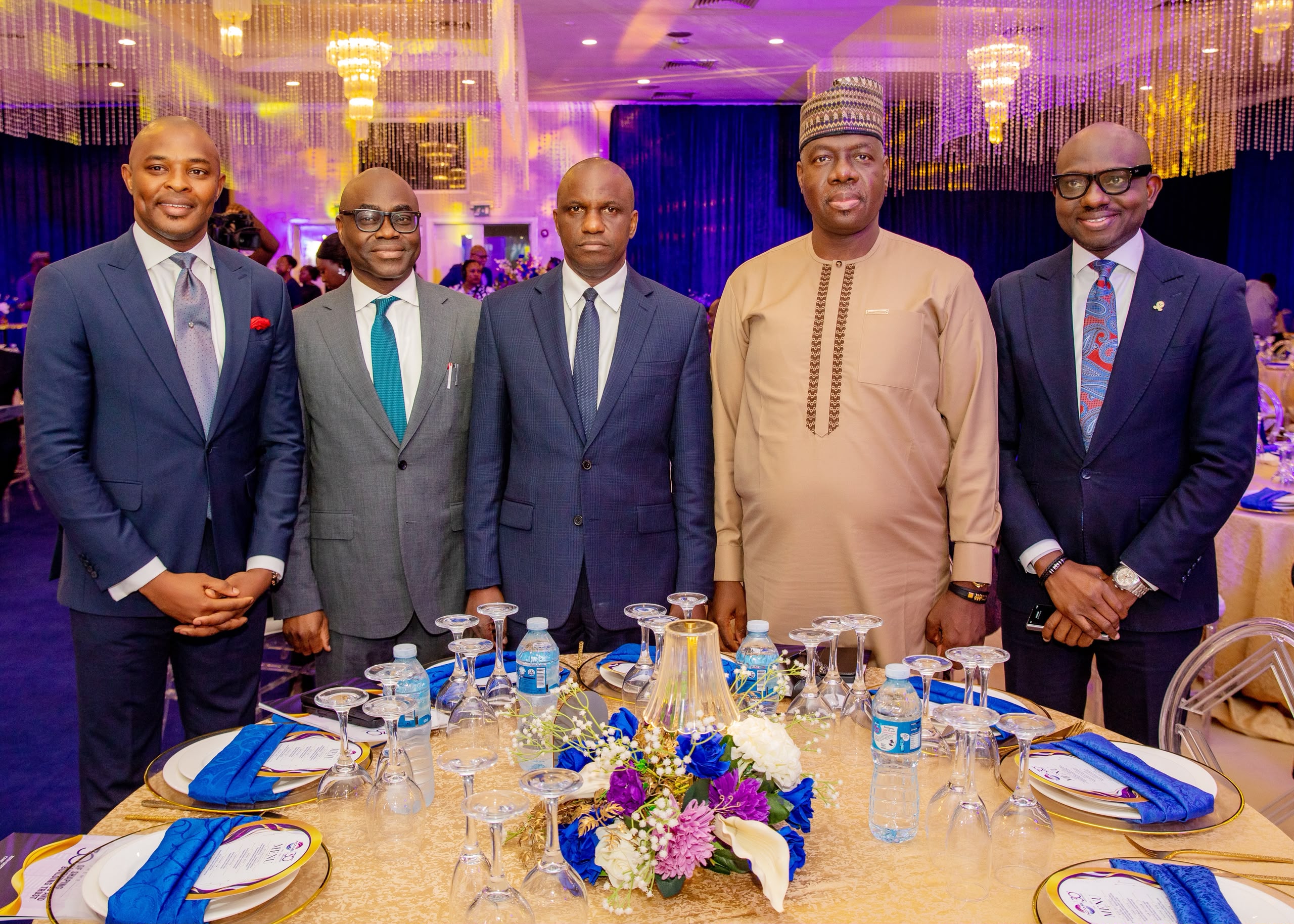
Association of Corporate Communication and Marketing Professionals in Banks (ACAMB) has marked 30 years of shaping narratives and building trust in Nigeria’s banking industry, with regulators and industry leaders calling on communication professionals to make credibility, clarity, Innovation and ethical conduct central to the future of financial services.
The association celebrated the milestone at an anniversary gala night in Lagos on September 30, 2026, bringing together, senior officials of the Central Bank of Nigeria (CBN), the Chartered Institute of Bankers of Nigeria (CIBN), the Nigeria Inter-Bank Settlement System (NIBSS), United Bank for Africa (UBA), Optimus Bank and industry leaders alongside communication and marketing heads, from banks across the country.
Speaking at the event, President of ACAMB, Jide Sipe, said, over three decades, the association has played and continued to play a critical role in helping banks communicate with the public, manage crises and protect institutional reputation.
“For 30 years, our members have stood between the banks and the public they serve. They explain policy, manage crises and protect reputations, often under intense pressure and in real time,” Sipe said.
“We have remained consistent, from gatekeepers to strategic drivers in actualising growth, positive brand perception, aligning business values to customer needs, customer satisfaction and loyalty”
All this have to great extent catalysed the growth trajectory of the financial sector and to that, we feel a sense of pride, worthy of celebration,
He said the association would continue to strengthen the capacity of its members as the communications profession evolves, with greater focus on artificial intelligence, data and digital media, as well as mentorship for young professionals entering the industry.
“Though the tools have changed since 1996, but the mandate remains same. We continue to earn trust, one credible message at a time, and we will guard it with the same discipline for the next 30 years and beyond,” he added.
While giving his address, Chairman of the occasion and 24th President of CIBN, Dele Alabi, described ACAMB’s 30-year journey as a testament to perseverance, professionalism and one that made far reaching impact the financial services industry should be proud of.
Alabi, who also commended Sipe’s leadership and recalled their years together at Ecobank Group, said ACAMB had helped strengthen communication, reputation and trust across the banking sector.
“Thirty years of shaping narratives and building trust reflects ACAMB’s critical role in strengthening communication, enhancing reputation and fostering trust across the financial services industry,” he said.
He urged communication professionals to embrace innovation without compromising ethics, in line with the CIBN’s IMPACT vision, which is built around inclusion, membership, professionalism and ethical conduct, accountability, competences & skills, and technology.
Representing the Deputy Governor of the CBN, Philip Ikeazor, the Acting Director, Corporate Communications and Investor Relations, Hakama Sidi Ali, said the banking industry was moving beyond stabilisation towards broader institutional transformation.
She challenged communication professionals to prioritise clarity over cleverness and to view customers as the ultimate test of the effectiveness and credibility of their communication.
“The credibility you carry into a crisis is built in quiet periods,” she said.
Delivering the keynote address, Managing Director/Chief Executive Officer of NIBSS, Premier Oiwoh, said the growth of digital banking had made trust even more critical, as financial services increasingly moved to mobile and digital platforms.
He noted that NIBSS had built Africa’s first mature instant payment system 15 years ago, adding that the evolution of digital banking had made trust a fundamental requirement for the continued growth of the financial system.
“Banking is all about trust. Without trust, banking cannot stand,” Oiwoh said.
Delivering a goodwill message on behalf of the Group Managing Director/CEO of UBA, Oliver Alawuba, the bank’s Group Head, Marketing and Corporate Communications, Alero Ladipo, commended ACAMB for creating a platform that brings communication professionals together across competing institutions.
“Thirty years is more than a milestone. It is evidence of relevance, resilience and the ability to evolve,” Ladipo said.
She noted that while banks compete in the market, communication professionals have a shared responsibility to strengthen confidence in the banking industry and maintain public trust in the financial system.
“Competition may separate us in the market, but there are moments when the industry must speak with a shared sense of responsibility,” she added.
Managing Director/CEO, Optimus Bank, Ademola Odeyemi, also commended ACAMB for it’s yeoman contributions over the years and shared vision, it has continued to effectively articulate on behalf of the banks, a feat that has helped the financial sector thrive collectively.
The anniversary celebration also featured networking sessions and recognition of professionals who have contributed to the growth of banking communication in Nigeria over the past three decades.


