
Personality in Focus
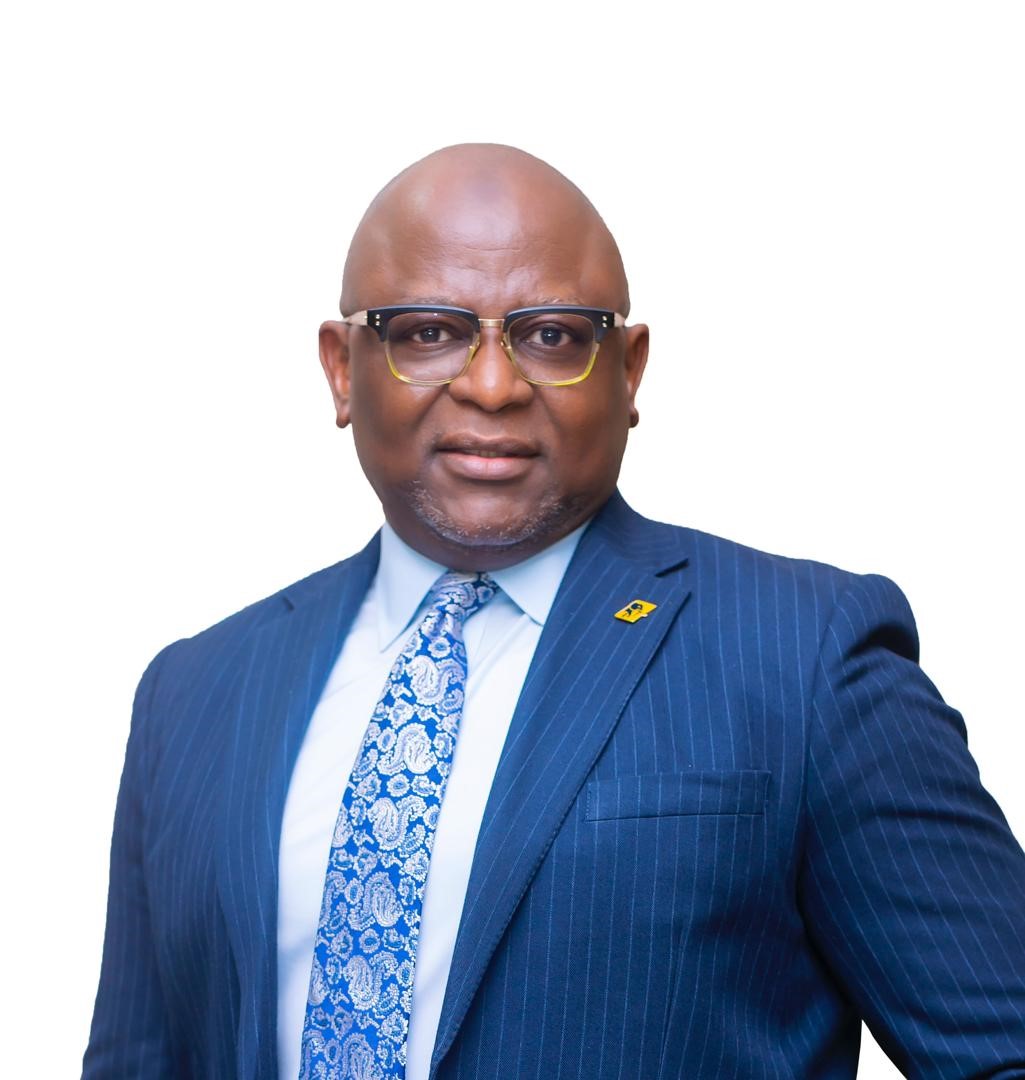
Adeduntan Sustains Winning Streak, Pioneers Leadership Excellence in Banking

- /home/rhoncare/pointblank.ng/wp-content/plugins/mvp-social-buttons/mvp-social-buttons.php on line 27
https://pointblank.ng/wp-content/uploads/2020/03/Dr.-Adesola-Adeduntan-FirstBank-CEO-1000x600.jpg&description=Adeduntan Sustains Winning Streak, Pioneers Leadership Excellence in Banking', 'pinterestShare', 'width=750,height=350'); return false;" title="Pin This Post">
- Share
- Tweet /home/rhoncare/pointblank.ng/wp-content/plugins/mvp-social-buttons/mvp-social-buttons.php on line 69
https://pointblank.ng/wp-content/uploads/2020/03/Dr.-Adesola-Adeduntan-FirstBank-CEO-1000x600.jpg&description=Adeduntan Sustains Winning Streak, Pioneers Leadership Excellence in Banking', 'pinterestShare', 'width=750,height=350'); return false;" title="Pin This Post">
Since his appointment as MD/CEO of First Bank of Nigeria Limited in 2016, Dr. Adesola Adeduntan has completely transformed the financial institution and has made it attractive to every strata of the society. From an institution that used to be perceived as an old-generation bank, FirstBank is now a darling to all as it leverages latest digital tools to meet its customers’ needs. Also, under Adeduntan’s leadership, the 128-year old bank has made huge contributions to national development, thereby stimulating development, setting standards and motivating excellent output across sectors. Clearly, these contributions to national development were what endeared Adeduntan to President Muhammadu Buhari who recently saluted him on his recognition by Cranfield University, UK, one of the most prestigious citadels of learning in Europe. Adeduntan will on Wednesday, June 22, be conferred with Doctor of Science, Honoris Causa and he would be delivering an address to the graduating class of the university. This feat, the president in a statement by his Special Adviser (Media and Publicity), Femi Adesina, described as, “another testament to the fact that Nigeria is blessed with the brightest and the best in all areas of human endeavor.” Buhari lauded Adeduntan for being a role model to the younger generation, showing that hard work pays, and with resourcefulness and doggedness, great heights are achievable.
Adeduntan holds a Doctor of Veterinary Medicine from the University of Ibadan, Master’s in Business Administration from Cranfield University, and is Fellow of Institute of Chartered Accountants of Nigeria (ICAN), as well as Chartered Institute of Bankers of Nigeria (CIBN).
The president sent best wishes to Adeduntan and family as he hoisted Nigeria’s flag proudly to receive an honor Cranfield University said was in recognition of his outstanding contribution to business. Incidentally, Buhari’s commendation came on the day the bank successfully held its AGM which showed a stellar performance in its financials, a transformational result that put the bank on course to reclaiming its leadership position of the financial sector.
Adeduntan has a distinguished career in finance having held senior positions at Citibank Nigeria, KPMG and Arthur Andersen Nigeria. He studied at Cranfield University as a British Chevening Scholar, achieving an MBA in 2005.
Commenting on the honour by Cranfield University, the FirstBank boss said: “I am extremely humbled and most grateful to the university for this recognition. My time at Cranfield served as a catalyst for my professional and personal development propelling me to the leadership position I occupy today.
“I am a firm believer in talent management, being vital to further accelerate Africa’s growth to enable it to benefit from its demographic dividend and the opportunities therein. I look forward to sharing my experiences with the students on the universal applicability of the skills the Cranfield MBA provides to positively impact the world.”
On his part, the Chief Executive and Vice-Chancellor of Cranfield University, Professor Karen Holford CBE FREng also congratulated Adeduntan, saying: “It is an honour to welcome Dr Adeduntan back to Cranfield to recognise all his professional achievements in this way. His own experience at Cranfield University has propelled his career forward and this serves as a true inspiration for our graduates both this year and in the future.”
Indeed, Adeduntan is an accomplished professional with distinctive international and domestic experience in commercial and investment banking, development finance, audit, and consulting; a philanthropist and leader with keen interest in providing platforms for the development of other young leaders.
The FirstBank Group, the commercial banking arm of FBN Holdings Plc, which he heads is made up of First Bank of Nigeria and subsidiaries including FBNBank UK, FBNBank DRC, FBNBank Ghana, FBNBank Senegal, FBNBank Guinea, FBNBank Gambia, FBNBank Sierra Leone and First Pension Custodian as well as Representative Offices in France and China.
Adeduntan is overseeing one of the most extensive transformation programmes in sub-Saharan African financial services industry, with the goal to reposition FirstBank Group to market pre-eminence.
He is leading FirstBank Group on the journey to win the most significant emerging business opportunities in the financial services industry through the development and execution of a digital-led strategy that has established FirstBank as the dominant player in digital banking.
FirstBank Group’s transformation programme, under the leadership of Adeduntan has enabled the bank to grow customer accounts from about 10 million in 2015 to over 36 million (including digital wallets), become the second largest issuer of cards in Africa with over 11.8 million issued cards, onboard over 18.6 million active customers on FirstBank’s digital banking platforms, and initiate and grow the most expansive bank-led Agent Banking Network in Africa with over 170,000 agents.
His career in banking and finance, spanning almost three decades, has earned him various recognitions and awards including Forbes Best of Africa – Outstanding Leader in Africa, Distinguished Alumnus Award by both the Cranfield University’s School of Management and the University of Ibadan, African Banking Personality of the Year, African Banker of the Year Award; Banking Icon of the Decade by the Sun Newspapers and induction into the African Leadership Magazine (ALM) Hall of Fame, Honorary Citizenship of the State of Georgia and Congressional Commendation Award from the Georgia Senate – USA, Bank CEO of the Year by the AES Excellence Club and several other awards.
He has attended various executive and leadership programmes at Harvard Business School (USA), Wharton School (USA), London Business School (UK), IESE (Spain), University of Oxford (UK), University of Cambridge (UK), CEIBS (China) and INSEAD (France). He is a fellow of both the Institute of Chartered Accountants of Nigeria (ICAN) and the Chartered Institute of Bankers of Nigeria (CIBN).
Adeduntan’s leadership drive also reflected in First Bank Nigeria Limited’s recently released full year 2021 financial statement. The results clearly showed the strength and resilience of the iconic African elephant as well as the financial institution’s leadership in the industry. The impressive results were a reflection of the robust strength and growth of the iconic African elephant, showing that the bank has taken its rightful position among the industry leaders.
In addition, it showed the level of work the current board, management and staff of the bank have put in to turn the tide in the 128 years old institution with entrenched corporate governance.
The full year 2021 performance by the bank represented a shift in the financial institution’s performance trajectory and was made possible through its undeterred commitment in pursuing its transformational agenda; cutting across customer-led innovation, building a digitalised bank, culture change, reinventing the bank’s workplace and safeguarding its assets for the digital age.
For the first time, FirstBank Group posted the best result in more than a decade history of the bank by crossing the N100 billion profit line. Specifically, in the full year 2021 financial statement, the FirstBank Group reported a 73.9 per cent growth in its profit after tax to N117.8 billion, as against the N67.8 billion recorded as of December 2020, just as its profit before tax stood at N130.9 billion, which was a significant rise by 77.9 per cent year-on-year, as against the N73.6 billion it was as of December 2020.
FirstBank’s gross earnings also increased by 30.3 per cent to N716.8 billion in 2021, up from N550.3 billion it was as of December 2020. Also, it recorded non-interest income of N342.2 billion in the year under review, which was 106.4 per cent higher than the N165.8 billion recorded as of December 2020. As a result of years of strategic restructuring of its balance sheet and operations, its gross earnings also moved northwards by 30.3 per cent, its total assets was up 15.9 per cent to N8.5 trillion as of the end of 2021, as against the N7.4 trillion recorded the previous year, just as its customer deposits also climbed by 19.5 per cent to N5.6 trillion, up from the N4.7 trillion recorded the previous year. The bank’s customer loans and advances also improved by 28 per cent to N2.8 trillion in the year under review, up from N2.2 trillion the previous year.
FirstBank has shown innovation, resilience and commitment to growth by significantly reducing its non-performing loans (NPL) from 25% in 2016 to an acceptable level of 6.1% in 2021.
To demonstrate that the bank’s performance in 2021 was not a fluke, the Bank equally performed excellently well in Q1 2022. FirstBank recorded 32% increase in gross earnings to N180bn in Q1’22 from N136.6bn in Q1’21. Profit after tax was up 108% to N32.4 billion (Q1’22) relative to N15.6 billion (Q1’21). This impressive performance is hinged on robust loan portfolio, effective cost structure and increased digital services.FirstBank recorded the highest decline in its cost-to-income ratio in Q1 2022, dropping from 79.5% recorded in Q1 2021 to 67.03% amongst tier-1 Banks in the review period.
With FirstBank under Adeduntan, the safety of customers and the security of their transactions come first. This has ensured the bank keeps the trust of Nigerians gained over the many years of its enduring legacy of safety and security.
The bank also delivers unique and bespoke financial services solutions across all customer segments underpinned by its commitment to innovation and the customer experience. It also leverages its strong investment banking capabilities to support clients in defining and executing innovative debt solutions as well as offer strategic advice at the highest level, arrange tailor-made financing structures, manage risk and ultimately help clients to realise their aspirations
Since its establishment in 1894, FirstBank has consistently built relationships with customers focusing on the fundamentals of good corporate governance, strong liquidity, optimised risk management and leadership.
Over the years, the bank has led the financing of private investment in infrastructure development in the Nigerian economy by playing key roles in the federal government’s privatisation and commercialisation schemes. With its global reach, FirstBank provides prospective investors wishing to explore the vast business opportunities that are available in Nigeria, an internationally competitive world-class brand and a credible financial partner. It is expected that the leadership excellence and recognitions accorded to Adeduntan would continue to reflect positively on the FirstBank brand and fundamentals of the bank so that the elephant will continue to stand ‘gidigba.’
Culled from ThisDay


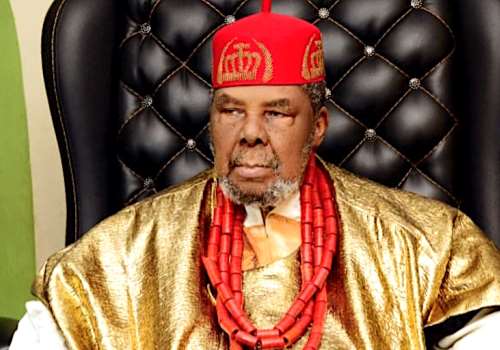
Veteran Nollywood actor, Pete Edochie has declared Chinua Achebe’s 1958 novel ‘Things Fall Apart’ as the greatest African book of all-time.
Speaking in a recent interview with TV3, Edochie explained that ‘Things Fall Apart’ is the greatest African book ever written because it tells the African story.
He stated that the book wouldn’t have been as popular as it is if it were telling the story of the colonisers.
He pointed out that many other African authors have also made efforts in telling African stories since ‘Things Fall Apart’ but none is as “strong” as it.
“The reason why ‘Things Fall Apart’ is the greatest book ever written on the African continent is because it is telling our own story.
“If it had been telling the story of the White man, it won’t be that popular. Many others have made efforts since then but not as strong as ‘Things Fall Apart’,” he said.
He urged African writers and creatives to focus on telling African stories, stressing that it would be their unique strength on the global stage.
The movie star, however, lamented that Africans were allowing their talents to be submerged by embracing foreign influences.
“We Africans permitted our talents to be submerged by overseas influences. I remember once upon a time I was being called Elvis Presley and John Wayne.
“I actually enjoyed answering those names but at some point I had to discard them and pick a name that’s culturally relevant to me. Then I went back to the root and started answering Uwadiegwu,” he added.
Source: DailyPost
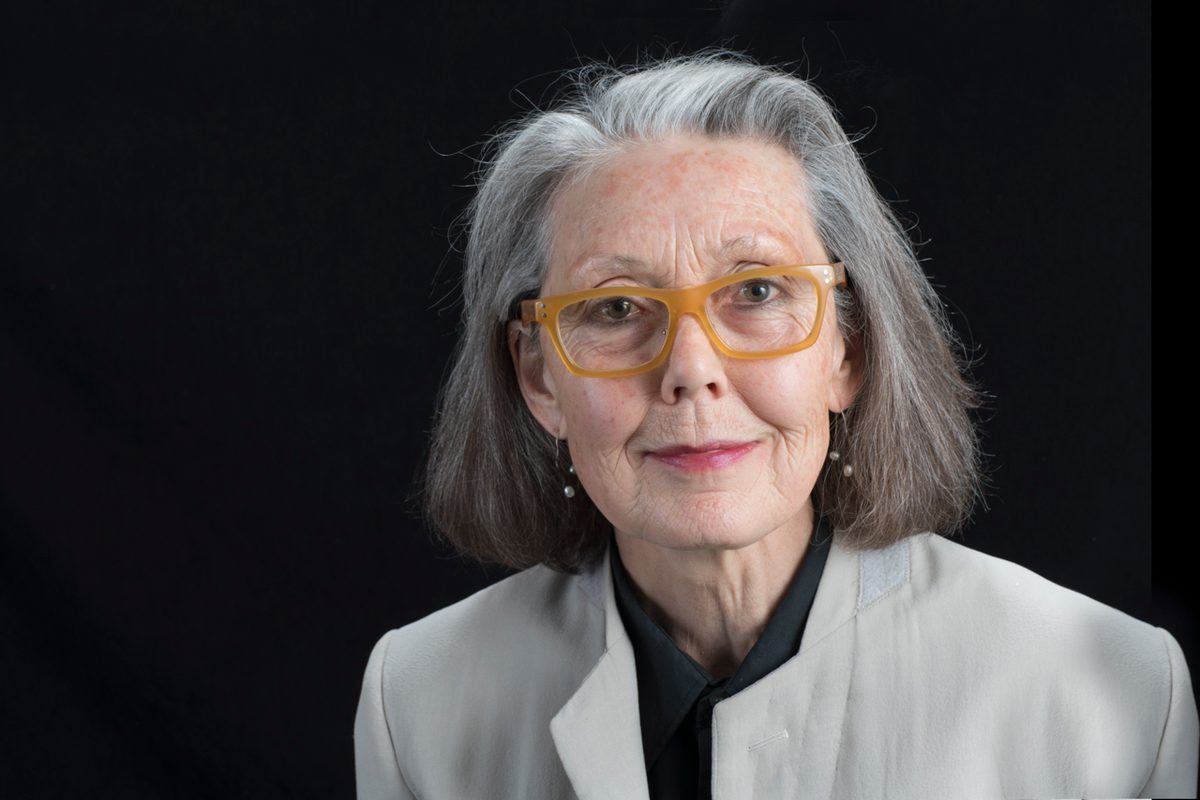
Canadian poet, essayist and translator Anne Carson has been awarded the 2026 Nobel Prize in Literature for her inventive writing and her engagement with the classical tradition. Her work brings together poetry, criticism, translation and narrative, expanding the forms through which contemporary literature can tell stories.
Born in Toronto in 1950, Carson trained as a classicist and has combined writing with university teaching and translation throughout her career. Her interest in the origins and meanings of words informs both her scholarship and her poetry. Ancient texts provide material for her explorations of desire, grief, identity and human relationships.
Her translations include If Not, Winter (2002), a rendering of Sappho’s surviving poetry that preserves the gaps between fragments. She has also translated plays by Sophocles and Euripides, bringing the language and conflicts of Greek tragedy into contemporary expression.
Carson’s writing gained increasing recognition during the 1990s. “The Glass Essay,” published in Glass, Irony, and God (1995), combines the experience of a relationship’s end with reflections on Emily Brontë, family life and solitude. Its movement between personal narrative and literary interpretation demonstrates her freedom in working across genres.
Autobiography of Red: A Novel in Verse (1998) remains among her most celebrated works. Drawing on fragments by the ancient Greek poet Stesichoros, Carson reimagines the winged red monster Geryon as a young person discovering photography, desire and heartbreak. The book places his experiences at the centre of a story traditionally associated with the exploits of Herakles.
Her later publications continue this experimentation. Float (2016) consists of twenty-two chapbooks that readers can approach in any order. Wrong Norma (2024) brings together varied prose pieces, extending her interest in the possibilities of short, loosely connected forms.
Carson has also collaborated with visual artists, choreographers and theatre and opera directors. These projects carry her writing into performance and establish connections between literature and other arts.
The award recognises a career devoted to close attention to language and continual experimentation with form. Through translation, poetry and collaboration, Carson has made classical literature an active part of contemporary writing.
Souce:Classic Books.
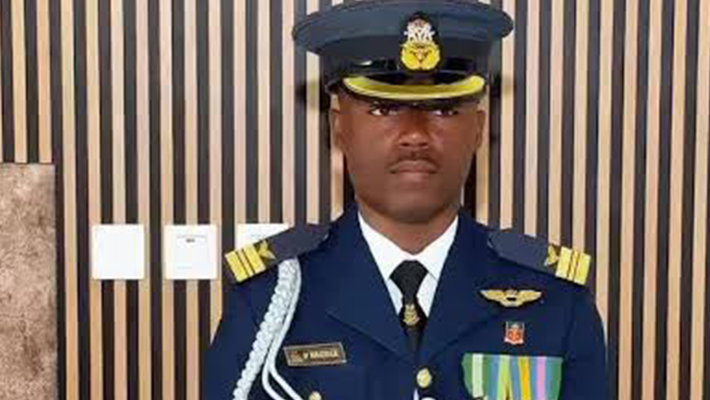
Abia State governor, Alex Otti, and Senator representing Abia North, Orji Uzor Kalu, have expressed sadness over the death of Abia-born Squadron Leader Ahamefule Aham Man-Ugwueje, one of the pilots of the Nigerian Air Force ATR-42 aircraft, NAF 931, which crashed in Igbokoda, Ondo State, on Monday.
Governor Otti, in a statement by his Special Adviser on Media and Publicity, Ferdinand Ekeoma, described Squadron Leader Man-Ugwueje’s death and those of other military personnel aboard the Nigerian Air Force plane as painful and devastating.
“This accident is both painful and devastating, because it has brought untold sorrow and anguish to the victims’ families, their friends and loved ones, the Nigerian Air Force, and the nation at large.”
Governor Otti regretted that Squadron Leader Man-Ugwueje perished in the air disaster barely two weeks after he wedded his beloved wife, Flight Lieutenant Damilola Adekunle, in Abuja, a sad development he said has robbed the couple of the opportunity of spending their lives together as husband and wife.
The governor, on behalf of his family, the government and people of Abia State, commiserated with the families of the victims, the people of Umuahia where Squadron Leader Man-Ugwueje hailed from, the Nigerian Air Force and the Federal Government of Nigeria, and prays for the peaceful repose of their souls in God’s bosom.
In his own message, Senator Kalu commiserated with the Nigerian Air Force over the loss of the Air Force personnel and others in the Ondo plane crash.
The former governor of Abia State, while expressing sadness over the loss, extended his heartfelt sympathy to the Chief of the Air Staff, Air Marshal Sunday Kelvin Aneke, the entire Nigerian Air Force and the families of those who lost their lives in the tragic incident.Describing the incident as painful and heartbreaking, Kalu said the death of personnel who devoted themselves to the service of the country is a huge loss to the Nigerian Air Force and the nation.
“I extend my heartfelt sympathy to the Chief of the Air Staff, Air Marshal Sunday Kelvin Aneke, and the entire Nigerian Air Force over this painful loss.
“My thoughts and prayers are especially with the families who have lost their loved ones. Losing men and women who dedicated themselves to serving and protecting our country is indeed a tragedy for all Nigerians.
“At this difficult moment, I pray that God comforts their families, colleagues and loved ones, and gives them the strength to bear this irreparable loss.
“May the souls of the departed rest in peace,” Kalu said.
He urged the Nigerian Air Force to remain strong in the face of the tragedy, noting that the sacrifices of its personnel in the service of the country would always be remembered.


