
Headlines
Adoke Gives Malami Seven Days Ultimatum to Withdraw False Evidence, Tender Public Apology

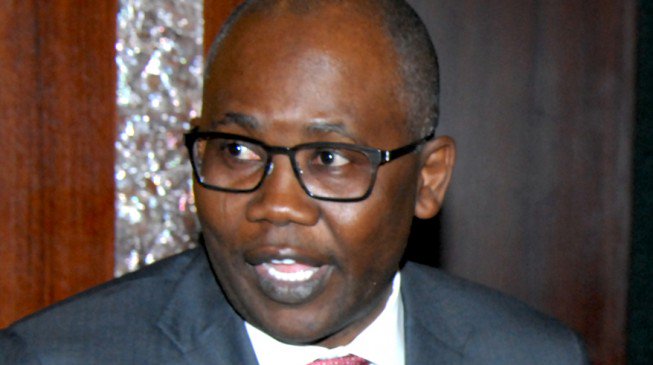
A former Nigerian attorney-general and Minister of Justice, Bello Adoke, has given the Attorney-General of the Federation and Minister of Justice, Abubakar Malami, seven days ultimatum to retract alleged defamatory statements made against him.
Mr Adoke issued the ultimatum on Wednesday through his lawyers led by Paul Erokoro, aSenior Advocate of Nigeria.
The alleged defamatory statements were made at the ongoing hearing of the Process and Industrial Development (P&ID) arbitration case in England.
Mr Adoke also asked Mr Malami to tender a public apology for making statements which he knew to be untrue and defamatory against his person.
Mr Erokoro said Mr Malami’s statements were not true and have negatively affected Mr Adoke’s image because the court proceedings were on live television in Nigeria and on social media around the world.
In the statement, Mr Malami had accused Mr Adoke of having a hand in the failed P&ID agreement, receiving kickback from the deal through former petroleum minister, Dan Etete, and also single-handedly selecting a legal team to represent Nigeria at the arbitration.
“Our client is astounded by your failure to inform the English court that under Nigerian law, any person charged with or accused of a crime MUST be presumed innocent until proven guilty,” the letter said.
“Rather, you pronounced our client guilty, even when you were fully aware that his trial had not even commenced. The Attorney-General’s oath of office includes an undertaking to protect and defend the Nigerian Constitution.
“The constitutional right to fair trial is severely breached when the Attorney-General of the Federal Republic of Nigeria urges the court of a foreign jurisdiction to regard and even pronounce a Nigerian guilty of an offence without a trial. It was your unfortunate and wrongful pronouncement of guilt on our client that emboldened the FRN’s counsel in England to tell the whole world that our client is corrupt.
“This has done incalculable harm to our client’s name, reputation and standing in society. Our client will suffer even more harm if the English Court, misled by your evidence, makes an adverse finding against our client. It is for this, among other reasons that the first duty of the Attorney-General and indeed all counsel, is to the Court,” the letter read in part.
Mr Adoke noted that he became Attorney-General of the Federation on April 6, 2010, while the negotiations for the gas project had been on from 2009, adding that he only became aware of the P&ID matter when the Ministry of Petroleum Resources requested in 2013 that he appoint an arbitrator as well as counsel.
The letter reads in part: “Our client finds it remarkable that you found no fault in the appointment of the arbitrator but found fault with the appointment of counsel, even though the two appointments followed the same process. For this reason, our client is forced to conclude that your vilification of his name is merely a case of giving the dog a bad name in order to hang it.
“Our client asserts that even though he appointed Mr. Shasore as counsel, Mr. Shasore’s legal fees were paid by the administration of President Buhari, long after our client had left office, a fact well known to you.
“It is also on record that our client was not involved in any of the negotiations with P&ID for settlement, which all took place under your watch. The initial proposal for settlement was delivered to President Jonathan. The President referred the matter to our client for his advice. Our client advised the President to leave the matter to the in-coming administration, since the President’s tenure was ending in 8 days.
“You also conceal these facts from the court even though the records have been in your office all along. If our client had been part of any corrupt scheme with P&ID as you claimed in your evidence, surely our client would have jumped at the chance to give P&ID a favourable settlement.”
Mr Adoke argued that the final award was issued in July 2015, months after he had left office.
“Your evidence was therefore unfair and uncharitable to our client because you are aware that all the attempts at settlement with P&ID took place under your tenure as Attorney-General, a fact you freely admitted in your witness statements,” he added.
Mr Adoke argued further that when the government requested information from some banks in the United States Government on all bank accounts owned by former President Goodluck Jonathan and others, it was discovered that he has no foreign account.
He, therefore, called on the minister within the next seven days on receipt of his letter to take necessary steps to correct the misleading and false statements against him.
“Our client demands that you retract the false evidence that you gave to the English Court, regarding him and apologise for the harm done to his name,” he said.
Premium Times


President Bola Tinubu has assured Nigerians that 2026 will be a more prosperous year for all.
Tinubu stated this in his New Year message on Thursday, adding that his administration would sustain the momentum on its major reforms.
“During 2025, we sustained the momentum on our major reforms. We had a fiscal reset and also recorded steady economic progress.
“Despite persistent global economic headwinds, we recorded tangible and measurable gains, particularly in the economy.
“These achievements reaffirm our belief that the difficult but necessary reforms we embarked upon are moving us in the right direction with more concrete results on the horizon for the ordinary Nigerian,” the President said in the statement he personally signed.
Consolidating gains
Tinubu said that the focus in 2026 would be on consolidating the gains and continuing to build a resilient, sustainable, inclusive, and growth-oriented economy.
According to him, Nigeria closed 2025 on a strong note, as despite the policies to fight inflation, it recorded a robust GDP growth each quarter, with annualised growth expected to exceed four per cent for the year.
Tinubu explained that the nation maintained trade surpluses and achieved greater exchange rate stability while inflation declined steadily and reached below 15 per cent, in line with his administration’s target.
“In 2026, we are determined to reduce inflation further and ensure that the benefits of reform reach every Nigerian household. In 2025, the Nigerian Stock Exchange outperformed its peers, posting a robust 48.12 per cent gain and consolidating its bullish run that began in the second half of 2023.
“Supported by sound monetary policy management, our foreign reserves stood at $45.4 billion as of December 29, 2025, providing a substantial buffer against external shocks for the Naira. We expect this position to strengthen further in the New Year,” he said.
“Foreign direct investment is also responding positively. In the third quarter of 2025, FDI rose to $720 million, up from $90 million in the preceding quarter, reflecting renewed investor confidence in Nigeria’s economic direction, which global credit rating agencies, including Moody’s, Fitch, and Standard & Poor’s, have consistently affirmed and applauded,” Tinubu added.
Tax reforms
The President further assured that with patience, fiscal discipline, and unity of purpose, Nigeria would emerge in 2026 stronger and better positioned for sustained growth.
According to him, as inflation and interest rates moderate, his administration expects increased fiscal space for productive investment in infrastructure and human capital development.
“We are also confronting the challenge of multiple taxation across all tiers of government. I commend states that have aligned with the national tax harmonisation agenda by adopting harmonised tax laws to reduce the excessive burden of taxes, levies, and fees on our people and on basic consumption.
“The new year marks a critical phase in implementing our tax reforms, designed to build a fair, competitive, and robust fiscal foundation for Nigeria.
“By harmonising our tax system, we aim to raise revenue sustainably, address fiscal distortions and strengthen our capacity to finance infrastructure and social investments that will deliver shared prosperity,” he added.
National security
Tinubu said that though the path of reform is never easy, his administration remains mindful that economic progress must be accompanied by security and peace.
“Our nation continues to confront security threats from criminal and terrorist elements determined to disrupt our way of life. In collaboration with international partners, including the United States, decisive actions were taken against terrorist targets in parts of the Northwest on December 24.
“Our Armed Forces have since sustained operations against terror networks and criminal strongholds across the Northwest and Northeast,” he said.
But the President stated that in 2026, Nigeria’s security and intelligence agencies would deepen cooperation with regional and global partners to eliminate all threats to national security.
“We remain committed to protecting lives, property, and the territorial integrity of our country.
“I continue to believe that a decentralised policing system with appropriate safeguards, complemented by properly regulated forest guards, all anchored on accountability, is critical to effectively addressing terrorism, banditry, and related security challenges,” he added.
Investments in infrastructure
The New Year marks the beginning of a more robust phase of economic growth, with tangible improvements in the lives of our people.
Tinubu also said that his government would accelerate the implementation of the Renewed Hope Ward Development Programme, aiming to bring at least 10 million Nigerians into productive economic activity by empowering at least 1,000 people in each of the 8,809 wards across the country.
“Through agriculture, trade, food processing, and mining, we will stimulate local economies and expand grassroots opportunities.
“We will also continue to invest in modernising Nigeria’s infrastructure – roads, power, ports, railways, airports, pipelines, healthcare, education, and agriculture to strengthen food security and improve quality of life. All ongoing projects will continue without interruption,” he said.
He, however, urged Nigerians to play their part to achieve the objectives in 2026 by standing together in unity and purpose, upholding patriotism, and serving the country with honour and integrity in their respective roles.
Let us resolve to be better citizens, better neighbours, and better stewards of our nation.
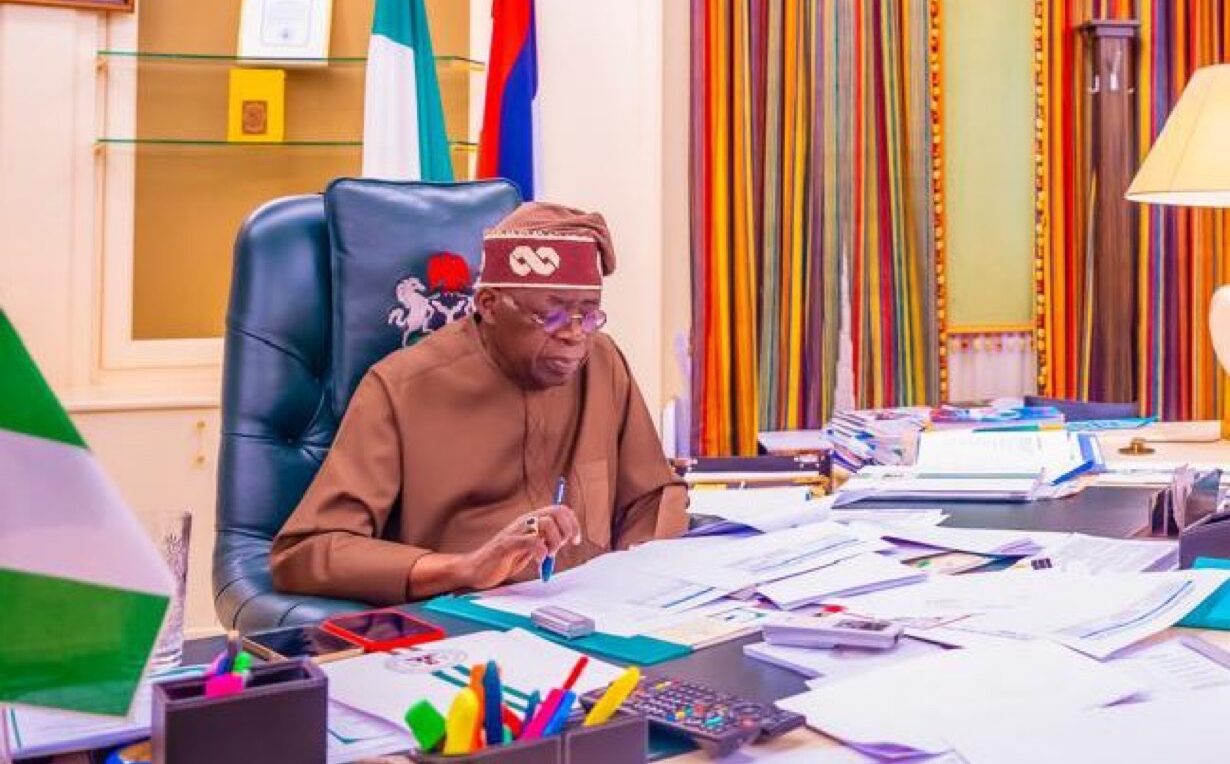
An Abuja High Court has cleared the way for the implementation of Nigeria’s new tax regime scheduled to commence on January 1, 2026, dismissing a suit seeking to halt the programme.
The ruling gives the Federal government, the Federal Inland Revenue Service (FIRS) and the National Assembly full legal backing to proceed with the take-off of the new tax laws.
The suit was filed by the Incorporated Trustees of African Initiative for Abuse of Public Trustees, which dragged the Federal Republic of Nigeria, the President, the Attorney-General of the Federation, the President of the Senate, Speaker of the House of Representatives and the National Assembly before the court over alleged discrepancies in the recently enacted tax laws.
In an ex-parte motion, the plaintiff sought an interim injunction restraining the Federal Government, FIRS, the National Assembly and related agencies from implementing or enforcing the provisions of the Nigeria Tax Act, 2025; Nigeria Tax Administration Act, 2025; Nigeria Revenue Service (Establishment) Act, 2025; and the Joint Revenue Board of Nigeria (Establishment) Act, 2025, pending the determination of the substantive suit.
The group also asked the court to restrain the President from implementing the laws in any part of the federation pending the hearing of its motion on notice.
However, in a ruling delivered on Tuesday, Justice Kawu struck out the application, holding that it lacked merit and failed to establish sufficient legal grounds to warrant the grant of the reliefs sought.
The court ruled that the plaintiffs did not demonstrate how the implementation of the new tax laws would occasion irreparable harm or violate any provision of the Constitution, stressing that matters of fiscal policy and economic reforms fall squarely within the powers of government.
Justice Kawu further held that once a law has been duly enacted and gazetted, any alleged errors or controversies can only be addressed through legislative amendment or a substantive court order, noting that disagreements over tax laws cannot stop the implementation of an existing law.
Consequently, the court affirmed that there was no legal impediment to the commencement of the new tax regime and directed that implementation should proceed as scheduled from January 1, 2026.
The new tax regime is anchored on four landmark tax reform bills signed into law in 2025 as part of the Federal Government’s broader fiscal and economic reform agenda aimed at boosting revenue, simplifying the tax system and reducing leakages.
The laws — the Nigeria Tax Act, 2025, Nigeria Tax Administration Act, 2025, Nigeria Revenue Service (Establishment) Act, 2025, and the Joint Revenue Board of Nigeria (Establishment) Act, 2025 — consolidate and replace several existing tax statutes, including laws governing companies income tax, personal income tax, value added tax, capital gains tax and stamp duties.
Key elements of the reforms include the harmonisation of multiple taxes into a more streamlined framework, expansion of the tax base, protection for low-income earners and small businesses, and the introduction of modern, technology-driven tax administration systems such as digital filing and electronic compliance monitoring.
The reforms also provide for the restructuring of federal tax administration, including the creation of the Nigeria Revenue Service, to strengthen efficiency, coordination and revenue collection across government levels.
While the Federal government has described the reforms as critical to stabilising public finances and funding infrastructure and social services, the laws have generated intense public debate, with some civil society groups and political actors alleging discrepancies between the versions passed by the National Assembly and those later gazetted.
These concerns sparked calls for suspension, re-gazetting and legal action, culminating in the suit dismissed by the Abuja High Court.
Reacting to the judgment, stakeholders described the ruling as a major boost for the reforms, saying it has removed all legal obstacles that could have delayed the implementation of the new tax framework.
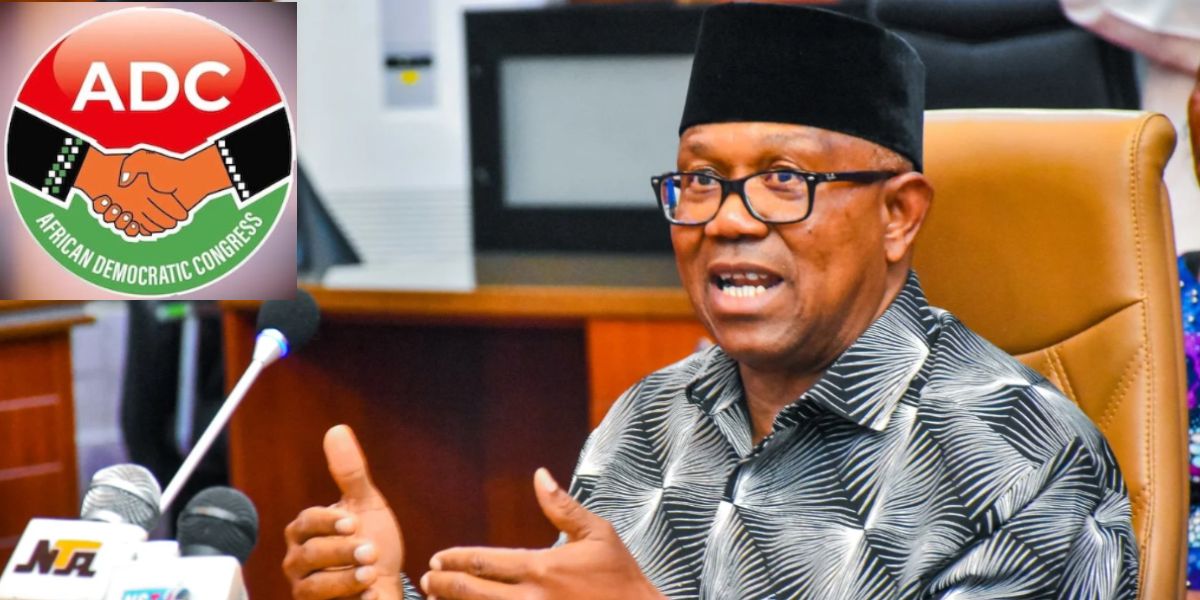
Former governor of Anambra State, presidential candidate of the Labour Party (LP) in the 2023 election, Mr. Peter Obi, has officially defected to the coalition-backed African Democratic Congress (ADC).
Obi announced the decision on Tuesday at an event held at the Nike Lake Resort, Enugu.
“We are ending this year with the hope that in 2026 we will begin a rescue journey,” Obi said.
The National Chairman of the ADC, David Mark, was among the attendees.


