
Metro
Adron Homes Appoints New Executive Team, Emphasizes Commitment to Excellence

- /home/rhoncare/pointblank.ng/wp-content/plugins/mvp-social-buttons/mvp-social-buttons.php on line 27
https://pointblank.ng/wp-content/uploads/2024/11/IMG-20241116-WA0107-1000x600.jpg&description=Adron Homes Appoints New Executive Team, Emphasizes Commitment to Excellence', 'pinterestShare', 'width=750,height=350'); return false;" title="Pin This Post">
- Share
- Tweet /home/rhoncare/pointblank.ng/wp-content/plugins/mvp-social-buttons/mvp-social-buttons.php on line 69
https://pointblank.ng/wp-content/uploads/2024/11/IMG-20241116-WA0107-1000x600.jpg&description=Adron Homes Appoints New Executive Team, Emphasizes Commitment to Excellence', 'pinterestShare', 'width=750,height=350'); return false;" title="Pin This Post">
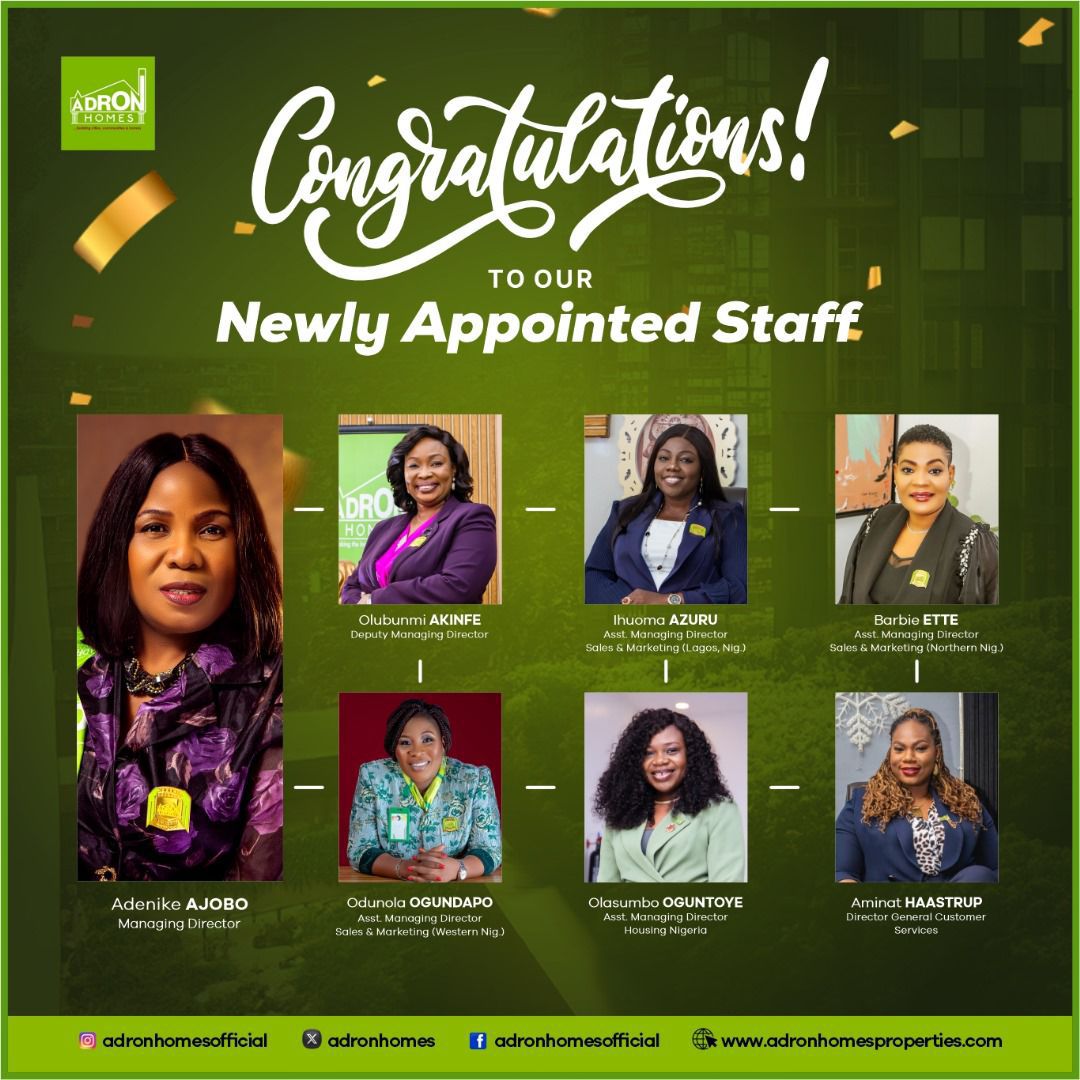
In a strategic move to foster growth and elevate the quality of service delivery, the Management of Adron Homes and Properties has announced the appointment of exceptional staff members, who have exemplified remarkable professionalism and have significantly contributed to the advancement of the Adron brand.
The newly appointed leaders are: Adenike Ajobo as Managing Director, Olubunmi Akinfe as Deputy Managing Director, Ihuoma Azuru as Assistant Managing Director of Sales and Marketing (Lagos Nigeria), Barbie Ette as Assistant Managing Director of Sales and Marketing (Northern Nigeria), Odunola Ogundapo as Assistant Managing Director of Sales and Marketing (Western Nigeria), Olasumbo Oguntoye as Assistant Managing Director of Housing Nigeria, and Haastrup as Director General of Customer Service.
Together, the team is expected to drive the company’s mission forward and ensure continued excellence at Adron Homes.
Welcoming the new directors on board, Aare Adetola Emmanuel King, the Chairman and Group Managing Director of Adron Homes, issued an important directive, emphasizing the critical need for quality delivery in all aspects of their work.
Aare King highlighted that each director must align their actions and decisions with the overarching vision and mission of the organization. He urged them to remain committed to the company’s goals and to foster a culture of excellence, ensuring that their contributions not only meet but exceed the expectations set forth by Adron Homes.
Adenike Abosede Ajobo stands out as a highly regarded authority in the fields of corporate branding, public relations, business repositioning, and organizational strategy. She holds a degree in Linguistics from the prestigious University of Ibadan and has further enhanced her expertise with an Ordinary National Diploma (OND) in Marketing from The Polytechnic of Ibadan.
Her dedication to professional growth is reflected in her memberships with esteemed organizations, including the National Institute of Marketing of Nigeria (MNIMN), the Nigerian Institute of Public Relations (NIPR), and the Nigeria Institute of Personality Development and Customer Relationship Management (NIPD-CRM-dsgnt). These affiliations illustrate her unwavering commitment to continuous learning and excellence within her industry.
Adenike’s professional journey with Adron Homes commenced in January 2024 when she took on the role of Group Company Secretary. Her exceptional leadership skills and strategic vision quickly propelled her up the ranks, and she soon became the Deputy Managing Director of Southern Nigeria. Her impressive performance has now garnered her a well-deserved promotion to the position of Managing Director at Adron Homes, where she is set to steer the company toward a promising future, leveraging her insights and experience to craft innovative strategies for growth and development.
Akinfe Olubunmi Omolara is an esteemed leader and achiever, recognized for her dedication to maximizing her potential in every role she undertakes. She is a graduate of Obafemi Awolowo University, lle-Ife, Osun State, with a Bachelor of Science degree in Microbiology. Her career journey at Adron Homes and Properties, reflects her remarkable growth and commitment to excellence. She has progressed through a range of pivotal roles, from Deputy Group Sales Manager, District Sales Manager, and Deputy District Sales Manager to Deputy Group Customer Relations Officer, Regional Chief Operating Officer, and Chief Operating Officer. Her leadership and strategic acumen continued to shine through her promotions as the Director of Sales and Marketer and later promoted as the Director General of Sales and Marketing. She has now been promoted to the position of Deputy Managing Director , where she will drive growth and operational efficiency for Adron Homes.
Ihuoma Udodirim Azuru’s journey is a testament to exceptional leadership and dedication. Her academic prowess shines through with a B.Sc in Accounting, M.Sc in Business Management, MBA in Human Resources and currently studying Law at the Leadership City University, underscoring her commitment to ongoing personal and professional development. Her career with the company began as Group Head Admin and HR, where she showcased her adaptive leadership style. Subsequently, she transitioned to the role of Director of Sales and Marketing (Southwest). Moreover, she was promoted to the prestigious role of Director General for Sales and Marketing at Adron Homes. Her exceptional leadership, dedication, and strategic vision within the organization leads to her appointment as the Assistant Managing Director Lagos Nigeria.
Odunola Ogundapo is a highly regarded sales and marketing professional, celebrated for her steadfast dedication and strategic insight, which have contributed to her impressive track record of success in the industry. She holds a Bachelor of Science degree in Geology from Olabisi Onabanjo University, where she developed a strong foundational knowledge of earth sciences. Further enhancing her expertise, she earned a Master’s degree in Sedimentary and Petroleum Geology from the prestigious University of Lagos, a program renowned for its rigorous approach and focus on the energy sector. This combination of academic credentials allows Odunola to meld deep scientific understanding with strategic business acumen, enabling her to deliver exceptional results in her professional endeavors.
Odunola embarked on her career in 2017 at Adron Homes and Properties Ltd, starting as a Business Executive. In this role, she quickly demonstrated her innate talents and passion for sales and marketing, employing a goal-driven approach that not only set her apart but also paved the way for her rapid advancement within the company. Her commitment to excellence and her ability to forge strong relationships with clients and stakeholders led to her recognition as a rising star in the organization.
Currently serving as the Assistant Managing Director, Odunola plays a pivotal role in shaping and executing innovative strategies aimed at driving growth and enhancing the company’s market position. Her forward-thinking mindset and comprehensive understanding of market dynamics allow her to identify and seize new opportunities effectively. Under her leadership, the team is not only motivated but also encouraged to think creatively and push boundaries, resulting in increased productivity and morale.
Odunola’s leadership style is characterized by a unique blend of optimism and resilience, which fosters a collaborative and inclusive work environment. She prioritizes the development of her team members, nurturing their potential and empowering them to become future leaders in the organization. This commitment to mentorship and professional growth among her staff has created a culture of excellence that thrives on teamwork and innovation, ensuring that everyone is aligned with the company’s vision and goals. Through her unwavering dedication to her work and her ability to inspire those around her, Odunola Ogundapo continues to make a significant impact in the sales and marketing realm.
Aminat Olaniyan Haastrup is an inspirational customer service specialist, deeply committed to creating exceptional service experiences. With a strong educational background in Estate Management and Customer Experience, she earned her degree from Yaba College of Technology. An Associate Member of The Association of Business Practitioners (ABP) in the UK and a fellow of the Chartered Institute of Customer Relationship Management, Aminat’s journey began as the Director of Customer Services. Renowned for her dedication to customer-centric strategies, she passionately pursues unparalleled service excellence. Through transformative initiatives across the company’s customer relations landscape, Aminat has inspired those around her and achieved her new role as the Director General of Customer Service.


The FCT Council of the Nigeria Labour Congress (NLC) has declared an indefinite strike across the Federal Capital Territory, directing workers in the public and private sectors to shut down schools, hospitals, government offices and other establishments.
The strike began on Wednesday, October 7, following the expiration of a seven-day ultimatum issued to the FCT Administration (FCTA) over the promotion of teachers.
The labour council said the FCTA failed to satisfactorily address its demands, particularly its call for the removal of the requirement for vacancies before teachers can be promoted.
The dispute centres on the FCTA’s position that teachers can only advance when vacancies are available. The NLC said the policy has contributed to years of career stagnation among teachers and is not applicable to the teaching profession.
In resolutions signed by its Chairman, Comrade Knabayi Adalo, the council argued that FCT teachers are not core civil servants or pool staff and should therefore not be subjected to a vacancy-based promotion system designed for pool officers.
It said teachers recruited by the FCT Universal Basic Education Board, UBEB, and FCT Secondary Education Board, SEB, were employed specifically to teach and should be promoted “as and when due.”
The NLC is also demanding that teachers who became eligible for promotion in 2025 be allowed to sit for their promotion examination before or alongside the 2026 candidates.
Another demand is the withdrawal of redeployment and demotion letters issued to directors who benefited from the Harmonised Retirement Age for Teachers Act, 2022.
The council is further calling for the immediate reinstatement of the dissolved management teams of FCT SEB and FCT UBEB.
The decision to commence the strike was taken at the council’s State Executive Council, SEC, meeting held on October 6, at the NLC FCT Secretariat.
At the meeting, the labour body rejected the FCTA’s response to its ultimatum, describing it as “neither clear, positive, nor genuine.”
According to the SEC, the response did not address the vacancy requirement, which it described as the “root cause of career stagnation”, and was also silent on what the council called the “illegal redeployment of directors.”
“The response of the FCTA is ambiguous and totally unacceptable,” the SEC said.
The council added that it “will no longer tolerate the continued dehumanisation of FCT teachers through obnoxious policies alien to the teaching profession.”

The 20 prospective National Youth Service Corps (NYSC) members and one other abducted along the Owerri-Onitsha Road in Imo State have regained their freedom.
The victims were rescued from the Amakohia-Ubi forest in Owerri West Local Government Area of the state following a coordinated operation involving security agencies.
They have since been taken to the Department of State Services (DSS) Hospital in Owerri, where they are receiving medical attention and undergoing necessary medical checks.
The Director-General of the National Youth Service Corps Brigadier General Olakunle Oluseye Nafiu visited the DSS Clinic in Owerri, where he addressed the rescued victims.
He was in company of the Imo State Commissioner of Police, Director DSS and Brigade Commander 34 artillery Imo State.
Details of the operation, including whether any arrests were made or ransom was paid, have not yet been made public.
However, in a statement issued by the Force Public Relations Officer, Ani Iniedu, the police said, “Efforts are ongoing to apprehend those responsible for the abduction, as the Police and other security agencies sustain coordinated operations towards bringing all culpable persons to justice.”
The victims were abducted on October 1 while travelling from Ibadan, Oyo State, to NYSC orientation camps in Abia and Akwa Ibom states.
The two buses conveying the prospective corps members came under attack near Umunoha in the Mbaitoli Local Government Area of Imo State.
Following the abduction, security agencies launched a coordinated search-and-rescue operation to locate the victims and their abductors.
The Imo State Police Command later said its operatives had located the kidnappers’ camp through drone surveillance but were unable to immediately enter the location because it was reportedly mined with improvised explosive devices (IEDs).
The police subsequently deployed additional operational assets, including bulldozers and armoured personnel carriers, as efforts intensified to reach the victims.
The development also triggered anxiety among the victims’ families after reports that the abductors were demanding ₦50 million for each victim.
Police had earlier confirmed that 10 victims were rescued following the attack, while efforts continued to locate the remaining abductees.
The latest development brings an end to the ordeal of the 20 corps members and the other abducted victim, who have now been reunited with safety and are receiving medical attention in Owerri.
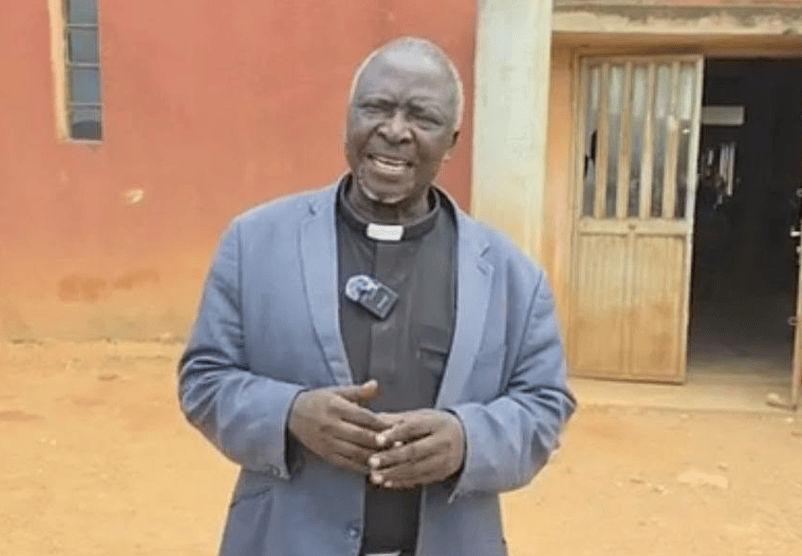
The Regional Chairman of Church of Christ in Nations (COCIN), Barkin Ladi Local Government Area of Plateau State, Rev. Ezekiel Dachomo, has denied reports that he prayed for the re-election of President Bola Tinubu and Vice President Kashim Shettima in the 2027 presidential election.
Dachomo, who is currently in Israel on what he described as his first International Christian Advocacy Tour, said his visit was aimed at drawing the attention of world leaders to the plight of Christians in Plateau.
The cleric made the clarification in a social media post on Monday night following reports that he had prayed for the success of the All Progressives Congress (APC) presidential ticket and expressed support for the Muslim-Muslim ticket.
Dachomo said his earlier post, in which he prayed for Nigeria, had been misconstrued as an endorsement of Tinubu and Shettima ahead of the 2027 election.
According to him, there was nowhere in the post where he prayed for the President and Vice-President to win the election.
“People are trying to frame me, saying I prayed for a Muslim-Muslim ticket. But I did not, and I will never pray for a Muslim-Muslim ticket because Nigeria belongs to both Muslims and Christians,” he said.
Dachomo said his prayers were for the well-being and success of Nigeria and its citizens, irrespective of their religious affiliations.
“I pray for both Muslims and Christians in Nigeria. I pray for Nigeria to succeed. If you truly want to come to God, come with a clean heart,” he added.
The cleric further stated, “I did not pray for President Tinubu and Vice President Shettima to win in 2027. My prayers have always been for Nigeria to succeed.”
Dachomo’s clarification came amid reactions to his ongoing advocacy tour in Israel, where he is seeking international attention to security challenges and what he described as the persecution of Christians in Plateau.


