
Metro
Africa As the Safe Haven of the World: Why Early Investors Should Move Now


- /home/rhoncare/pointblank.ng/wp-content/plugins/mvp-social-buttons/mvp-social-buttons.php on line 27
https://pointblank.ng/wp-content/uploads/2025/08/DR.TOLULOPE-A.-ADEGOKE-AMBP-UN__-1-744x600.jpg&description=Africa As the Safe Haven of the World: Why Early Investors Should Move Now', 'pinterestShare', 'width=750,height=350'); return false;" title="Pin This Post">
- Share
- Tweet /home/rhoncare/pointblank.ng/wp-content/plugins/mvp-social-buttons/mvp-social-buttons.php on line 69
https://pointblank.ng/wp-content/uploads/2025/08/DR.TOLULOPE-A.-ADEGOKE-AMBP-UN__-1-744x600.jpg&description=Africa As the Safe Haven of the World: Why Early Investors Should Move Now', 'pinterestShare', 'width=750,height=350'); return false;" title="Pin This Post">
By Tolulope A. Adegoke
“The world is waking up to a truth Africa has always known: that the continent which gave humanity its first steps is not the world’s last frontier, but its next foundation. Those who arrive early will not merely witness the future—they will help build it.” – Tolulope A. Adegoke, PhD
The World Is Changing. Africa Is Ready.
For decades, global investors treated Africa as a frontier market—promising, perhaps, but peripheral to the serious business of wealth preservation. That assumption is now being tested by forces far beyond the continent’s control.
Geopolitical fragmentation. Supply-chain realignment. Volatile traditional markets. Aging populations across the developed world. In this environment, capital is searching for something increasingly rare: stability combined with growth.
Africa is answering that call.
With projected GDP growth of 4.2% in 2026—outpacing much of the developed world—and a demographic dividend that will shape the global economy for the next fifty years, the continent is no longer a peripheral story. It is becoming a structural safe haven for long-horizon capital. And for investors who move early, the window of opportunity is narrowing.
The Numbers Behind the Narrative
The conventional risk story about Africa is being dismantled by hard data.
According to the African Development Bank’s 2026 African Economic Outlook, the continent recorded average GDP growth of 4.4% in 2025, with twenty-two economies posting rates above 5%. For 2026, growth is projected to moderate only slightly to 4.2%, before rebounding to 4.4% in 2027. This is not a commodity boom. It is broad-based, diversified resilience.
Meanwhile, traditional safe-haven assets face unprecedented pressures. Global conflicts—from the Middle East to Ukraine—have forced institutional investors to rethink how they assess risk. Africa’s position in global portfolios is being reevaluated as a result.
Zain Latif, founder of TLG Capital, put it plainly in a 2026 Bloomberg interview: sectors with steady, defensive returns across Africa are drawing interest precisely because global volatility is rising. His firm, backed by Bpifrance and the International Finance Corporation, reports that focusing on defensive sectors across the continent offers steady returns of approximately 12%—a yield that is increasingly difficult to replicate in mature markets without comparable or greater risk.
The Henley & Partners 2026 Global Investment Risk Index confirms the shift. The number of African nations ranked among the world’s top 100 for investment safety rose from three to nine, with Mauritius leading at 61st globally, followed by Tanzania and Botswana. Seychelles, Cape Verde, Namibia, South Africa, and Morocco also entered the rankings. These nations share common characteristics: institutional stability, economic openness, industrial diversification, and reduced dependence on primary commodities.
The trend line is clear. Africa’s investment environment is improving structurally, not cyclically.
A Young Continent in an Aging World
No discussion of Africa’s safe-haven status is complete without addressing its most profound structural advantage: demography.
While much of the developed world confronts aging populations, shrinking workforces, and unsustainable pension obligations, Africa stands as the world’s youngest continent. Its population is projected to reach 2.5 billion by 2050, with thirty-two of the world’s forty-four least developed nations located on the continent.
This demographic profile represents far more than a labor pool. It constitutes an expanding consumer market, a growing tax base, and a dynamic engine of entrepreneurship.
For early investors, this translates into tangible sectoral opportunities. Africa’s venture capital ecosystem demonstrated notable resilience in 2025, with startup funding rising 25% to just over $4 billion, even as global venture capital tightened. Unlike the global trend of chasing artificial intelligence abstractions, African startups are focused on solving real-world problems—fintech, clean technology, health technology, and logistics—sectors that generate durable revenue and address fundamental market needs.
Tokunboh Ishmael, co-founder of Alethea Capital, notes that the era of “blitzscaling” has given way to a focus on fundamentally driven, resilient growth that endures through currency volatility and geopolitical shocks. This maturation is precisely what long-term institutional investors should seek.
The demographic thesis also underpins domestic capital formation. African pension funds, facing duration mismatches and insufficient returns from traditional fixed-income products, are increasingly allocating to alternative asset classes, including private equity and venture capital. This growing domestic institutional base provides a stabilizing counterweight to foreign capital flows, reducing the volatility that historically characterized emerging-market investment cycles.
The Resource Endowment: Critical Minerals and Supply Security
The Middle East conflict has exposed the costs of over-reliance on concentrated supply chains for essential commodities. Africa’s resource endowment is consequently being revalued by strategic investors.
Foreign direct investment inflows to Africa reached approximately $70 billion in 2025—the third-highest level since 1990 and roughly one-third above the continent’s long-term average. While headline figures declined from the exceptional $94 billion recorded in 2024, the underlying trend is more significant: the number of announced greenfield projects increased even as their average value fell, indicating broader, more diversified engagement rather than reliance on a handful of mega-deals.
The strategic logic is straightforward. Parts of Africa hold major reserves of minerals essential for renewable energy technologies, battery manufacturing, and advanced industrial production—copper, cobalt, lithium, manganese, graphite, and rare earth elements. As the United States and its allies accelerate efforts to diversify critical mineral supply chains away from concentrated sources, Africa has become a focal point of strategic investment.
California’s KoBold Metals, backed by prominent investors, unveiled what it termed the world’s largest lithium exploration campaign in the Democratic Republic of Congo in April 2026. The US government-backed Orion Critical Mineral Consortium has signed preliminary agreements to acquire stakes in Congolese copper mines and has emerged as a favored candidate for a major nickel project in Tanzania.
However, a note of analytical discipline is warranted. Africa’s current share of global rare-earth production remains below 2%, concentrated primarily in Madagascar and Nigeria. The narrative of Africa as a critical minerals panacea requires nuance: the continent’s influence is substantial in specific commodities—cobalt, bauxite, platinum—but these are concentrated in a small number of jurisdictions. The investment opportunity lies not in aggregate claims but in targeted exposure to specific projects and jurisdictions where governance, infrastructure, and commercial viability align.
Early investors who conduct rigorous, project-level due diligence will capture disproportionate value as supply-chain diversification accelerates.
Energy and Infrastructure: The Foundation of Transformation
Energy access remains Africa’s most pressing developmental challenge and, simultaneously, its most significant investment opportunity.
More than 640 million Africans lack electricity, with access rates hovering just above 40%—the lowest in the world. Per capita consumption in Sub-Saharan Africa excluding South Africa is approximately 180 kWh, compared with roughly 13,000 kWh in the United States and 6,500 kWh in Europe. This deficit is not merely a humanitarian concern; it is a market signal of extraordinary magnitude.
The investment pipeline reflects this reality. Announced green hydrogen projects across sixteen African countries total approximately $293 billion, though most remain at early or emerging stages and have not reached final investment decision. While green hydrogen exports have captured headlines, a more grounded assessment suggests that universal electrification and industrial development should take precedence in the near term. A 2026 study published in the journal Sustainability argues that Africa would be better served by prioritizing domestic electrification through renewable energy, with hydrogen exports as a longer-term prospect.
For investors, this implies that distributed renewable energy, grid infrastructure, and off-grid solutions offer more immediate and bankable opportunities than large-scale export-oriented mega-projects.
The infrastructure gap is also being addressed by major bilateral and multilateral commitments. China alone committed $33.5 billion to Africa in the first half of 2026 under its Belt and Road Initiative—the highest six-month total on record—with Ethiopia and Egypt as primary beneficiaries. In energy, Canada’s Zimar Group signed a $1.9 billion agreement with Niger to build an oil refinery and petrochemical complex, while TotalEnergies and its partners plan to invest $10 billion in Angola’s oil sector over five years.
These flows are not merely charitable. They represent commercial positioning by sophisticated actors who recognize that Africa’s infrastructure deficit is, from an investment perspective, a generational opportunity.
The Venture Capital and Private Equity Frontier
For investors seeking exposure to Africa’s growth story beyond extractives and infrastructure, the continent’s venture capital and private equity ecosystem offers a compelling entry point.
The $4 billion deployed into African startups in 2025—a 25% increase year-on-year—was concentrated in four markets: Kenya, South Africa, Egypt, and Nigeria, which collectively captured 72% of total funding. The sectoral composition is instructive: fintech dominated with 31% of Egyptian startup investment, followed by e-commerce at 24% and enterprise services at 16%. These are sectors that generate recurring revenue, leverage digital distribution, and address large underserved markets.
The maturation of African venture capital is reflected in the growing participation of domestic investors, who accounted for 45% of funding in 2025, compared with 26% from the United States. This shift is not merely symbolic; it indicates the development of local expertise, networks, and exit pathways that reduce the information asymmetries historically faced by foreign investors. For early entrants, partnering with established local managers offers a means of accessing deal flow while mitigating execution risk.
The private equity landscape more broadly is characterized by a focus on defensive sectors—healthcare, education, financial services, and consumer staples—that offer steady returns irrespective of commodity cycles. TLG Capital’s reported 12% returns from defensive-sector strategies across Africa suggest that risk-adjusted returns in these segments are competitive with, and often superior to, comparable strategies in developed markets. The key differentiator is active management and local presence; passive exposure to African equities remains volatile, but direct or co-invested positions in well-managed businesses serving growing consumer markets offer a fundamentally different risk-return profile.
Navigating the Risks: An Honest Assessment
Intellectual honesty demands acknowledgment of the challenges that persist.
Inflation across the continent is projected to remain elevated at 10.4% in 2026, posing persistent challenges to macroeconomic stability and eroding household purchasing power. Currency volatility remains a significant concern, particularly for investors whose liabilities are denominated in hard currencies. Infrastructure deficits—not only in power but also in transport, logistics, and digital connectivity—continue to raise operating costs and constrain market integration.
Governance and political risk vary enormously across the continent’s fifty-four nations. The Henley & Partners rankings illustrate this dispersion: while Mauritius, Tanzania, and Botswana rank favorably, Nigeria—despite being one of the continent’s largest economies—ranks poorly due to high inflation, foreign exchange volatility, and security concerns. South Africa’s growth remains subdued at 2.1% in 2026, weighed down by weak mining and agricultural output and higher energy costs.
These disparities underscore a critical point: Africa is not a single investment thesis but a collection of differentiated opportunities requiring jurisdiction-specific and sector-specific analysis.
The safe-haven characterization, therefore, must be understood in relative rather than absolute terms. Africa offers diversification benefits, demographic tailwinds, and resource endowments that are increasingly scarce globally. It does not offer the institutional predictability of Switzerland or the liquidity of United States Treasuries. The appropriate framing is that Africa provides a strategic complement to traditional safe-haven allocations—a source of growth and resilience that is uncorrelated with the geopolitical and fiscal risks concentrated in the Northern Hemisphere.
Why Waiting Is Not a Strategy
The central argument for early investment is not merely that Africa’s growth trajectory is positive, but that the terms of entry are changing.
As the continent’s investment narrative matures, valuations will adjust. The presence of sophisticated institutional investors—JPMorgan Chase, Bpifrance, the International Finance Corporation, and a growing array of sovereign wealth funds and family offices—signals that the informational advantage once enjoyed by a small cadre of Africa-focused specialists is eroding.
JPMorgan’s senior country officer for Sub-Saharan Africa, Kevin Latter, has stated plainly: “The Africa growth opportunity is now large enough to matter to global investors. The substantial capital required to support this growth comes precisely at the time that global capital is searching for new sources of growth.”
This confluence of capital demand and global search for yield creates a classic early-mover dynamic. Investors who establish positions now—whether through direct investments, fund commitments, or strategic partnerships—will benefit from access to deal flow, relationship capital, and pricing that will be unavailable once the continent’s safe-haven status becomes consensus.
The African Development Bank’s projection of 4.2% growth in 2026 and 4.4% in 2027 may appear modest by the standards of historical emerging-market booms, but in a world of 1-2% growth in advanced economies, the differential is substantial and compounding.
Moreover, the sectors that will define Africa’s next decade—renewable energy, digital infrastructure, critical minerals processing, healthcare, and financial inclusion—are precisely those where early capital can shape market structure. First-movers in these sectors will not merely capture returns; they will influence the regulatory and commercial frameworks within which later entrants must operate.
Conclusion: A Strategic Allocation, Not a Speculative Bet
Africa’s emergence as a safe haven is not a claim that the continent is devoid of risk. It is a claim that the risk-return calculus has shifted decisively.
The combination of demographic expansion, resource endowment, improving governance in a critical mass of nations, and a global environment in which supply-chain diversification and non-correlated growth are at a premium creates a compelling case for strategic allocation.
For institutional investors, family offices, and high-net-worth individuals with a long-term horizon, the question is no longer whether to invest in Africa, but how to construct exposure that balances opportunity with prudence.
The answer lies in diversified approaches: a blend of private equity and venture capital in defensive and growth sectors, targeted infrastructure and energy investments with strong counterparties, and selective exposure to critical minerals projects with rigorous governance and off-take arrangements.
The window for early entry is narrowing. Capital flows are accelerating. The institutional infrastructure is maturing. The narrative is shifting from “frontier” to “opportunity.”
Those who act with discipline and local insight now will secure their position in what is increasingly recognized as the world’s most consequential growth market—and, for the patient and discerning investor, its most promising safe haven.
Dr. Tolulope A. Adegoke, AMBP-UN, is a globally recognized scholar-practitioner and thought leader at the nexus of security, governance, and strategic leadership. His mission is dedicated to advancing ethical governance, strategic human capital development, resilient nation-building, and global peace. He bridges the worlds of academic rigor and practical application, contributing to leadership discourse at the highest levels of policy and practice. He can be reached via: tolulopeadegoke01@gmail.com, globalstageimpacts@gmail.com


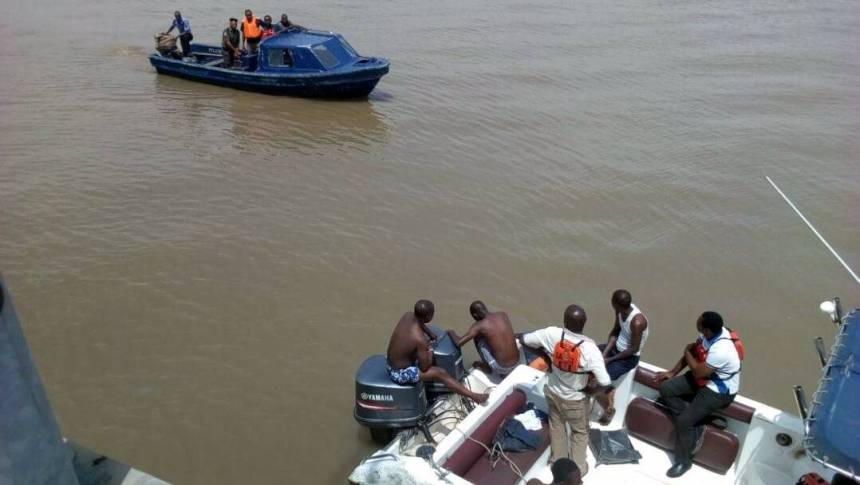
Several people are feared missing after a boat conveying mourners from a burial ceremony in Ukubie community, Southern Ijaw Local Government Area of Bayelsa State, sank on Friday near Oweikorogha community, throwing passengers into the river.
The incident, which has plunged the affected communities into panic and grief, involved a vessel popularly known as a Love Boat.
Reports said that the boat was conveying people who had attended a burial ceremony in Ukubie when it capsized shortly after passing Oweikorogha community.
Information emerging from the area indicated that several passengers were feared missing following the accident, although the exact number of people aboard the vessel and those unaccounted for had yet to be established as of the time of filing this report.
The incident has sparked anxiety among families and residents of Ukubie and Oweikorogha, as efforts continue to establish the fate of those who were travelling on the boat.
Residents and community members have mobilised to assist in the search for passengers who may have survived the accident.
The rescue efforts were said to be ongoing, with residents joining hands to locate those who were thrown into the water when the vessel went down.
However, the number of survivors, if any, had not been officially confirmed at the time of this report.
Families of the passengers were said to be anxiously awaiting information about their loved ones, as the incident cast a pall of mourning over the two communities.
The circumstances surrounding the boat mishap remain unclear, as authorities are yet to issue an official statement explaining what caused the vessel to sink.
It was also not immediately established how many passengers were aboard the boat or whether the vessel encountered mechanical difficulties or other challenges before capsizing.
Southern Ijaw is one of the major riverine local government areas in Bayelsa State, with several communities relying heavily on waterways for transportation because of the limited road network.
Boat transportation remains a major means of movement for residents travelling between riverine settlements, particularly during social gatherings, burial ceremonies and other community activities.
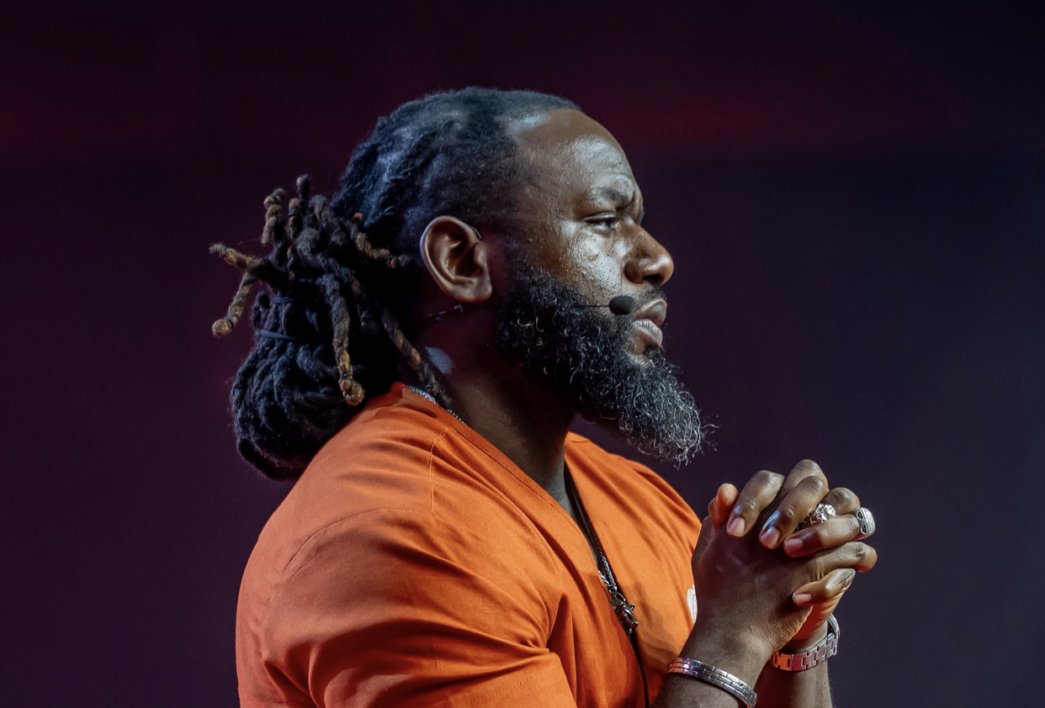
The Lagos State High Court has restrained Jimmy Odukoyafrom parading himself as the senior pastor and spiritual head of the Fountain of Life Church, following a legal challenge by the church’s board of trustees.
Justice O.O. Adewunmi-Oshin issued the order on Wednesday after hearing an application filed by the incorporated trustees of the church, who are seeking to prevent Jimmy from acting in the capacity of senior pastor.
The trustees told the court that Jimmy had ceased to occupy the position following the appointment of a successor by the church’s late founder, Pastor Taiwo Odukoya, who died in 2023.
In their application, the trustees sought an injunction to prevent Jimmy, either personally or through representatives, from interfering in the church’s administration and activities while the legal process continues.
According to reports, part of the order read: “A Pre-emptive Order of Injunction restraining the Respondent, whether acting personally or through any proxies in any alleged capacity as the Senior Pastor of the Church from interfering, disrupting, meddling with and or obstructing the activities, governance and any other business of the Church pending the Applicant’s full compliance with the High Court of Lagos State (Expeditious Disposal of Civil Cases) Practice Directions No. 2 of 2019 on Pre-action Protocol.”
The court also granted the trustees permission to commence the action under the pre-action protocol provided for in the Lagos State High Court’s practice directions.
In his ruling, the judge said: “Leave is hereby granted to the Applicant to commence this action under the Pre-Action Protocol pursuant to Paragraph 4 of the High Court of Lagos State (Expeditious Disposal of Civil Cases) Practice Direction No. 2 of 2019.”
The court proceedings came a day after the church’s board of trustees announced Jimmy’s removal as senior pastor, alleging that his appointment did not reflect the succession arrangements made by his late father.
The board explained that its decision followed a review of the church’s constitution and instructions allegedly documented by Taiwo before his death.
According to the trustees, they recently uncovered a video recording made by the late founder in December 2021, in which he outlined his preferred succession arrangement.
They further claimed that the recording was not made available to the board before Jimmy’s appointment, which they subsequently described as wrongful.

Access to reliable suppliers, working capital, inventory management and technology are critical to helping Africa’s neighbourhood retailers build sustainable businesses, according to a new Boost Africa feature highlighting TradeDepot.
For millions of small retailers across Africa, keeping products on their shelves is only one part of running a successful business. Access to affordable goods may bring customers through the door, but sustainable growth requires much more than having products available for sale.
From limited working capital and inconsistent supplies to the time spent sourcing goods from multiple distributors, small business owners face challenges that affect their ability to serve customers, expand inventory and remain competitive.
Consider a neighbourhood shop owner who understands what customers want but cannot afford to purchase enough stock to meet demand. Another retailer may spend hours contacting different suppliers and negotiating purchases, leaving little time to focus on customers and other aspects of the business.
These challenges highlight why small retailers need more comprehensive support systems to grow.
According to a feature by Boost Africa, sustainable retail growth depends on reliable access to suppliers, sufficient working capital, efficient operations and technology that helps business owners make informed decisions.
The initiative identifies several areas where small retailers need support, including access to products at competitive prices, inventory management, timely stock replenishment, financing and tools that reduce the cost and time involved in sourcing goods.
Technology is increasingly emerging as an important part of addressing these challenges.
Nigerian technology company TradeDepot is working to improve how small retailers access products by connecting them with manufacturers and distributors through its digital platform.
The company’s approach reflects a broader shift in retail distribution, moving beyond the supply of goods towards building an ecosystem that helps small businesses operate more efficiently.
Access to finance also remains a major part of this conversation.
Through Boost Africa, the European Investment Bank (EIB) invested €10 million in Partech Africa Fund, which subsequently backed TradeDepot.
The investment highlights how development finance and venture capital can support innovative African businesses working to address practical challenges across the continent.
Boost Africa supports investment in businesses developing solutions to economic and social challenges, with the potential to create wider opportunities for growth and development.
For neighbourhood retailers, the bigger issue is no longer just where to find products. It is how to access the finance, technology, supply networks and business support needed to turn small shops into sustainable enterprises.
As Africa’s retail sector continues to evolve, strengthening the businesses that serve communities every day could play an important role in building a more inclusive and efficient economy.
Watch the video: TradeDepot brings commerce closer to communities with Boost Africa.



