
Headlines
AI Humans Go Mainstream in South Korea, Reads, Sings, Sells


- /home/rhoncare/pointblank.ng/wp-content/plugins/mvp-social-buttons/mvp-social-buttons.php on line 27
https://pointblank.ng/wp-content/uploads/2023/09/AI-Human.jpg&description=AI Humans Go Mainstream in South Korea, Reads, Sings, Sells', 'pinterestShare', 'width=750,height=350'); return false;" title="Pin This Post">
- Share
- Tweet /home/rhoncare/pointblank.ng/wp-content/plugins/mvp-social-buttons/mvp-social-buttons.php on line 69
https://pointblank.ng/wp-content/uploads/2023/09/AI-Human.jpg&description=AI Humans Go Mainstream in South Korea, Reads, Sings, Sells', 'pinterestShare', 'width=750,height=350'); return false;" title="Pin This Post">
Her face is a deep fake. Her body belongs to a team of similar-sized actors. But she sings, reads the news, and sells luxury clothes on TV as AI humans go mainstream in South Korea.
Meet Zaein, one of South Korea’s most active virtual humans, who was created by Pulse9, an artificial intelligence company that is working to bring corporate dreams of the perfect employee to life.
Pulse9 has created digital humans for some of South Korea’s largest conglomerates, including Shinsegae, with research indicating the global market for such life-like creations could reach $527 billion by 2030.
In South Korea, AI humans have enrolled as students at universities, interned at major companies, and appear regularly on live television driving sellouts of products from food to luxury handbags.
But Pulse9 says this is only the beginning. They are “working on developing the technology to broaden AI human use”, Park Ji-eun, the company’s CEO, told AFP.
“Virtual humans are basically capable of carrying out much of what real people do,” she said, adding that the current level of AI technology means humans are still needed – for now.
The demand for AI humans in South Korea was initially driven by the K-pop industry, with the idea of a virtual idol – not prone to scandals and able to work 24/7 – proving popular with the country’s notoriously hard-driving music agencies.
But now, Pulse9 is “expanding their roles in society to show that these virtual humans aren’t just fantasy idols but can coexist with humans as colleagues and friends”, Park said.
– K-pop face –
Zaein’s face was created by a deep learning analysis – an AI method that teaches computers to process complex data – of the faces of K-pop stars over the last two decades.
Doe-eyed with delicate features, fair skin and a willowy figure, she is brought to life by overlaying the deepfake on a human actor.
More than 10 human actors, each with different talents — from singing, dancing, acting, to reporting — help animate Zaein, which is what makes this particular AI creation so “special”, Park said.
On a Monday morning, AFP met with one of the actors as she was preparing to deliver a report as Zaein on a live morning news programme on South Korean broadcaster SBS.
“I think it can be a good practice for people who want to become celebrities and that’s what appealed to me,” said the actor, who could not be named due to company policy.
A representative for Pulse9 said the identities of all human actors are concealed and their real faces are not shown.
Despite the strict measures to keep their profiles hidden, the actor said playing as a virtual human opened new doors.
“Typically, a lot of people in their teens and young people become K-pop idols and I’m way past that age, but it’s nice to be able to take on that challenge,” the actor, who is in her 30s, told AFP.
“I’d love to try acting as a man if I can manage my voice well, and maybe a foreigner — something that I can’t become in real life.”
– ‘Real and fake’ –
Creating artificial humans will continue to require real people “until a really strong AI is created in the future which will be able to process everything by itself”, Park said.
The potential — and potential perils — of AI have exploded into the public consciousness in recent months since ChatGPT burst onto the scene at the end of last year.
Experts around the world, including AI pioneers, have spoken out about its dangers, and several countries are seeking regulation of the powerful but high-risk invention.
But Park is not concerned. Her company is working on new virtual idols, virtual influencers, and virtual sales agents to take over customer-facing tasks for South Korean conglomerates, which are increasingly struggling with recruitment in the low-birthrate country.
South Korea — and the world — needs better, clearer regulations on what AI can do, she said, adding that when done properly, the technology can add to “the richness of life”.
The trouble, however, is that a deepfake can “make it impossible to tell what is real and fake”, Kim Myuhng-joo, a professor of information security at Seoul Women’s University, told AFP.
“It’s an egregious tool when used to harm others or put people in trouble. That’s why it’s becoming a problem,” he added.
AFP


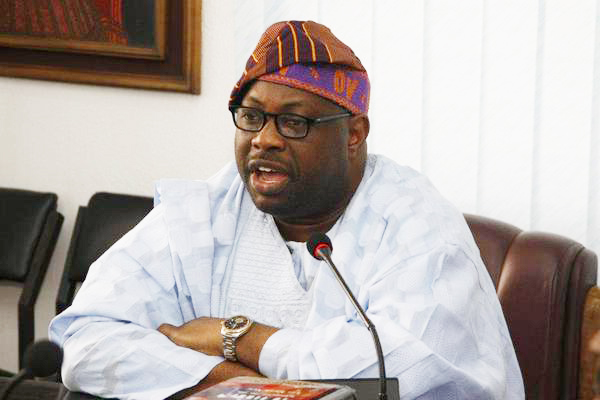
A chieftain of the African Democratic Congress (ADC), and Deputy Director of the Presidential Campaign Council, Chief Dele Momodu, has described former Vice-President Atiku Abubakar as the most nationally formidable and experienced among the leading contenders for the 2027 presidential election.
Momodu said Atiku’s experience at the national level distinguishes him from President Bola Tinubu and former Anambra State Governor, Peter Obi.
He stated this on Wednesday during an interview on Eagle 102.5 FM, Ilese-Ijebu, in Abeokuta.
“If you look at the antecedents of the three major candidates, between Atiku Abubakar and Peter Obi, you will see that Atiku is the most experienced. He has managed our country at the highest level,” he said.
Momodu traced Atiku’s political journey to the 1992 Social Democratic Party (SDP), presidential primary where he contested against late MKO Abiola and stepped down for him.
He said Atiku accepted the outcome without crisis even after he was not picked as Abiola’s running mate, describing it as a mark of true democratic temperament.
“He is the only one who started from around 1992, contested the SDP primary against Abiola and stepped down with uncommon equanimity. He did not make any noise,” Momodu said.
He noted that Atiku was among the founders of the Peoples Democratic Party, PDP, and served as Vice-President from 1999 to 2007.
Comparing Atiku with Obi, Momodu argued that while Obi’s best was demonstrated in Anambra, Atiku’s was at the presidency level managing the national economy.
“Peter Obi has tried his best in Anambra, while Atiku’s best is at the level of vice president controlling the economy of Nigeria. The difference is clear. He has matured in experience and exposure,” he said.
Momodu also said President Tinubu’s experience was largely limited to Lagos.
“What I’m trying to say is that Tinubu’s experience was limited to Lagos, and that is why when he became president, he thought Nigeria was Lagos. And he has found out now that Nigeria is not Lagos,” he said.
He argued that the current economic hardship under the present administration did not show prosperity, insisting Atiku remained better positioned to lead the country.
“Well, we are yet to see that prosperity, and if yesterday would determine today and tomorrow, it is obvious that Tinubu should retire now and let someone else do it,” Momodu added.
DailyPost
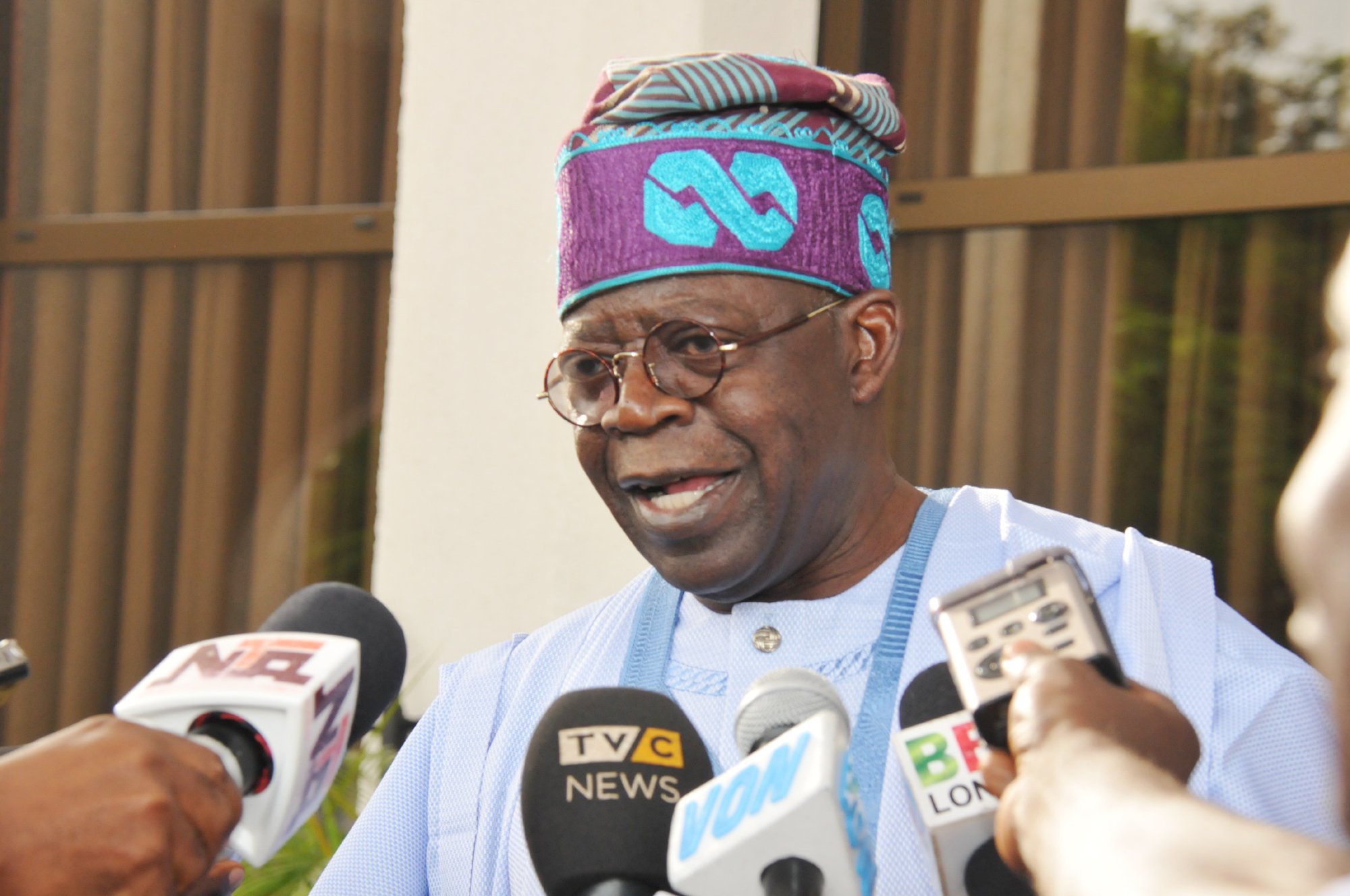
President Bola Tinubu says he has no regrets over the removal of petrol subsidy and other economic reforms introduced by his administration, insisting that Nigeria could not borrow its way to greatness.
Meanwhile, Minister of Finance and Coordinating Minister of the Economy, Taiwo Oyedele, has warned Nigerians against returning to petrol subsidy. He said the backtrack could trigger capital flight, undermining investor confidence and pushing the Naira to N3,000, N3,500 or even N4,000 per dollar.
But the Director of Media and Publicity of the African Democratic Congress (ADC) Presidential Campaign Council (PCC), Kola Ologbondiyan, challenged Oyedele to publish the economic model behind his warning that a return to fuel subsidy could push the naira to N4,000 per dollar.
The President spoke on Monday during the City Boys Movement retreat in Abuja, where he charged members of the group to mobilise support for his administration ahead of the 2027 general elections, insisting that the country’s future mattered more than the ambition of any individual candidate.
“No regrets,” Tinubu said, insisting that his administration would not be pushed back from its reform agenda.
He took a swipe at his political opponents, promising to restore the petrol subsidy, saying Nigeria could no longer afford to pay the fuel subsidy, and warning that reversing the policy would take the country back to an unsustainable economic path.
Defending his decision to remove the subsidy on his first day in office, Tinubu said the country was on the verge of financial collapse and could no longer afford the policy’s cost.
Tinubu also sought to reassure Nigerians about the direction of the economy, arguing that growth was steady and that the sacrifices associated with his reforms would ultimately offer citizens a future worth believing in.
Oyedele disclosed during a press briefing of the International Monetary Fund (IMF) and World Bank Annual Meetings in Bangkok, Thailand, yesterday, that investors had repeatedly questioned whether the government would abandon its reforms ahead of the next election cycle.
Ruling out the reversal of the government’s economic reforms, he maintained that any signal that Tinubu’s administration was contemplating or reinstating the subsidy would immediately affect financial markets, raise borrowing costs and worsen economic pressures on households.
“In all the meetings I have had, I came to a conclusion that the markets, including the domestic market, which you can read from the capital market, and the international market, have largely written off the opposition in Nigeria as unserious.
“If, for any reason, the President were to say we are merely considering the return of fuel subsidy, capital would react immediately, airfares would struggle, the naira would come under severe pressure, potentially moving towards 3,000, 3,500 or even 4,000.
The very fuel people want subsidised would become far more expensive in Naira terms,” Oyedele warned.
However, Ologbondiyan accused the Federal government of using fear to discourage debate on fuel subsidy, insisting that Nigerians deserve evidence, not alarming projections, on the potential economic consequences of restoring the policy.
Speaking to journalists, he described the minister’s warning as scaremongering and demanded that the government explain how it arrived at the projected exchange rate.
“The Minister of Finance is merely scaremongering. He cannot claim that a return to fuel subsidy will cause the naira to depreciate to N4,000 to the dollar without showing Nigerians the model behind that projection,” he said.
He questioned the reliance on investors’ concerns to oppose a subsidy’s return, challenging the government to identify the sources of the projections and disclose their calculations.
President Bola Tinubu has expressed sadness over the death of Ambassador Patrick Dele Cole, describing him as a distinguished diplomat, journalist, politician and public servant.
Cole died at 86.
In a statement on Saturday, Tinubu said Cole devoted his life to national service and brought distinction to his work in diplomacy, journalism and politics.
“His career reflected the enduring value of dialogue, tact, mutual respect and the pursuit of shared interests in advancing national development and international cooperation,” the President said.
Tinubu noted Cole’s contributions to Nigeria’s media landscape, particularly as Managing Director of the Daily Times, where he upheld the role of the press in holding public officials accountable, speaking truth to power and strengthening democratic governance.
“His legacy in journalism and public life remains an enduring part of our national story,” he said.
The President said at 86, Cole witnessed defining moments in Nigeria’s history and contributed to national development, adding that his life stands as a testament to experience, principled engagement and commitment to public good.
Tinubu extended condolences to Cole’s family, friends, professional associates and all whose lives he touched, praying that memories of his remarkable life will bring comfort and strength.
“May Almighty God grant Ambassador Cole eternal rest and give his family and all who mourn him the fortitude to bear this profound loss,” he said.


