
Metro
AIG Margaret Ochalla Assumes Office As 54th Boss, FCID Annex, Lagos


- /home/rhoncare/pointblank.ng/wp-content/plugins/mvp-social-buttons/mvp-social-buttons.php on line 27
https://pointblank.ng/wp-content/uploads/2025/03/IMG-20250317-WA0044-1000x600.jpg&description=AIG Margaret Ochalla Assumes Office As 54th Boss, FCID Annex, Lagos', 'pinterestShare', 'width=750,height=350'); return false;" title="Pin This Post">
- Share
- Tweet /home/rhoncare/pointblank.ng/wp-content/plugins/mvp-social-buttons/mvp-social-buttons.php on line 69
https://pointblank.ng/wp-content/uploads/2025/03/IMG-20250317-WA0044-1000x600.jpg&description=AIG Margaret Ochalla Assumes Office As 54th Boss, FCID Annex, Lagos', 'pinterestShare', 'width=750,height=350'); return false;" title="Pin This Post">
AIG Margaret Ochalla Agebe, on Monday, formally assumed office as the 54th Assistant Inspector General of Police in charge of the Force Criminal Intelligence and Investigation Department (FCID) Annex, Lagos, according to a statement by the FCID Public Relations Officer, ASP Mayegun Aminat, and made available to pointblank.ng
Her appointment marks the beginning of a new chapter in the leadership of the department, following the retirement of the esteemed AIG Augustina N. Ogbodo (rtd), who concluded a distinguished and exemplary career in the Nigeria Police Force.
A native of Yala Local Government Area in Cross River State, AIG Margaret Ochalla Agebe holds a Bachelor’s degree in Sociology from the prestigious Nnamdi Azikiwe University, Awka, as well as a Bachelor of Science in Conflict Resolution and Refugee Management and a Master’s degree in Peace and Conflict Studies. Her robust educational background, combined with her extensive professional experience, underscores her readiness to lead FCID Annex Lagos in addressing the contemporary challenges of criminal intelligence and investigation.
Throughout her distinguished career, AIG Agebe has held several pivotal positions within the Nigeria Police Force, each contributing to her exemplary leadership profile. She has served as the Personal Assistant to four Commissioners of Police in Anambra, Officer In-Charge of the Monitoring Unit in Anambra, Team Leader of the IGP Monitoring Unit, Assistant Commissioner of Police (ACP) at the Force Gender Unit, and Advisor to the Inspector General on Gender Issues. She also served as Commissioner of Police at the Anti-Fraud Unit in the Force CID, Abuja, and Commissioner of Police at the Special Fraud Unit in Lagos. Her exceptional work at the Special Fraud Unit paved the way for her elevation to Assistant Inspector General of Police at the Force Headquarters Annex, Lagos, where she made a significant impact through her visionary leadership and strategic initiatives. AIG Agebe’s contributions were instrumental in the establishment of specialized units and frameworks that significantly enhanced the operational capabilities of the Nigeria Police Force.
AIG Agebe is widely recognized for her relentless commitment to professional development and operational excellence. She has attended numerous specialized courses and training programs, gaining invaluable expertise in law enforcement, which she has applied throughout her career across various commands and formations nationwide.
Her leadership and service have been recognized with numerous prestigious awards, including the Global Women Hall of Fame (2017), the Africa Women Leadership Award presented in South Africa by His Excellency John Mahama, President of Ghana, the National Security Award for Excellent Performance and Exemplary Leadership by the Federal Republic of Nigeria Senate Committee on Police Affairs, the Improving Access to Justice Award presented by former Vice President Prof. Yemi Osinbajo, SAN, and the Outstanding and Invaluable Service to the Nigeria Police Award. Additionally, AIG Agebe has received the Season Corps Award for Competent Governance and Civil Trust, the Distinguished Global Amazon Award in Kigali, Rwanda, and the Kwame Nkrumah Leadership Award of Excellence (2023). She was also honored with the International Security Service Award by ISO-SEC Switzerland and HSIIS United Kingdom (2024), the National Crimewatch Lifetime Achievement Award (2024), the Award of Excellence by the Yache Community Development Association, and the Outstanding Female Humanitarian of the Year Award. AIG Agebe’s unwavering dedication to advancing the efficiency of the Nigeria Police Force, with a particular focus on combating gender-based violence, fraud, and other criminal activities, demonstrates her deep commitment to justice, human rights, and national security.
In her new role, AIG Agebe calls on well-meaning citizens to support the Police in the fight against crime, promote justice, and strengthen national security. She remains steadfast in her mission to enhance the operational effectiveness of the FCID, ensuring public safety, upholding the integrity of the Police Force, and continuing her strong stance against corruption as envisioned by the Inspector General of Police.


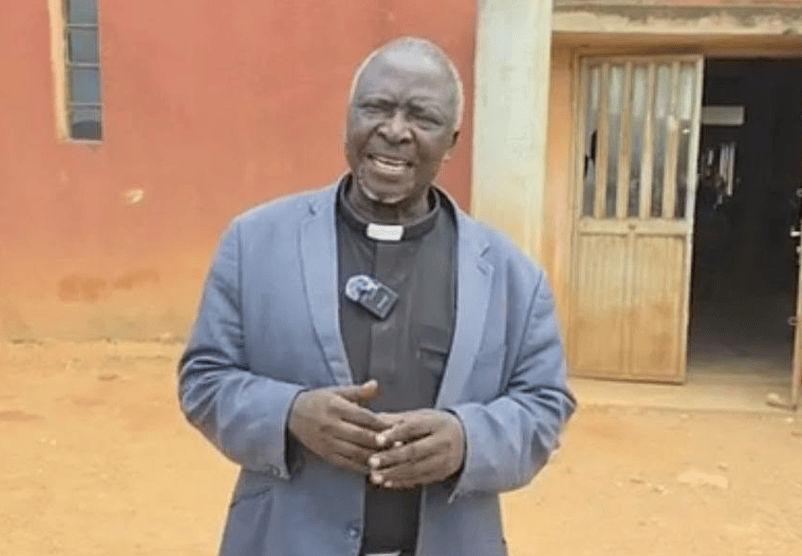
The Regional Chairman of Church of Christ in Nations (COCIN), Barkin Ladi Local Government Area of Plateau State, Rev. Ezekiel Dachomo, has denied reports that he prayed for the re-election of President Bola Tinubu and Vice President Kashim Shettima in the 2027 presidential election.
Dachomo, who is currently in Israel on what he described as his first International Christian Advocacy Tour, said his visit was aimed at drawing the attention of world leaders to the plight of Christians in Plateau.
The cleric made the clarification in a social media post on Monday night following reports that he had prayed for the success of the All Progressives Congress (APC) presidential ticket and expressed support for the Muslim-Muslim ticket.
Dachomo said his earlier post, in which he prayed for Nigeria, had been misconstrued as an endorsement of Tinubu and Shettima ahead of the 2027 election.
According to him, there was nowhere in the post where he prayed for the President and Vice-President to win the election.
“People are trying to frame me, saying I prayed for a Muslim-Muslim ticket. But I did not, and I will never pray for a Muslim-Muslim ticket because Nigeria belongs to both Muslims and Christians,” he said.
Dachomo said his prayers were for the well-being and success of Nigeria and its citizens, irrespective of their religious affiliations.
“I pray for both Muslims and Christians in Nigeria. I pray for Nigeria to succeed. If you truly want to come to God, come with a clean heart,” he added.
The cleric further stated, “I did not pray for President Tinubu and Vice President Shettima to win in 2027. My prayers have always been for Nigeria to succeed.”
Dachomo’s clarification came amid reactions to his ongoing advocacy tour in Israel, where he is seeking international attention to security challenges and what he described as the persecution of Christians in Plateau.

Ahead of the 2027 election, the House of Representatives Committee on Electoral Matters has urged the Independent National Electoral Commission (INEC) to disqualify candidates whose names are not contained in political party registers, as stipulated by the Electoral Act 2026.
In a statement on Tuesday, the Chairman of the committee, Bayo Balogun, drew the commission’s attention to a Supreme Court ruling on Sections 77(5), 77(6) and 77(7) and called for their full enforcement across all political parties.
Balogun, a member of the All Progressives Congress, APC, said that pending legal proceedings concerning the interpretation, constitutionality and enforceability of the sections had been resolved by virtue of the Supreme Court judgment.
The lawmaker recalled that the Supreme Court, on September 24, 2026, restored the provisions after setting aside the Court of Appeal judgment that had declared them unconstitutional.
According to him, the apex court held that the provisions were not inconsistent with the 1999 Constitution.
Balogun explained that Section 77(5) provides that only members whose names are contained in the membership register submitted to INEC are eligible to vote or be voted for at party primaries, congresses and conventions.
He said that Section 77(6) requires political parties to use the register submitted to the electoral umpire for such exercises.
Balogun urged INEC to proceed without further delay to enforce Sections 77(4) to 77(6) in the administration and monitoring of political parties and their electoral activities.
He further urged the commission to audit the membership registers and candidates submitted by political parties to establish whether the names of the candidates are contained in the registers earlier submitted to INEC in compliance with Section 77(5).
“This will be a litmus test for the commission – any culpable political party and candidates should be disqualified.
“Diligent enforcement of the provision would help prevent disputes and reduce the volume of litigation that could arise from alleged irregularities or non-compliance with Sections 77(4) to 77(6) of the Electoral Act,” Balogun said.
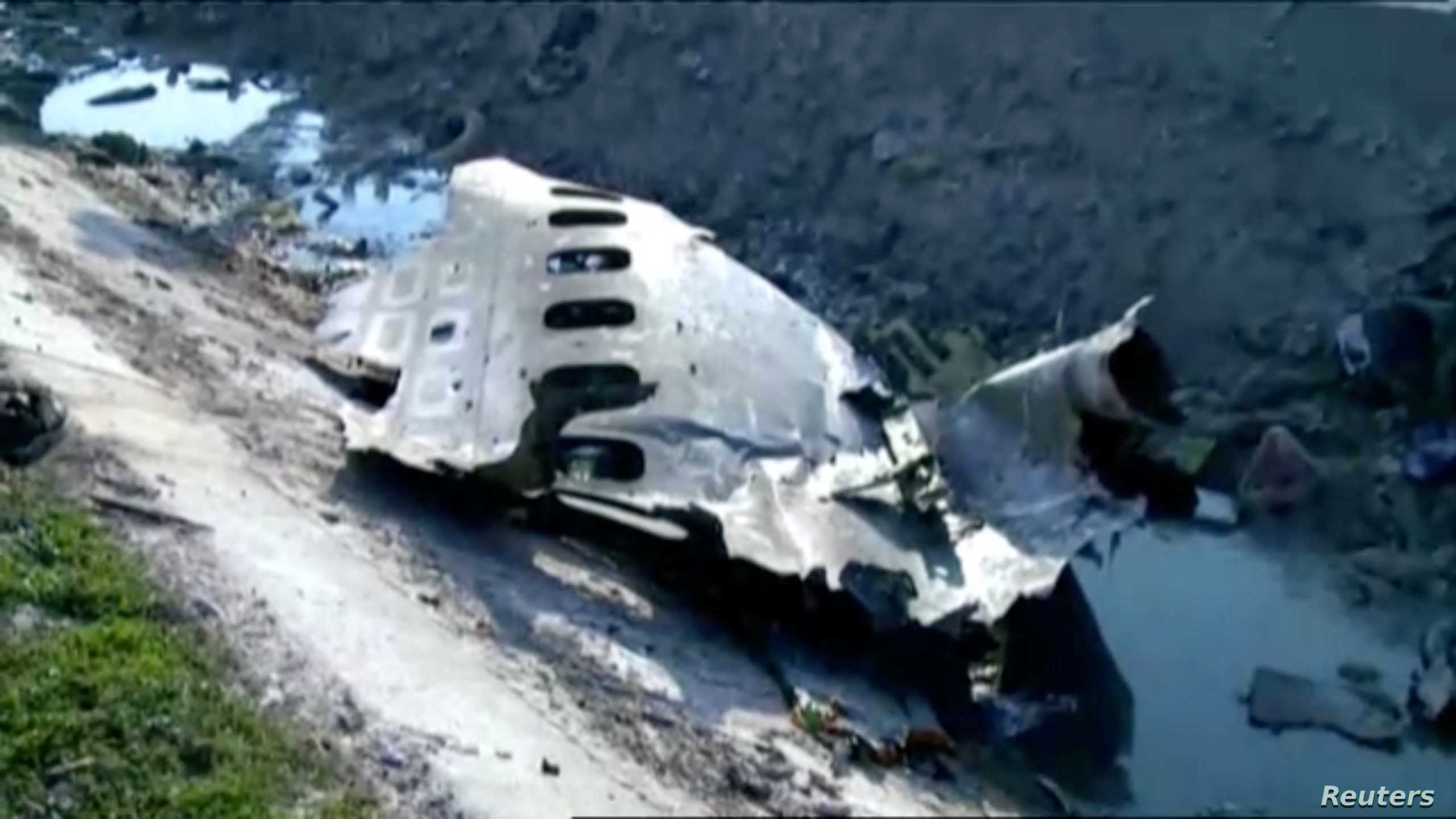
An helicopter crashed into a swamp near Naval Base in Igbokoda, the headquarters of Ilaje Local Government Area of Ondo State, on Monday.
The incident occurred at about 11.00a.m during heavy down pour, throwing the coastal community into panic.
The number of people on board of the helicopter was yet to be officially confirmed, while the condition of possible survivors cannot be confirmed.
Confirming the incident, Maurice Oripenaiye, the Chairman of the local government, told the News Agency of Nigeria (NAN) in a telephone interview that he could not ascertain the number of the victims.
Oripenaye also said he was yet to ascertain the identity of the crashed helicopter and the passengers.
“It happened during the heavy rainfall at about 11.00a.m. I cannot confirm the number of the people on board. I have deployed some youths to the area for rescue purpose,” he told NAN.
Similarly, the Police Command in Ondo State while confirming the crash, said details surrounding the incident were still emerging.
The command in a statement by its spokesperson, Abayomi Jimoh, a deputy superintendent of police, in Akure, said efforts were ongoing to establish the full circumstances surrounding the crash.
“The command urges members of the public, particularly residents of Igbokoda and adjoining communities, to remain calm and refrain from circulating unverified information.
“The public will be duly informed as soon as further credible information becomes available,” it stated.
(NAN)


