
News
Air Force Personnel Dies in Parachuting Accident


- /home/rhoncare/pointblank.ng/wp-content/plugins/mvp-social-buttons/mvp-social-buttons.php on line 27
https://pointblank.ng/wp-content/uploads/2019/04/Air-Marshal-Sadique-Abubakar.png&description=Air Force Personnel Dies in Parachuting Accident', 'pinterestShare', 'width=750,height=350'); return false;" title="Pin This Post">
- Share
- Tweet /home/rhoncare/pointblank.ng/wp-content/plugins/mvp-social-buttons/mvp-social-buttons.php on line 69
https://pointblank.ng/wp-content/uploads/2019/04/Air-Marshal-Sadique-Abubakar.png&description=Air Force Personnel Dies in Parachuting Accident', 'pinterestShare', 'width=750,height=350'); return false;" title="Pin This Post">
A Nigerian Air Force personnel, Corporal Meshach Komo, was confirmed dead on Sunday after being involved in a parachuting accident at an undisclosed location in Kaduna State.
Our correspondent learnt that the air accident occurred when the NAF personnel was participating in “recurrency training.”
The air force has lost two men to air accidents within a week, after an aircraft man, Umaru Abdul-Ganimu, was killed by a helicopter rotor on April 7 in Bama area of Borno State.
Abdul-Ganimu, who had since been buried, was said to be actively involved in the Operation Lafiya Dole’s counter-insurgency efforts in the North-East before the air tragedy occurred.
The NAF Director of Public Relations and Information, Air Commodore Ibikunle Daramola, who confirmed Komo’s death in a release, said, “NAF is sad to announce the passing away of one of its airmen, Corporal Meshach Iliya Komo, who died in Kaduna on Sunday in a parachuting accident during recurrency training.
“The Chief of the Air Staff, Air Marshal Sadique Abubakar, commiserates with the family of the late airman over this irreparable loss.”
The Punch


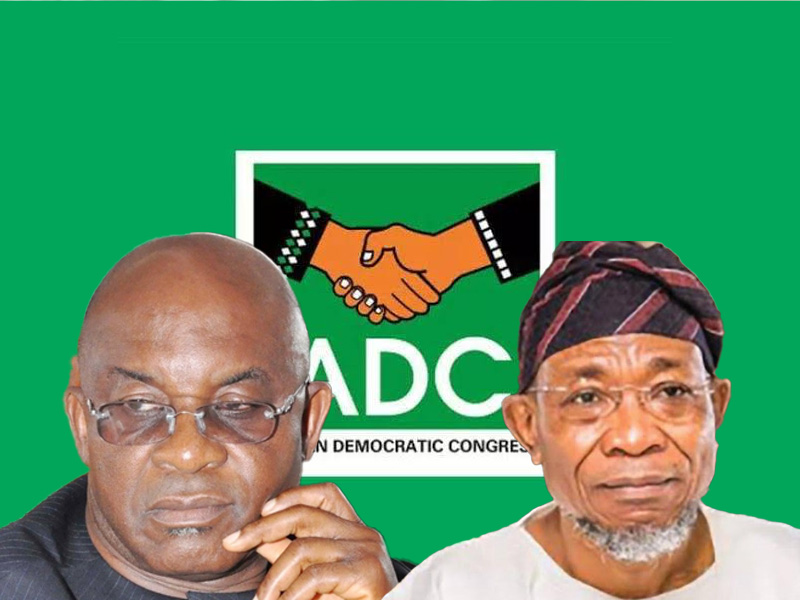
A Federal High Court in Abuja has nullified the leadership of the African Democratic Congress (ADC) led by former Senate President David Mark, declaring the caretaker committee illegal.
The court also invalidated all actions taken by the committee, including the nomination of former Vice-President Atiku Abubakar as the party’s presidential candidate for the 2027 general election.
Delivering judgment on Thursday, November 5, the presiding judge, Peter Lifu upheld a suit filed by Nafiu Bala Gombe, a former National Deputy Chairman (North-East) of the party, who challenged the process through which Mark and other members of the caretaker committee assumed control of the party.
The court granted the reliefs sought by Gombe, effectively invalidating the actions taken by the Mark-led leadership.
Gombe had argued that following the resignation of the party’s former National Chairman, Ralph Nwosu, he was entitled to assume the party’s leadership in his capacity as the former deputy national chairman.
The plaintiff also sought the nullification of decisions taken by the Mark-led leadership, arguing that its emergence violated the ADC constitution and provisions of the Electoral Act.
In the suit, marked FHC/ABJ/CS/1819/2025, the ADC, the Independent National Electoral Commission (INEC), Mark, Aregbesola and Nwosu were listed as defendants.
The ruling invalidates the process through which the ADC conducted its presidential primary that produced Atiku as its flag bearer for the 2027 election.
Abubakar had subsequently selected former Rivers State Governor Rotimi Amaechi as his running mate ahead of the presidential election scheduled for January 16, 2027.
Background
Thursday’s judgment is the latest development in the prolonged leadership crisis within the ADC, which began after the party’s former National Chairman, Nwosu, handed over its leadership to Mark and Aregbesola in July 2025.
The handover took place during a stakeholders’ meeting at the Shehu Musa Yar’Adua Centre in Abuja on July 2, 2025. It was followed by a National Executive Committee (NEC) meeting on July 29, 2025, where Mark and Aregbesola formally emerged as the party’s National Chairman and National Secretary, respectively.
The party maintained that the process complied with its constitution and was monitored by INEC. However, the transition triggered opposition from members of the party, resulting in multiple legal challenges over who should control its leadership ahead of the 2027 general election.
One of the challengers was Nafiu Bala Gombe, a former National Deputy Chairman (North-East) of the party, who approached the Federal High Court in Abuja in a suit marked FHC/ABJ/CS/1819/2025. He argued that following Nwosu’s resignation, he was entitled to assume the party’s leadership and challenged the process through which Mark and Aregbesola emerged.
The dispute subsequently went through the Court of Appeal, which issued an order directing the parties to maintain the status quo ante bellum pending the determination of the substantive case.
Relying on the appellate court’s directive, INEC removed Mark and Aregbesola’s names from its official portal, effectively withdrawing recognition of the Mark-led leadership.
The matter eventually reached the Supreme Court, which, on April 30, 2026, set aside the Court of Appeal’s order. The apex court described the directive as “unnecessary, improper and unwarranted” and returned the substantive leadership dispute to the Federal High Court for determination.
Following the Supreme Court’s decision, INEC restored Mark and Aregbesola’s names to its official portal as the ADC’s National Chairman and National Secretary, respectively, pending the determination of the substantive suit.
Meanwhile, a separate challenge to the Mark-led leadership was brought by Leke Abejide, a member of the House of Representatives, in a suit marked FHC/ABJ/CS/1637/2025.
On July 2, 2026, the Federal High Court in Abuja dismissed Abejide’s suit and upheld the Mark-led leadership.
Delivering judgment, the judge, Musa Liman, held that the dispute concerned the internal affairs of a political party and was non-justiciable.
Source: ICIR

The Cross River State Police Command has arrested a 27-year-old man, identified as Victor Edet Yellow Duke, over the alleged attack on the convoy of the Nigeria Democratic Congress (NDC) presidential candidate, Peter Obi, in Calabar.
The incident occurred on Wednesday, November 4, 2026, around Watt Market Roundabout, along the Calabar Road axis of the capital capital, while Obi’s convoy was returning from the palace of the Obong of Calabar to Metropolitan Hotel, venue of the party’s presidential town hall meeting.
According to a statement issued by the Police Public Relations Officer, ASP Eitokpah Sunday Akata, the attack occurred at about 2:20pm when suspected hoodlums, reportedly armed with machetes and sticks, emerged from the Calabar Road and Clerks Alley axis and attacked vehicles in the convoy.
The statement disclosed that the attackers smashed the windshields of some vehicles, adding that the exact number of vehicles affected was yet to be established.
Following the intervention of security operatives, one of the suspected attackers, Victor Edet Yellow Duke, was arrested, while others reportedly fled the scene.
According to the police, “the suspect has subsequently been transferred to the State Police Headquarters by operatives of the Violent Crime Response Unit, VCRU, for discreet investigation and to prevent possible reprisals or further breakdown of law and order.”
The Command confirmed that “normalcy has since returned to the affected area.”
Meanwhile, the Commissioner of Police, Cross River State Command, CP Ajo Geoffrey Ordue, has ordered a thorough investigation into the incident, directing officers to identify and apprehend other individuals allegedly involved in the attack.
The police, however, cautioned against drawing conclusions from the arrest, emphasising that “the arrest does not establish the suspect’s guilt.”
It added that the suspect remains entitled to the presumption of innocence pending the conclusion of investigations and any subsequent judicial proceedings.
The Command also reassured residents, political stakeholders and visitors of adequate security across the state, stressing that “all political parties, candidates and their supporters would receive equal protection irrespective of their political affiliations.”
Obi’s media aide, Ester Umoh, had earlier raised the alarm on social media that the NDC flagbearer had been attacked.
“Thugs are trying to attack our convoy,” she said while raising the alarm over the incident.
News
Nigeria-EU Investment Partnership: Boost Africa Highlights Mouthwatering Opportunities for Entrepreneurs
What happens after investment reaches an African business?
Beyond the financing figures and commitments, how does capital translate into business growth, innovation, jobs and economic opportunity?
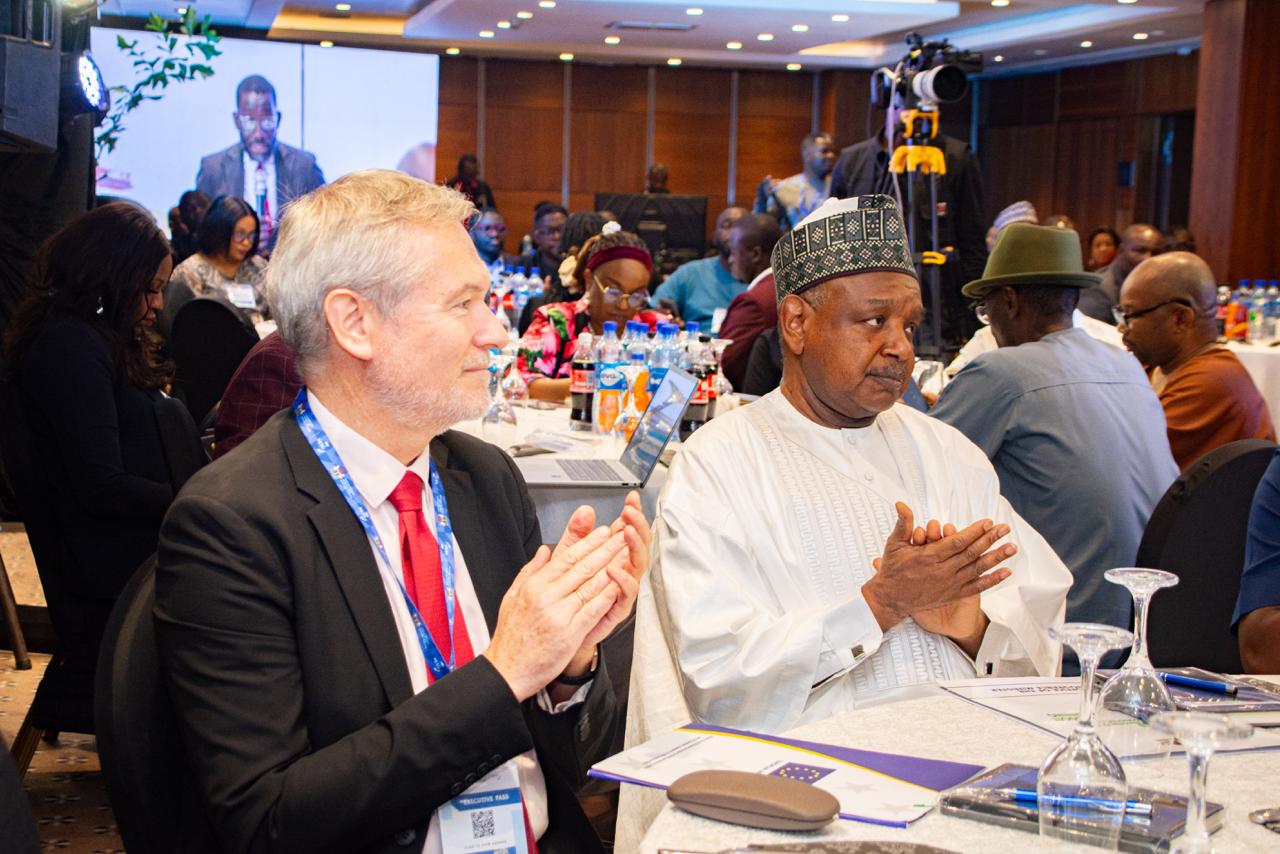
These questions took centre stage as the European Investment Bank (EIB) showcased the achievements of Boost Africa at the Nigeria–EU Global Gateway Investment Partnership Lab, held on the sidelines of the 32nd Nigerian Economic Summit in Abuja.
The event, convened by Nigeria’s Federal Ministry of Budget and Economic Planning in collaboration with the EIB’s Boost Africa team, brought together government officials, European development institutions, investors and private-sector leaders to explore how strategic partnerships and innovative financing can accelerate Nigeria’s economic
development.
In his remarks, Senator Abubakar Atiku Bagudu, Nigeria’s Minister of Budget and Economic Planning, emphasised the importance of mobilising private investment to support Nigeria’s economic transformation.
H.E. Gautier Mignot, European Union Ambassador to Nigeria and ECOWAS, highlighted the importance of translating investment partnerships into concrete opportunities, including stronger support for Nigeria’s entrepreneurial ecosystem.
Bringing the Boost Africa story to life
A major highlight of the event was the session “Boost Africa: From Capital to Impact,” which brought together representatives of development finance institutions, venture capital funds and Nigerian businesses to examine what investment has made possible.
The session opened with a short video introducing Boost Africa and its contribution to supporting innovative African enterprises.
Moussa Nakoulima, EIB Regional Head for West and Central Africa, provided an
overview of the initiative, highlighting its achievements and the role of development finance in mobilising investment for African entrepreneurs.
Launched as a joint initiative of the EIB and the African Development Bank, with support from the European Union, Boost Africa combines investment through venture capital funds with technical assistance to strengthen Africa’s entrepreneurial ecosystem.
The initiative has attracted more than €100 million in EIB investment commitments to
venture capital funds, supporting enterprise development across sectors including
technology, financial services, agribusiness and renewable energy.
From investment funds to growing businesses
Moving from the institutional perspective to the investment ecosystem, Daisy Leich, Director of Strategy at TLcom, shared insights into the role of venture capital in supporting African businesses.
Her contribution highlighted why financing alone is not enough. For growing enterprises, access to strategic guidance, expertise and networks can be just as important as access to capital. The discussion then turned to two Nigerian businesses whose experiences illustrated the opportunities that investment can help unlock.
Michael Babalola, Director of Operations at Beacon Power Services, shared the
company’s experience of developing technology-driven solutions for the energy sector, demonstrating how innovation can help address operational challenges in electricity distribution.
Representing ChipMango, Hamilton discussed the company’s work in developing Nigeria’s semiconductor engineering capabilities and creating opportunities for local talent to participate in the global technology industry.
Together, these perspectives illustrated the journey from development finance to venture capital investment and, ultimately, to businesses delivering practical solutions.
They also reinforced an important distinction: Boost Africa supports enterprises through its investments in venture capital funds, helping create the conditions for innovative businesses
to access financing and grow.
Looking ahead: Building on Boost Africa’s experience
Beyond reflecting on achievements, the session also provided an opportunity to discuss the future of financing for African innovation.
Participants were introduced to Boost Ventures, a successor initiative intended to build on Boost Africa’s experience and expand financing opportunities for innovative African businesses.
Backed by a €129 million European Commission guarantee, the initiative represents a further commitment to strengthening Africa’s venture capital ecosystem and supporting the next generation of entrepreneurs.
For Nigeria, where innovative businesses continue to develop solutions across critical sectors, sustained access to investment, expertise and strategic partnerships will remain essential.
Investment as a catalyst for lasting impact
The Boost Africa session reinforced a central message of the Nigeria–EU investment
partnership: development finance can play a catalytic role in mobilising private investment and helping businesses realise their potential.
By bringing together the institutions providing finance, the funds investing in enterprises and the businesses translating investment into solutions, the discussion offered a practical picture of how development partnerships can contribute to economic growth. The story of Boost Africa is ultimately not only about how much capital has been invested, but about what that investment has made possible: stronger businesses, new capabilities, innovative solutions and opportunities for Africa’s future.
Learn more at
https://www.eib.org/en/products/mandates-partnerships/boost-africa/index


