
Headlines
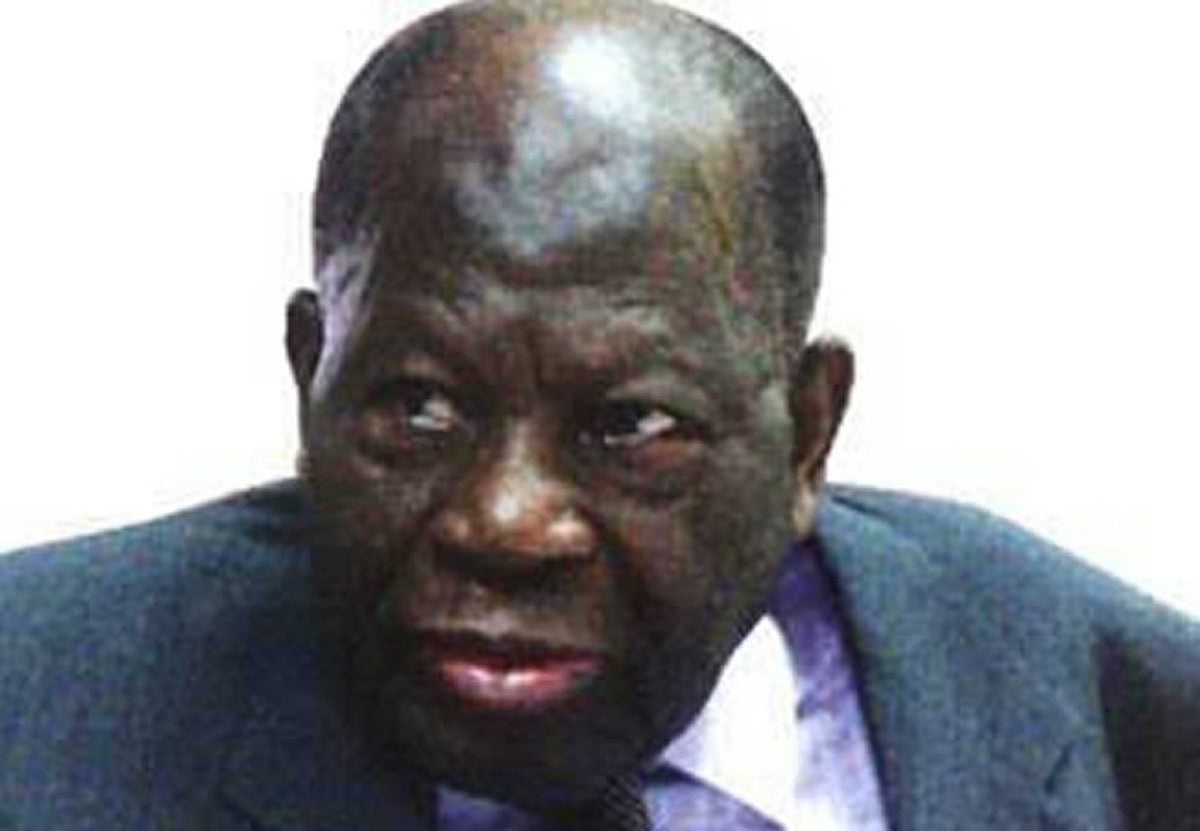
Akintola Williams: The 100 Year-Old Accounting Colossus

- /home/rhoncare/pointblank.ng/wp-content/plugins/mvp-social-buttons/mvp-social-buttons.php on line 27
https://pointblank.ng/wp-content/uploads/2019/08/downloadfile-14-1000x600.jpg&description=Akintola Williams: The 100 Year-Old Accounting Colossus', 'pinterestShare', 'width=750,height=350'); return false;" title="Pin This Post">
- Share
- Tweet /home/rhoncare/pointblank.ng/wp-content/plugins/mvp-social-buttons/mvp-social-buttons.php on line 69
https://pointblank.ng/wp-content/uploads/2019/08/downloadfile-14-1000x600.jpg&description=Akintola Williams: The 100 Year-Old Accounting Colossus', 'pinterestShare', 'width=750,height=350'); return false;" title="Pin This Post">
By Eric Elezuo
Hurray!! The accounting wizard is 100 years!
Only few persons are known to have come from rich and influential families, and still managed to carve a niche for themselves, made their own names and stood apart from the crowd. One of such persons is the indefatigable and ever committed accounting guru, arguably the best the country ever produced, Chief Akintola Williams, who clocked an enviable 100 years on August 9.
Chief Williams was born on August 9, 1919 to the Ekundayo Williams family. His father was a lawyer and farmer while his grandfather, Z. A. Williams, was a prolific businessman from Abeokuta. His background really set the stage for the young Akintola to take the world by storm, rise above mediocrity and start an all new hegemony devoid of entrepreneurship, law and farming that his forebears were known for. He created a new vista, a new environment and subdued the field of accountancy. He became the first African to qualify as a chartered accountant.
Akintola took off on the journey of life when he began his education at Olowogbowo Methodist Primary School, Bankole street, Apongbon, Lagos Island, Lagos, in the early 1930s. This was the same primary school his late younger half-brother, Chief Rotimi Williams, attended.
After his primary education, he proceeded to the CMS Grammar School, also in Lagos and made one of the best results, which took him to the only higher institution of learning at the time, Yaba Higher College, now Yaba College of Technology. His education at the institution was sponsored by a UAC scholarship as a result of his brilliance. He obtained a Diploma in Commerce on graduation.
In 1944, he was admitted to the University of London, England, to study Banking and Finance, and in 1946, he graduated with a Bachelor of Commerce. He did not stop there, but continued steadfastly in his studies, qualifying as a chartered accountant in England in 1949.
After qualifying as a chartered accountant, Williams professionally started his career when he took up paid employment with the Colonial office in London. He was thereafter posted to Nigeria, and he returned home in 1950 to take the post of Inspector of Taxes, working with John Selby, whose advice laid his path to considering accountancy as a course.
In 1952 therefore, he left the job and its huge benefits to set up his own firm, Akintola Williams and Co in Lagos. It became the first indigenous chartered accounting firm in Africa. It would be recalled that at the time, the accountancy business was dominated by five large foreign firms. Although there were a few small local firms, they were certified rather than chartered accountants.
With master touches of professionalism, his firm later grew ‘organically and through mergers’ to become the largest professional services firm in Nigeria by 2004. Williams participated in founding the Nigerian Stock Exchange and the Institute of Chartered Accountants of Nigeria. During a long career, he has received many honours.
With his deft moves and diplomatic connections, he gained business from indigenous companies including Nnamdi Azikiwe’s West African Pilot, K. O. Mbadiwe’s African Insurance Company, Fawehinmi Furniture and Ojukwu Transport. He also provided services to the new state-owned corporations including the Electricity Corporation of Nigeria, the Western Nigeria Development Corporation, the Eastern Nigeria Development Corporation, the Nigerian Railway Corporation and the Nigerian Ports Authority.
By 1964, the expansion of his firm has started as a branch was opened in the Cameroons. This was followed by branches in Côte d’Ivoire and Swaziland, and affiliates in Ghana, Egypt and Kenya. By March 1992, the company had 19 partners and 535 staff. This obviously attested to the hard work the seasoned accountant has put into his work.
With the advent of the Companies Act of 1968, demand for his services increased. This act required that companies operating in Nigeria formed locally incorporated subsidiaries and published audited annual accounts. The drive in the early 1970s to encourage indigenous ownership of businesses also increased demand, and Williams was responsive to all challenges.
In 1973, AW Consultant Ltd, a management consultancy headed by Chief Arthur Mbanefo, was spun off. The company acquired a computer service company and a secretarial service, and in 1977, the company entered into an agreement with Touche Ross International based on profit sharing. Williams was also a board member and major shareholder in a number of other companies. He retired in 1983.
Between April 1999 and May 2004, Akintola Williams & Co. merged with two other accounting firms to create Akintola Williams Deloitte, the largest professional services firm in Nigeria with a staff of over 600.
Among many of his achievements, Williams played a leading role in establishing the Association of Accountants in Nigeria in 1960 with the goal of training accountants. He was also the first President of the association as well as the founding member and first president of the Institute of Chartered Accountants of Nigeria. He is very good at creating new things. He was also involved in establishing the Nigerian Stock Exchange. Akintola Williams remained actively involved with these organisations into his old age.
With an eye on due process, he called on operators to protect the stock exchange market and ensure there was no scandal. He said that, if needed, market operators should not hesitate to seek his advice on resolving any problem. He made himself available even as a retiree.
Some of the public sector positions he held are enormous and they include Chairman of the Federal Income Tax Appeal Commissioners (1958–68), member of the Coker Commission of Inquiry into the Statutory Corporations of the former Western Region of Nigeria (1962), member of the board of Trustees of the Commonwealth Foundation (1966–1975), Chairman of the Lagos State Government Revenue Collection Panel (1973) and Chairman of the Public Service Review Panel to correct the anomalies in the Udoji Salary Review Commission (1975).
Other positions include President of the Metropolitan Club in Victoria Island, Lagos, Founder and Council member of the Nigerian Conservation Foundation and Founder and chairman of the board of Trustees of the Musical Society of Nigeria.
In 1982, Williams’ efforts were recognized and he was honoured by the Nigerian Government with the O.F. R. award
Following retirement in 1983, Williams sought to diversify and keep himself busy. That prompted an all new project aimed at establishing a music centre and concert hall for the Music Society of Nigeria.
In April 1997, he was appointed a Commander of the Most Excellent Order of the British Empire for services to the accountancy profession and for promotion of arts, culture and music through the Musical Society of Nigeria. The Akintola Williams Arboretum at the Nigerian Conservation Foundation headquarters in Lagos is named in his honour.
As the expansion keeps becoming a recurring decimal, the firm adopted the business name “Akintola Williams Deloitte” on July 30, 2004. It has remained the oldest indigenous firm in Nigeria.
On the 8th of May, 2011, the Nigeria-Britain Association presented awards to John Kufuor, past President of Ghana, and to Akintola Williams, for their contributions to democracy and development in Africa.
A Centenarian of no mean repute, Akintola Williams clocked 100 healthy and productive years on August 9, 2019, drawing accolades from reputable movers and shakers of Nigerian and international business as well as politics.
Sir, for your achievements which are innumerable and the many lives you have touched in your 100 years on earth, and since 1952 when you took the bull by the horn to float your own firm, you are our Boss of the Week.
Congrats and happy birthday sir!


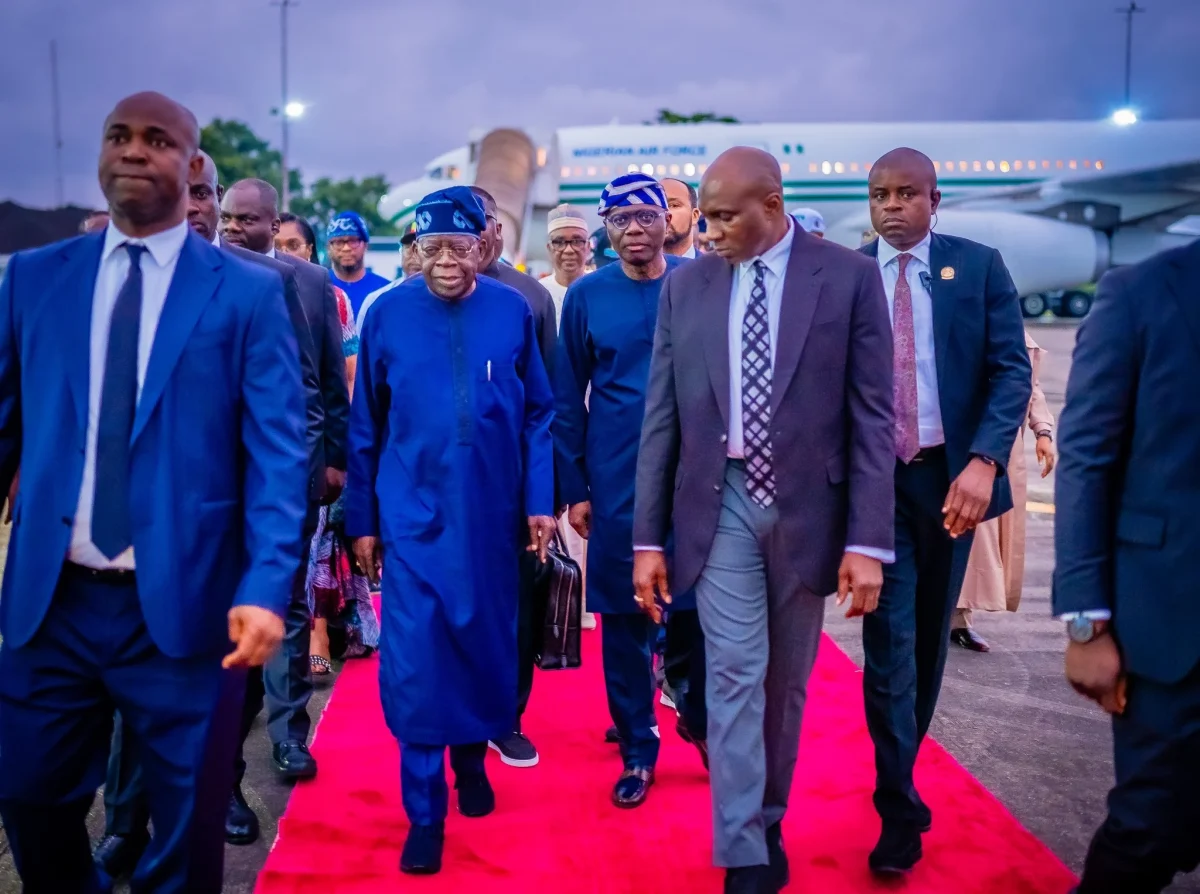
President Bola Tinubu has told members of the All Progressives Congress (APC) Presidential Campaign Council not to expect him to accompany them to every campaign event ahead of the 2027 general election, saying he must remain focused on governance and the country’s economic responsibilities.
Tinubu spoke on Wednesday during the inauguration of the APC Presidential Campaign Council in Abuja, where he urged members to take the party’s message to Nigerians across the states and local government areas while he continues to attend to matters of governance.
The president said he agreed with concerns that the demands of the campaign should not distract him from running the country, adding that Nigeria needs his attention at the moment.
“You’ve warned me not to allow the rigour of the campaign to distract me from governance, I hear you. I am in full agreement with your decision. Nigeria needs more attention now,” Tinubu said.
He told council members to excuse him from accompanying them to every campaign event, noting that his administration has bills to pay and international financial obligations to meet.
“So, you will excuse me from going everywhere with you, we have bills to pay. The American creditors cannot wait,” the President said.
Tinubu also said the government needs to attract investors who would commit to long-term investments in Nigeria and contribute to the future of the country’s children.
“We want those investors to come in, be here to stay, to invest for the future of our children,” he said.
The president, however, assured Nigerians that he would continue to engage them directly even as the campaign council took charge of mobilisation across the country.
“However, I will still make time to speak directly with Nigerians, even as you lead the campaign in the states and local government areas,” he said.
Tinubu described the inauguration of the council as more than a campaign activity, saying it represents a renewed commitment to Nigerians and the responsibilities of the ruling party.
“We have not gathered merely to inaugurate a council. We have gathered to renew a covenant. A covenant with Nigerian people and the historic responsibility they have entrusted to us as Nigeria’s governing party,” he said.
He added that the council is expected to communicate the administration’s vision, achievements and agenda to voters nationwide.
“This council will carry our vision, our records and our agenda to every Nigerian, and it will carry them to victory every ward of this country,” Tinubu said.
The president also commended APC members for completing the party’s congresses, recalling that some had predicted internal crises during the process.
He said the party has overcome the challenges and emerged united, crediting members for participating in the process from the ward level to the national leadership.
“They said there will be implosion. We passed through it. We did not fail. You didn’t let us down. We got here together,” he said.

The All Progressives Congress (APC) has named Nyesom Wike, Minister of the Federal Capital Territory (FCT); Ademola Adeleke, Osun State governor; and Chukwuma Soludo, Anambra State governor, as campaign coordinators in its expanded presidential campaign council for the 2027 general election, despite their affiliations with other political parties.
Wike belongs to the Peoples’ Democratic Party (PDP), Soludo is a member of the All Progressives Grand Alliance (APGA), while Adeleke won re-election as Osun governor in 2026 under the Accord Party.
Under the new arrangement, Wike will coordinate the APC campaign in Rivers State and the FCT, Soludo will oversee Anambra, while Adeleke will coordinate the campaign in Osun.
The expanded list is scheduled for inauguration by President Bola Tinubu at the Presidential Villa in Abuja on Wednesday.
The APC initially released its campaign council list on August 22, naming Abdulaziz Yari, former Zamfara governor, as director-general. Senate President Godswill Akpabio, House of Representatives Speaker Tajudeen Abbas and Yobe Governor Mai Mala Buni were appointed deputy director-generals.
In the revised list, Akpabio, Abbas and Kwara Governor AbdulRahman AbdulRazaq are deputy vice-chairmen I, II and III, respectively, while Buni becomes deputy director-general I for the North.
The council also includes former governors and party chieftains as advisers, which include former APC national chairmen Adebisi Akande and Abdullahi Adamu; former Ogun State Governor Ibikunle Amosun; former Osun State Governor Iyiola Omisore; Senator Ibrahim Dankwambo; Senator George Akume; former Ogun State Governor Segun Osoba; and Wale Edun. Obafemi George is listed as an adviser on media.
The Directorate of Election Planning, Coordination, Monitoring and Mobilisation, established ahead of the 2027 general election, has Faleke as Deputy Director-General, with Stella Okotete and Engr. Abdullahi Garba Ramat serving as Secretary I and Secretary II, respectively. Audu Maikori is also listed as a secretary.
Other members of the directorate include Soares Omotola, Bashir Dabo, Sheriff Mohammed Usman, Jibrin Bancir, Ayoola Peter Olajolo, Abubakar Sadiq Sada and Princess Folasade Ogunbiyi.
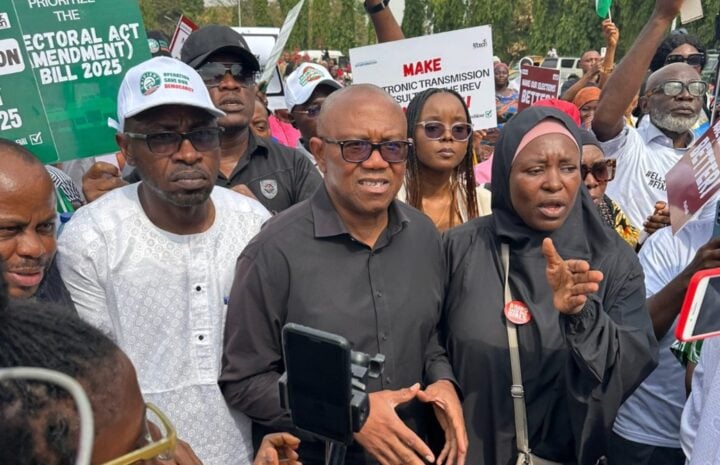
The Nigeria Democratic Congress (NDC) presidential candidate, Peter Obi, has questioned how the Federal government’s 30-day petrol price discount would reduce poverty, unemployment, insecurity and inequality in the country.
Obi raised the questions in a statement posted on his X platform on Sunday, describing the initiative as a reactive policy that substitutes political optics for sound economic planning.
He argued that the discount, which he said amounts to less than five per cent of petrol costs, is unlikely to address the wider economic challenges facing Nigerians.
“The announcement by the APC-led Federal government offering a 30-day discount on price of petrol to relieve the acute hardship and hunger caused Nigerians by its unplanned removal of subsidy can only be described as another very reactive and confused approach to governance that is now the culture of the Tinubu government,” he said.
Obi said he had delayed commenting on the policy to allow time to assess its outcome, but maintains that the measure has not demonstrated a sustainable approach to addressing the country’s economic difficulties.
He recalled that President Bola Tinubu removed the petrol subsidy on May 29, 2023, arguing that the decision was taken without adequate consultation or a proper assessment of its likely effects on the economy and the livelihoods of ordinary Nigerians.
According to Obi, the subsidy removal was followed by other policies, including the floating of the Naira and tax reforms, which he argued are being implemented without proper sequencing and coordination.
He also criticised the government’s handling of multiple budgets, arguing that the combined effect of the policies has contributed to inflation and rising costs of goods and services.
Obi attributed what he described as increasing multidimensional poverty, business closures, unemployment, insecurity, widening inequality and youth migration to the economic pressures arising from the policies.
He also said the policies had weakened the general well-being of Nigerians, insisting that the government should assess their impact before introducing temporary relief measures.
The former Anambra State governor called for a detailed and publicly available regulatory impact assessment of government policies, arguing that such an exercise would help identify their effects and guide necessary adjustments.
He said a government committed to sustainable economic growth should engage stakeholders and ordinary citizens in consultations to develop inclusive policies that improve living conditions and expand economic opportunities.
Questioning the objectives of the petrol discount, Obi asked whether it would increase productivity and exports or whether it was intended to determine if the subsidy should be restored.
“Will it reduce poverty, unemployment, insecurity, and inequality? Will it increase productivity and exports? Is it a test to ascertain if subsidy should be restored? Is it another political gambit in the face of threats of electoral loss in the 2027 election?” he asked.
“Too many questions, no answer!” the former Governor of Anambra State added.


