
Headlines
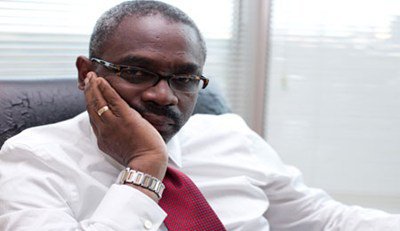
Alleged N27.4bn Scandal: Presidency Exonerates Gbajabiamila, Says Adeyemi Matthew is a ‘Con Artist’

- /home/rhoncare/pointblank.ng/wp-content/plugins/mvp-social-buttons/mvp-social-buttons.php on line 27
https://pointblank.ng/wp-content/uploads/2019/04/Gbajabiamila.jpg&description=Alleged N27.4bn Scandal: Presidency Exonerates Gbajabiamila, Says Adeyemi Matthew is a ‘Con Artist’', 'pinterestShare', 'width=750,height=350'); return false;" title="Pin This Post">
- Share
- Tweet /home/rhoncare/pointblank.ng/wp-content/plugins/mvp-social-buttons/mvp-social-buttons.php on line 69
https://pointblank.ng/wp-content/uploads/2019/04/Gbajabiamila.jpg&description=Alleged N27.4bn Scandal: Presidency Exonerates Gbajabiamila, Says Adeyemi Matthew is a ‘Con Artist’', 'pinterestShare', 'width=750,height=350'); return false;" title="Pin This Post">
The Presidency has volunteered details on how a certain Prince Adeniyi Adeyemi Matthew, allegedly built an elaborate web of forged documents, fake government appointments and fictitious agencies to deceive public officials and present himself as a senior presidential appointee under the administration of President Bola Tinubu.
The Presidency, in a statement issued on Wednesday by the Special Adviser to the President on Information and Strategy, Bayo Onanuga, described Adeyemi as “a con artist” who allegedly used forged appointment letters bearing the name of the Chief of Staff to the President, Femi Gbajabiamila, to create and operate a non-existent Presidential Foreign Intervention Promotion Council, later referred to as the Presidential Economic Advisory Council.
According to the statement, the alleged scam was uncovered after officials of the Nigerian Investment Promotion Council raised concerns that another purported government agency appeared to be operating alongside it.
The Office of the Chief of Staff subsequently alerted security agencies, accusing unnamed individuals of forging official appointment letters purportedly issued from his office.
“The attention of this office has been drawn to the activities of certain individuals and groups engaged in the forgery of official appointment letters purportedly issued from my office,” Gbajabiamila said in a petition dated October 17.
“The fake documents, bearing falsified signatures, reference/folio numbers, and seals, have been used to claim leadership appointments to non-existent entities, with particular reference to the Presidential Foreign Intervention Promotion Council.”
The Chief of Staff disclosed that Adeyemi had allegedly established an office at the Federal Secretariat Complex in Abuja, where he reportedly hosted meetings with Nigerians and foreign nationals while presenting himself as the Director-General of the fictitious agency.
According to the petition, the group even sought diplomatic support from the Ministry of Foreign Affairs to facilitate United States visas for its purported staff.
“The above development not only constitutes a serious criminal act but also undermines the integrity of the Presidency and the credibility of official government communication,” Gbajabiamila wrote.
“I therefore urge you to initiate a thorough investigation to identify and apprehend those involved and also to uncover the network facilitating the forgery.”
Foreign Affairs Ministry raises red flag
The statement revealed that concerns over Adeyemi’s activities had also reached the Federal Ministry of Foreign Affairs after he reportedly convened a meeting with ambassadors at the Wells Carlton Hotel and Apartments in Abuja on October 10, 2025, without the ministry’s knowledge.
In a letter dated October 15, 2025, signed by Ambassador Anderson Madubuike and addressed to the Office of the National Security Adviser and the Office of the Chief of Staff, the ministry sought clarification regarding the status of the purported agency.
“This act contravenes extant rules and regulations guiding diplomatic practices globally,” the ministry stated.
The enquiries triggered correspondence among the Office of the National Security Adviser, the Office of the Secretary to the Government of the Federation and the Office of the Chief of Staff.
Responding to the enquiries, Gbajabiamila categorically denied appointing Adeyemi or recognising the agency.
“Prince Adeniyi Matthew, Director-General of the Presidential Foreign Investment Promotion Council, is unknown to any office, nor do we have any dealings with the said council,” he wrote.
“My attention was drawn to a letter of this purported application, which is fake, and my office has instructed the police and other relevant security agencies to carry out investigations on the person and the entity he claims to represent.”
The Presidency stressed that the Chief of Staff could not have issued any appointment letter because appointments into government offices are the exclusive responsibility of the Office of the Secretary to the Government of the Federation.
Police uncover alleged forgery network
Following the petition, the Police launched an investigation and arrested Adeyemi on October 27, 2025, at the Abuja office from where he allegedly operated the scheme.
Searches conducted at both his office and residence in Suleja reportedly yielded several documents and exhibits believed to be connected with the operation.
Investigators said Adeyemi claimed that one Dolapo Babatunde Tanimola assisted him in procuring the forged appointment letter.
However, police investigations established that Tanimola had died in a fire incident at Kachi Hotel in Abuja on October 22, 2025, five days before Adeyemi’s arrest.
According to the State House, investigators established that the agency Adeyemi claimed to head never existed, while the appointment letters and several official documents recovered during the investigation were allegedly forged.
Police also accused him of falsely presenting himself as a presidential appointee and fraudulently requesting a diplomatic note verbale from the Ministry of Foreign Affairs to facilitate visa applications for himself and members of his organisation.
Investigators further alleged that Adeyemi operated no fewer than 34 bank accounts, including nine accounts opened in the names of fictitious organisations, including the FCT Investment Promotion Agency and Public Private Partnership (FIPA-APP).
The investigation also found that he allegedly succeeded in opening a Central Bank of Nigeria account by misleading the Office of the Accountant-General of the Federation using forged documents.
The Presidency, however, noted that investigators confirmed no government funds were ever paid into the account.
“The act of the suspect constitutes criminal forgery, impersonation and obtaining by false pretence, thereby bringing the office of the Chief of Staff to the President and the Presidency to disrepute before the public and international community,” the police report stated.
Eight-count charge filed
Based on the outcome of the investigation, police filed an eight-count charge before the Federal High Court in Abuja against Adeyemi and two alleged accomplices on November 27, 2025.
The matter is scheduled for hearing on July 27.
According to the Presidency, Adeyemi, while on police bail, recently resurfaced with fresh claims that the Chief of Staff had genuinely appointed him as Director-General of the agency.
The statement noted that the claim directly contradicted the statement he voluntarily made to investigators during the police probe.
It said the renewed allegation prompted Gbajabiamila to issue another public disclaimer on June 8, reaffirming that Adeyemi was an impostor.
Presidency urges caution
The Presidency said Adeyemi had a history of alleged fraudulent misrepresentation, recalling that in 2016 he allegedly presented himself as President-General of the World Youth Organisation, claiming it was affiliated with the United Nations before the UN reportedly disowned the organisation.
Describing the case as that of “a con artist who appears to have built a web of false claims to deceive unsuspecting government officials and the public,” the Presidency urged politicians and members of the public to avoid drawing conclusions before the ongoing criminal trial is concluded.
It further advised that, since the matter is before the court, interested parties should allow the judicial process to determine the allegations against Adeyemi and his co-defendants.


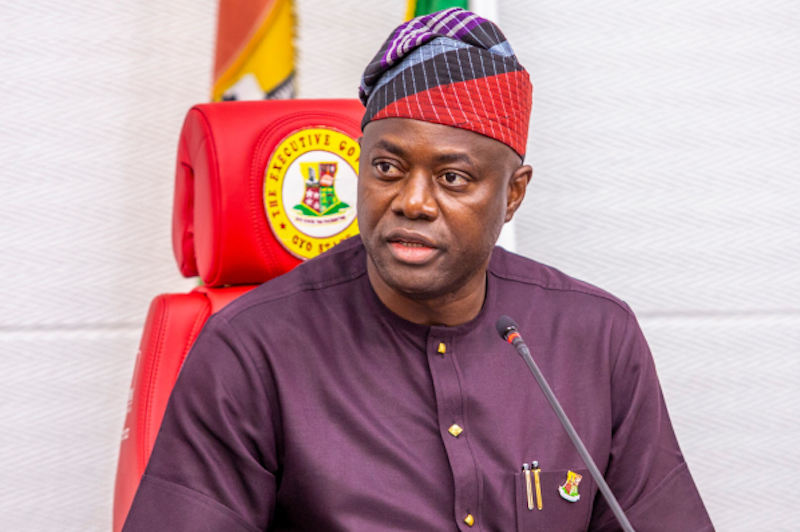
The Allied Peoples Movement (APM) presidential candidate, Seyi Makinde, on Thursday, criticised President Bola Tinubu’s “Emi Lokan” slogan ahead of the 2027 presidential election.
Makinde said Nigerians do not need “turn-by-turn nepotism”, arguing that voters should be free to decide who becomes the country’s next president in 2027.
The Oyo State governor spoke during the APM’s town hall meeting in Akure, Ondo State.
Makinde asked: “How can someone say ‘Eemi lokan’ in a country like Nigeria? You were given the opportunity. If you recall the 1999 presidential election, the South-West voted massively for Baba Olu Falae, but the rest of Nigerians voted for Baba Obasanjo. So, this is not an issue that only the South-West can resolve; it is an issue we must address collectively as Nigerians.
“We do not want ‘turn-by-turn nepotism’, nor do we want a situation where people say, ‘I will vote for projects because it is my turn’. You will not finish those projects, and when it becomes someone else’s turn, they will do the same thing. We will end up with a Nigeria where we cannot get value for the resources belonging to Nigerians.
“The Reset Nigeria agenda is about building a country where infrastructure development supports economic growth and addresses the concerns of young people and women.
“Once we fix our economy, no zone will be left behind, and no demographic group will be left behind.”
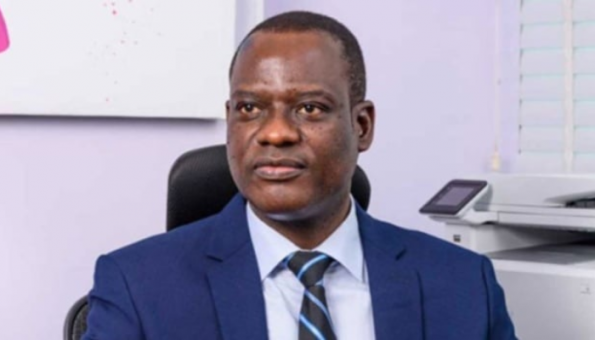
Minister of Finance and Coordinating Minister of the Economy, Taiwo Oyedele, has denied saying the Federal government will introduce a fuel tax when the economy stabilises and income levels improve.
In a post on X on Tuesday, Oyedele said his remarks during an interview with ARISE News was misrepresented, insisting that a “fuel tax is not on the table.”
However, during the interview with Rotus Odiri, ARISE News Business Correspondent, on the sidelines of the 2026 International Monetary Fund and World Bank annual meetings in Bangkok, Thailand, Oyedele said the tax would come when income levels improve enough for Nigerians to accommodate it.
He said taxes account for between 20 and 80 percent of pump prices in some countries, while many African countries impose between six and 10 different taxes on fuel products.
He said introducing fuel tax while petrol was still subsidised would have been counterproductive because government would effectively be paying the tax itself.
According to him, imposing the tax immediately after removal of petrol subsidy would be insensitive to Nigerians.
“The objective should be that instead of trying to suppress prices, which hasn’t worked for us, it hasn’t worked for any country in the world, not one. Instead of trying to suppress prices, think about how to grow income faster than prices rise,” Oyedele said.
“That’s how you bring prosperity and grow the middle class and that is exactly what we are doing as led by Mr. President himself.
“At the appropriate time, when the economy has stabilizes and income level will be able to accommodate it, those taxes will come. Not because we want to impose taxes,” he added.
In his Tuesday post, the minister reiterated that introducing a fuel tax at this time would be insensitive following removal of petrol subsidy, describing reports that government will introduce the levy when the economy stabilises as “fake news.”
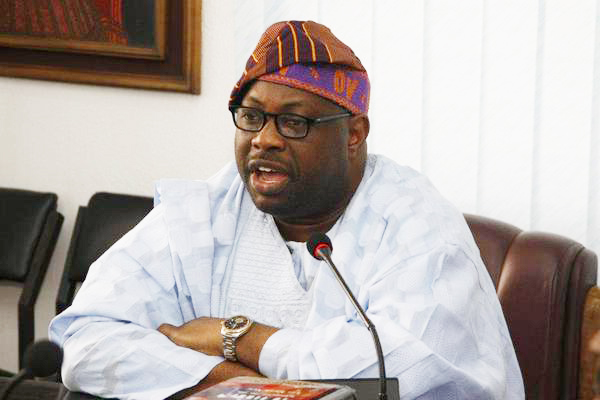
A chieftain of the African Democratic Congress (ADC), and Deputy Director of the Presidential Campaign Council, Chief Dele Momodu, has described former Vice-President Atiku Abubakar as the most nationally formidable and experienced among the leading contenders for the 2027 presidential election.
Momodu said Atiku’s experience at the national level distinguishes him from President Bola Tinubu and former Anambra State Governor, Peter Obi.
He stated this on Wednesday during an interview on Eagle 102.5 FM, Ilese-Ijebu, in Abeokuta.
“If you look at the antecedents of the three major candidates, between Atiku Abubakar and Peter Obi, you will see that Atiku is the most experienced. He has managed our country at the highest level,” he said.
Momodu traced Atiku’s political journey to the 1992 Social Democratic Party (SDP), presidential primary where he contested against late MKO Abiola and stepped down for him.
He said Atiku accepted the outcome without crisis even after he was not picked as Abiola’s running mate, describing it as a mark of true democratic temperament.
“He is the only one who started from around 1992, contested the SDP primary against Abiola and stepped down with uncommon equanimity. He did not make any noise,” Momodu said.
He noted that Atiku was among the founders of the Peoples Democratic Party, PDP, and served as Vice-President from 1999 to 2007.
Comparing Atiku with Obi, Momodu argued that while Obi’s best was demonstrated in Anambra, Atiku’s was at the presidency level managing the national economy.
“Peter Obi has tried his best in Anambra, while Atiku’s best is at the level of vice president controlling the economy of Nigeria. The difference is clear. He has matured in experience and exposure,” he said.
Momodu also said President Tinubu’s experience was largely limited to Lagos.
“What I’m trying to say is that Tinubu’s experience was limited to Lagos, and that is why when he became president, he thought Nigeria was Lagos. And he has found out now that Nigeria is not Lagos,” he said.
He argued that the current economic hardship under the present administration did not show prosperity, insisting Atiku remained better positioned to lead the country.
“Well, we are yet to see that prosperity, and if yesterday would determine today and tomorrow, it is obvious that Tinubu should retire now and let someone else do it,” Momodu added.
DailyPost


