
Headlines
Amid Fraud Allegations, Tinubu Appoints Gbajabiamila As Head, State Police Implementation Committee

- /home/rhoncare/pointblank.ng/wp-content/plugins/mvp-social-buttons/mvp-social-buttons.php on line 27
https://pointblank.ng/wp-content/uploads/2026/07/hq720.jpg&description=Amid Fraud Allegations, Tinubu Appoints Gbajabiamila As Head, State Police Implementation Committee', 'pinterestShare', 'width=750,height=350'); return false;" title="Pin This Post">
- Share
- Tweet /home/rhoncare/pointblank.ng/wp-content/plugins/mvp-social-buttons/mvp-social-buttons.php on line 69
https://pointblank.ng/wp-content/uploads/2026/07/hq720.jpg&description=Amid Fraud Allegations, Tinubu Appoints Gbajabiamila As Head, State Police Implementation Committee', 'pinterestShare', 'width=750,height=350'); return false;" title="Pin This Post">
President Bola Tinubu on Tuesday inaugurated the Presidential Working Group on the National Policing Bill to prepare the legal framework for implementing state police across the country.
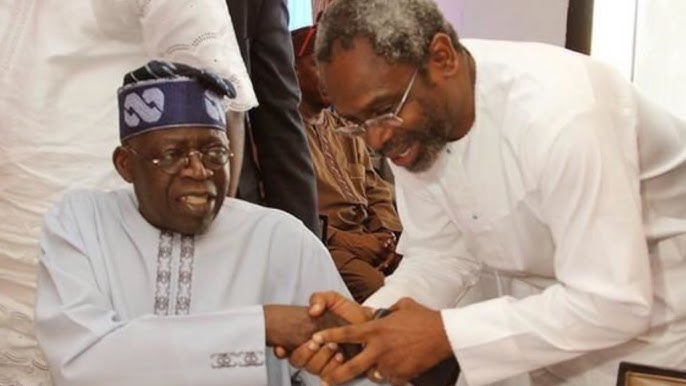
Tinubu, represented by his Chief of Staff, Mr Femi Gbajabiamila, inaugurated the panel at the Presidential Villa, Abuja.
The inauguration followed the Senate’s passage of the Constitution Alteration (State Police) Bill, 2026, proposing a dual policing structure comprising the Federal Police Service and 36 State Police Services.
Tinubu said while the constitutional amendment creates the framework for state police, the National Policing Bill would provide the legal structure for its implementation.
He said, “The Constitution Amendment Bill establishes in the framework for dual policing, but it does not operationalise it. That work is left to the National Policing Bill.”
He said the proposed legislation would address policing standards, state readiness, federal-state coordination, accountability, human rights safeguards and personnel transition.
“The proposed National Policing Bill will include provisions on minimum policing standards, state readiness certification, federal-state coordination, accountability, human rights safeguards and fiscal conditions,” he noted.
The president said that the committee will produce an implementation-ready draft bill immediately after the constitutional amendment process.
“The Working Group has been constituted to produce a technically robust, implementation-ready draft National Policing Bill for transmission to the National Assembly,” Tinubu said.
He said the committee would also recommend other legal instruments required for the smooth implementation of the dual policing system.
“We must not wait until the constitutional process is concluded before beginning this important assignment,” he said.
Gbajabiamila will serve as chairman of the committee, while members include the Attorney-General of the Federation, National Security Adviser and Inspector-General of Police.
Others are; President of the Nigerian Bar Association (NBA), the Chairman, Nigeria Governors’ Forum (NGF), Chairman, NGF Committee on State Police and a Secretariat.
Attorney-General of the Federation and Minister of Justice, Lateef Fagbemi described the initiative as timely in view of Nigeria’s security challenges.
“There is no denying the fact that we are in a critical moment security-wise, and all hands must be on deck,” he said.
Fagbemi urged governors to ensure speedy ratification of the constitutional amendment by their respective state assemblies.
“I appeal to the governors to do their utmost to ensure the early passage of the constitutional amendment because this is a shared responsibility,” he said.
President of the Nigerian Bar Association, Mr Afam Osigwe, reaffirmed the association’s support for the state police initiative.
“Nigeria can hardly be effectively policed by one national police. We fully support the constitutional amendment providing for state police,” he said.
Osigwe, however, stressed the need for adequate legal safeguards to prevent abuse of state police.
“We must ensure we do not create a monster. The right legal framework must guarantee accountability and prevent oppression,” he said.
He pledged the NBA’s commitment to supporting the committee in producing legislation that will strengthen security while protecting citizens’ rights.
Speaking on behalf of the NGF, Governor Dapo Abiodun of Ogun State pledged governors’ support for the speedy implementation of the reform.
He said the plan is for the 36 state governors to accelerate work on the bill once it gets to their various House of Assembly and passed unanimously.
“The plan is that when the bill gets to our various Houses of Assembly, we will all pass it on the same day,” he said.
Abiodun described the proposed state police as a response to Nigerians’ long-standing demand for community-based policing.
“This bill has answered the cries of Nigerians about cascading policing and removing it from the Exclusive Legislative List.”
He said the initiative validated the success of regional security outfits such as Amotekun in the South-West.
“This bill has validated the effectiveness of community policing as demonstrated by Amotekun in the South-West,’ he said.
Abiodun said state police would significantly increase the number of security personnel across the country.
“If each state deploys about 6,000 personnel, we will add nearly 200,000 officers to complement the existing federal police.”.
The governor commended Tinubu for initiating implementation plans before the constitutional amendment process was completed.
“This inauguration demonstrates the proactiveness of the Executive in preparing for effective implementation,” Abiodun said.


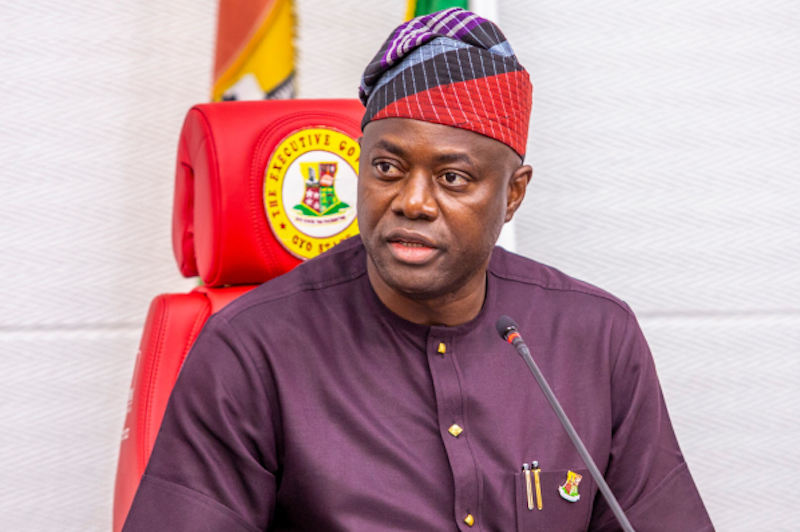
The Allied Peoples Movement (APM) presidential candidate, Seyi Makinde, on Thursday, criticised President Bola Tinubu’s “Emi Lokan” slogan ahead of the 2027 presidential election.
Makinde said Nigerians do not need “turn-by-turn nepotism”, arguing that voters should be free to decide who becomes the country’s next president in 2027.
The Oyo State governor spoke during the APM’s town hall meeting in Akure, Ondo State.
Makinde asked: “How can someone say ‘Eemi lokan’ in a country like Nigeria? You were given the opportunity. If you recall the 1999 presidential election, the South-West voted massively for Baba Olu Falae, but the rest of Nigerians voted for Baba Obasanjo. So, this is not an issue that only the South-West can resolve; it is an issue we must address collectively as Nigerians.
“We do not want ‘turn-by-turn nepotism’, nor do we want a situation where people say, ‘I will vote for projects because it is my turn’. You will not finish those projects, and when it becomes someone else’s turn, they will do the same thing. We will end up with a Nigeria where we cannot get value for the resources belonging to Nigerians.
“The Reset Nigeria agenda is about building a country where infrastructure development supports economic growth and addresses the concerns of young people and women.
“Once we fix our economy, no zone will be left behind, and no demographic group will be left behind.”
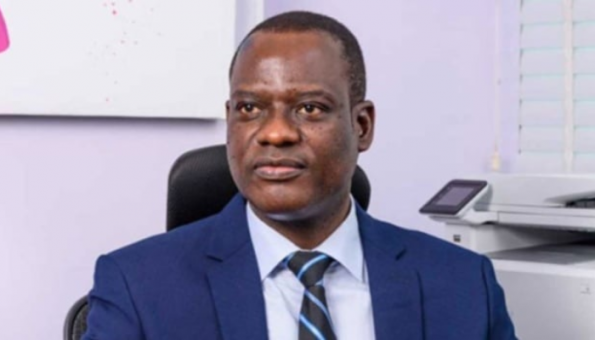
Minister of Finance and Coordinating Minister of the Economy, Taiwo Oyedele, has denied saying the Federal government will introduce a fuel tax when the economy stabilises and income levels improve.
In a post on X on Tuesday, Oyedele said his remarks during an interview with ARISE News was misrepresented, insisting that a “fuel tax is not on the table.”
However, during the interview with Rotus Odiri, ARISE News Business Correspondent, on the sidelines of the 2026 International Monetary Fund and World Bank annual meetings in Bangkok, Thailand, Oyedele said the tax would come when income levels improve enough for Nigerians to accommodate it.
He said taxes account for between 20 and 80 percent of pump prices in some countries, while many African countries impose between six and 10 different taxes on fuel products.
He said introducing fuel tax while petrol was still subsidised would have been counterproductive because government would effectively be paying the tax itself.
According to him, imposing the tax immediately after removal of petrol subsidy would be insensitive to Nigerians.
“The objective should be that instead of trying to suppress prices, which hasn’t worked for us, it hasn’t worked for any country in the world, not one. Instead of trying to suppress prices, think about how to grow income faster than prices rise,” Oyedele said.
“That’s how you bring prosperity and grow the middle class and that is exactly what we are doing as led by Mr. President himself.
“At the appropriate time, when the economy has stabilizes and income level will be able to accommodate it, those taxes will come. Not because we want to impose taxes,” he added.
In his Tuesday post, the minister reiterated that introducing a fuel tax at this time would be insensitive following removal of petrol subsidy, describing reports that government will introduce the levy when the economy stabilises as “fake news.”
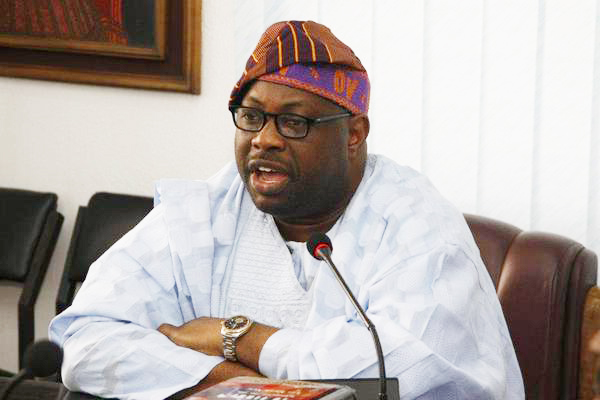
A chieftain of the African Democratic Congress (ADC), and Deputy Director of the Presidential Campaign Council, Chief Dele Momodu, has described former Vice-President Atiku Abubakar as the most nationally formidable and experienced among the leading contenders for the 2027 presidential election.
Momodu said Atiku’s experience at the national level distinguishes him from President Bola Tinubu and former Anambra State Governor, Peter Obi.
He stated this on Wednesday during an interview on Eagle 102.5 FM, Ilese-Ijebu, in Abeokuta.
“If you look at the antecedents of the three major candidates, between Atiku Abubakar and Peter Obi, you will see that Atiku is the most experienced. He has managed our country at the highest level,” he said.
Momodu traced Atiku’s political journey to the 1992 Social Democratic Party (SDP), presidential primary where he contested against late MKO Abiola and stepped down for him.
He said Atiku accepted the outcome without crisis even after he was not picked as Abiola’s running mate, describing it as a mark of true democratic temperament.
“He is the only one who started from around 1992, contested the SDP primary against Abiola and stepped down with uncommon equanimity. He did not make any noise,” Momodu said.
He noted that Atiku was among the founders of the Peoples Democratic Party, PDP, and served as Vice-President from 1999 to 2007.
Comparing Atiku with Obi, Momodu argued that while Obi’s best was demonstrated in Anambra, Atiku’s was at the presidency level managing the national economy.
“Peter Obi has tried his best in Anambra, while Atiku’s best is at the level of vice president controlling the economy of Nigeria. The difference is clear. He has matured in experience and exposure,” he said.
Momodu also said President Tinubu’s experience was largely limited to Lagos.
“What I’m trying to say is that Tinubu’s experience was limited to Lagos, and that is why when he became president, he thought Nigeria was Lagos. And he has found out now that Nigeria is not Lagos,” he said.
He argued that the current economic hardship under the present administration did not show prosperity, insisting Atiku remained better positioned to lead the country.
“Well, we are yet to see that prosperity, and if yesterday would determine today and tomorrow, it is obvious that Tinubu should retire now and let someone else do it,” Momodu added.
DailyPost


