
Metro
Anchors of Progress: Leadership, Nation Building, Security As Pathways to Shared Resilience


- /home/rhoncare/pointblank.ng/wp-content/plugins/mvp-social-buttons/mvp-social-buttons.php on line 27
https://pointblank.ng/wp-content/uploads/2025/08/DR.TOLULOPE-A.-ADEGOKE-AMBP-UN__-1-744x600.jpg&description=Anchors of Progress: Leadership, Nation Building, Security As Pathways to Shared Resilience', 'pinterestShare', 'width=750,height=350'); return false;" title="Pin This Post">
- Share
- Tweet /home/rhoncare/pointblank.ng/wp-content/plugins/mvp-social-buttons/mvp-social-buttons.php on line 69
https://pointblank.ng/wp-content/uploads/2025/08/DR.TOLULOPE-A.-ADEGOKE-AMBP-UN__-1-744x600.jpg&description=Anchors of Progress: Leadership, Nation Building, Security As Pathways to Shared Resilience', 'pinterestShare', 'width=750,height=350'); return false;" title="Pin This Post">
By Tolulope A. Adegoke PhD
“Progress endures on three quiet anchors: leadership that roots institutions deep, security that keeps possibility alive, and nation building that weaves the many into one lasting strength.”
Leadership, nation building, and security are not abstract ideals. Together they form the operating system that determines whether societies advance or stagnate. When these three elements work in concert, nations generate stability, shared prosperity, and resilience. When they pull apart, insecurity, exclusion, and institutional decay take hold.
Nigeria, the wider African continent, and the global community face converging pressures—multi-dimensional violence, weak institutions, economic exclusion, climate stress, and shifting geopolitics. The response cannot be piecemeal. Progress requires deliberate, solution-oriented strategies that treat leadership, nation building, and security as mutually reinforcing. This article outlines practical pathways and illustrates their impact through specific case studies that convert these inter-linkages into tangible gains for national development, continental advancement, and global well-being.
Core Principles That Guide Effective Action
Three principles underpin workable solutions.
First, security must be both protective and enabling. It creates the space for investment and daily life while drawing its legitimacy from fair and inclusive governance. Second, nation building succeeds when it expands shared economic stakes and a sense of common citizenship, rather than simply managing diversity. Third, leadership delivers lasting results when it prioritises strong institutions over personalised power and links immediate stabilisation to long-term capacity.
These principles shape the concrete measures and case studies that follow.
Nigeria: Building Security and Inclusion Together
Nigeria’s security challenges are complex and multi-theatre. Residual insurgency in the northeast, widespread banditry and kidnapping, farmer-herder conflicts, separatist tensions, and resource-related criminality all strain state capacity. These threats thrive where governance is thin, economic opportunity is scarce, and public trust is low.
A dual-track response is essential. On the operational side, sustained investment in the welfare, training, and equipment of police and military personnel remains critical. Intelligence-led policing, better inter-agency coordination, and technology-supported border management can improve results. Expanding professional state and local security structures under clear national standards can ease the burden on federal forces without fragmenting authority.
Parallel nation-building efforts must tackle the drivers of violence. Targeted programmes that create productive opportunities for young people and rural communities in high-risk areas reduce recruitment pools for armed groups. Transparent resource-revenue sharing, accelerated delivery of education, healthcare, and infrastructure, and practical land-use and livestock reforms can ease competition over scarce resources.
Leadership is the critical link. Clear performance metrics for both security and development outcomes, stronger independent oversight, and policy continuity across electoral cycles increase the chances of durable progress. When citizens see improved safety accompanied by rising incomes and better services, confidence in the state grows and social cohesion strengthens.
Case Studies in Impact: Continental and Global Lessons
Concrete examples demonstrate how aligned leadership, nation building, and security produce measurable results.
Botswana: Institutional Foresight and Sustained Stability Botswana stands as one of Africa’s clearest long-term success stories. At independence in 1966, it was among the poorest countries in the world. Founding President Seretse Khama and successive leaders made early institutional choices that proved decisive. Mineral rights were placed under national rather than tribal or sectional control before major diamond discoveries. Regular multiparty elections, relatively independent institutions, and prudent fiscal management channelled resource revenues into public goods rather than patronage.
The impact has been substantial. Botswana avoided the resource curse that affected several peer economies, maintained political stability for nearly six decades, and achieved consistent economic growth alongside improvements in human development indicators. The case shows that leadership decisions made before resource wealth materialises, combined with consistent nation-building around inclusive institutions and security under the rule of law, can generate broad-based and durable progress.
Rwanda: Rapid Recovery from Catastrophe Rwanda’s experience after the 1994 genocide illustrates the catalytic potential of focused leadership in extreme fragility. The government prioritised rapid restoration of security, centralised administrative capacity, and ambitious economic modernisation. Investments in infrastructure, public services, business environment reforms, and social programmes produced notable gains in poverty reduction, life expectancy, and economic growth over subsequent decades. Kigali’s transformation and the country’s improved rankings on various ease-of-doing-business and governance metrics reflect deliberate nation-building efforts.
At the same time, the highly centralised character of governance has generated ongoing debate about political space and long-term institutional resilience. The Rwandan case demonstrates that decisive leadership can restore order and accelerate development after profound trauma, while also underscoring the importance of gradually expanding inclusion for sustained legitimacy.
Singapore: From Vulnerability to High-Performance State Singapore offers a powerful non-African parallel. Upon independence, the small city-state faced severe security vulnerabilities, ethnic diversity, and limited natural resources. Leadership under Lee Kuan Yew and successors combined rigorous public order and security measures with meritocratic governance, strategic economic positioning, anti-corruption systems, and deliberate nation-building around shared prosperity and multi-ethnic coexistence.
The results transformed Singapore into one of the world’s most competitive and stable economies. High levels of public trust, efficient institutions, and sustained investment in human capital turned geopolitical exposure into a source of disciplined state capacity. The experience highlights how leadership that integrates security, institutional integrity, and inclusive economic opportunity can overcome structural constraints.
Additional African Illustrations Post-conflict recoveries in Sierra Leone and Mozambique further reinforce the pattern. In both cases, progress depended on integrating security-sector reform with political settlements and economic reintegration of former combatants and affected communities. Ghana’s record of successive democratic transitions shows that institutionalised leadership change can reinforce stability and investor confidence even under economic pressure. These examples confirm that context matters, yet the underlying logic remains consistent: security creates space, nation building creates cohesion and opportunity, and leadership aligns the two over time.
Continental Solutions: Strengthening Agency and Shared Resilience
Africa can scale these lessons through pragmatic regional action. Strengthening issue-specific security cooperation—intelligence sharing, joint border operations, and efforts against the financing of armed groups—remains essential even where broader political alignments are contested. Expanding intra-African trade, infrastructure corridors, and skills mobility creates shared economic interests capable of transcending political differences. Investing in a new generation of public leaders oriented toward institutional performance rather than short-term extraction reinforces these gains.
Global Dimensions: Mutual Gains from Local Progress
Stable and productive African states deliver clear benefits beyond the continent. They reduce pressures that fuel irregular migration, limit space for transnational criminal and extremist networks, expand legitimate markets, and contribute to global climate and food-security efforts.
External partners amplify positive outcomes by prioritising capacity strengthening over substitution. Support for African-led security initiatives focused on training, logistics, and institutional reform; investment in climate-smart agriculture and resilient infrastructure; and trade frameworks that reward governance improvements and value addition all align external resources with local priorities. Global leadership that models long-term orientation and respect for institutions reinforces these efforts.
Turning Pathways into Results
Implementation requires realism and discipline. Early, visible improvements in security and basic services build the political capital needed for deeper reforms. Transparent monitoring that tracks both security indicators and development outcomes enables adjustment and accountability. Inclusive consultation—bringing in local communities, traditional institutions, the private sector, and civil society—increases legitimacy and practical relevance.
Leadership development itself is strategic. Structured exposure to comparative experience, evidence-based design, and ethical standards expands the pool of actors capable of sustaining integrated approaches across political cycles. Civic education that connects individual opportunity to broader national and continental progress strengthens the social foundations of security and nation building.
Conclusion: From Interdependence to Shared Progress
The challenges facing Nigeria, Africa, and the wider world are serious, yet they are not insurmountable. The case studies of Botswana, Rwanda, Singapore, and other recoveries demonstrate that aligned leadership, nation building, and security produce measurable improvements in stability, prosperity, and human well-being.
National strategies that professionalise security forces while expanding economic inclusion, continental approaches that strengthen African agency and shared prosperity, and global partnerships that reinforce local capacity generate reinforcing gains. The ultimate measure of success is the steady expansion of human security, productive opportunity, and institutional trust.
When leadership, nation building, and security operate as a coherent system, they contribute directly to national stability, continental advancement, and global well-being. The pathways are practical and adaptable. Their realisation depends on sustained commitment to a simple truth: order, inclusion, and capable institutions are not competing priorities. They are interdependent requirements for lasting progress.
Dr. Tolulope A. Adegoke, AMBP-UN is a globally recognized scholar-practitioner and thought leader at the nexus of security, governance, and strategic leadership. His mission is dedicated to advancing ethical governance, strategic human capital development, resilient nation building, and global peace. He can be reached via: tolulopeadegoke01@gmail.com, globalstageimpacts@gmail.com


The FCT Council of the Nigeria Labour Congress (NLC) has declared an indefinite strike across the Federal Capital Territory, directing workers in the public and private sectors to shut down schools, hospitals, government offices and other establishments.
The strike began on Wednesday, October 7, following the expiration of a seven-day ultimatum issued to the FCT Administration (FCTA) over the promotion of teachers.
The labour council said the FCTA failed to satisfactorily address its demands, particularly its call for the removal of the requirement for vacancies before teachers can be promoted.
The dispute centres on the FCTA’s position that teachers can only advance when vacancies are available. The NLC said the policy has contributed to years of career stagnation among teachers and is not applicable to the teaching profession.
In resolutions signed by its Chairman, Comrade Knabayi Adalo, the council argued that FCT teachers are not core civil servants or pool staff and should therefore not be subjected to a vacancy-based promotion system designed for pool officers.
It said teachers recruited by the FCT Universal Basic Education Board, UBEB, and FCT Secondary Education Board, SEB, were employed specifically to teach and should be promoted “as and when due.”
The NLC is also demanding that teachers who became eligible for promotion in 2025 be allowed to sit for their promotion examination before or alongside the 2026 candidates.
Another demand is the withdrawal of redeployment and demotion letters issued to directors who benefited from the Harmonised Retirement Age for Teachers Act, 2022.
The council is further calling for the immediate reinstatement of the dissolved management teams of FCT SEB and FCT UBEB.
The decision to commence the strike was taken at the council’s State Executive Council, SEC, meeting held on October 6, at the NLC FCT Secretariat.
At the meeting, the labour body rejected the FCTA’s response to its ultimatum, describing it as “neither clear, positive, nor genuine.”
According to the SEC, the response did not address the vacancy requirement, which it described as the “root cause of career stagnation”, and was also silent on what the council called the “illegal redeployment of directors.”
“The response of the FCTA is ambiguous and totally unacceptable,” the SEC said.
The council added that it “will no longer tolerate the continued dehumanisation of FCT teachers through obnoxious policies alien to the teaching profession.”
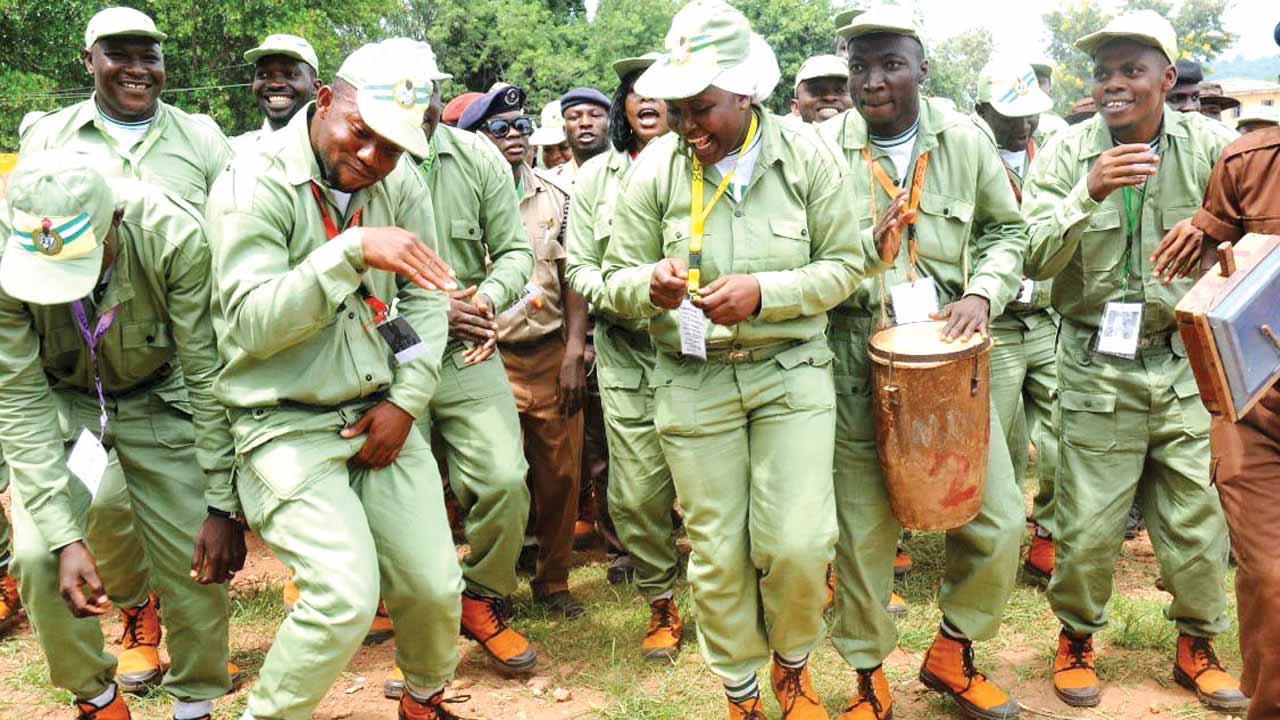
The 20 prospective National Youth Service Corps (NYSC) members and one other abducted along the Owerri-Onitsha Road in Imo State have regained their freedom.
The victims were rescued from the Amakohia-Ubi forest in Owerri West Local Government Area of the state following a coordinated operation involving security agencies.
They have since been taken to the Department of State Services (DSS) Hospital in Owerri, where they are receiving medical attention and undergoing necessary medical checks.
The Director-General of the National Youth Service Corps Brigadier General Olakunle Oluseye Nafiu visited the DSS Clinic in Owerri, where he addressed the rescued victims.
He was in company of the Imo State Commissioner of Police, Director DSS and Brigade Commander 34 artillery Imo State.
Details of the operation, including whether any arrests were made or ransom was paid, have not yet been made public.
However, in a statement issued by the Force Public Relations Officer, Ani Iniedu, the police said, “Efforts are ongoing to apprehend those responsible for the abduction, as the Police and other security agencies sustain coordinated operations towards bringing all culpable persons to justice.”
The victims were abducted on October 1 while travelling from Ibadan, Oyo State, to NYSC orientation camps in Abia and Akwa Ibom states.
The two buses conveying the prospective corps members came under attack near Umunoha in the Mbaitoli Local Government Area of Imo State.
Following the abduction, security agencies launched a coordinated search-and-rescue operation to locate the victims and their abductors.
The Imo State Police Command later said its operatives had located the kidnappers’ camp through drone surveillance but were unable to immediately enter the location because it was reportedly mined with improvised explosive devices (IEDs).
The police subsequently deployed additional operational assets, including bulldozers and armoured personnel carriers, as efforts intensified to reach the victims.
The development also triggered anxiety among the victims’ families after reports that the abductors were demanding ₦50 million for each victim.
Police had earlier confirmed that 10 victims were rescued following the attack, while efforts continued to locate the remaining abductees.
The latest development brings an end to the ordeal of the 20 corps members and the other abducted victim, who have now been reunited with safety and are receiving medical attention in Owerri.
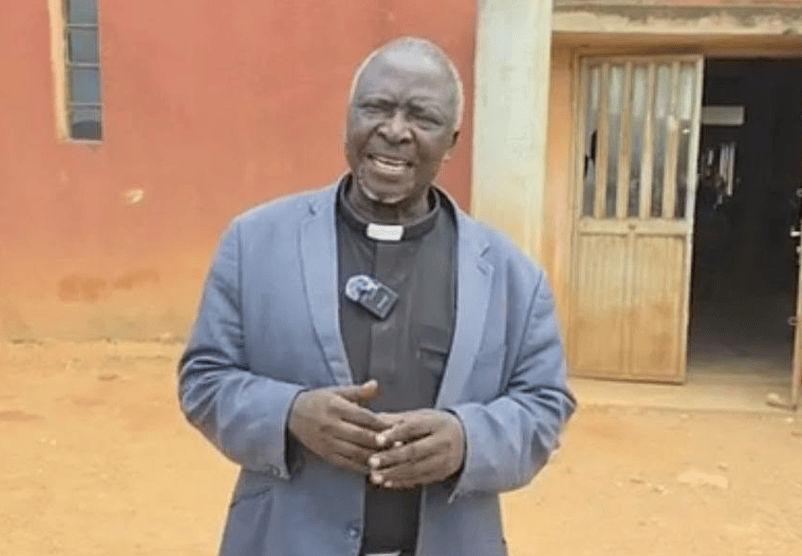
The Regional Chairman of Church of Christ in Nations (COCIN), Barkin Ladi Local Government Area of Plateau State, Rev. Ezekiel Dachomo, has denied reports that he prayed for the re-election of President Bola Tinubu and Vice President Kashim Shettima in the 2027 presidential election.
Dachomo, who is currently in Israel on what he described as his first International Christian Advocacy Tour, said his visit was aimed at drawing the attention of world leaders to the plight of Christians in Plateau.
The cleric made the clarification in a social media post on Monday night following reports that he had prayed for the success of the All Progressives Congress (APC) presidential ticket and expressed support for the Muslim-Muslim ticket.
Dachomo said his earlier post, in which he prayed for Nigeria, had been misconstrued as an endorsement of Tinubu and Shettima ahead of the 2027 election.
According to him, there was nowhere in the post where he prayed for the President and Vice-President to win the election.
“People are trying to frame me, saying I prayed for a Muslim-Muslim ticket. But I did not, and I will never pray for a Muslim-Muslim ticket because Nigeria belongs to both Muslims and Christians,” he said.
Dachomo said his prayers were for the well-being and success of Nigeria and its citizens, irrespective of their religious affiliations.
“I pray for both Muslims and Christians in Nigeria. I pray for Nigeria to succeed. If you truly want to come to God, come with a clean heart,” he added.
The cleric further stated, “I did not pray for President Tinubu and Vice President Shettima to win in 2027. My prayers have always been for Nigeria to succeed.”
Dachomo’s clarification came amid reactions to his ongoing advocacy tour in Israel, where he is seeking international attention to security challenges and what he described as the persecution of Christians in Plateau.


