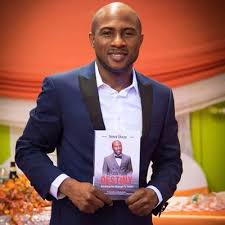
By Henry Ukazu
Dear Destiny Friends,
Greatness is something we all should aspire to attain as we explore what life has in store for us. To attain greatness is no joke. It takes a lot of sacrifice, patience, knowledge, wisdom, understanding, perseverance, and dedication. Isn’t it true that nothing good comes easy? According to my late dad, Chief Lazarus Anthony Ukazu, “If you want to bear a bear name, one must work hard to earn it”
That means success is not attained on a platter of gold. One must strategically work hard to attain any height or title one desires to have. If one desires to be a President, one must be intentional in the way they live their life. If a student desires to have a perfect Grade Point Average (GPA), the student must begin from their first year of college to have good grades; if an employee desires to rise up to a managerial position, the employee must put in the work by ensuring that they are punctual and their work ethic is top-notch. I can go on, but as the sage will say, a word is enough for the wise.
Aspiring for greatness can be difficult, no doubt, but it’s doable. One of the easiest ways of attaining greatness is by knowing yourself. Knowing who you are is a critical and fundamental tool necessary for success because it helps to speed up the process. One may be wondering why I said knowing oneself is the easiest and fastest way to succeed in life. Well, the answer is not far-fetched. According to Oscar Wilde, “Be yourself because others are taken”. This simply means one must focus on what they are naturally good at. It makes no sense to struggle to be what you are not. Like, I always say, you can copy my style, but you can’t imitate my creativity.
That said, it’s important for one to ask oneself: what’s that one thing they are good at; what’s that one thing one doesn’t struggle to do; what’s that one thing most people compliment about them; what’s that one thing you can do and you won’t be stressed; what’s that thing you can do for free and you’ll care less whether you are paid or not; what’s that one thing you can do with relative ease if you are woken from the sleep and you’ll do it well? If you were able to answer any of these questions, then you are fifty percent nearer to greatness. The other fifty percent is for one to develop that inherent talent or gift in them.
The interesting thing about self-discovery is that it helps one to spend less time and energy on a project that won’t add value to their life. For instance, if you know you are good at a particular project or subject, or have expertise or creativity in a particular skill, you’ll stand a better chance of succeeding faster in life when you hone it than learning a new skill that you’ll have to develop. That’s why it’s good to know oneself.
During my formative years in the USA, I engaged in many activities trying to figure out my path. I began by studying taxation law at New York Law School, a major I didn’t like. I worked in a tax firm, hoping I would find joy in the money I made. That turned out to be an illusion. I worked in a small boutique law firm; I worked in a Not-for-profit organization; I worked in a private corporation as a Case Manager; I also worked as an entrepreneur at one point, and now I am currently in the public sector. I did all this just to figure out my path.
In all of these, I was still confused, trying many things. My clarity began when I got a job as a Case Manager; that job gave me clarity, focus, and purpose to know what I should be focusing on.
Again, my writing skills gave me a better understanding of who I am because it projected my image. Today, some people look at me and say I am great simply because I have three books to my name; I have written hundreds of articles in addition to meeting great people the world has celebrated. But the truth is that I discovered what I love, what I am doing and building, and the universe conspired to connect me to the right people, in addition to attracting opportunities to me.
I can say for a fact that, assuming I worked in a tax firm as advised just because of the associated money I might make, I would be feeling frustrated and depressed, even though I might have made money, which is not even guaranteed.
The same principle is applicable to anyone who studies a major or works in an establishment they don’t like. They might make money, but not in the major. I have seen nurses, doctors, engineers, lawyers, etc. who are making good money but are not happy, and I have seen people who didn’t study professional courses, some didn’t even have a college degree, yet are extremely successful and happy.
What does that tell you? They have either discovered what makes them unique, or they are happy with their major. Alternatively, it can be a combination of both.
The message here is to focus on what you are good at and develop it. The world will come to seek your services wherever you may be on planet Earth.
Furthermore, according to John Maxwell’s father, if you want to be great, you need three things: Value people, believe in people, and unconditionally love people for who they are. These are great ways to succeed in life, especially if one desires to make a fortune out of life.
For me, when I write, I think about valuing people, believing in people, and unconditionally loving people. Also, when I speak, I value people, I believe in people, and unconditionally love them. Why? Because people do well when people think well of them. It’s wonderful when a person believes in the leader, but it’s powerful and wonderful when the leader believes in the people.
Do you know that when you value people, it brings out the best in them? People love to be appreciated; people love to get approval, people love to get attention; people love to be accepted for who they are; and people love to be valued and respected. The simple truth about value is that when I value people, it brings out the best in me.
Today, I will ask you: are you aspiring for greatness in your family, school, workplace, community, etc. If yes, your task will be to focus on developing what you are naturally good at.
Henry Ukazu writes from New York. He works with the New York City Department of Correction as the Legal Coordinator. He’s the founder of Gloemi. He’s a Transformative Human Capacity and Mindset coach. He is also a public speaker, youth advocate, creative writer, and author of Design Your Destiny- Actualizing Your Birthright to Success, Unleash Your Destiny, and The Six Pillars of Success. He can be reached via info@gloemi.com