Following the opening of applications from eligible candidates living with disabilities, for scholarships to pursue legal qualifications, the Opeoluwa Sotonwa Foundation (OSF), a not-for-profit organisation, founded by US-based philanthropist, Mr. Opeoluwa Sotonwa, and dedicated to expanding educational opportunity, leadership and inclusion, has announced the recipients of its 2026 scholarships, fellowships and academic awards.
Now in its fourth year, OSF has continued to deepen its investment in Nigeria’s deaf and hard-of-hearing community while expanding pathways for students with disabilities in the legal profession.
The 2026 awards also mark a new milestone with the introduction of the Prof. Konyinsola Ajayi, SAN Scholar-Practitioner Award, supporting a legal practitioner pursuing doctoral studies in Law.
Founded in 2022, OSF is grounded in a simple but enduring conviction: talent is universal, but opportunity is not. The Foundation seeks to close that gap by investing not merely in education, but in people whose knowledge, leadership and service can create opportunities for others.
PROF. KONYINSOLA AJAYI, SAN SCHOLAR-PRACTITIONER AWARD
For the first time, OSF is extending its investment in legal education beyond the undergraduate level through the Prof. Konyinsola Ajayi, SAN Scholar-Practitioner Award.
The new award recognizes a legal practitioner pursuing a Ph.D. in Law, bridging two worlds essential to the future of justice: the practical experience of the legal profession and the rigorous inquiry of advanced legal scholarship.
- Isioma Osakuni — Ph.D. in Law, University of Ibadan — Inaugural Recipient
The establishment of the Scholar-Practitioner Award represents a natural evolution of the Prof. Konyinsola Ajayi, SAN Fellowship. It broadens OSF’s vision from helping students enter the legal profession to supporting practitioners seeking to contribute to its intellectual development through advanced research and scholarship.
PROF. KONYINSOLA AJAYI, SAN FELLOWSHIP
The Prof. Konyinsola Ajayi, SAN Fellowship is OSF’s flagship investment in developing a more inclusive legal profession. Expanded in 2025 to include law students with disabilities beyond the Deaf and hard-of-hearing community, the fellowship recognizes that the pursuit of justice is strengthened when the legal profession reflects the breadth of the society it serves. The recipients are:
- Abubakar Nura — Law, Bayero University Kano
- Amala Njelita — Law, University of Calabar
OPEOLUWA SOTONWA FOUNDATION GENERAL SCHOLARSHIP
The Foundation’s core scholarship program continues OSF’s foundational commitment to Deaf and hard-of-hearing students pursuing higher education across Nigeria. The 2026 scholars represent a broad range of disciplines, from education and computer science to political science, entrepreneurship and the arts. The recipients are:
- Auwalu Mohammed — English Education, Gombe State University
- Wende Terungwa — Special Education/PHE, Federal University of Education Pankshin
- Farida Dalhatu — Political Science, Umar Musa Yar’dua University, Katsina
- Fuhad Abdulrasaq — History and International Studies, University of Ilorin
- Irimiya Samaila — Special Education, University of Calabar
- Amina Nasiru — Entrepreneurship, Kaduna State University
- Abosede Josephine Akilo — Special Education, Federal College of Education in affiliation with University of Ibadan
- Toheeb Olajuwon Balogun — Political Science, Federal College of Education (Special), Oyo
- Mujahid Adamu — Education-English, Sule Lamido University Kafin Hausa
- Inerepamo Maxwell Pounana — Special Education, Ignatius Ajuru University of Education
- Precious Onyinyechi Okonkwo — Special Education, Ignatius Ajuru University of Education
- Nneoma Happiness Agbo — Economic Education, Peaceland College of Education Enugu
- Yusuf Anas — Educational Management, Abdulkadir Kure University, Minna
- Omopariola Opeyemi — Educational Management, Kwara State University
- Akinkunmi Sheriff Akinboade — Fine and Applied Arts, Federal College of Education (Special), Oyo
- Royal Adeh Obi — Special Education/Tourism, University of Calabar
- Oladipupo Emmanuel Adeyeri — Computer Science, Federal College of Education (Special), Oyo
- Bello Abubakar — Islamic Studies, Aminu Salah College of Education
MOST OUTSTANDING SCHOLARS 2026
Introduced in 2025, the Most Outstanding Scholar distinction recognizes one female and one male scholar whose academic achievement, leadership and perseverance distinguish them within the OSF community.
- Mutiyat Oreoluwa Raheem — Microbiology, University of Ilorin — Female Most Outstanding Scholar
- John Nworie Nte — Medicine and Surgery, University of Calabar — Male Most Outstanding Scholar
GRADUATE SCHOLARS
OSF’s commitment does not end with undergraduate education. The Graduate Scholars program supports Deaf and hard-of-hearing scholars advancing into postgraduate study and developing expertise capable of influencing their professions, institutions and communities.
- Godwin Agianpuye — PGD/M.Sc., Computer Science, Wesley University, Ondo
- Auwalu Salisu Ismaila — M.Ed., Special Education, Bayero University, Kano
- Caroline Nwugo Onu — Ph.D., Christian Leadership, The Nigerian Baptist Theological Seminary
VOICES BEYOND SOUND – SOCIAL AND BUSINESS SCHOLARSHIP
Established in partnership with Greg and Annette Hudson, Voices Beyond Sound recognizes Deaf and hard-of-hearing students pursuing studies connected to social and business leadership. First featured in the 2025 awards, the initiative reflects a shared belief that leadership is not defined by how a person communicates, but by the ideas, resilience and impact they bring to society.
- Zulaihatu Sani — Business Administration, Gombe State University
- Qudus Ajiboye — Economics, National Open University of Nigeria
- Taiwo Eneyamire Abdul — Economics, Federal College of Education (Special), Oyo
- Taiwo Hassan Alatilehin — Business Education, University of Ilorin
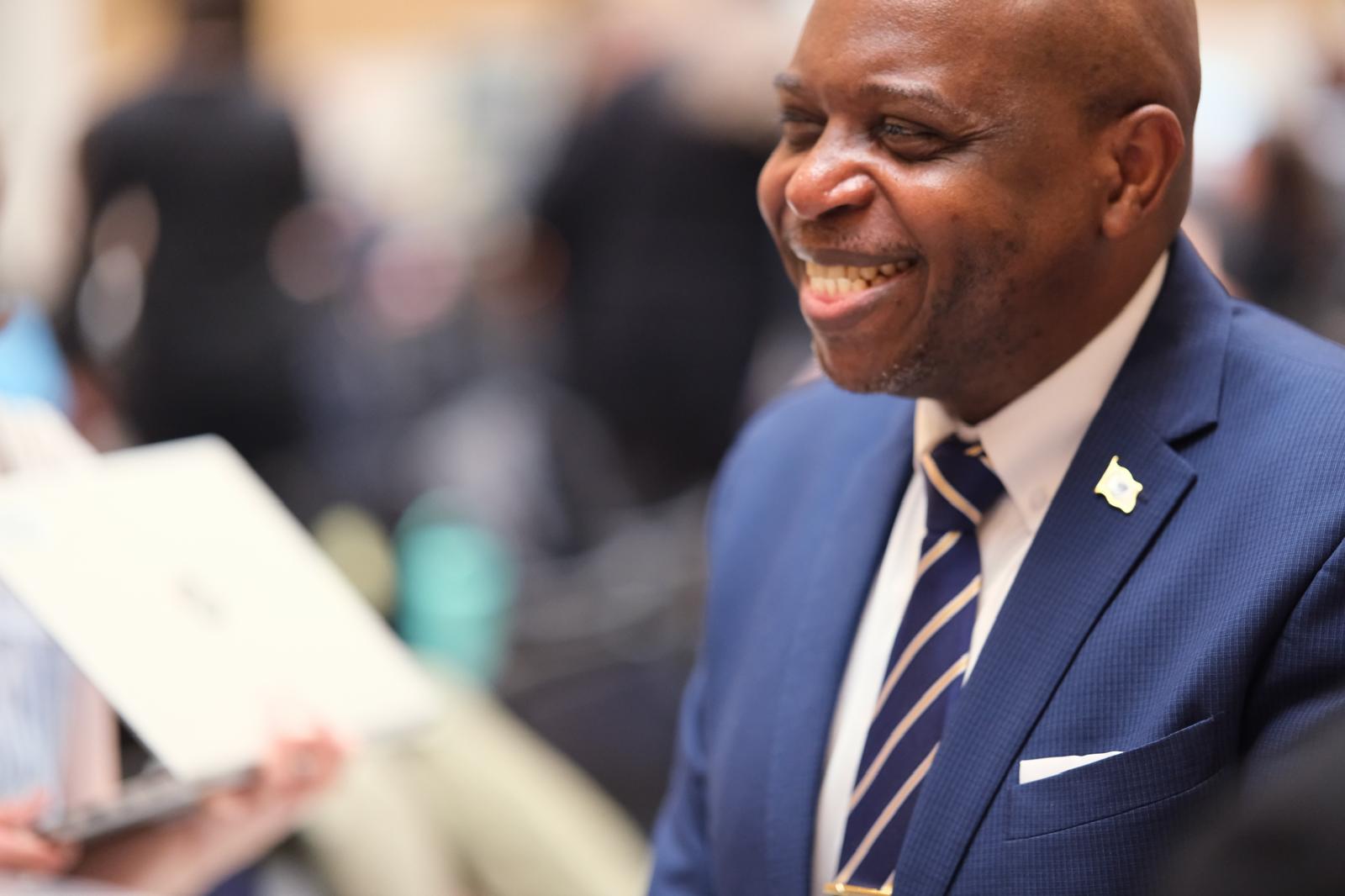
“Four years into this journey, we are seeing what becomes possible when opportunity meets determination,” said Dr. Opeoluwa Sotonwa, Founder of OSF. “Our scholars are studying medicine, law, education, science, technology, business, the arts and other disciplines. Some are beginning their higher-education journeys; others are advancing into master’s and doctoral study. What connects them is not disability, but possibility. Our responsibility as a Foundation is to ensure that talent is given room to become impact.”
“The introduction of the Prof. Konyinsola Ajayi, SAN Scholar-Practitioner Award is especially meaningful. Justice requires not only lawyers who practice the law, but scholars who interrogate it, strengthen it and help imagine what it can become. By investing across that continuum—from the undergraduate law student to the doctoral scholar-practitioner—we are investing in the future of the profession itself.”
For more information about the Opeoluwa Sotonwa Foundation and its programs, visit www.opeoluwasotonwafoundation.org.
About the Opeoluwa Sotonwa Foundation
Established in 2022, the Opeoluwa Sotonwa Foundation (OSF) is a nonprofit organization dedicated to unlocking educational and leadership opportunities for Nigeria’s Deaf and hard-of-hearing communities while advancing targeted opportunities for students with disabilities. Through scholarships, fellowships, mentorship and advocacy, OSF invests in students and emerging leaders with the potential to transform their professions, communities and society.
The Foundation can be reached via:
Cassandra Sotonwa
Chief Operating Officer
Opeoluwa Sotonwa Foundation
opeoluwasotonwafoundation@gmail.com
The Foundation wishes all recipients a fruitful academic period.