
Uncategorized
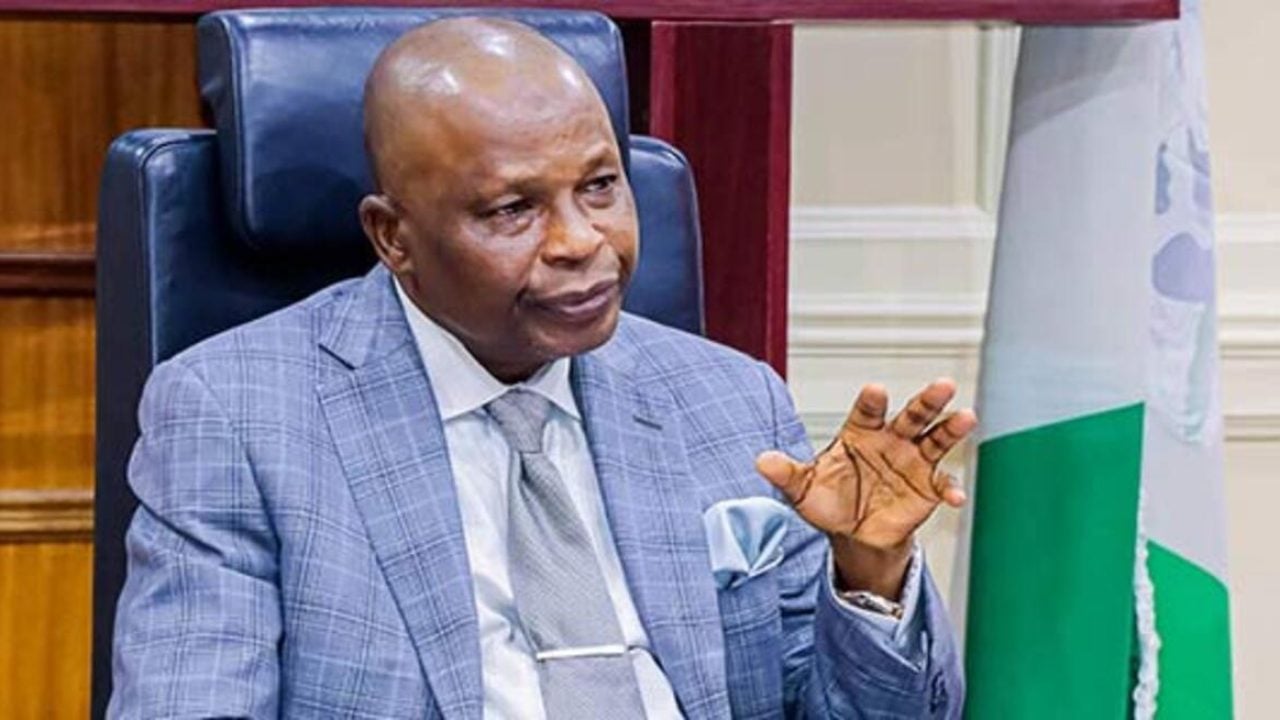
Attorney-General Asks Court to Deregister ADC, Accord, Three Other Parties

- /home/rhoncare/pointblank.ng/wp-content/plugins/mvp-social-buttons/mvp-social-buttons.php on line 27
https://pointblank.ng/wp-content/uploads/2026/04/Lateef-Fagbemi-1-1280x720-1-1000x600.jpg&description=Attorney-General Asks Court to Deregister ADC, Accord, Three Other Parties', 'pinterestShare', 'width=750,height=350'); return false;" title="Pin This Post">
- Share
- Tweet /home/rhoncare/pointblank.ng/wp-content/plugins/mvp-social-buttons/mvp-social-buttons.php on line 69
https://pointblank.ng/wp-content/uploads/2026/04/Lateef-Fagbemi-1-1280x720-1-1000x600.jpg&description=Attorney-General Asks Court to Deregister ADC, Accord, Three Other Parties', 'pinterestShare', 'width=750,height=350'); return false;" title="Pin This Post">
The Attorney-General of the Federation has urged the Federal High Court in Abuja to compel the Independent National Electoral Commission (INEC) to deregister five political parties, arguing that their continued existence violates constitutional provisions and undermines Nigeria’s electoral integrity.
In court filings, the Attorney General contended that unless the court intervenes, INEC would “continue to act in breach of its constitutional duty” by retaining parties that have failed to meet the minimum requirements prescribed by law.
The filing stressed that the right to associate as a political party is not absolute and must be exercised within constitutional limits. It further argued that it is in the interest of justice for the court to grant the reliefs sought by the plaintiffs.
The suit, marked FHC/ABJ/CS/2637/2026 and filed at the Abuja Judicial Division of the Federal High Court, lists the Incorporated Trustees of the National Forum of Former Legislators as the plaintiff.
The defendants include INEC as the first defendant and the Attorney General of the Federation as the second defendant, alongside five political parties: African Democratic Congress (ADC), Action Alliance (AA), Action Peoples Party (APP), Accord (A), and Zenith Labour Party (ZLP).
At the center of the issue in the case is whether INEC has a constitutional obligation to remove parties that fail to meet electoral performance thresholds set out in Section 225A of the 1999 Constitution (as amended) and reinforced by the Electoral Act 2022 and INEC’s own regulations.
The plaintiffs argue that the affected parties have persistently failed to satisfy the constitutional benchmarks required to retain their registration. These include winning at least 25 per cent of votes in a state during a presidential election or securing at least one elective seat at the national, state or local government level.
They contend that the parties performed poorly in the 2023 general elections and subsequent by-elections, failing to win seats across key tiers of government, yet continue to be recognised by INEC as eligible political platforms.
The plaintiffs maintain that this continued recognition is unlawful and undermines the integrity of Nigeria’s electoral system.
In the affidavit supporting the suit, the forum’s national coordinator, Igbokwe Raphael Nnanna, states that allowing parties that have not met constitutional requirements to remain on the register “is unconstitutional, illegal and a violation” of the governing legal framework.
The suit asks the court to declare that INEC is duty-bound to deregister such parties and to compel the commission to do so before preparations for the 2027 elections advance further.
Beyond declaratory reliefs, the plaintiffs are also seeking far-reaching orders that would bar the affected parties from participating in the next general elections or engaging in political activities such as campaigns, rallies and primaries. They further request injunctions restraining INEC from recognising or dealing with the parties in any official capacity unless and until they comply strictly with constitutional provisions.
Central to the plaintiffs’ argument is their interpretation of the law as imposing a mandatory duty on INEC. They argue that the use of the word “shall” in the Constitution leaves no room for discretion once a party fails to meet the stipulated thresholds.
In their written address, they rely on statutory provisions and judicial precedents to contend that electoral performance is an objective condition that must be enforced to maintain discipline, transparency, and accountability in the political system.
Tribune



Ecobank Nigeria has announced the return of Ecobank Adire Lagos for a special December Edition, scheduled to hold from 11 to 13 December 2026 at the Ecobank Pan-African Centre (EPAC), Victoria Island, Lagos. The three-day festival will bring together fashion, art, culture, entertainment and enterprise, creating a vibrant marketplace for African creativity while providing SMEs, designers, artisans and other creative entrepreneurs with opportunities to showcase their businesses, make sales, expand their customer base and build new connections.
For the first time, Ecobank is taking Adire Lagos into the end-of-year season, positioning the festival as a major December cultural and creative economy experience. The edition is designed to engage Nigerians at home, the diaspora community returning for the festive season, families, tourists and cultural enthusiasts.
The December edition is targeting over 35,000 attendees across three days and will provide a sales and visibility platform for more than 150 Nigerian and African brands and businesses, including fashion designers, textile merchants, artisans and lifestyle entrepreneurs. The festival will feature a vibrant mix of shopping, fashion, art, food, music, cultural experiences and entertainment, creating multiple opportunities for visitors to discover and support African brands while providing participating SMEs and creative entrepreneurs with a strong platform for visibility, customer engagement and sales.
Speaking ahead of the festival, Head, SMEs, Partnerships & Collaborations at Ecobank Nigeria, Omoboye ODU, said the December Edition reinforces Ecobank’s commitment to the creative economy by connecting culture and creativity with real commercial opportunities for African businesses.
“Ecobank Adire Lagos has grown beyond being simply an exhibition. It is an SME and creative enterprise platform that connects culture with commerce, giving businesses visibility, access to customers and opportunities to grow. Our ambition is to ensure that the creativity we celebrate also translates into sustainable businesses, jobs, market access and economic value.”
She added: “December presents a particularly exciting opportunity. Lagos comes alive with Nigerians returning home, tourists, families and consumers looking for authentic experiences and locally made products. We want to bring that audience together with some of the most exciting African designers, artisans and creative entrepreneurs, giving our SMEs an opportunity not just to showcase, but importantly, to sell, build relationships and reach new customers.”
The festival has recorded significant growth since its inception, with attendance rising from 2,000 in 2022 to 5,000 in 2023, 12,000 in 2024, 25,000 in 2025 and more than 35,000 in June 2026. Exhibitor participation has similarly expanded, reflecting growing interest in African textiles, cultural expression and creative entrepreneurship.
According to Odu, this growth reflects Ecobank’s broader approach to SME development. “For us, supporting SMEs goes beyond providing finance. Businesses also need customers, markets, visibility, digital and payment solutions, knowledge and the right partnerships. Platforms such as Ecobank Adire Lagos allow us to bring these elements together and help entrepreneurs build more resilient, scalable and sustainable businesses.”
As a Pan-African bank, Ecobank continues to use its platform, partnerships and extensive African footprint to champion indigenous enterprise and connect African businesses to wider market opportunities. Ecobank Adire Lagos celebrates Adire and African craftsmanship, while promoting the intersection of heritage, contemporary creativity and enterprise.
Beyond celebrating culture, the platform is designed to drive commerce. By bringing thousands of consumers into direct contact with SMEs and creative businesses, the festival creates opportunities for increased sales, customer acquisition, brand visibility, and longer-term business relationships. It also reinforces Ecobank’s commitment to providing entrepreneurs with the financial and non-financial support required to grow their businesses.
Members of the public, Nigerians returning home for the festive season, tourists, fashion enthusiasts, art collectors, families, business owners and cultural enthusiasts are invited to experience three days of shopping, fashion, art, food, music and African creativity at the Ecobank Pan-African Centre.
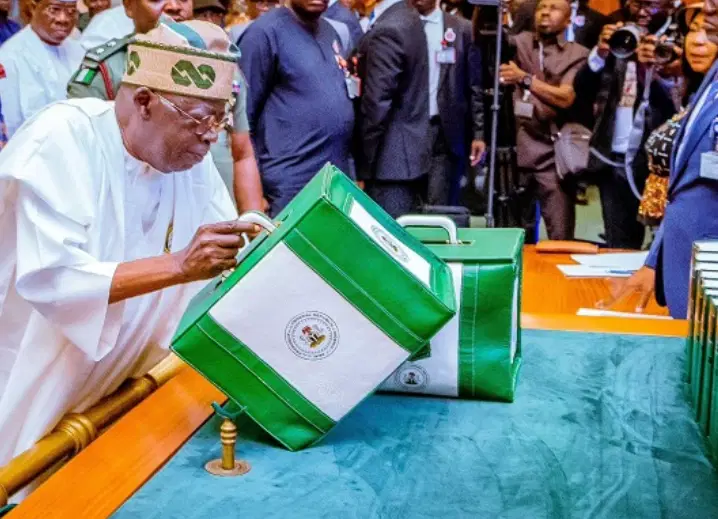
The Presidency has acknowledged, albeit inadvertently, that more Nigerians have been pushed into poverty under the administration of President Bola Tinubu, but said the situation is a consequence of the reforms being implemented by government.
The Presidency also faulted a report by The Economist on Nigerians’ dissatisfaction with Tinubu’s performance, describing it as watery and lacking substance.
On October 1, The Economist said President Tinubu might win the forthcoming 2027 polls despite public discontent.
The report, titled: ‘Nigerians dislike their president, but may re-elect him anyway’, identified a worsening security crisis, the biting effects of the economic reforms and popular political challengers as factors that could work against the president’s re-election bid.
Reacting to the report on Politics Today, a Channels TV programme on Wednesday, Special Adviser to President Tinubu on Policy Communication, Daniel Bwala, questioned the research methodology of the report.
Bwala said: “Let me say that The Economist’s theory, as published, is watery. It doesn’t have the substance. If you want to write an opinion piece, and especially when you want to rely on data, you want to make a claim on the data, the first thing you should do is to conduct a survey. There would be some people who don’t like him (Tinubu), but there are others who like him.
“In other words, in democracy you have to allow the two voices to speak. When you make a claim that Nigerians don’t like him (Tinubu) without also saying that there are a lot of people, for example, one million families whose children have benefited from Nigerian Education Loan Fund, NELFund, do you think they hate him? If you look at the agricultural sector in Nigeria, the kind of incentive and benefit they got, do you think they hate him? What about the incentive for the manufacturers in production?”
Asked whether more people had been thrown into poverty by the current administration, he said: “Do you know why? It is simply because we took a reform. There is no part of the world where reform comes with convenience. The population is 230 million, already at some stage of poverty. But we can’t make any progress until reform is carried out. None of the presidents that came before this president had the courage to do it because of fear.
“But the president said we can’t make any progress. So, he took that reform. Please let it be clear, even to the opposition. The reason why you have this number of poor people, and some of these doomsday analyses that people are giving, is because we undertook a reform. There is no part of the world where you start a reform like that, and there will not be discomfort. More people went down to poverty. I acknowledge it, I’m not doubting. But, there is a but to it. Since the reform started till today, we have made marked progress, which is what we have spent the last three years doing.”
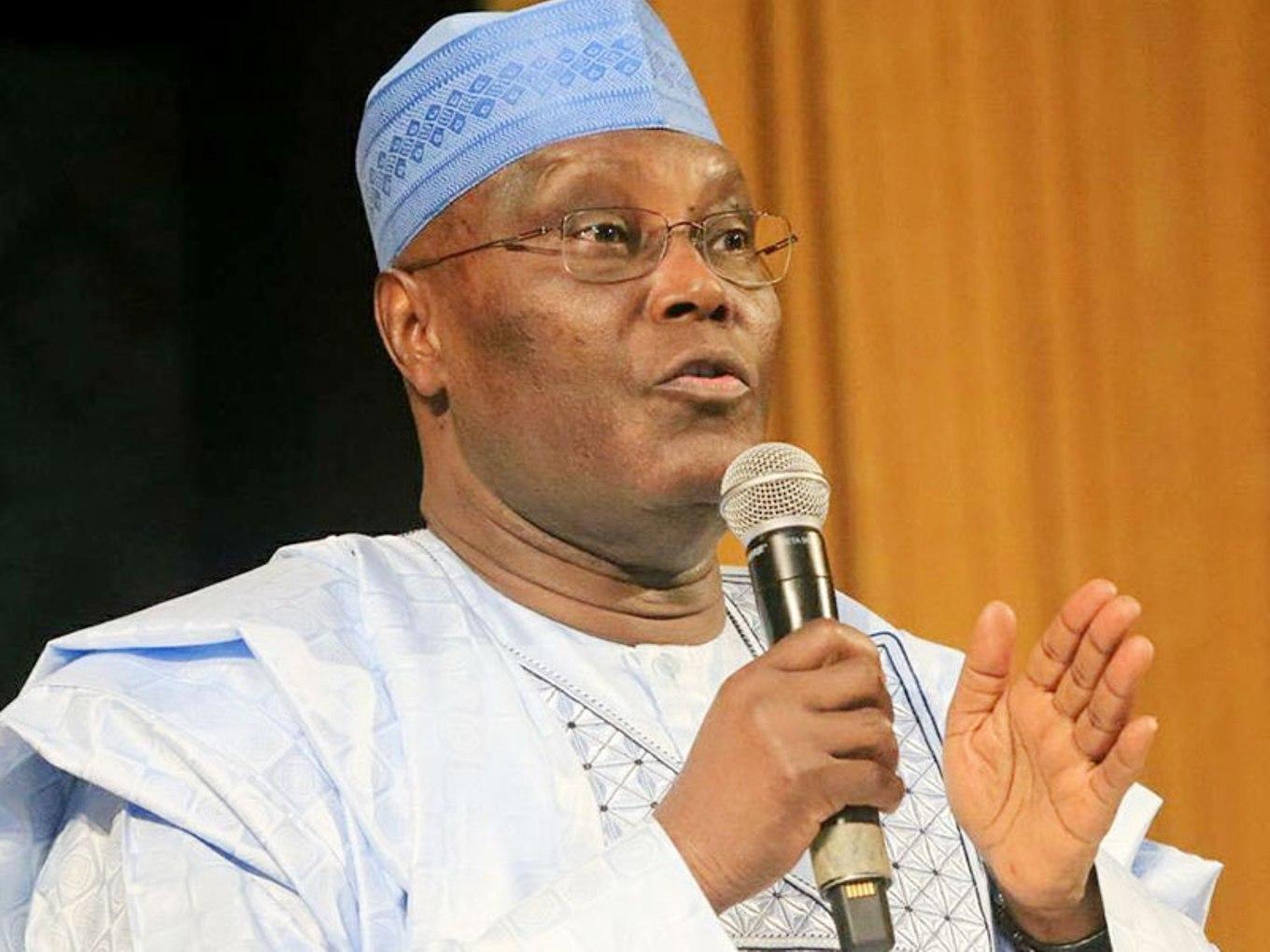
Former Vice President and ADC presidential candidate Atiku Abubakar has accused President Bola Tinubu of presiding over a collapse in agricultural export earnings while farmers struggle with insecurity and manufacturers confront punishing production costs. He said an administration that promised to build a productive economy has left Nigeria selling crops abroad without capturing enough of the processing jobs and value they can generate at home.
“Tinubu cannot call this reform when the people who grow our food and the businesses that should process it are being squeezed from both sides,” Atiku said.
In a statement issued by Phrank Shaibu, Director of Strategic Communication of the ADC Presidential Campaign Council, Atiku said the trade figures expose the scale of the failure. Nigeria’s agricultural trade swung from a ₦740.27 billion surplus in the first half of 2025 to a ₦56.13 billion deficit in the first half of 2026—a ₦796.40 billion reversal in one year. Agricultural exports fell by 33.3 per cent, far faster than imports, which also declined.
“The excuse that Nigerians simply imported too much will not stand. Tinubu’s government must answer for the collapse in what Nigeria sold to the world. The country is losing export earnings, and the President owes farmers, workers and businesses more than another speech about prosperity.
“What has his administration done to make it safer to farm, cheaper to move produce, easier to keep a processing plant running or more profitable to sell a finished Nigerian product abroad? Farmers cannot cultivate promises. Manufacturers cannot power factories with speeches. Workers cannot feed their families on assurances that prosperity is coming.”
Atiku said Nigeria’s leading agricultural exports still include cashew nuts in shell and cocoa beans, illustrating the value the country could retain by expanding domestic processing.
“We grow the crop. Someone else does more of the processing, builds a business around it and earns the larger return. Then Tinubu speaks of jobs while Nigerian factories struggle to compete. He has made production expensive and called the resulting hardship reform.
“A trade deficit alone does not explain every problem on our farms. But after more than three years in office, the President owns the decisions that have left farmers exposed and producers burdened. He cannot claim credit for every favourable statistic and disown a ₦796.40 billion reversal when the figures turn against him.”
Atiku said his proposed production subsidy for petroleum products refined in Nigeria follows the same principle: keep more production, work and value at home. The support would cover qualifying products from Nigerian refineries, including modular refineries. Imported products would not qualify. It would be capped, budgeted and independently audited, with measures to track whether savings reach consumers and businesses.
He said the Tinubu administration’s CNG initiative had failed abysmally as a relief measure: the cost of converting vehicles is beyond the reach of many poor Nigerians, conversion kits are difficult to access, and the buses presented as palliatives remain unavailable to many of the people who need them.
“Local refining is about more than the price at the petrol pump. Aviation fuel affects fares. LPG affects the cost of cooking. Petroleum products and feedstocks affect industries and the people they employ. Nigerians need practical relief they can actually access—not schemes whose costs and shortages put the promised benefits out of reach. The value of our resources must reach Nigerians beyond the refinery gate.
“My administration will begin restoring a transparent production subsidy from Day One. We will back farmers and processors with the same determination. Grow it here. Process it here. Refine it here. Create the jobs here. Make life affordable here.
“Tinubu’s record is becoming painfully clear: Nigeria supplies raw crops and crude oil while Nigerians pay dearly for finished goods. A government that cannot turn our resources into affordable products and decent jobs has failed the people it was elected to serve.”



