
Metro
Audi Commissions Staff Housing Projects, Pledges Improved Officers’ Welfare


- /home/rhoncare/pointblank.ng/wp-content/plugins/mvp-social-buttons/mvp-social-buttons.php on line 27
https://pointblank.ng/wp-content/uploads/2021/09/IMG-20210917-WA0097-731x600.jpg&description=Audi Commissions Staff Housing Projects, Pledges Improved Officers’ Welfare', 'pinterestShare', 'width=750,height=350'); return false;" title="Pin This Post">
- Share
- Tweet /home/rhoncare/pointblank.ng/wp-content/plugins/mvp-social-buttons/mvp-social-buttons.php on line 69
https://pointblank.ng/wp-content/uploads/2021/09/IMG-20210917-WA0097-731x600.jpg&description=Audi Commissions Staff Housing Projects, Pledges Improved Officers’ Welfare', 'pinterestShare', 'width=750,height=350'); return false;" title="Pin This Post">
The Commandant General of the Nigeria Security and Civil Defence Corps, Dr Ahmed Abubakar Audi, mni, has affirmed his unwavering commitment to the welfare of officers and men. He made this known while commissioning the NSCDC Cooperative Housing Project at Kuje, Abuja in commemoration of the World Civil Defence Day 2022 and his one year in office as the 3rd substantive Commandant General of the Corps.
Dr Ahmed Audi who earlier in the company of his wife, the National President of the Civil Defence Officers Wives Association (CDOWA) Hajia Aisha Abubakar Audi conducted the ground breaking and foundation laying of CDOWA Group of Schools and Skill Acquisition Centre at Sauka, Abuja. The CG noted that efficiency in service delivery and optimal performance of an officer can only be achieved when the welfare of such officers are guaranteed and his administration would give utmost priority to that.
“If there is anyone whose joy and excitement knows no bound today, it is me because when I came in as the 3rd substantive Commandant General of NSCDC, I said this Adminstration has come with a renewed vigour to rejig, revamp, rejuvenate, resuscitate and reposition the Civil Defence to a World Class Elite Organisation poised to protect the lives of citizens as well as safeguarding all critical national assets and Infrastructure of the nation. I am glad you are all witnesses to these laudable achievements. Today house keys are being handed over to officers and we are also laying a new foundation for another 102 buildings of 3 Bedroom and 2 Bedroom within the Estate,” Audi said.
In his appreciative words, the Chairman NSCDC National Headquarters Cooperative Society; ACC Aina Oladeji Jones appreciated the CG for playing fatherly role as the Grand patron of the Cooperate Multipurpose Society, reiterating that the CG at his 100 days in office promised that his Officers would be house owners before his one year tenure in office and this he achieved.
He lauded the CG for closely monitoring the project and making necessary corrections when the project was under construction which has culminated into great realities in which 22 buildings are being commissioned and keys handed over to the beneficiaries at exactly his one year in office.
The Commandant General maintained that the years ahead will be full of tremendous innovative achievements because the Audi led administration will keep moving on and never get tired of putting smiles on the faces of all personnel of the Corps both at the National Headquarters and all formations in the federation.


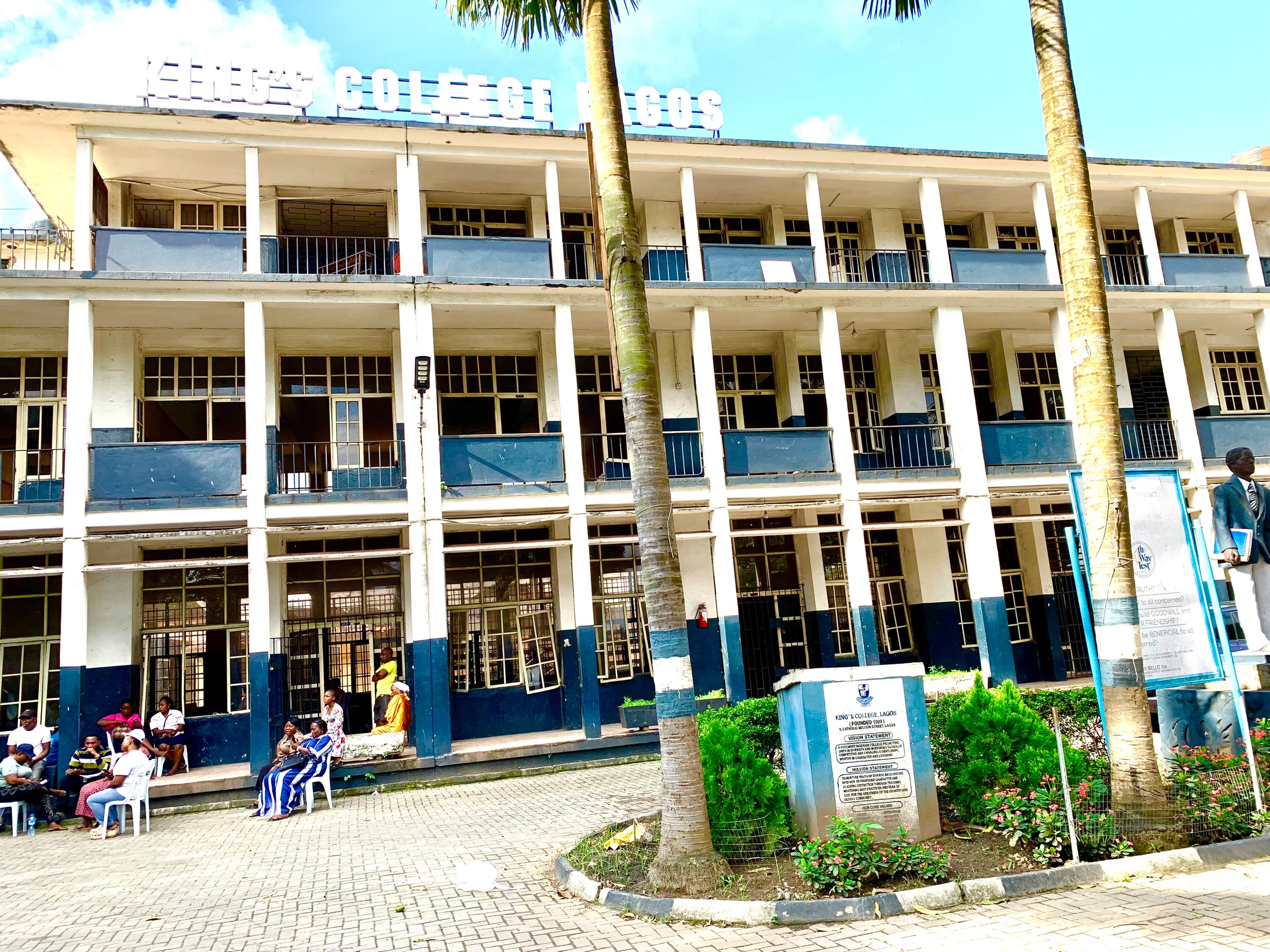
The Federal Government has declared that it will proceed with the proposed concession of King’s College, Lagos, despite mounting opposition from workers, parents and other stakeholders.
The Minister of Education, Dr. Tunji Alausa, said this on Wednesday in Abuja while addressing journalists.
He disclosed that the government followed due process in reaching the decision and remains committed to the concession as part of efforts to improve the school’s infrastructure, resources, and overall management.
The minister maintained that the proposed concession is not an abandonment of the institution by the Federal government, but a move intended to address infrastructure and management challenges and improve the quality of education at the college.
Alausa alleged that some directors in the ministry are fueling the controversy by mobilising workers against the government’s decision.
He alleged that some union members and what he described as “unscrupulous” ministry staff are deliberately circulating misinformation about the concession.
“Misinformation has been going around, perpetuated by union members and unscrupulous members of staff of the Federal Ministry of Education,” he said.
Alausa also took a swipe at the Parent-Teacher Association of King’s College, accusing the body of turning admission into a lucrative enterprise and allegedly demanding as much as N20 million from prospective students.
“The PTA of King’s College has turned admission into King’s College into a criminal enterprise,” he alleged.
His declaration came amid escalating opposition by workers in the ministry and other stakeholders, who have raised concerns over the concession of the 117-year-old institution to the King’s College Old Boys Association.
According to him, the alumni had spent over N2 billion on the institution with nothing to show for it.
He explained that, contrary to reports circulated by the workers, the school was not for sale, stressing that the Federal government would retain full ownership of the school despite the proposed management arrangement with the Old Boys Association.
“We haven’t sold it to them. The property still remains Federal government property,” Alausa said, insisting that the government retains 100 per cent ownership of the school.
Alausa also assured workers that the proposed management arrangement would not result in job losses or demotions, stressing that affected staff would retain their appointments and existing levels within the public service.
He said the government had considered workers’ concerns and would ensure their employment rights and benefits were protected throughout the process.
He explained that workers affected by the arrangement would have the option to be redeployed to other federal institutions within the education sector where their services were needed.
According to him, teachers and non-academic staff could be posted to other Unity Colleges and federal institutions, with the government maintaining that no worker would be forced out of employment as a result of the proposed concession.
Also speaking, Minister of State for Education, Prof. Suwaiba Ahmad, said the Federal government has no plans to extend the proposed concession arrangement to other Unity Colleges across the country.
She stressed that the initiative was specific to King’s College, Lagos, and should not be interpreted as a broader plan to transfer the management or ownership of other Federal Unity Colleges to private organisations or alumni associations.
Ahmad said the government remained committed to protecting the public ownership of the Unity Colleges, while exploring measures to address their infrastructure and management challenges.
She maintained that the proposed arrangement for King’s College is being considered as an intervention to improve the school’s facilities and restore its standards, rather than as a move to sell off Federal government properties.

By Tolulope. Adegoke
“When the old world’s granaries emptied and its rivers ran thin, the nations did not look to the fallen pillars of their own making—they looked southward, to a land that had always known how to wait, how to hold, how to give. For in the quiet geology beneath Africa’s soil lies the pulse of a civilization yet to be born, and in the patience of its people lies the blueprint for a world that must learn to live again.” – Tolulope A. Adegoke, PhD
Introduction: The Contemporary Resonance of an Ancient Metaphor
In the narrative of Genesis, when famine swept across the known world, the land of Goshen in Egypt became a refuge for the family of Jacob—it was “the best of the land,” fertile and abundant, and under Joseph’s governance, it sustained life and multiplication amid widespread scarcity. The significance of Goshen was never merely geographical refuge; it was a strategic space that preserved the seeds of civilization and nurtured future strength in a time of crisis.
Projecting this metaphor onto the contemporary map of the global economy, the African continent is assuming a Goshen-like structural role. As the world confronts the multiple crises of climate breakdown, supply chain disruption, the pains of energy transition, and geo-economic fragmentation, Africa—with nearly one-third of the world’s critical minerals for energy transition, approximately seventy percent of its uncultivated arable land, and the world’s youngest demographic structure—constitutes an irreplaceable “reserve continent.” Africa is not only the key variable determining whether the global sustainable development agenda can be realized; it may well become the strategic fulcrum for reconstructing the world economic order.
Yet the Goshen metaphor also contains a warning. In the biblical narrative, Goshen was both a place of refuge and a site where the Israelites experienced a transition from “favored sojourners” to “enslaved laborers.” If contemporary Africa cannot assert leadership in the development of its minerals, land, and human capital, it may likewise fall into the historical cycle of “resource abundance without development.” This article aims to move beyond surface-level opportunity discourse and delve deeply into the structural conditions, potential risks, and strategic pathways of Africa as the world’s “Goshen.”
I. The Material Basis of Goshen: Irreplaceable Resource Endowments
Mineral Wealth: The Lifeblood of Energy Transition
The physical foundation of the global energy transition rests upon a group of raw materials known as “critical minerals.” Cobalt, lithium, manganese, graphite, rare earth elements, and platinum group metals constitute the core materials for batteries, wind turbines, solar panels, and hydrogen fuel cells. The international community increasingly recognizes that without stable supplies of these minerals, net-zero emissions targets will remain mere rhetoric.
Africa occupies a position in this domain that no industrialization strategist can afford to ignore. The Democratic Republic of the Congo holds approximately fifty percent of the world’s proven cobalt reserves—a metal that is a key component of lithium-ion battery cathodes. South Africa controls approximately eighty-three percent of global platinum group metal reserves, metals that possess irreplaceable functions in hydrogen technology and automotive catalytic converters. Guinea’s bauxite reserves account for more than approximately one-quarter of the global total, while Morocco controls approximately sixty-nine percent of global phosphate reserves—the latter being not only a raw material for fertilizers but also playing an increasingly important role in lithium iron phosphate battery technology. In terms of lithium resources, Zimbabwe possesses Africa’s largest reserves, estimated at approximately eleven million tonnes.
The significance of these figures extends far beyond the extractive industry. The energy transition is essentially a process of “moving from burning underground hydrocarbons to mining underground metals.” In this historic conversion, Africa holds structural pricing power and supply chain node status. A report by the United Nations University notes that by 2050, global revenues from copper, nickel, cobalt, and lithium could reach sixteen trillion US dollars, and sub-Saharan Africa is positioned to capture more than ten percent of this value.
Land and Agriculture: The Silent Granary
As global food insecurity rose by one hundred fifty percent between 2019 and 2022, and climate shocks expose global agricultural systems to unprecedented uncertainty, Africa’s strategic value in agriculture is equally prominent. Africa possesses nearly seventy percent of the world’s uncultivated arable land, and the agricultural sector already contributes more than one-third of the continent’s GDP.
The implications of these data need to be fully articulated. Global population is projected to approach ten billion by 2050, meaning food demand will grow by approximately fifty percent. Simultaneously, climate change is exposing traditional breadbasket regions—from the American Midwest to the Mekong Delta in Southeast Asia—to intensifying water stress and extreme weather events. Against this backdrop, Africa’s arable land reserves constitute a “strategic buffer” for global food security. As Kenny Fihla, CEO of Absa Group, stated, “Africa has the potential to become the world’s breadbasket.”
The B20 Special Task Force on Sustainable Food Systems and Agriculture has identified five forces reshaping the global food system: climate change, supply chain fragility, demand growth, technological transformation, and land management. Africa occupies a critical position across all five dimensions. Through the application of triple seed technology, digital agriculture platforms, and climate-smart practices, African agricultural productivity could achieve leapfrog growth. The task force estimates that merely repairing Africa’s supply chain bottlenecks could recover one to two percent of GDP annually, while tripling intra-African agricultural exports could generate approximately one hundred eighty billion US dollars in revenue and create ten million jobs.
Human Capital: The World’s Only Continuously Expanding Labor Pool
Africa’s most undervalued strategic asset is perhaps its human capital. As Global North countries confront severe prospects of population aging and labor force contraction, Africa is the only continent whose working-age population will continue to grow significantly in the coming decades.
However, this demographic dividend is not automatically realized. The World Economic Forum estimates that by 2030, nearly sixty percent of the global workforce will require reskilling. Africa faces structural unemployment, uneven educational quality, and a widening gap between educational outcomes and labor market demands. South Africa alone lost more than three hundred thousand jobs in the first quarter of 2026—a figure that reveals the pressures bearing down on traditional employment models.
At the same time, African youth have already demonstrated unique adaptability in global remote services. From software development and artificial intelligence data annotation to customer support and digital marketing, Africa’s “digital natives” are integrating into global value chains in unexpected ways. McKinsey estimates that generative artificial intelligence could create between sixty-one billion and one hundred three billion US dollars in economic value in Africa. The continent’s entrepreneurship rate ranks among the highest globally—an “entrepreneurial reflex” born of survival needs in environments where formal employment is scarce, and it also constitutes the unique resilience of Africa’s human capital.
II. The Structural Predicament of Goshen: Resource Curse and Institutional Deficits
The Paradox of “Poverty Amid Plenty”
The Goshen metaphor contains a profound tension. In the biblical narrative, the Israelites initially enjoyed prosperity and protection in Goshen, but as time passed, a new Pharaoh “who did not know Joseph” came to power, and this community was ultimately reduced to slavery. This narrative arc has an unsettling correspondence in contemporary African economic history.
Africa possesses approximately thirty percent of the world’s critical green mineral reserves, yet it has long remained at the periphery of global value chains. Minerals are exported as raw materials and returned to Africa as finished goods after processing, with the bulk of value addition captured by external economic systems. Claver Gatete, Executive Secretary of the United Nations Economic Commission for Africa, stated bluntly at the 2025 Africa Climate Summit: “We cannot repeat the exploitation patterns of the past. Africa must use its own resources to achieve industrialization and create jobs and sustainable growth for its people.”
This “de-industrialized” extractive model not only limits the capture of economic benefits but also deepens Africa’s structural vulnerability in the global economy. The Democratic Republic of the Congo supplies nearly half of the world’s cobalt, yet its own participation in the electric vehicle industry is virtually nil. Guinea’s bauxite supports the global aluminum industry, but Guinea itself lacks the capacity to convert alumina into aluminum. This model makes Africa highly sensitive to global commodity price fluctuations while unable to benefit from value growth in end markets.
Financial Constraints and Debt Traps
Transforming “Goshen” from metaphor to reality requires large-scale investment. Yet Africa faces severe financing constraints. Research from the United Nations University shows that Africa needs between twenty-five billion and fifty billion US dollars annually to achieve the 2030 universal energy access target, and an additional two hundred billion US dollars annually to finance its Nationally Determined Contribution climate commitments.
The reality is that current climate finance mechanisms continue to be dominated by loans rather than grants, saddling Africa with new debt burdens. Policy tools such as the European Union’s Carbon Border Adjustment Mechanism threaten Africa’s export revenues, raising fundamental questions of fairness. Professor Fatima Denton, Director of the United Nations University Institute for Natural Resources in Africa, points out: “Africa is being asked to serve as the world’s carbon sink, but without matching compensation or support mechanisms.”
The core contradiction of this financial constraint lies in the fact that Africa is being asked to play a key role in the provision of global public goods—from carbon sequestration to mineral supply to food security—yet is not granted corresponding financing conditions and institutional space to fulfill these functions. This is the contemporary version of the “Goshen dilemma”: being expected to provide refuge and resources without being equipped with the tools for autonomous development.
Governance Fragmentation and Institutional Deficits
The African continent comprises fifty-four countries, each with its own legal system, regulatory framework, and business environment. This fragmentation constitutes a significant obstacle to attracting investment and building regional value chains. The World Bank’s report “Integrating Africa” estimates that approximately sixty percent of trade costs are “unilateral or behind-the-border,” reflecting customs delays, inefficient logistics, transport restrictions, fragmented standards, and service barriers.
The African Continental Free Trade Area (AfCFTA) was designed as the institutional tool to address this challenge. The United Nations Economic Commission for Africa’s 2025 Economic Report notes that AfCFTA “offers a transformative opportunity to accelerate trade-led integration and drive inclusive sustainable development.” However, the distance between agreement signing and actual market operation remains vast. The World Bank report notes that deeper services liberalization could increase services trade within the AfCFTA region by approximately sixty to sixty-four percent.
III. The Path to Goshen: Strategic Pathways and Critical Choices
From Extraction to Transformation: Mineral Sovereignty and Industrialization
If Africa is to truly become the “Goshen” of the global sustainable development process, it must complete the role transition from raw material supplier to industrial transformer. The United Nations University Institute for Natural Resources in Africa report explicitly states that “mineral wealth must no longer be a paradox of ‘plenty without prosperity,'” and that Africa’s minerals are “not only crucial to the global decarbonization agenda but equally critical to Africa’s own industrialization, energy security, and technological advancement.”
The core of this transformation lies in local processing and value addition. The “Battery and Electric Vehicle Value Chain Initiative,” launched through collaboration between the United Nations Economic Commission for Africa and the African Export-Import Bank, aims to establish special economic zones in the Democratic Republic of the Congo and Zambia for the production of electric vehicle battery precursors and components. The symbolic and substantive significance of this initiative are equally important: it represents Africa’s shift from “resource extraction” to “prioritizing technological innovation and local value addition.”
To make this shift a systemic reality, Africa needs to establish a coordinated mineral governance framework. The “African Critical Minerals Alliance” concept proposed at the 2025 Africa Climate Summit aims to unify regulation, negotiate better trade terms, and promote intra-African collaboration. The logic of this collective action bears a structural resemblance to Joseph’s strategy of securing “the best of the land” for the entire family in Goshen: in the face of external pressures, only unity can ensure a space for survival and prosperity.
Agricultural Transformation: From Self-Sufficiency to Feeding the World
Converting Africa’s arable land potential into actual food output requires systemic change at multiple levels. The B20 task force’s recommendations encompass supply chain strengthening, access to inputs and technology, sustainable land management, and trade facilitation.
Technology is a key lever for this transformation. Precision agriculture, AI-driven extension services, and digital platforms can significantly boost productivity. The task force estimates that implementing similar technologies in Brazil has increased farmer incomes by twenty-five percent and reduced input costs by twenty percent, and Africa could potentially replicate or even exceed this trajectory. However, technology transfer must be accompanied by capacity building and adaptive innovation, rather than simple transplantation of solutions.
Infrastructure is another bottleneck. Africa’s agricultural supply chains face severe logistical challenges, from post-harvest losses to transport delays to market access barriers. Repairing these “clogs” could recover one to two percent of GDP annually—what the B20 task force describes as “low-hanging fruit and opportunities for entrepreneurs.” The African Continental Free Trade Area provides an institutional framework for building regional agricultural value chains, but requires accompanying hardware investment and policy coordination.
Human Capital Deepening: From Demographic Dividend to Skills Dividend
Africa’s demographic advantage can only become a genuine economic lever when converted into a skills advantage. KG Bako, a talent management executive at Absa Group, notes that “the future of work is, in fact, the future of skills. Skills—not job titles—are becoming the primary currency of employability, mobility, and productivity.”
This requires Africa to act in three directions. First, unlock the informal economy. The informal sector is the most defining feature of Africa’s labor market, constituting the majority of employment in most countries. Integrating this sector through financial accessibility, digital empowerment, and formal market linkages is the most direct opportunity for expanding productivity, broadening the tax base, and driving inclusive growth.
Second, advance gender inclusion. Women are disproportionately represented in the informal and under-served economic sectors, at rates as high as ninety percent. Expanding access to education, entrepreneurial finance, and leadership opportunities is not only a social obligation but also a clear economic lever.
Third, redefine workforce capabilities for the new era. As technology reshapes industrial landscapes, demand is shifting toward “power skills”—critical thinking, creativity, adaptability, ethical judgment, and collaboration. Africa’s education systems need to move from knowledge transmission to capability cultivation, from credential orientation to skills orientation.
Regional Integration: From Fragmentation to System
The successful implementation of the African Continental Free Trade Area is central to institutionalizing the Goshen vision. The United Nations Economic Commission for Africa’s report emphasizes that AfCFTA can reduce commodity dependence, boost manufacturing, and strengthen Africa’s position in global value chains by promoting intra-African trade.
The World Bank’s “Integrating Africa” report proposes four mutually reinforcing priorities: building regional value chains connected to cross-border production; reducing trade and regulatory friction; deepening, implementing, and enforcing regional trade agreements; and delivering regional public goods, including transport corridors, power markets, digital networks, and payment systems.
The implementation of these priorities requires African countries to find a balance between sovereignty and collective action. World Bank Vice President Ndiamé Diop notes that “Africa has a continental free trade agreement. The focus now is on implementation.” The distance from commitment to execution will determine whether Africa becomes an integrated continental market or a fragmented collection of states.
IV. The Global Significance of Goshen: An Anchor for a Just Transition
Positioning Africa as the “Goshen of the world” is not merely praise for Africa’s potential but a fundamental repositioning of the global sustainable development architecture. The core insight of this framework is that Africa’s future and the future of the rest of the world have become inextricably intertwined.
If Africa’s mineral wealth is used to finance its own industrialization, the global energy transition will gain a more stable and just supply chain foundation. If Africa’s arable land potential is sustainably activated, the global food system will gain a vital buffer space. If Africa’s youth population receives appropriate skills and opportunities, the global labor market will gain a continuously expanding talent pool. Conversely, if Africa remains locked in extractive relationships, the global sustainable development goals will be unattainable, and Africa will become a permanent source of crisis.
Professor Fatima Denton’s assertion strikes at the ethical core of this framework: “Justice must be at the heart of the green transition. Africa can no longer serve as a cheap carbon sink or the world’s raw material supplier.” The appropriate application of the Goshen metaphor in the contemporary context must include a serious commitment to justice. A “Goshen” built on unequal exchange is not a refuge but another form of enslavement.
Conclusion: Choice and Destiny
In the Genesis narrative, Goshen’s fate depended on the convergence of multiple forces: Joseph’s strategic foresight, Pharaoh’s governing will, and the Israelites’ own multiplication and perseverance. Contemporary Africa’s “Goshen moment” similarly depends on the interweaving of a complex set of factors: global demand for critical minerals, the strategic choices of African leaders, reform of the international financial architecture, and the agency of African peoples themselves.
Africa will not automatically become the world’s sustainable development engine. Resource endowments are a necessary condition but far from a sufficient one. Institutional quality, infrastructure, human capital, and political will determine whether these endowments are transformed into shared prosperity or locked into historical extractive patterns.
One thing, however, is clear: in the global sustainable development equation of the twenty-first century, Africa is no longer a remainder that can be ignored. It is becoming the core variable of the equation. As the world confronts the multiple pressures of climate breakdown, resource constraints, and demographic transition, what Africa possesses—minerals, land, youth—is precisely what is most scarce in the future.
Goshen holds significance in the biblical narrative not only because it was a refuge but also because it became the cradle of a people. The opportunity and challenge of contemporary Africa lie in precisely this: Can it become the stabilizing anchor of global sustainable development while completing its own transformation from resource provider to prosperity creator? The answer to this question will determine not only Africa’s destiny but the future of the entire world.
Dr. Tolulope A. Adegoke, AMBP-UN, is a globally recognized scholar-practitioner and thought leader at the nexus of security, governance, and strategic leadership. His mission is dedicated to advancing ethical governance, strategic human capital development, resilient nation-building, and global peace. He bridges the worlds of academic rigor and practical application, contributing to leadership discourse at the highest levels of policy and practice. He can be reached via: tolulopeadegoke01@gmail.com, globalstageimpacts@gmail.com

The Dangote Petroleum Refinery has increased its Premium Motor Spirit (PMS) aka petrol, gantry price by 6.7 per cent to N1,350 per litre from N1,265 per litre, effective September 12, 2026.
The refinery also raised its coastal price to N1,783,530 from N1,669,543, representing an increase of N113,987, or 6.8 per cent.
In a memo to customers, Dangote Petroleum Refinery announced the revised prices, saying:
“Dear valued customer, please find below the revised DPRP PMS gantry and coastal price which is effective 12th September 2026.”
The refinery also directed customers with existing loading arrangements to return their Automated Truck Certificates, ATCs, for repricing.
It said: “You are advised to return all ATCs for repricing and a new volume contract will be issued for immediate loading resumption.”
The latest adjustment is expected to increase the acquisition cost of petrol for marketers sourcing supplies from the refinery and could put upward pressure on pump prices.
The increase comes amid renewed volatility in the international crude oil market, with Brent crude recently trading above $100 per barrel.
Nigeria’s downstream petroleum market operates under deregulation, with petrol prices influenced by crude oil costs, refining expenses, foreign exchange, logistics and market forces.
Consequently, the new Dangote price is expected to trigger reviews by marketers, although the extent of any adjustment at filling stations will depend on transportation, distribution costs, competition and prevailing market conditions.
The Dangote refinery has emerged as a major supplier of locally refined petrol as Nigeria seeks to reduce its dependence on imported petroleum products.
The latest increase could therefore have implications for consumers and businesses if marketers pass the higher acquisition cost through to retail prices.
Marketers are now expected to adjust their purchase and selling prices in response to the new Dangote petrol rates.


