
Headlines
Bill Seeking Immunity for Lawmakers Passes Second Reading in House of Reps


- /home/rhoncare/pointblank.ng/wp-content/plugins/mvp-social-buttons/mvp-social-buttons.php on line 27
https://pointblank.ng/wp-content/uploads/2020/02/Speaker.jpg&description=Bill Seeking Immunity for Lawmakers Passes Second Reading in House of Reps', 'pinterestShare', 'width=750,height=350'); return false;" title="Pin This Post">
- Share
- Tweet /home/rhoncare/pointblank.ng/wp-content/plugins/mvp-social-buttons/mvp-social-buttons.php on line 69
https://pointblank.ng/wp-content/uploads/2020/02/Speaker.jpg&description=Bill Seeking Immunity for Lawmakers Passes Second Reading in House of Reps', 'pinterestShare', 'width=750,height=350'); return false;" title="Pin This Post">
A bill that would grant immunity to the presiding officers of the National and State Assemblies narrowly scaled second reading in the House of Representatives on Tuesday.
The bill seeks to amend Section 308 of the 1999 constitution.
Section 308 of the Constitution shields the quartet of the president, the vice president, state governors and their deputies, for their period in office, from all forms of civil and criminal prosecution.
The sponsor of the bill, Odebunmi Olusegun of Ogo-Oluwa/Surulere federal constituency (APC, Oyo), wants the presiding officers of the federal and state houses to enjoy similar privilege for them to shrug off “frivolous suits while in office.”
Mr Olusegun argued that the bill is targeted at avoiding distraction for the leadership of the legislative arm. He said it is his aim to “protect, stabilize the house” and ensure “our democracy continues to flourish at national and state levels.”
Proponents
Toby Okechukwu (PDP, Enugu) pitched his tent with the bill’s sponsor. He said, if passed, the bill would shield presiding officers from the prying eyes of witch hunters.
He argued that once the leadership of the legislature is protected from possible blackmail while in office, then they can do their job without fear. He urged his colleagues to give their nod to the bill and allow Nigerians to decide during its public hearing.
Nkem-Abonta Uzoma (PDP, Abia) took off from where Mr Okechukwu stopped. He argued that the bill is not about the sitting speaker but the office itself. He said any criminal blemish ascribed to the office of the Speaker would cast the entire House in a bad light.
If the president, his deputy, state governors and their deputies can enjoy immunity, why can’t the leadership of the National Assembly, he asked.
“Let us protect the (legislative) institution from institutional embarrassment with suits, arraignment from the EFCC, CCB, ICPC,” he said after which the Speaker, Femi Gbajabiamila, cut in.
The Speaker buttressed this by saying potential lawsuits against a presiding officer can come not only from agencies of the executive but also from individuals.
Opponents
Minority Leader Ndudi Elumelu (PDP, Delta) begged to differ. He said the bill should not be allowed as it is coming at the wrong time because “people should be held accountable for their actions.”
He called for the bill to be jettisoned and that attention should be redirected to tackle insecurity ravaging the country.
Also, Sergius Ogun (PDP, Edo) frowned at the bill. He said if he had his way, he would “remove the immunity the president and the governors enjoy.”
“As parliamentarians, I do not believe this is what we need today. We should lift the immunity that presidents and the governors enjoy. There is no reason why a sitting president or governor should not go to jail,” Mr Ogun noted.
As Mr Ogun rounded off, House Speaker Femi Gbajabiamila asked: “Is the head of the executive covered by immunity? And directly or indirectly, is the head of the judiciary covered by immunity?”
To that, he got a response in the affirmative. He then said he asked to weigh the various angles to the debate at hand. He called for equity in terms of privileges enjoyed by the each arms of government.
While the debate lasted, Mr Gbajabiamila said he was against the bill and was not willing to benefit from the privileges the bill might bring. He, therefore, suggested that the bill, should it be passed and assented to, would not take effect while the current leadership is in office.
In 2016, the same bill was read on the floor of the lower house. It came in the wake of the charges filed against former Senate President Bukola Saraki by the Code of Conduct Bureau during the eighth assembly. It was, however, thrown out, having divided the House over whether or not it should be passed.
Mr Gbajabiamila, then Majority Leader, was one of the fierce opponents of the bill.
The bill, however, still has a long way to go to become law. It will still pass through a public hearing and is expected to be included among the issues to be debated by a National Assembly committee to review the Constitution. The Senate is also yet to debate the bill.
Group Condemns Bill
The Socio-Economic Rights and Accountability Project (SERAP) has condemned Tuesday’s passing of the bill.
Responding to the development, SERAP deputy director Kolawole Oluwadare said: “Providing immunity for presiding officers against crimes of corruption is tantamount to ripping up the constitution. It’s a blatant assault on the rule of law and breach of public trust.”
SERAP said: “The leadership of the House of Representatives must immediately withdraw this obnoxious bill. We will vigorously challenge this impunity.”
The statement read in part: “It’s a huge setback for the rule of law that the same privileged and powerful leaders of parliament that regularly make laws that consign ordinary, powerless Nigerians to prison for even trivial offences yet again want to establish elite immunity to protect themselves from any consequences for serious crimes of corruption and money laundering.”
“Whereas countries like Guatemala has voted unanimously to strip their president of immunity from prosecution for corruption our own lawmakers are moving in the opposite direction.”
“The message seems to be that in Nigeria, powerful and influential actors must not be and are not subject to the rule of law. It’s simply not proper for lawmakers to be the chief advocates of immunity for corruption.”
“It’s a form of political corruption for the parliamentarians to abuse their legislative powers, intended for use in the public interest but instead for personal advantage. This is an unacceptable proposition as it gives the impression that both the principal officers of the National Assembly are above the law.”
“If the House of Representatives should have their way, this will rob Nigerians of their rights to accountable government.”
“Public officials who are genuinely committed to the well-being of the state and its people, and to the establishment of an effective and functioning system of administration of justice, should have absolutely nothing to fear.”
Premium Times


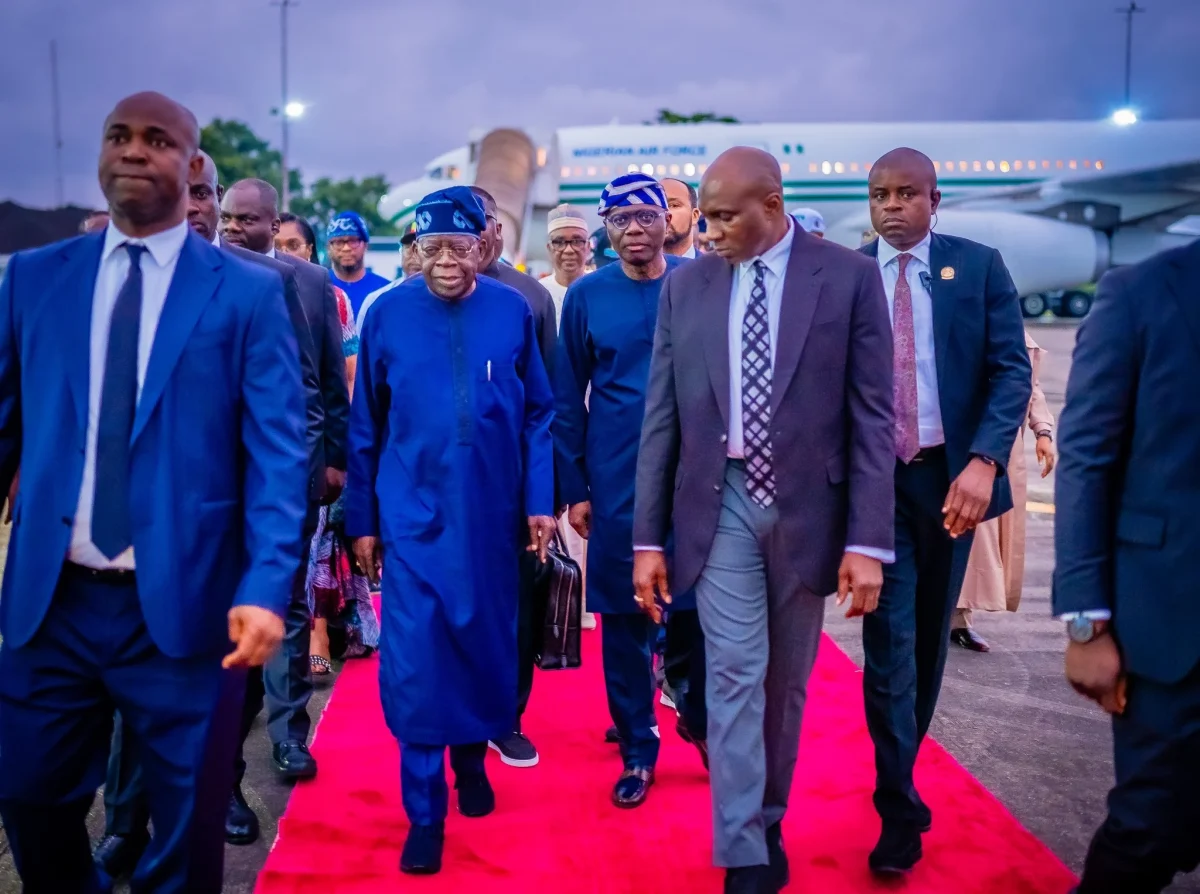
President Bola Tinubu has told members of the All Progressives Congress (APC) Presidential Campaign Council not to expect him to accompany them to every campaign event ahead of the 2027 general election, saying he must remain focused on governance and the country’s economic responsibilities.
Tinubu spoke on Wednesday during the inauguration of the APC Presidential Campaign Council in Abuja, where he urged members to take the party’s message to Nigerians across the states and local government areas while he continues to attend to matters of governance.
The president said he agreed with concerns that the demands of the campaign should not distract him from running the country, adding that Nigeria needs his attention at the moment.
“You’ve warned me not to allow the rigour of the campaign to distract me from governance, I hear you. I am in full agreement with your decision. Nigeria needs more attention now,” Tinubu said.
He told council members to excuse him from accompanying them to every campaign event, noting that his administration has bills to pay and international financial obligations to meet.
“So, you will excuse me from going everywhere with you, we have bills to pay. The American creditors cannot wait,” the President said.
Tinubu also said the government needs to attract investors who would commit to long-term investments in Nigeria and contribute to the future of the country’s children.
“We want those investors to come in, be here to stay, to invest for the future of our children,” he said.
The president, however, assured Nigerians that he would continue to engage them directly even as the campaign council took charge of mobilisation across the country.
“However, I will still make time to speak directly with Nigerians, even as you lead the campaign in the states and local government areas,” he said.
Tinubu described the inauguration of the council as more than a campaign activity, saying it represents a renewed commitment to Nigerians and the responsibilities of the ruling party.
“We have not gathered merely to inaugurate a council. We have gathered to renew a covenant. A covenant with Nigerian people and the historic responsibility they have entrusted to us as Nigeria’s governing party,” he said.
He added that the council is expected to communicate the administration’s vision, achievements and agenda to voters nationwide.
“This council will carry our vision, our records and our agenda to every Nigerian, and it will carry them to victory every ward of this country,” Tinubu said.
The president also commended APC members for completing the party’s congresses, recalling that some had predicted internal crises during the process.
He said the party has overcome the challenges and emerged united, crediting members for participating in the process from the ward level to the national leadership.
“They said there will be implosion. We passed through it. We did not fail. You didn’t let us down. We got here together,” he said.
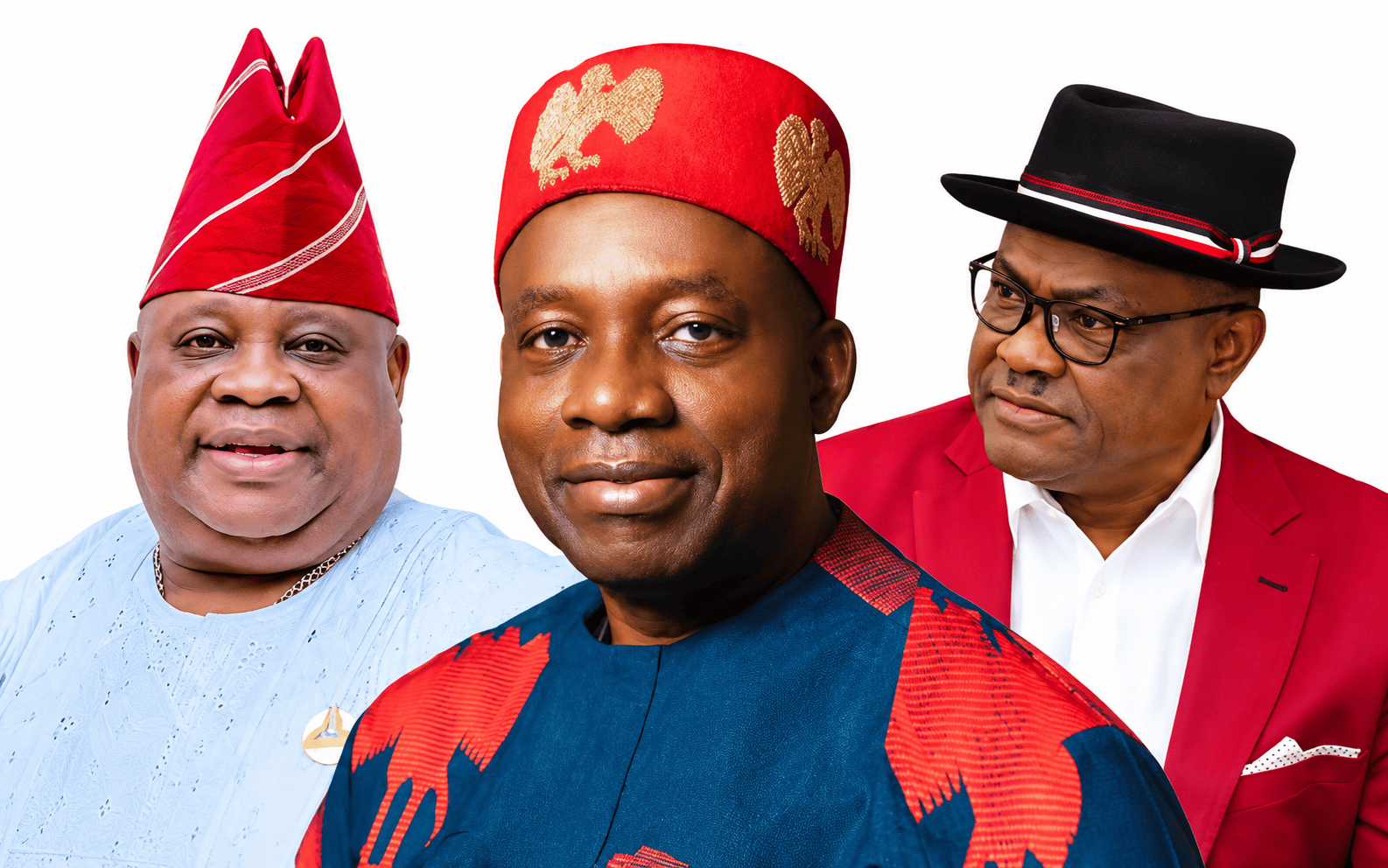
The All Progressives Congress (APC) has named Nyesom Wike, Minister of the Federal Capital Territory (FCT); Ademola Adeleke, Osun State governor; and Chukwuma Soludo, Anambra State governor, as campaign coordinators in its expanded presidential campaign council for the 2027 general election, despite their affiliations with other political parties.
Wike belongs to the Peoples’ Democratic Party (PDP), Soludo is a member of the All Progressives Grand Alliance (APGA), while Adeleke won re-election as Osun governor in 2026 under the Accord Party.
Under the new arrangement, Wike will coordinate the APC campaign in Rivers State and the FCT, Soludo will oversee Anambra, while Adeleke will coordinate the campaign in Osun.
The expanded list is scheduled for inauguration by President Bola Tinubu at the Presidential Villa in Abuja on Wednesday.
The APC initially released its campaign council list on August 22, naming Abdulaziz Yari, former Zamfara governor, as director-general. Senate President Godswill Akpabio, House of Representatives Speaker Tajudeen Abbas and Yobe Governor Mai Mala Buni were appointed deputy director-generals.
In the revised list, Akpabio, Abbas and Kwara Governor AbdulRahman AbdulRazaq are deputy vice-chairmen I, II and III, respectively, while Buni becomes deputy director-general I for the North.
The council also includes former governors and party chieftains as advisers, which include former APC national chairmen Adebisi Akande and Abdullahi Adamu; former Ogun State Governor Ibikunle Amosun; former Osun State Governor Iyiola Omisore; Senator Ibrahim Dankwambo; Senator George Akume; former Ogun State Governor Segun Osoba; and Wale Edun. Obafemi George is listed as an adviser on media.
The Directorate of Election Planning, Coordination, Monitoring and Mobilisation, established ahead of the 2027 general election, has Faleke as Deputy Director-General, with Stella Okotete and Engr. Abdullahi Garba Ramat serving as Secretary I and Secretary II, respectively. Audu Maikori is also listed as a secretary.
Other members of the directorate include Soares Omotola, Bashir Dabo, Sheriff Mohammed Usman, Jibrin Bancir, Ayoola Peter Olajolo, Abubakar Sadiq Sada and Princess Folasade Ogunbiyi.
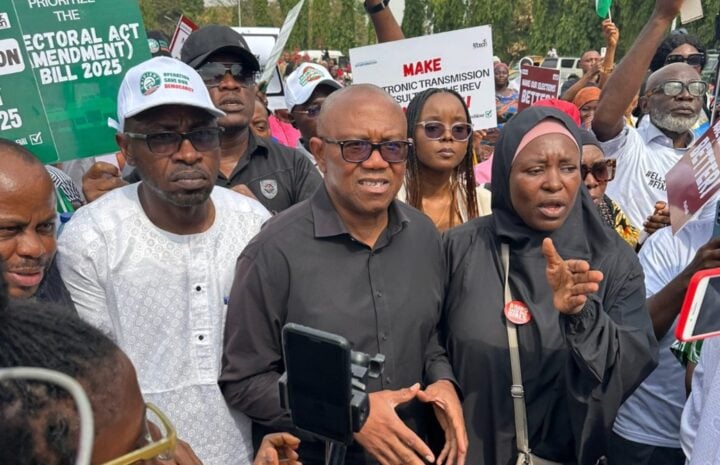
The Nigeria Democratic Congress (NDC) presidential candidate, Peter Obi, has questioned how the Federal government’s 30-day petrol price discount would reduce poverty, unemployment, insecurity and inequality in the country.
Obi raised the questions in a statement posted on his X platform on Sunday, describing the initiative as a reactive policy that substitutes political optics for sound economic planning.
He argued that the discount, which he said amounts to less than five per cent of petrol costs, is unlikely to address the wider economic challenges facing Nigerians.
“The announcement by the APC-led Federal government offering a 30-day discount on price of petrol to relieve the acute hardship and hunger caused Nigerians by its unplanned removal of subsidy can only be described as another very reactive and confused approach to governance that is now the culture of the Tinubu government,” he said.
Obi said he had delayed commenting on the policy to allow time to assess its outcome, but maintains that the measure has not demonstrated a sustainable approach to addressing the country’s economic difficulties.
He recalled that President Bola Tinubu removed the petrol subsidy on May 29, 2023, arguing that the decision was taken without adequate consultation or a proper assessment of its likely effects on the economy and the livelihoods of ordinary Nigerians.
According to Obi, the subsidy removal was followed by other policies, including the floating of the Naira and tax reforms, which he argued are being implemented without proper sequencing and coordination.
He also criticised the government’s handling of multiple budgets, arguing that the combined effect of the policies has contributed to inflation and rising costs of goods and services.
Obi attributed what he described as increasing multidimensional poverty, business closures, unemployment, insecurity, widening inequality and youth migration to the economic pressures arising from the policies.
He also said the policies had weakened the general well-being of Nigerians, insisting that the government should assess their impact before introducing temporary relief measures.
The former Anambra State governor called for a detailed and publicly available regulatory impact assessment of government policies, arguing that such an exercise would help identify their effects and guide necessary adjustments.
He said a government committed to sustainable economic growth should engage stakeholders and ordinary citizens in consultations to develop inclusive policies that improve living conditions and expand economic opportunities.
Questioning the objectives of the petrol discount, Obi asked whether it would increase productivity and exports or whether it was intended to determine if the subsidy should be restored.
“Will it reduce poverty, unemployment, insecurity, and inequality? Will it increase productivity and exports? Is it a test to ascertain if subsidy should be restored? Is it another political gambit in the face of threats of electoral loss in the 2027 election?” he asked.
“Too many questions, no answer!” the former Governor of Anambra State added.



1 Comment