
Personality in Focus
Brain Behind Discovery of DNA, James Watson Dies at 97

- /home/rhoncare/pointblank.ng/wp-content/plugins/mvp-social-buttons/mvp-social-buttons.php on line 27
https://pointblank.ng/wp-content/uploads/2025/11/51958131-1000x600.jpg&description=Brain Behind Discovery of DNA, James Watson Dies at 97', 'pinterestShare', 'width=750,height=350'); return false;" title="Pin This Post">
- Share
- Tweet /home/rhoncare/pointblank.ng/wp-content/plugins/mvp-social-buttons/mvp-social-buttons.php on line 69
https://pointblank.ng/wp-content/uploads/2025/11/51958131-1000x600.jpg&description=Brain Behind Discovery of DNA, James Watson Dies at 97', 'pinterestShare', 'width=750,height=350'); return false;" title="Pin This Post">
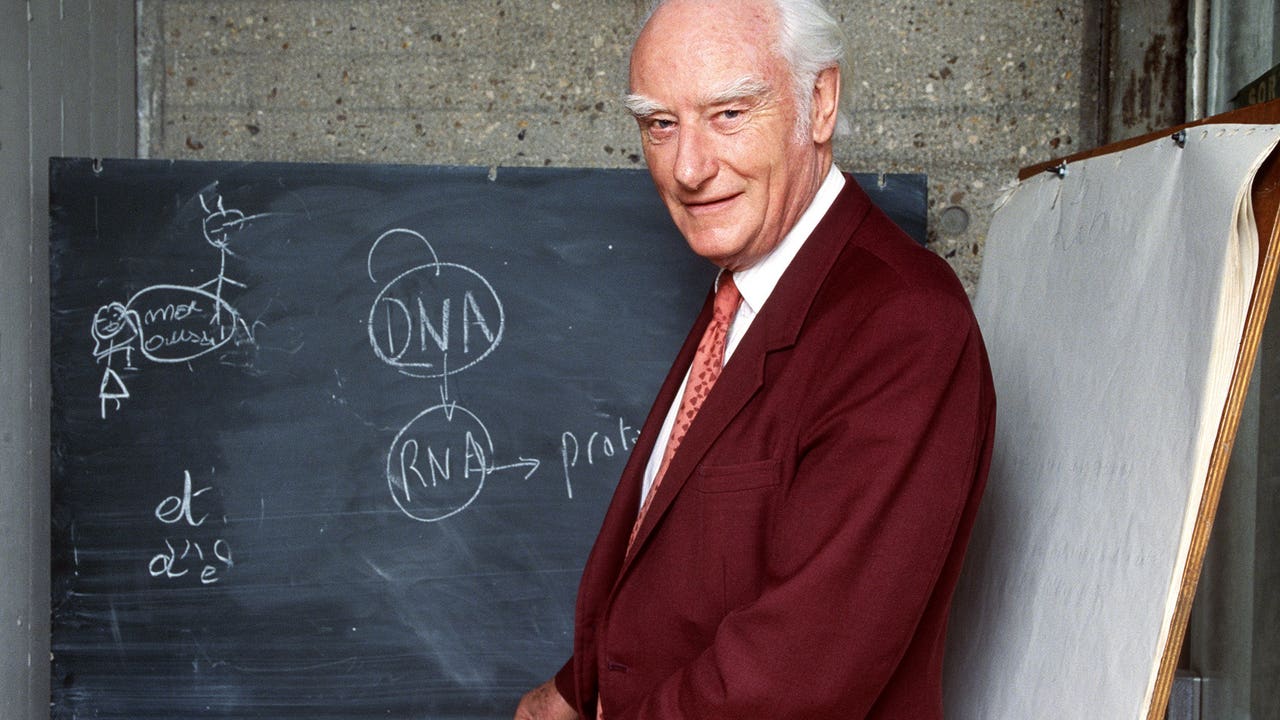
American scientist, James Watson, one of the co-discoverers of the structure of deoxyribonucleic acid (DNA), has died at the age of 97.
Watson, alongside Francis Crick, identified the double-helix structure of DNA in 1953, a discovery that transformed biology and medicine. Their work, which revealed how genetic information is stored and transmitted, earned them and Maurice Wilkins the 1962 Nobel Prize in Physiology or Medicine.
“We have discovered the secret of life,” they said at the time.
His death was confirmed by the Cold Spring Harbor Laboratory (CSHL) in New York, where he spent much of his career. Watson led the institution for decades before stepping down as chancellor following controversy over his remarks on race and sex.
Watson’s reputation declined sharply after comments he made suggesting genetic differences in intelligence between races. In a 2007 interview with The Times, he said he was “inherently gloomy about the prospect of Africa”, adding that “all our social policies are based on the fact that their intelligence is the same as ours whereas all the testing says not really.”
He later apologised “unreservedly”, but the remarks cost him his position at CSHL. In 2019, further comments linking race and intelligence prompted the lab to strip him of his remaining honorary titles. “Dr. Watson’s statements are reprehensible, unsupported by science,” the laboratory said in a statement.
DNA was first discovered in 1869, but its role as the genetic material in cells wasn’t confirmed until 1943. The molecule’s structure remained unknown until Watson and Crick built their model, using X-ray images produced by Rosalind Franklin at King’s College London images reportedly obtained without her consent.
Though Franklin died in 1958, she is now widely credited for her crucial role in solving the DNA structure. At the time, however, her contributions were largely overlooked.
Watson also drew criticism for sexist remarks in his 1968 memoir The Double Helix, where he commented on Franklin’s appearance. Despite this, some former colleagues noted that he supported women scientists at Harvard in the 1950s and 60s, when few others did.
In 2014, feeling isolated from the scientific community, Watson sold his Nobel medal for $4.8 million. The Russian buyer later returned it to him.
Born in Chicago in April 1928, Watson was the son of Jean and James Watson, descendants of English, Scottish, and Irish settlers. A gifted student, he entered the University of Chicago at 15, where he became interested in X-ray diffraction, a key technique in revealing atomic structures.
Watson later studied at Cambridge University, where he met Crick and began building models of DNA. After their discovery, he joined Harvard University as a biology professor.
He and his wife, Elizabeth, had two sons. One was diagnosed with schizophrenia, inspiring Watson to continue research into the genetic basis of mental illness.
In 1968, he became director of Cold Spring Harbor Laboratory, transforming it into a leading global centre for molecular biology research, the same institution that later confirmed his death.


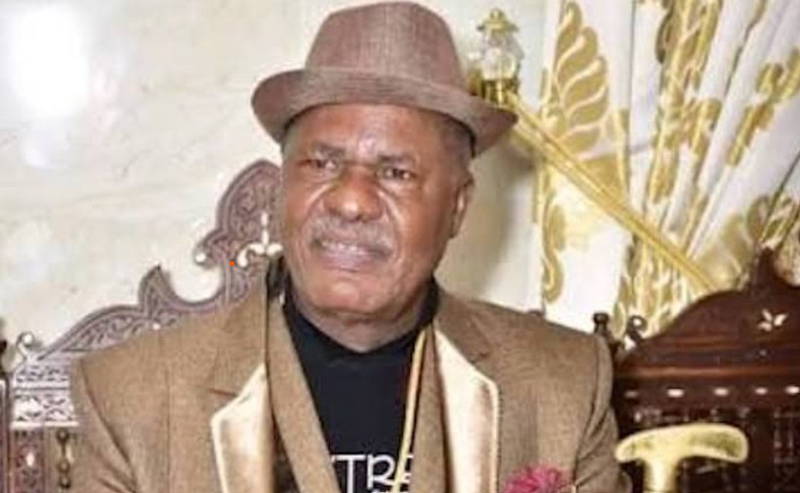
Gunmen who kidnapped the chairman of Jezco Group, Chief Joseph Ezeokafor, have reportedly increased their ransom demand from N700 million to N1.5 billion for his release.
Ezeokafor, a septuagenarian businessman, was reportedly abducted in Anambra State about a week ago.
The kidnappers initially demanded N700 million from the businessman’s family.
Unofficial reports quoting an anonymous source said the kidnappers had established contact with the family after the abduction.
The source said the family accepted the initial N700 million demand as part of efforts to secure Ezeokafor’s release.
However, the kidnappers later increased the ransom to N1.5 billion.
The source said the family remains willing to negotiate with the abductors, but the kidnappers have allegedly stopped further communication.
The development has reportedly left the family in a difficult situation, as attempts to restore contact with the abductors have not yielded results.
Ezeokafor was kidnapped on Tuesday at about 2am after he reportedly left his home for a prayer ground as part of his annual spiritual rejuvenation.
He was said to have left his security details behind when he stepped out of his residence, which the kidnappers capitalized on, to abduct him.
One week after the incident, the police and the State government authorities have yet to make any official statement on the businessman’s abduction.
The Anambra State Police Command has also not publicly commented on the incident.
Personality in Focus
Lessons from Dickem Farms: Two Decades of Pioneering Innovation in Nigeria’s Aquaculture Industry
By Ayo Oyoze Baje
“Our philosophy has always been simple: innovation should solve real problems, create opportunities and improve livelihoods.”
Introduction
For over two decades, Dickem Farms has remained committed to transforming Nigeria’s aquaculture industry through innovation, technology, enterprise development and human capacity building. What began in 1999 as a vision to improve fish production has evolved into one of the country’s respected aquaculture enterprises, recognized for pioneering practical solutions that have strengthened fish farming and empowered the next generation of agripreneurs.
Dickem Farms was the first to introduce mobile fish ponds into the Nigerian market, making fish farming more flexible, affordable and accessible to investors and smallholder farmers. The company also pioneered the local production of a floating fish feed extruder that uses locally available materials, reducing dependence on imported technology while lowering production costs for fish farmers. In addition, Dickem Farms has invested in modern hatchery systems that produce healthy, high-quality fingerlings to support commercial fish production.
Our philosophy has always been simple: innovation should solve real problems, create opportunities and improve livelihoods.
Recent experiences and initiatives
To get more important information about the farm there were questions on the different aspects, starting with the experiences in the past five years. Let us glean from the horse’s mouth. According to the Managing Director, Godwin Emaketenemi, “Over the last five years, we have continued to strengthen our production systems for both catfish and tilapia. Our focus has been on improving fingerling quality, enhancing pond management practices and maintaining strict water-quality monitoring to maximise fish survival and productivity.
“We also introduced better feeding programmes and comprehensive record-keeping systems that enable us to monitor growth performance, feed conversion efficiency and mortality rates.
Rather than pursuing rapid expansion, we have adopted a disciplined strategy of scaling only after achieving consistent operational results.
“This measured approach has enabled Dickem Farms to build a resilient business capable of supplying quality fish and aquaculture services to customers in Lagos and across Nigeria.”
Overcoming challenges:
On the challenges faced and how they were overcome, he stated that: “Like every agricultural enterprise, we have encountered significant challenges. Rising feed costs, unreliable electricity supply and disease management remain major concerns within the aquaculture industry. Instead of allowing these obstacles to limit our growth, we viewed them as opportunities for innovation.
Producing our own quality fish feed has significantly reduced production costs while giving us greater control over feed quality and formulation. We have also improved water-management systems and operational planning to minimize the effects of power instability.
“At the farm level, stronger biosecurity measures, improved hygiene and proactive fish-health monitoring have substantially reduced disease outbreaks and production losses.”
Marketing strategies
With regards to marketing he explained that; “Production alone does not guarantee success; a reliable market is equally important. Dickem Farms has therefore, built long-term relationships with wholesalers, retailers, restaurants and institutional buyers. We grade our fish according to customer specifications and schedule harvesting to coincide with periods of stronger market demand.”
Training programs
Furthermore, with the focus on training he explained that: “Our reputation has been built on dependable supply, consistent quality and customer trust.
One of our proudest achievements is our investment in people. We believe that sustainable agriculture depends not only on technology but also on developing competent professionals and entrepreneurs.
Over the years, Dickem Farms has trained hundreds of staff, industrial attachment (IT) students, graduates and aspiring fish farmers in practical aquaculture.
“Our training covers hatchery management, pond construction and management, fish nutrition, water-quality management, fish-health monitoring, biosecurity and business record-keeping.
More importantly, we do not stop at training. We mentor young graduates and entrepreneurs, providing technical guidance and business support until they are confident enough to establish and successfully manage their own enterprises. Seeing former trainees become successful employers and business owners remains one of our greatest rewards.
“Continuous learning has also shaped our growth. Through partnerships with foreign organisations and technical visits to leading aquaculture companies, we have gained valuable knowledge in modern hatchery technology, fish-health management, production efficiency and operational excellence.”
Government ‘s support
Coming to the need for government’s support he beamed light on it this way:
“These experiences have strengthened our technical capacity and enabled us to transfer global best practices to Nigerian farmers.
Nigeria possesses enormous potential to become a leading aquaculture producer in Africa. However, unlocking that potential requires stronger collaboration between government and the private sector.
We recommend tax exemptions or significant tax incentives for fish farming and aquaculture value-chain businesses to encourage investment.
“Farmers also need affordable financing with realistic repayment terms, reliable access to quality fingerlings, improved energy support and stronger extension services that provide timely technical guidance on fish health and disease prevention. Organized marketing systems that connect producers directly with institutional buyers will further strengthen the industry’s competitiveness.”
Piece of advice to the younger generation:
His piece of advice to young people who might be interested to go into fish farming:
“To young people considering aquaculture as a career or business, my advice is straightforward: seek proper training and find a credible mentor. Fish farming is a science and a business that rewards discipline, knowledge and patience. Begin with manageable investments, keep accurate records, master water-quality management and learn from experienced practitioners before expanding.
“A good mentor can save years of costly mistakes and accelerate the journey to success.”
As the future beckons:
As for plans for the future he highlighted that: “Looking ahead, Dickem Farms will continue to invest in innovation, local technology development, commercial hatchery expansion, fish-feed production, modern aquaculture equipment and practical capacity building. Our ambition is not only to grow our business but also to contribute meaningfully to food security, employment creation and economic development.
Our long-term vision extends beyond Nigeria.
“We believe Africa possesses the resources, talent and entrepreneurial spirit to feed itself and compete globally. Through innovation, strategic partnerships and investment in people, Dickem Farms will continue to play its part in building a modern aquaculture industry that delivers prosperity for farmers, affordable nutrition for families and sustainable growth for the continent.
Our mission remains unwavering: to inspire a future where Africans feed Africa through innovation, enterprise and excellence in agriculture.”
These indeed, are brilliant submissions for us all to learn from now and always.

The Chairman of First HoldCo, Femi Otedola, has strengthened his stake in the financial institution after acquiring an additional 1.77 billion shares valued at N222.20 billion.
Details contained in a disclosure filed with the Nigerian Exchange (NGX) showed that the shares were purchased on Thursday through his investment company, Calvados Global Services Limited.
The latest transaction raised Otedola’s shareholding in First HoldCo from 9.99 billion shares to 11.77 billion shares, with his ownership increasing from 21.96 per cent to 25.88 per cent.
The purchase marks Otedola’s second major investment in the company this July, following his acquisition of 706.13 million shares worth N77.58 billion on July 22.
With the fresh acquisition, Otedola’s total investment in First HoldCo has climbed to N1.47 trillion, making him the institution’s largest shareholder.


