
Personality in Focus
Britain Get New Prime Minister, Andy Burnham

- /home/rhoncare/pointblank.ng/wp-content/plugins/mvp-social-buttons/mvp-social-buttons.php on line 27
https://pointblank.ng/wp-content/uploads/2026/07/AP24188446267287-e1720275835890-1000x600.jpg&description=Britain Get New Prime Minister, Andy Burnham', 'pinterestShare', 'width=750,height=350'); return false;" title="Pin This Post">
- Share
- Tweet /home/rhoncare/pointblank.ng/wp-content/plugins/mvp-social-buttons/mvp-social-buttons.php on line 69
https://pointblank.ng/wp-content/uploads/2026/07/AP24188446267287-e1720275835890-1000x600.jpg&description=Britain Get New Prime Minister, Andy Burnham', 'pinterestShare', 'width=750,height=350'); return false;" title="Pin This Post">
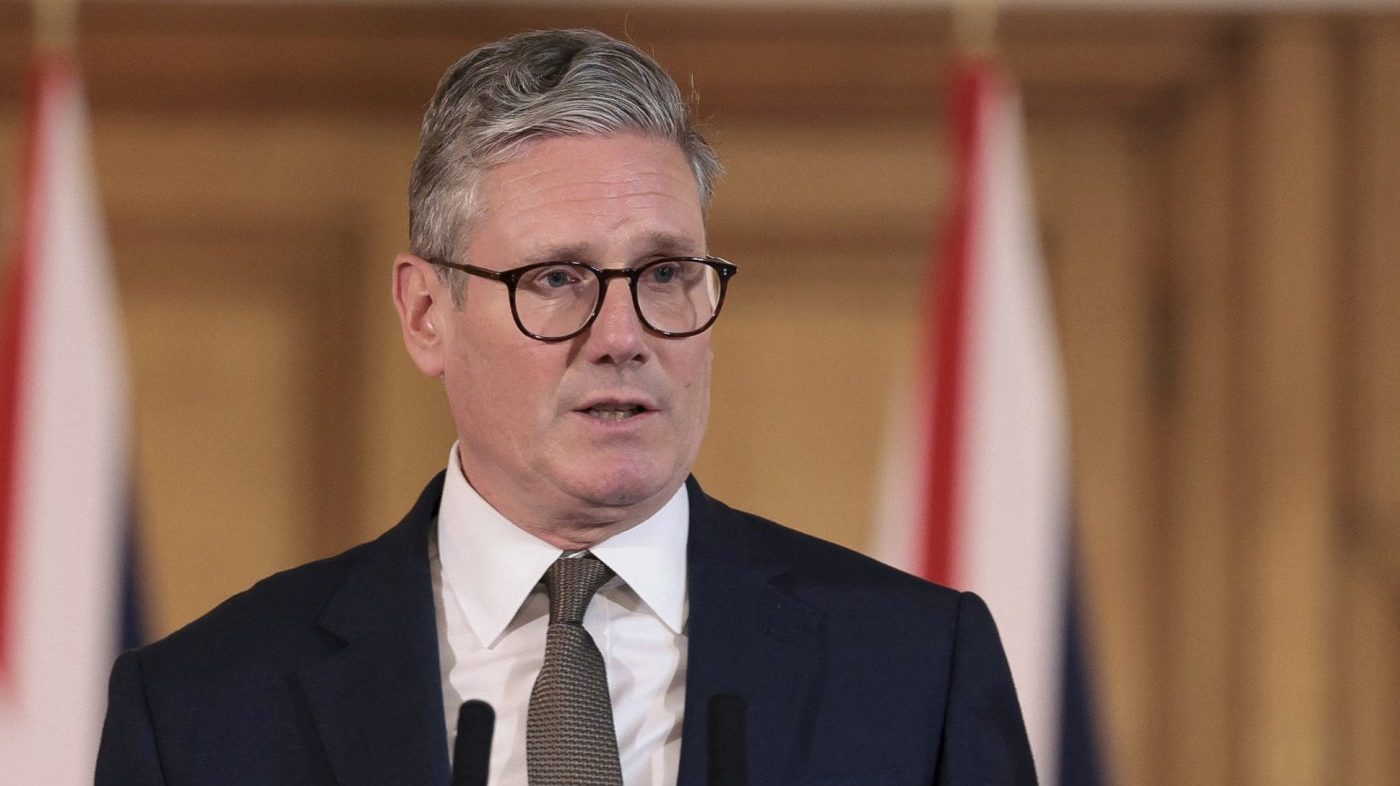
Nearly a month after Keir Starmer’s resignation, former Manchester Mayor Andy Burnham, one of the most popular politicians in Britain, will become the country’s seventh prime minister in 10 years.
The move was made possible after Burnham won a byelection in the Makerfield constituency by a wide margin. He was then appointed as the leader of the ruling Labour Party on Friday, confirming him as Starmer’s successor.
A long political career
“Everyone can feel the country isn’t where it should be,” 56-year-old Burnham said after his Makerfield election victory, in remarks that already sounded distinctly prime ministerial. “From here on I will give everything I have got to make it so. To ensure the name Makerfield is forever synonymous with bringing about the change this country needs, bringing back something we’ve lost ― hope ― hope for the future.”
Burnham is seen as a leading figure on Labour’s moderate-left wing and has decades of experience in both national and regional politics. He first entered Parliament in 2001. Under Prime Minister Tony Blair, he served as a junior minister at the Home Office before Blair’s successor, Gordon Brown, appointed him to roles at the Finance Ministry, the Department for Culture, and later as health secretary.
Burnham even ran for the Labour leadership twice, in 2010 and 2015. In 2017, he left Parliament to become mayor of Greater Manchester, a region of around 2.8 million people in northern England. He has since won reelection twice, most recently getting nearly two-thirds of the vote.
Among Burnham’s most notable achievements in Manchester is the expansion of affordable public transportation. Housing and health care have also been central priorities throughout his time as mayor. He is critical of Brexit, the UK’s exit from the European Union in 2020, and describes himself as an advocate of “pro-business socialism.”
During the COVID pandemic, Burnham locked horns with then-Prime Minister Boris Johnson, demanding greater financial support for businesses and workers affected by lockdown restrictions. The confrontation and his general success in Manchester earned him the nickname “King of the North.”
In the past few years, Burnham’s main criticism of his Labour Party colleague Keir Starmer has focused on the prime minister’s cuts to welfare spending. Which policies Burnham would pursue should he succeed as prime minister has so far largely remained undefined.
A working-class northerner
Burnham is deeply rooted in the former mining and industrial communities of northern England. Born in 1970 in Aintree, near Liverpool, he grew up in the village of Culcheth with his father working as a technician and his mother as a medical assistant.
While studying English at Cambridge University, Burnham later said he often felt like an outsider. Inspired by the miners’ strike of the mid-1980s, he joined the Labour Party at the age of 14.
He’s been a lifelong supporter of Everton Football Club. His wife is Dutch, and the couple has three children. Burnham also has a tattoo of the worker bee — a symbol of industry and solidarity — on his right upper arm.
Today, Burnham is among the most popular politicians in the United Kingdom, and many supporters see him as Labour’s best hope of countering the rise of the right-wing populist Reform UK party of Nigel Farage.
Yet since the Brexit referendum in 2016, the office of British prime minister has become somewhat precarious. Burnham would be the seventh person to hold the position since the referendum a decade ago. If he does succeed Starmer, he will inherit a country still grappling with deep political, economic, and social challenges.
This article was originally published in German on June 22 and updated on July 17 to reflect Andy Burnham being appointed Labour Party leader.
Culled from DW.com


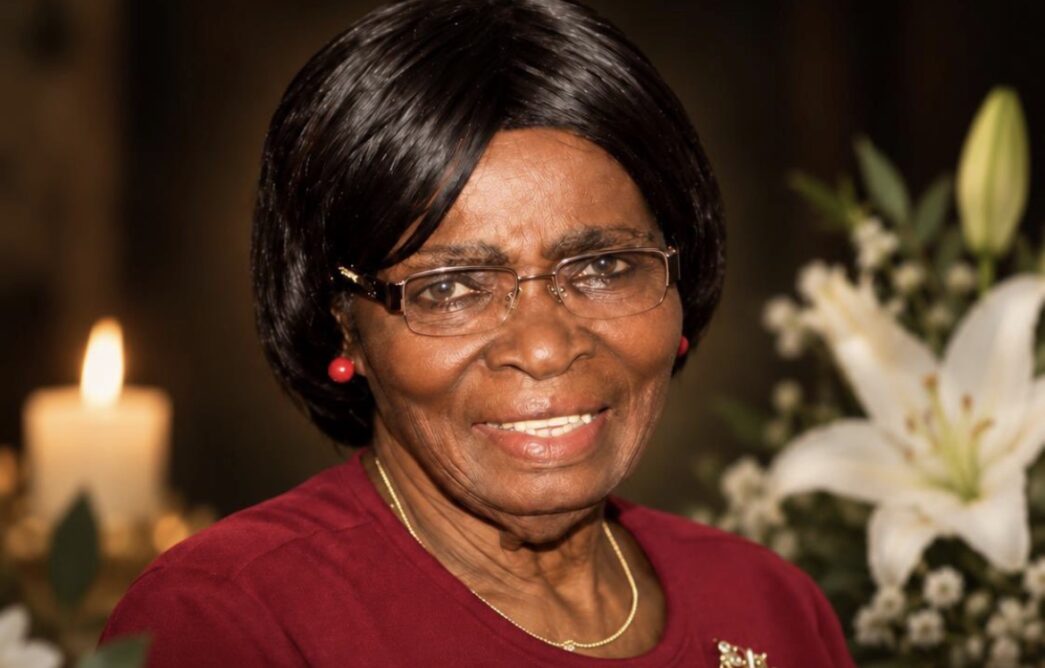
Professor Kamene Okonjo, a renowned sociologist, women’s rights advocate and mother of the Director-General of the World Trade Organisation (WTO), Dr. Ngozi Okonjo-Iweala, has passed on at the age of 96.
Okonjo, who was also the matriarch of the Umu Obi Obahai Royal Family of Ogwashi-Uku Kingdom in Delta State, died on Friday.
Her death was announced on Sunday in a statement issued by the Palace Secretary of Ogwashi-Uku Kingdom, Prince Ifeakanachukwu Emordi, on behalf of the royal family.
The late professor was the wife of the immediate past traditional ruler of Ogwashi-Uku, Obi (Professor) Chukwuka Okonjo, with whom she was married for 66 years.
She was also the mother of the reigning monarch, Obi (Dr.) Ifechukwude Anishi Okonjo II, and WTO Director-General Ngozi Okonjo-Iweala.
The royal family described her death as a significant loss to the kingdom, citing her contributions to academic scholarship, women’s rights and social development.
An internationally recognised sociologist, Okonjo devoted much of her professional life to academic research and advocacy for women’s empowerment, earning recognition within and beyond Nigeria.
“An internationally recognised and foremost sociologist, Professor Kamene Okonjo distinguished herself through her outstanding academic accomplishments, intellectual contributions and lifelong advocacy for women’s rights and empowerment,” the statement said.
The family noted that her influence extended beyond academia, particularly through her commitment to advancing opportunities for women and promoting education.
It also acknowledged her role within the traditional institution of Ogwashi-Uku, where she remained an influential member of the royal household.
Beyond her academic career, Okonjo was a mother, grandmother and great-grandmother whose family ties spanned several generations.
“While we mourn her passing, we celebrate a life exceptionally well lived,” the royal family stated.
The statement extended condolences to the reigning monarch, Okonjo-Iweala and other surviving children, including Dr. Njideka Okonjo-Udochi, Prince Onyema Okonjo and Prince Chichi Okonjo.
It also acknowledged the deceased’s grandchildren, great-grandchildren and other members of the extended royal family.
The family urged residents of Ogwashi-Uku to honour her memory and reflect on her contributions to scholarship, women’s advancement and the community.
Details of her funeral arrangements were not disclosed in the statement.
By Eric Elezuo
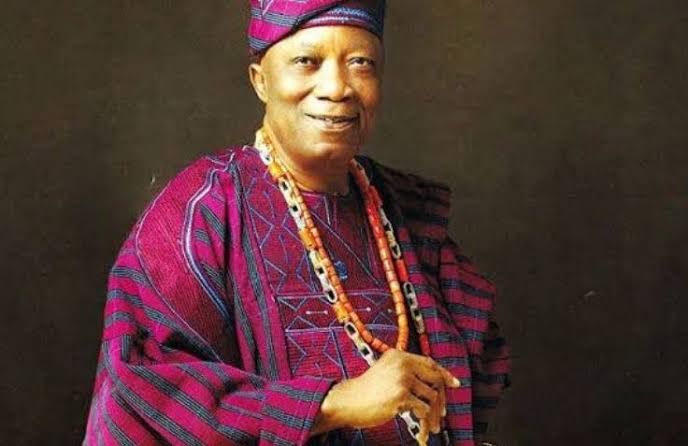
Much as everyday in the life of Ogun State-born multi-billionaire, Sir Kesington Adebukunola Adebutu, is a day of giving, his birthday, which fall in the month of October, has become monumental because it defines generosity, philanthropism and giving on a whole new level. And this year as the lottery merchant turns 91 is no exception. He is reported to hand over a standard facility valued at over $600,000 to the Lagos State Security Trust Fund (LSSTF) as his birthday token, and contribution to the security development of Lagos State, and to an extent, the country.
Adebutu, who is the founder of Premier Lotto, has handed the Lagos State the new multi-storey building headquarters he paid for in full, along with five patrol vehicles for security operations, a performance Governor of Lagos State, Babajide Sanwo-Olu, described as ‘a remarkable gesture’.
Adebutu’s benevolence freed the Trust Fund from nearly 10 years of operating from rented and squating offices. The edifice I situated highbrow Ikeja Central Business District. The construction took the philanthropist just 10 months to complete – from groundbreaking to handing over. It was a miracle of some sort, and a proof that that when Adebutu sets out to achieve something, it is good as done.
The edifice has since been named the Sir Kesington Adebutu Security Trust Fund Building. It would be recalled that only recently, the billionaire businessman gave similar building to the Nigerian Institute of Journalism (NIJ). In 2025, he completed and handed over the Kesington Adebukunola Adebutu Research Centre to the Lagos State government.
Responding during the commissioning and handing over ceremony of the building, Adebutu, who had vowed to continue to do good till his last breath, noted as follows: “I, therefore, regard my modest contribution to this project not merely as philanthropy but as a sacred obligation of gratitude to our Almighty Creator.”
He described the building as “an enduring testament to our collective commitment to safeguarding lives and property.”
Adebutu once more proved tat he can be trusted with wealth, and that he is the definition of ebullient, phenomenal and philanthropist-personified.
Recall that in a 2024 interview with The Boss, Chief Adebutu noted that “I continue telling people, I don’t stay negative. My calling is to do good to people, and to appreciate God’s mercy on my life and my family. I know I work hard, but some people work harder than me, but they are not getting a fraction from what I am getting from God. So the only way about mine is to show appreciation to God by giving out a little bit of the fraction of what he has given to me. I believe that a soul which is healthy and educated can never go backward, and that is what I have passion for; that explains my giving nature…what I am doing is to tell God thank you. As long as God spares my life, I will continue to do good deeds.”
Fondly called Baba Ijebu as a result of the empirical success of one of his business concerns, Adebutu is by every standard an enigma, a colossus of immense substance and someone no one can ever wave away. He has carved his life in gold, and more importantly, his afterlife in glory.
In 2025, Adebutu totally exhausted eight long days to celebrate his entry into the nonagerian club. His philanthropic gestures traveled through the cities of Ife, Iperu and Lagos, leaving behind soundtracks of immense generosity. These levels of generosity changed and still changing lives, redefined concepts and set new standards in the history of corporate social responsibility delivery.
Even at 91, Adebutu appear agile, able and full of wisdom. He is also highly prolific. It is worthy of note that once upon a time Adebutu added a glorious great feather to his crown of feathers, becoming the custodian of Yoruba culture, as the Ooni of Ife, Oba Enitan Ogunwusi, Ojaja II conferred on him the Odole of Ile Ife, one of the most prestigious titles in Yorubaland, and Ife’s highest title.
The Odole title, reputed to be conferred on prominent individuals, who have distinguished themselves in all areas of human endeavours, is the sure honour for a man of Adebutu’s calibre and status. This is because the betting businessman, has not only excelled in business but has become a rare gem when it comes to looking after the less privileged and sending heartfelt endearments to as many as that cross his path. Chief Obafemi Awolowo and Chief Godwin Olusegun Kolawole Ajayi (SAN) were former holders of the title
Popularly known as Baba Ijebu and Omo Iya, Sir Kesington Adebukunola Adebutu, with an avanlanche of recognitions including CON, KJW and FISM, was born to late Alhaji karimu Folarin Adebutu aka “Owo-Iya” and late Alhaja Seliat Olasimbo Adebutu of Iperu Remo, Ikenne LGA in Ogun State on October 24, 1935. Sir Kesington completed his primary education in 1950 having attended the Wesley Primary School, Iperu Remo and later Ijero Baptist School, Apapa Road, Ebute-Metta, Lagos.
In January 1951, he was admitted to Baptist Academy School, but he completed his secondary education at the grand Remo Secondary School (RSS), Sagamu, Remo, Ogun State. Baba Ijebu’s career endeavour started at Cable and Wireless Limited, which later became NITEL, as Operations Clerk. He later joined Claffins Chemicals as a salesman, and through dint of hardwork rose to become the Regional Sales Manager for Lagos and the then Midwestern Region. It was his quest to provide employment for teeming Nigerian youths that led to the establishment of Face Millionaires Pool Limited with his bosom friend, Chief Solomon Ayoku in 1969.
A philanthropist par excellence, Sir Kesington abandoned his ambition to become a lawyer, preferring to ‘enjoy’ life, and today, is the proprietor of Kesington Adebukunola Adebutu Foundation (KAAF), and promoter of the popular Premier Lotto, also known as Baba Ijebu – a scheme that has put smiles on the faces of many Nigerians. Adebutu, over the years, has used every opportunity that comes his way to affect lives of everyone he meets, especially during his birthdays and auspicious occasions. During his 80th birthday, Adebutu, whose Foundation was celebrating its 10th anniversary, conducted a free medical outreach programme at Iperu-Remo, Ogun state. In addition, he gave out eight brand new cars and other valuable gifts to loyal customers of Premier Lotto.
Sir kesington’s larger than life image is always in the public view, and he has been honoured on a good number of occasions. He was rewarded as an ICON and celebrated as a man of character, kindness and generosity during the Ogun at 40 celebrations in 2016. Other feathers on the crown of the man of possibilities include the traditional title of Asoju Oba of Lagos, which was conferred on him by the Oba of Lagos, Rilwan Akiolu. When the man of means celebrated his 81st birthday, he wowed the congregation when instead of demanding gifts, tasked everyone to make a donation to the church, and tagged it “Adebutu Family Harvest”. His dedication to God is legendary.
He said during thanksgiving service that: “At 81, what work can I do, there is no work I can do at 81 years but the work of God”. That was 10 years ago, and that also explains how dedicated and close to his God he is.
A year later, during his 82nd birthday, he was quoted as saying: “At 82, what can one say? You have contributed immensely to worthy causes in the house of God. Even you have contributed to other worthy causes in the state and the society as a whole. People like you are rare to find. “What is now left for you is to continue to walk with God, love God the more, live your life for Him. So that at the end of your race on earth, you will reign with Him in heaven.”
In 2018, Adebutu was honored with double chieftaincy titles as the Baba-Oba Akarigbo of Remo by the Lord of Remo, His Royal Highness, Oba Babatunde Adewale Ajayi, and also honoured as Baba-Oba Alaperu of Akesan Land by His Royal Majesty, King Idowu Basibo (Odoru V), Sagamu in Ogun State, at the sprawling palace of the royal father in Sagamu Remo.
A worthy icon, well known business brand, philanthropist extra-ordinaire, Adebutu was at the forefront of helping to stem the tide of the Coronavirus pandemic with a generous donation of N300 million to the Lagos State government while commending ‘the dynamic efforts of Governor Babajide Sanwo-Olu in bringing succour to the sufferers of COVID-19 Pandemic in the state’.
In a letter the billionaire industrialist personally signed, he was quoted as saying “As a token of our support to the victims, myself, family and organisation are donating a modest sum of N300,000,000.00 towards which, we have forwarded the necessary instruction and our bankers – Wema Bank Plc has transferred the sum into the dedicated UBA account…”
The front line humanitarian, Adebutu is using his using his wealth of experience, spread and connection to positively affect the youths of Yoruba land, just as his predecessors did in the past.
He said: “With my emergence as Odole Oodua, the Yoruba race will witness new era of sociocultural development, unity and peace,” and he has been living up to expectation many years after. His contributions, donations and acts of benevolence continue to reverberate across the length and breadth of Yorubaland.
The grace behind his Odole status clearly summarises his larger than life personality
Adebutu is happily married with a host of very successful children.
This is wishing the great philanthropist, lover of humanity and distinguished gentleman a happy, prosperous 91st birthday!
Personality in Focus
Glo Celebrates Igwe Nnaemeka Achebe with Royal Banquet As 2026 Ofala Festival Ends
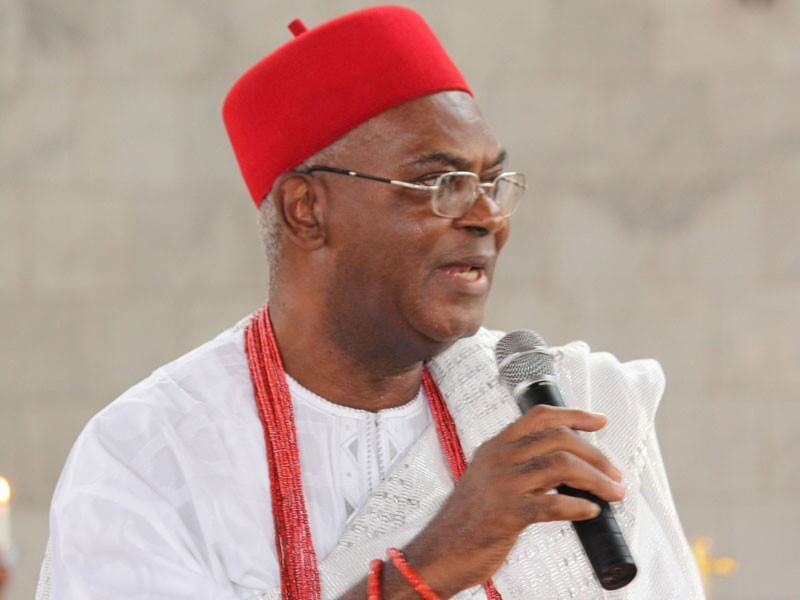
Globacom brought the 2026 Ofala Festival to a magnificent close on Wednesday with a royal banquet in honour of the Obi of Onitsha, His Majesty Igwe Alfred Nnaemeka Achebe.
The elegant gathering, attended by the monarch, members of his cabinet, Globacom’s trade partners and high-net-worth customers, marked the grand finale of the festival sponsored by the telecommunications and digital solutions company.
Speaking at the occasion, Globacom’s Divisional Head, South-East, Mike Ehumadu, said the event underscored the enduring significance of partnerships between corporate organisations and traditional institutions in preserving Nigeria’s cultural legacy and sustaining the traditions that give communities their distinctive identity.
He congratulated Igwe Achebe, the Ofala Festival organising committee and the people of Onitsha on the successful celebration of the 2026 edition, reaffirming Globacom’s commitment to initiatives that celebrate Nigeria’s cultural diversity, strengthen community bonds and project the country’s rich heritage to a wider international audience.
The evening unfolded as a vibrant tapestry of music, comedy and cultural entertainment. Guests were treated to performances from Aniweta Mazeli, Boy o Boy and the Groove Band, while comedian MC Ezegetive infused the gathering with laughter. The performers brought their artistry to bear on the occasion, enriching its atmosphere and creating cherished moments for the royal household, community leaders and other distinguished guests.
In further recognition of the competitive spirit, discipline and communal solidarity displayed by the various Onitsha age grades during the festival, Globacom rewarded winners of the different competitions with cash prizes and trophies. The gesture acknowledged not merely their achievements but also the collective pride and sense of belonging that animate the Ofala tradition. It also presented hundreds of bags of special Basmati rice to all the members of the different age grade associations.
Globacom’s sustained association with Ofala exemplifies the capacity of purposeful private-sector investment to preserve cultural heritage while broadening the social and economic benefits of traditional festivals.


