
Headlines
Buhari Not Eloquent, Service Chiefs Should Address NASS Instead – Aliyu


A former Minority Leader of the House of Representatives, Farouk Aliyu, says President, Muhammadu Buhari is not an orator and as such should not address the National Assembly sitting today.
According to Aliyu who is a member of the All Progressives Congress and a close ally to the president, the service chiefs should attend the NASS invitation in lieu of Buhari.
The House of Representatives led by the Speaker, Femi Gbajabiamila, had last week invited Buhari over the rising insecurity and the killing of over 43 rice farmers by Boko Haram terrorists in Borno State.
An aide to the President, Lauretta Onochie, had also revealed that Buhari would appear before a joint session of the National Assembly on Thursday. However, reports began to filter in on Tuesday that the President had decided not to attend the meeting any longer.
The Attorney-General of the Federation and Minister of Justice, Abubakar Malami (SAN), had said the National Assembly lacked the power to invite the President to speak on security matters.
Speaking last night, the former Minority Leader in the House of Representatives backed Malami, saying, “There are so many things that the President may divulge and people will say, ‘Why did he even go? He shouldn’t have gone.’”
Aliyu argued, “President Buhari is not an orator. There are orators, people who can talk and talk. People are different.”
The APC member, who spoke Wednesday while featuring on a television programme in Abuja, said, “If I were to advise Mr President, I will tell Mr President not to go. He should probably allow the service chiefs to go and explain (things) because there are certain details that should probably be explained in camera.”
“As a former minority leader in the House, I don’t think the President should appear, not at this time when things are so difficult (and) the country is going through challenges. Is the President going to appear there to tell the National Assembly the strategies being taken by the government?
“Is he going there for an interactive session? Not even the Speaker can assure the President or his party that Mr President may not be embarrassed.”
The Punch


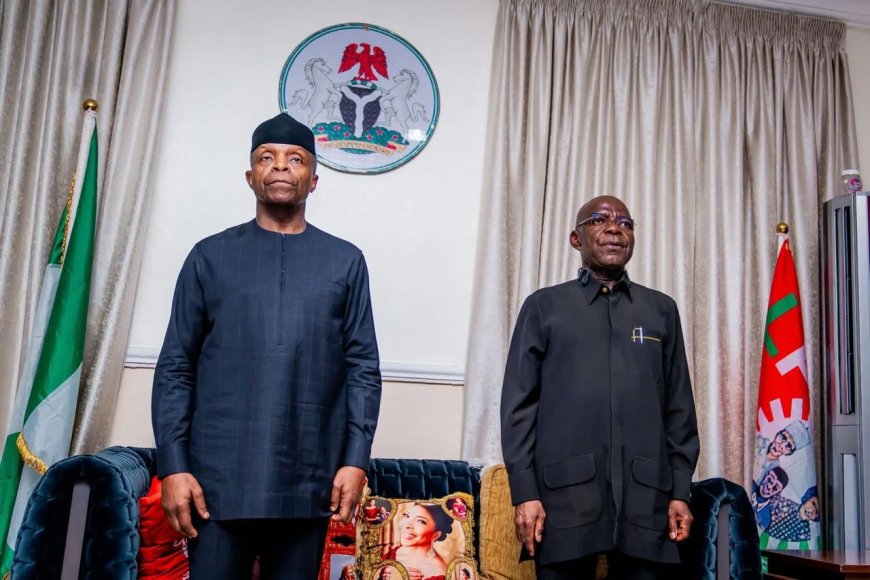
Former Vice President Yemi Osinbajo has applauded Governor Alex Otti of Abia State for what he described as purposeful, people-centered leadership that is repositioning Abia State for sustainable growth and prosperity.
Speaking during his visit to the governor in his office on Wednesday, February 18, which coincided with Otti’s birthday, Osinbajo expressed deep appreciation for the governor’s hospitality and outstanding performance in office, noting that the true essence of public service is making meaningful differences on the lives of the people.
“I am extremely proud of the work you have done so far, you have lived up to expectations – not only to the people but also to your friends and associates. In the short time I have been here, I have seen tangible evidence of progress.” The former Vice President stated.
Prof. Osinbajo particularly commended Governor Otti’s bold social welfare reforms, including assenting into law, the Senior Citizens’ Law.
He described the initiatives as exemplary and deeply rooted in compassion and social responsibility, emphasising that the world’s most successful welfare systems are built on care for the vulnerable.
He also lauded the extensive road infrastructure renewal and improved connectivity across the State, describing the projects as visible symbols of purposeful and results-driven leadership. While reflecting on the demands of leadership, Prof. Osinbajo noted that while many aspire for public office, true distinction lies in delivery.
“Sometimes you wonder whether, after all the efforts to get into office, leaders are able to fulfill their promises. But in your case, you have done not just what you promised, but even more. You have made public service worthwhile,” Prof. Osinbajo added.
He prayed for renewed strength, wisdom, and divine favour for Governor Otti as he continues the work of transformation in Abia State.
In his response, Otti warmly welcomed Osinbajo, describing him as a brother, friend, and mentor, whose visit was deeply appreciated.
The governor clarified that the gathering was not a planned birthday celebration but just marking the day, noting that he rarely celebrate such occasions publicly, especially while serving in public office.
He expressed gratitude to well-wishers who came voluntarily and emphasised his preference for modesty and focus on service.
Otti thanked God for the progress recorded within 32 months in office, describing the administration’s achievements as modest but impactful.
He reiterated that governance must remain centered on the welfare and security of the people.
“Governance is about the people their welfare, their safety, and their peace of mind. If you enter office for any other reason, you miss the essence of leadership,” Governor Otti stated.
He recalled decisive actions taken in the administration’s first month, when some local governments were under the control of non-state actors. The governor said that firm intervention restored order and ensured that communities once inaccessible are now safe and open to residents.
Governor Otti also commended security agencies for their round-the-clock dedication, acknowledging their sacrifices in maintaining peace and stability across the state.
“We are grateful to the men and women who stay awake so that our people can sleep in peace,” Otti stated.
Earlier, the Secretary to the State Government, Dr. Emmanuel Meribole, on behalf of the State Executive Council, extended warm birthday wishes to the governor, praying for continued strength and fruitful years ahead.
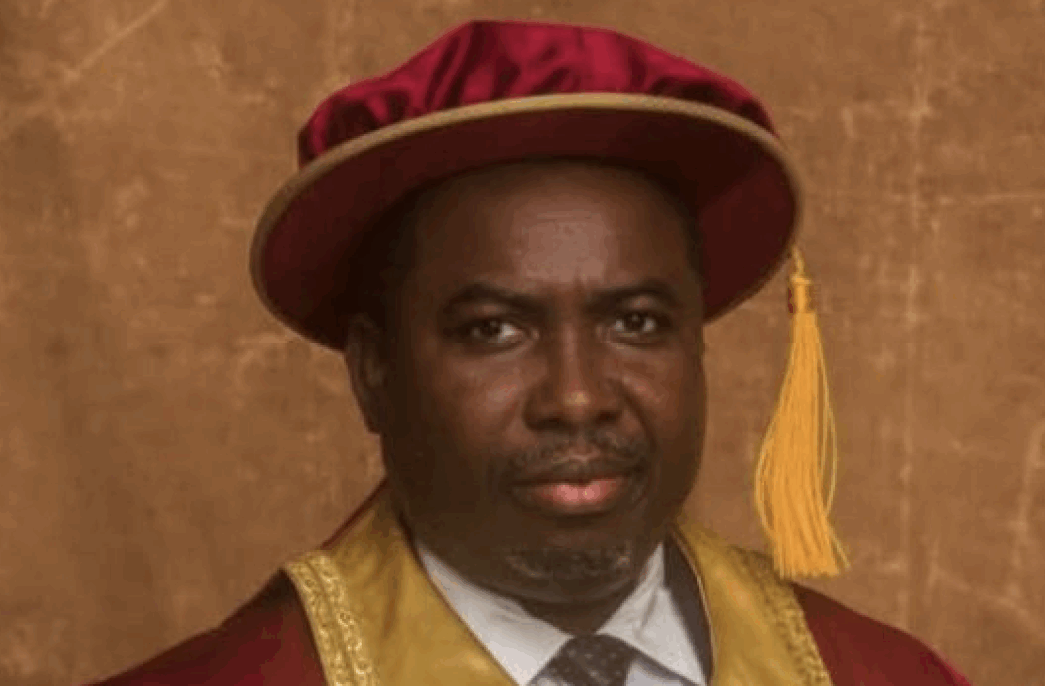
Chairman of the Independent Electoral Commission (INEC), Prof Joash Amupitan, said on Wednesday that the results of the FCT Area Council Elections will be transmitted electronically to the INEC Result Viewing (IREV) portal in accordance with extant laws.
The INEC chairman also disclosed that about 1,680,315 registered voters will participate in Saturday’s Area Council Elections.
Speaking at a stakeholders meeting in Abuja, the INEC chairman said the commission will be deploying about 11,873 polling unit officials across the six Area Councils, warning however that the commission will not accept any excuse for failure.
He warned against vote buying during the elections, adding that the commission is working closely with the police and the Economic and Financial Crimes Commission (EFCC) to nip the incident in the bud.
“The conduct of credible elections is a shared responsibility. While the Commission is constitutionally mandated to organise, undertake and supervise elections, their success depends on the cooperation, restraint and commitment of all stakeholders acting within the framework of the law.
“This election will involve 1,680,315 registered voters who will cast their ballots in 2,822 polling units spread across the six Area Councils of the Federal Capital Territory, namely Abaji, Abuja Municipal Area Council, Bwari, Gwagwalada, Kuje and Kwali. A total of 570 candidates is contesting 68 constituencies for the positions of Chairmen and Vice-Chairmen as well as 62 councillorship seats, comprising 10 wards each in five Area Councils and 12 wards in the Abuja Municipal Area Council.
“These figures underscore the scale of the exercise and the responsibility placed upon all of us to ensure its success.
“It is important to note that the FCT Area Council Election remains the only local government election conducted by the Independent National Electoral Commission. Over the years, it has become a reference point for Local Government elections conducted by State Independent Electoral Commissions, particularly because of the diversity reflected in its outcomes.
“The credibility of this process has strengthened confidence in grassroots democracy. As we approach Saturday, 21st February 2026, we must collectively resolve to raise the bar even higher.
He said the Commission has kept faith with its commitments, and expect political parties and candidates to equally comply with the law as the campaign period draws to a close.
He affirmed that the distribution of Permanent Voter Cards ended on February 10, 2026. During the exercise, 106,099 PVCs from the Continuous Voter Registration exercise, which was suspended in the FCT on Sunday, 12th October 2025, were collected.
“This demonstrates the interest of residents of the Federal Capital Territory in participating in the electoral process. We encourage all registered voters who have collected their PVCs to turn out peacefully on Election Day and exercise their franchise in an orderly manner.
“Consistent with our commitment to transparency and inclusiveness, the Commission has accredited 89 domestic and foreign observer groups to observe the election. In addition, 700 journalists representing 72 domestic and foreign media organisations have been accredited to cover the process.
“We appreciate their role in strengthening public confidence and urge them to discharge their responsibilities professionally and in accordance with the applicable guidelines,” he added in a statement.
He disclosed that the commission will be deploying 11, 873 Polling Unit Officials, including officials for the 195 split polling units supported by 282 Supervisory Presiding Officers, 68 Local Government Area and Registration Area Supervisors and Monitors, 68 Registration Area Centre Managers, 208 Registration Area and LGA Technical Support Staff, as well as 192 Registration Area and LGA Collation Officers.
He said: “The emphasis throughout has been on strict adherence to the Electoral Act, the Commission’s Regulations and Guidelines, and on professionalism, neutrality and efficiency in the discharge of duties.
“The Bimodal Voter Accreditation System has been upgraded and will be deployed in all 2,822 polling units across the Federal Capital Territory for voter accreditation, and results will be uploaded to the INEC Result Viewing Portal in accordance with established procedures.
“All the required BVAS devices for the polling units, including those for the 195 split polling units, as well as the additional five per cent backup, have been thoroughly tested and fully charged for deployment on Election Day.
“To further strengthen public confidence, the Commission conducted a mock accreditation exercise using the improved BVAS in 289 polling units across the FCT. The outcome of that exercise was satisfactory, and we are confident in the effectiveness and reliability of the system for this election.
“Logistics remains central to the successful conduct of elections. On Monday, 16th February 2026, the Commission met with the leadership of the transport unions responsible for providing the bulk of vehicles required for election duty.
“For this election, 1,132 vehicles, 620 motorcycles and 14 boats will be deployed. We made it unequivocally clear that there must be no lapses in logistics on Election Day. Polling units are expected to open promptly at 8.30 a.m. We held extensive discussions and are confident that the unions will fulfil their obligations to ensure timely movement of personnel and materials.
“As we approach Election Day, the Commission has substantially discharged its responsibilities. What remains is for all stakeholders to play their part in ensuring that the election is peaceful, credible and that its outcome is widely accepted. Let me reiterate that INEC does not have a political party and does not have a preferred candidate.
“Our mandate is clear: to provide the enabling environment for residents of the Federal Capital Territory to freely choose their representatives on 21st February 2026. I call on candidates and party leaders to prevail on their supporters to act responsibly, respect the rules and allow the will of the people to prevail.
“There is, however, one issue that must be addressed directly, and that is vote trading or vote buying. The Commission has given an express mandate to the Economic and Financial Crimes Commission and the Independent Corrupt Practices and Other Related Offences Commission to deploy their personnel to polling units.
“Any individual found buying or selling votes will be apprehended and dealt with in accordance with the law. Vote trading undermines the sanctity of the ballot and erodes public confidence in democratic institutions. It must not be tolerated”.
He appealed to stakeholders to recommit themselves to peaceful conduct and strict compliance with the law, adding that security agencies must remain professional and impartial. Political parties must conduct themselves responsibly.
In addition, he said the media must report accurately. Observers must remain objective. Voters must turn out peacefully and exercise their franchise freely.
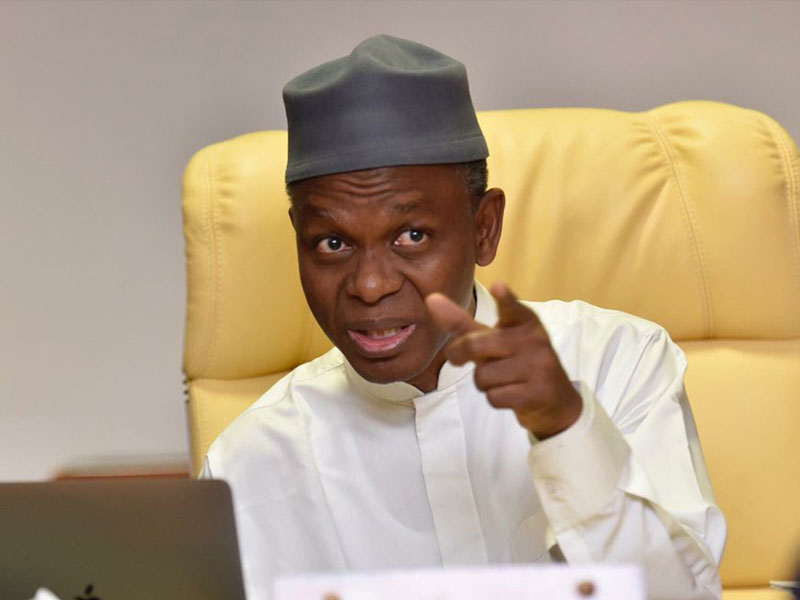
Former Kaduna State Governor, Nasir El-Rufai, was arrested by operatives of the Department of State Services, DSS, shortly after being released on bail by the Economic and Financial Crimes Commission (EFCC) according to Premium Times.
El-Rufai, who was granted bail at around 8 p.m., was immediately picked up by DSS operatives who reportedly lay in wait at the EFCC headquarters.
His arrest is reportedly linked to allegations that he unlawfully intercepted the phone communications of the National Security Adviser, NSA, Nuhu Ribadu.
The former governor, a prominent chieftain of the African Democratic Congress (ADC), had earlier honoured the EFCC’s invitation on Monday over alleged corruption linked to his administration.
He arrived at the EFCC headquarters accompanied by hundreds of his supporters.
This development comes after El-Rufai narrowly escaped arrest at Nnamdi Azikiwe International Airport, Abuja, last Thursday.
Following the airport incident, he accused NSA Nuhu Ribadu of orchestrating the attempted arrest in a series of interviews.
DailyPost


