
Headlines
Cameroon Opposition Leader Dies in Detention

- /home/rhoncare/pointblank.ng/wp-content/plugins/mvp-social-buttons/mvp-social-buttons.php on line 27
https://pointblank.ng/wp-content/uploads/2025/12/Anicet-Ekane.jpg&description=Cameroon Opposition Leader Dies in Detention', 'pinterestShare', 'width=750,height=350'); return false;" title="Pin This Post">
- Share
- Tweet /home/rhoncare/pointblank.ng/wp-content/plugins/mvp-social-buttons/mvp-social-buttons.php on line 69
https://pointblank.ng/wp-content/uploads/2025/12/Anicet-Ekane.jpg&description=Cameroon Opposition Leader Dies in Detention', 'pinterestShare', 'width=750,height=350'); return false;" title="Pin This Post">
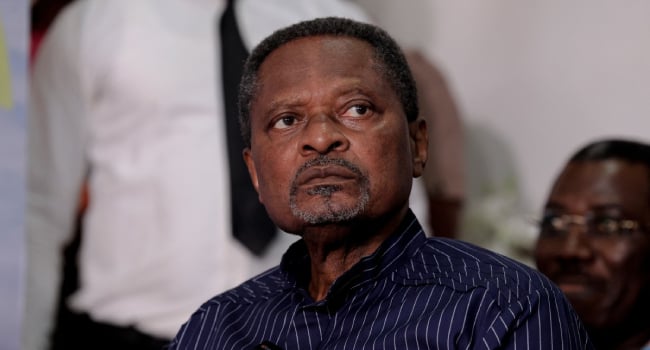
Cameroonian opposition figure, Anicet Ekan, on Monday, died in detention in Yaounde, the vice president of his party told AFP.
“Anicet Ekane died this morning in Yaounde, where he had been transferred after his arrest at the end of October in Douala,” Valentin Dongmo of the African Movement for the New Independence of Cameroon (Manidem) party said.
The exact circumstances of the 74-year-old’s death remain unclear.
The left-wing, nationalist politician was arrested in Douala on October 24, on the eve of the publication of presidential election results that returned 92-year-old Paula Biya to power for an eighth mandate.
Ekane was close to fellow opposition figure Issa Tchiroma Bakary, who contested Biya’s 43-year grip on power in the October 12 election.
“Anicet Ekane was arrested in Douala and then transferred to Yaounde, where he was held at the State Defence Secretariat (SED). It was there that his health began to deteriorate,” according to Dongmo.
“We repeatedly alerted the authorities, including the military court administration, requesting that Anicet Ekane be transferred to a hospital with the appropriate facilities for better care, but our requests did not receive a favourable response,” he said.
Manidem had denounced the “arbitrary” arrests aiming to “intimidate” Cameroonians.
Born in Douala in 1951, Ekane joined the Union of the Peoples of Cameroon (UPC) party in 1973 — which he then quit to create Manidem in 1995.
In February 1990, he and other members of the Yondo Black group were arrested. He was condemned in a military trial before being pardoned several months later.
Ekane led Manidem for several years and ran as its presidential candidate in 2004 and 2011.
His death has triggered a groundswell of reactions on social media.
AFP


The African Democratic Congress Presidential Campaign Council (ADC PCC) has faulted the claim by Vice President Kashim Shettima that President Bola Tinubu saved Nigeria from economic collapse.
The council said the current administration cannot disown the record of the All Progressives Congress (APC) government under former President Muhammadu Buhari.
Reacting through the Director of Media and Publicity of ADC PCC, Kola Ologbondiyan, it said if Nigeria was heading towards economic collapse before Tinubu assumed office, as claimed by the Vice President, then APC must accept responsibility, having controlled Federal government for eight years under Buhari.
He recalled that Tinubu had said his government would build on Buhari’s legacy.
“Nigerians know APC. It is the APC, on whose platform President Tinubu is seeking second term,” he said.
Ologbondiyan said administration had not delivered on expectations in areas such as roads, electricity, cost of living and public institutions.
He said the immediate concern of Nigerians is access to affordable food and basic necessities.
“President Tinubu has not saved Nigeria from collapse; he has pushed country deeper into economic challenges marked by hunger, inflation and high cost of living,” he said.
He said Nigerians were already experiencing economic hardship, not merely heading towards it.
He also questioned Shettima’s promise to deploy 10,600 electric tricycles, 300 buses and electric taxis under e-logistics programme in coming weeks, and reminded Vice President of his earlier promise that transportation costs would come down by October 1, 2026.
ADC PCC urged APC to acknowledge challenges confronting country and focus on solutions.
Council assured Nigerians that ADC remains committed to providing credible political alternative.
It called on Nigerians to support quest for government that would make life more affordable.
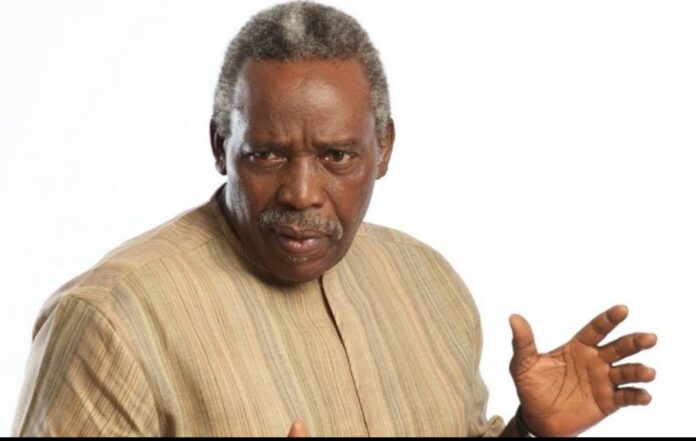
Nollywood practitioners, colleagues, family members and associates of late veteran actor, Olu Jacobs, on Wednesday night, celebrated his life and contributions to the entertainment industry.
The event, which held at Glover Memorial Hall, Lagos Island, attracted prominent actors, filmmakers and other stakeholders in the creative industry who gathered to honour the late thespian whose career spanned more than five decades.
Celebrities at the event reflected on his professionalism, humility, mentorship and immense influence on generations of actors.
Richard Mofe-Damijo described Jacobs as a father figure whose influence helped shape the careers of many actors, including himself.
He said Jacobs’ decision to return to Nigeria and invest his talent in the local industry helped create opportunities for younger performers.
“Uncle Olu was more than a colleague; he was a father figure to many of us.”
“His professionalism, discipline and commitment to excellence set a standard we continue to aspire to.”
“His legacy is not just in the films he made, but in the people he inspired and the industry he helped build.”
Sola Sobowale described Jacobs as a remarkable actor whose talent, kindness and humility made him a treasured figure in the industry.
She said his ability to command attention on screen was matched by his warmth and generosity off screen.
“Uncle Olu was a rare gift to Nigerian cinema, and we are blessed to have witnessed his greatness.”
“He carried himself with dignity, humility and a level of professionalism that every actor should learn from.”
“His legacy will continue to live through the stories he told and the generations he inspired.”
Segun Arinze described Jacobs as one of the defining figures of Nigerian acting, noting that his career provided a benchmark for aspiring performers.
He said the late actor’s contributions extended beyond his memorable performances to the standards he established for the profession.
“He was one of the people who showed us what it truly means to be an actor.”
“His dedication to his craft and his ability to bring every character to life were exceptional.”
“Olu Jacobs may have taken his final bow, but his influence on Nigerian entertainment will never fade.”
Fred Amata described Jacobs as an exceptional actor whose professionalism and dedication to the craft inspired generations.
“Uncle Olu was a master of his craft and he brought dignity and excellence to acting.
“His legacy will continue to inspire us.”
Jide Kosoko described Jacobs as a respected colleague whose contributions to Nollywood would remain unforgettable.
“He was a brother and a great professional and his impact on this industry cannot be overstated.
“We will forever cherish the memories and lessons he left behind.” he said.
Veteran actor, Adebayo Salami, popularly known as Oga Bello, described Jacobs as one of the pillars of Nigerian acting.
“Olu Jacobs was a great ambassador of our profession and he represented excellence, discipline and humility.
“His contributions to the industry will never be forgotten.” he said.
The late Oludotun Baiyewu Jacobs was born on July 11, 1942, in Abeokuta, Ogun State.
He trained at the Royal Academy of Dramatic Art (RADA), London, before building an international career in theatre, television and film.
He later returned to Nigeria, where he became one of the most respected figures in the country’s entertainment industry.
His distinguished career earned him several recognitions, including the national honour of Member of the Order of the Federal Republic (MFR), the Africa Movie Academy Award for Best Actor in a Leading Role and the Industry Merit Award at the Africa Magic Viewers’ Choice Awards.
Beyond his remarkable performances, Jacobs was celebrated for his contribution to the professionalisation of acting, mentorship of younger talents and promotion of Nigerian stories.
The Night of Tributes provided an opportunity for the industry to celebrate a man whose artistry, integrity and commitment to excellence helped shape Nigerian entertainment.
As colleagues and admirers remembered him, the gathering reaffirmed Jacobs’ enduring place in the history of Nigerian theatre and cinema.
The funeral service is scheduled for Friday, October 2, at This Present House, Lekki Phase 1, Lagos.
NAN
Headlines
Our Objective is Not to Manage Poverty, But Defeat It, Tinubu Assures on 66th Independence Anniversary (Full speech)
By Eric Elezuo
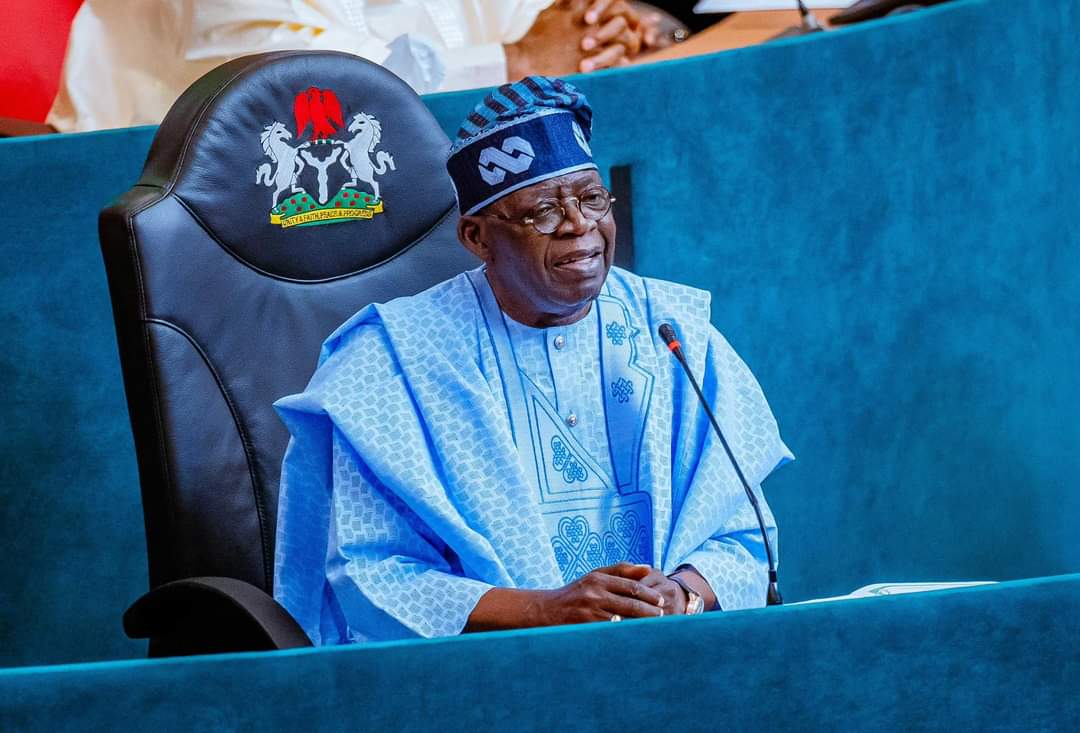
President Bola Tinubu has assured Nigerians that the intention of his government is not to manage poverty efficiently, but to completely defeat it, stressing that his administration has recorded massive achievements in the last three years since it assumed leadership.
Tinubu made the remarks while delivering his 66th Independence Day message, titled From Reform to Prosperity, to Nigerians on Thursday.
While bringing to the fore the programmes initiated by his administration to fight poverty, Tinubu insisted that that:
“These programmes are not substitutes for prosperity. They are a bridge to aid our nation’s citizens on their path towards it. Our objective is not to manage poverty more efficiently.
“We will defeat it.
“It will take time. It will require discipline. It will require sustained growth year after year and the creation of millions of productive opportunities across our country.”
Tinubu’s full Independence Day Speech:
My fellow Nigerians,
Sixty-six years ago today, our flag was raised, for the first time, over a free and sovereign nation. Since then, we have journeyed together as one nation, bound by our collective trust in the great promise of Nigeria: that a country of our size, our bountiful resources, our cultural diversity and, above all, our extraordinary people can build a giant in Africa; that in this blessed and fertile land we can build a united, strong and prosperous nation; a land of regional authority and global consequence.
Our journey has not always been easy. In truth, it has generally been too hard for too many. We have known moments of great hope and periods of profound disappointment. We have endured war, military rule, economic crises, insecurity and political upheaval. Yet through it all, Nigeria, with the indomitable spirit of its people, has endured.
It has endured through the efforts of the farmer who rises before dawn to work his land. The trader who opens her shop each morning, hopeful for a productive day. The teacher who believes in the children entrusted to her care and the young entrepreneur who refuses to surrender ambition to circumstance. We are grateful for the men and women of our Armed Forces and security services who place themselves in harm’s way so that the rest of us may live in peace.
Through every difficulty, generations of Nigerians have continued to believe in one thing: that this country of ours will be better.
This faith, which sustains us all, is the inheritance of independence. Our founding fathers did not struggle merely for a flag, an anthem or a place among the nations of the world. Independence carried a larger promise: that Nigerians would have the freedom to shape their own destiny and build a nation capable of providing opportunity, dignity and a better life for its people. Sixty-six years later, Almighty God has made it our responsibility to deliver that promise.
Today, as we celebrate our independence, we must speak honestly about the journey so far, the choices we made, and the country we are determined to build from here.
For too long, the promise of Nigeria was undermined by choices that postponed difficult decisions and allowed deep economic distortions to grow.
By 2023, poverty was rising, and hope was nearly gone. The country’s situation was darker than ever. We had no choice but to act.
Nigeria was like a sick patient who receives the terrible news that he has cancer. His doctor explains that the treatment will be difficult and painful, but that it offers a strong prospect of recovery. The patient has a choice. He can begin treatment, endure its discomfort and fight the disease. Or he can ask only for morphine, dull the pain and leave the cancer to spread.
For too long, Nigeria’s leaders chose morphine while praying for a miracle that never came.
They focused on symptoms while allowing the disease to take hold deep within the fabric of our society. We spent enormous sums sustaining inefficient arrangements that were never intended to last. We hid from difficult truths and passed the consequences from one generation to the next.
When this Administration assumed office, we resolved to do things differently. We chose to excise the cancer. The reforms that followed were difficult. The side effects were real. Yet, we must never confuse the medicine with the disease.
Our reforms did not create the weaknesses in our economy. They confronted them. Now, as certain influential but regressive voices would have us abandon the treatment and return ourselves to the abuse of addictive subsidies, we must resist their siren song. We must remember why we began this journey and how far we have already come.
Three and a half years later, the evidence that Nigeria’s economic outlook has improved is undeniable. Our economy has grown by over 4 per cent this year. Both oil and non-oil sectors have contributed to the renewed period of stable growth.
Oil theft is down. Inflation has fallen substantially from its peak. Our foreign reserves have been rebuilt, our foreign exchange market has stabilised, and in 2025 this country recorded its highest revenue from non-oil exports in its history, exceeding $6 billion. This is real money being made by real Nigerian businesses.
These are not idle claims. International observers, journalists, NGOs and multilateral institutions can see the change. Each has concluded that our reforms have strengthened Nigeria’s economic stability and resilience. The private sector has long since delivered its verdict, and foreign direct investment continues to rise each year.
My fellow Nigerians, we have reached a turning point.
The emergency treatment is over. The foundation has been repaired. The central economic task before us has changed. For three years, our overriding purpose was to correct our nation’s course.
Now, our purpose is simple: shared and widespread prosperity.
When I speak of prosperity, I do not speak merely of a larger economy, abstract numbers or better statistics. I mean something much more personal.
I mean a Nigeria in which the farmer can cultivate his land safely, produce more at lower cost, and earn a decent return for his labour. A Nigeria in which factories have reliable power, businesses can obtain credit, and young people can find productive work. A Nigeria in which food and transportation are affordable, education is within reach, and hard-working families can look towards the future with confidence.
This is the promise we must now fulfil.
Our priority is to bring down the cost of living. We will achieve this by lowering the cost of producing and moving the things Nigerians consume.
We have the land and people to feed ourselves. My government is therefore focused on expanding mechanised irrigation and dry-season farming, improving access to seeds and fertiliser, holistically increasing mechanisation, and investing in storage and transportation. We are building and completing the roads, railways and ports that connect farms and factories to markets.
Our logic is simple. When a farmer produces more cheaply, when fewer crops are lost between the farm and the market, when a manufacturer spends less on electricity, when a truck reaches its destination faster, and when the business environment fosters fair competition, all those savings will ultimately find their way into the price of goods in the market.
But prosperity requires more than cheaper goods. It requires productive work.
Nigeria is a young country. Millions of young Nigerians enter adulthood every year with talent, energy and ambition. Our responsibility is to ensure that this great demographic strength becomes an engine of production rather than a source of despair.
We are therefore placing jobs, enterprise, and industrial growth at the heart of our government’s policies.
We will use our gas to power new industries. We will support businesses that work to bring factories back to life in our great industrial centres. We will expand digital connectivity into communities that have waited too long to participate in the modern economy. We will invest in the skills employers demand and support Nigerian businesses with the infrastructure and finance they need to grow.
I want to see more Nigerians making things. I want to see more Nigerian farms feeding our cities and supplying our factories. I want to see Nigerian businesses selling Nigerian goods to the whole world. I want young Nigerians building unicorns and creating opportunities for others here at home.
I am also conscious that millions of our fellow citizens cannot wait for tomorrow. Some Nigerian families still struggle today for the next meal, the next school fee, the next medical bill, or simply enough money to get to work. Their circumstances did not begin with the reforms of the last three years. Their struggle is the accumulated consequence of decades of low productivity, inadequate infrastructure, insufficient opportunity and institutions that too often failed those who needed them most.
We cannot erase in four years what accumulated over generations. But we can change its course. We can build an economy that steadily lifts people out of poverty while ensuring that those who remain vulnerable are not abandoned along the way.
That is why we are strengthening direct support for the poorest households and improving the National Social Register so that assistance reaches those who genuinely need it.
It is why the Nigerian Education Loan Fund is ensuring that the child of a low-income family need not surrender the dream of higher education simply because his parents cannot afford the fees.
It is why CREDICORP is giving working Nigerians access to consumer credit, allowing people to acquire vehicles, solar systems, digital devices and other essential assets without first having to accumulate years of savings.
That is why, working with our states and local governments, we will continue to strengthen primary healthcare, basic education, and the essential public services poorer Nigerians depend on most. Since 2023, we have paid salaries and pensions on time and in full. We have reformed the national pension program to benefit retirees and the vulnerable.
These programmes are not substitutes for prosperity. They are a bridge to aid our nation’s citizens on their path towards it. Our objective is not to manage poverty more efficiently.
We will defeat it.
It will take time. It will require discipline. It will require sustained growth year after year and the creation of millions of productive opportunities across our country.
But for the first time in decades, we embark on this task from a position of strength; with an economy whose fundamental direction has been corrected. We confronted the difficult choices we faced and have laid the foundations for lasting prosperity. Rather than fail the promise of a better future for our children, the time has come for us to build that future.
The age of reform has done its work. Now begins the age of prosperity. An age in which the promise of this great nation must finally become the lived experience of Nigerians from all walks of life.
We have travelled through difficult years together. We have made hard decisions together. And now, still together, we must build the country those decisions have made possible.
I believe deeply in what lies ahead.
I believe in the millions of ordinary men and women whose work, courage and determination have always been the true strength of our country. The road ahead will still demand much from us. But we now travel it with firm footing, a clear direction, and renewed hope in our collective future.
Nigeria has corrected its course. We have passed through our own Red Sea. This is not the time to look back. Let us go forward together, with faith in ourselves, faith in our country, and faith that the sacrifices we have made will yield their reward.
The Promised Land before us is a Nigeria of abundance and opportunity; a nation where prosperity is broadly shared, where every child can dream beyond the circumstances of his birth, and where our country’s immense promise is finally reflected in the lives of our people.
Our destination is in sight. Our foundations are strong. Our direction is clear. So let us go forward. No looking back.
Happy Independence Day, my fellow Nigerians. God bless you all, and God bless the Federal Republic of Nigeria.
Bola Ahmed Tinubu, GCFR
President and Commander-in-Chief of the Armed Forces of the Federal Republic of Nigeria


