
Headlines
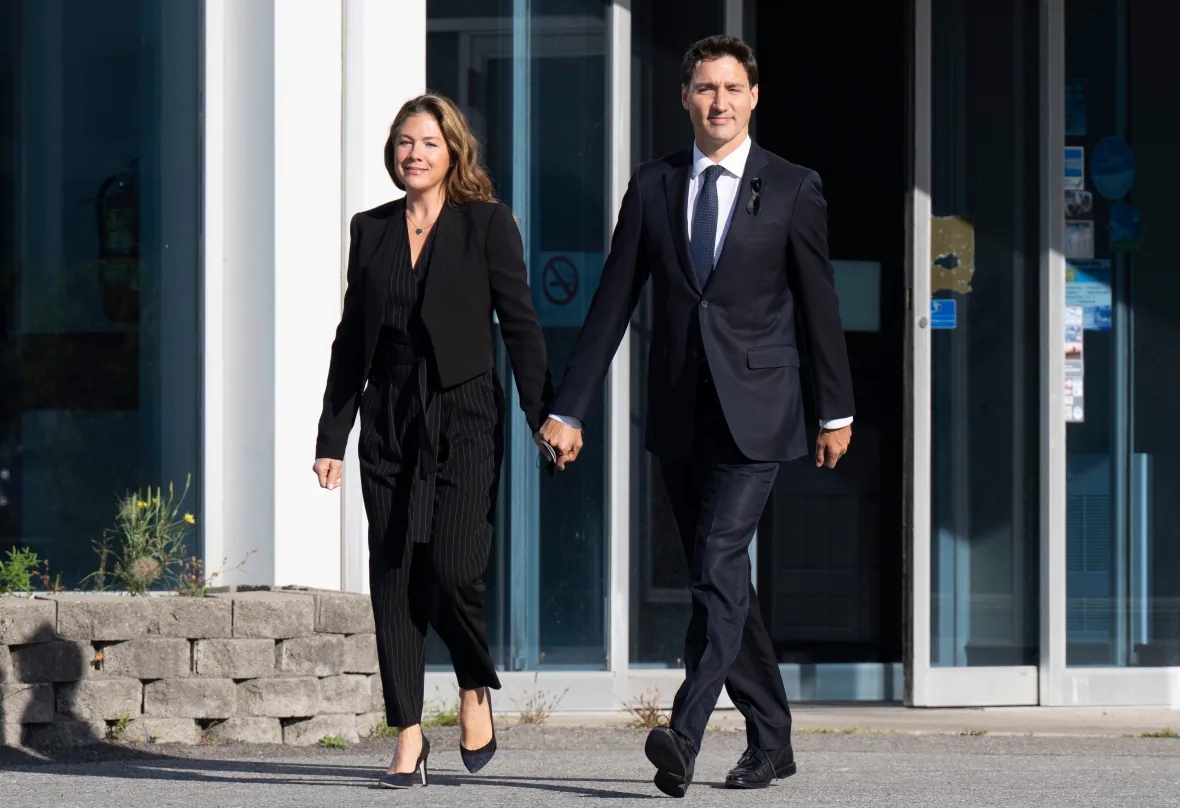
Canadian PM, Justin Trudeau, Wife Sophie Grégoire, Announce Separation

- /home/rhoncare/pointblank.ng/wp-content/plugins/mvp-social-buttons/mvp-social-buttons.php on line 27
https://pointblank.ng/wp-content/uploads/2023/08/cda-queen-20220916-1000x600.webp&description=Canadian PM, Justin Trudeau, Wife Sophie Grégoire, Announce Separation', 'pinterestShare', 'width=750,height=350'); return false;" title="Pin This Post">
- Share
- Tweet /home/rhoncare/pointblank.ng/wp-content/plugins/mvp-social-buttons/mvp-social-buttons.php on line 69
https://pointblank.ng/wp-content/uploads/2023/08/cda-queen-20220916-1000x600.webp&description=Canadian PM, Justin Trudeau, Wife Sophie Grégoire, Announce Separation', 'pinterestShare', 'width=750,height=350'); return false;" title="Pin This Post">
Prime Minister Justin Trudeau and his wife, Sophie Grégoire Trudeau, have decided to separate, according to statements posted online by both of them.
“Sophie and I would like to share the fact that after many meaningful and difficult conversations, we have made the decision to separate,” Trudeau wrote in a message posted to his Instagram account.
Trudeau, 51, and Grégoire, 48, were married in May 2005 and have three children together: two sons, Xavier, 15, and Hadrien, nine, and one daughter, 14-year-old Ella-Grace.
“As always, we remain a close family with deep love and respect for each other and for everything we have built and will continue to build,” Trudeau and Grégoire Trudeau wrote in identical messages. “For the well-being of our children, we ask that you respect our and their privacy.”
Grégoire Trudeau, a former television presenter, has been a prominent presence at Trudeau’s side throughout his political career and became a public figure in her own right as an advocate for several charitable and social causes, including mental health and gender equality.
According to a statement from the Prime Minister’s Office, Trudeau and Grégoire Trudeau have “signed a legal separation agreement.”
“They have worked to ensure that all legal and ethical steps with regards to their decision to separate have been taken, and will continue to do so moving forward,” Trudeau’s office said.
“They remain a close family and Sophie and the Prime Minister are focused on raising their kids in a safe, loving and collaborative environment. Both parents will be a constant presence in their children’s lives and Canadians can expect to often see the family together. The family will be together on vacation, beginning next week.”
According to a source with knowledge of the arrangements, Grégoire Trudeau has moved to a separate home in Ottawa and the prime minister will remain at Rideau Cottage. Grégoire Trudeau will also spend time at Rideau Cottage, where their children are expected to live most of the time, and the Trudeaus will share parenting responsibilities, according to the source. Trudeau is expected to speak publicly this week before leaving on vacation with his family.
Trudeau’s parents — former prime minister Pierre Trudeau and Margaret Trudeau — famously separated in 1977. The announcement of Trudeau and Grégoire Trudeau’s separation was extensively covered by international media on Wednesday.
Dominic LeBlanc, a cabinet minister and childhood friend of Trudeau’s, was expected to brief Liberal MPs about the situation on Wednesday afternoon.
As first reported by the National Post, a source confirms that Grégoire Trudeau will no longer take on any official duties and she will not be provided with government staff to manage her own personal appearances.
As recounted in his autobiography, Common Ground, Trudeau and Grégoire Trudeau began dating in 2003. Grégoire Trudeau, the daughter of a stockbroker and a nurse, was a former schoolmate of Trudeau’s late brother, Michel.
The couple became engaged in 2004 and married each other a year later during a ceremony at Montreal’s Sainte-Madeleine d’Outremont church — “by Canadian standards, a sweet and appropriately understated fairy-tale wedding,” was how a writer for Maclean’s described it.
‘Our marriage isn’t perfect’
Both Trudeau and Grégoire Trudeau spoke at times candidly about their relationship and the challenges of marriage.
“Our marriage isn’t perfect, and we have had difficult ups and downs, yet Sophie remains my best friend, my partner, my love,” Trudeau wrote in Common Ground, which was published in 2014.
Grégoire Trudeau told an interviewer in 2015 that “no marriage is easy.”
“I’m almost kind of proud of the fact that we’ve had hardship, yes, because we want authenticity. We want truth,” she said. “We want to grow closer as individuals through our lifetime and we’re both dreamers and we want to be together for as long as we can.”
Trudeau launched his political career in 2007, when he decided to seek the Liberal Party nomination in the Montreal riding of Papineau. After winning there in 2008 and 2011, Trudeau began to consider seeking the Liberal leadership. The decision, he wrote, would ultimately come down to “a deeply personal private discussion between Sophie and me.”
“We had many long, honest talks that summer,” Trudeau recalled. “I wanted to be sure she knew, from my own experience, just how rough that life can be. I recalled for Sophie that my father had once told me I should never feel compelled to run for office. ‘Our family has done enough,’ he said.”
His father said that, Trudeau noted, “despite having never experienced the incessant, base vitriol of twenty-first-century politics.”
“I welcome a good tussle, and my skin is thick, but I had grown up in the reality of public life,” Trudeau wrote. “Sophie had not, and our decision would affect our kids, in some ways, more than either of us.”
In an interview in 2008, Grégoire Trudeau said that when she met Trudeau, “politics was not impossible, but it was not in the short-term or the mid-term plan.”
“But an opportunity came up, and we felt that if we weren’t going to embark on this adventure, a part of us would be selfish with the voice that we have and the opportunities that are given to us,” she said.
In Common Ground, Trudeau credits Grégoire Trudeau with “profoundly” influencing his style of politics and for helping keep him grounded.
“Sometimes it’s easy for people who have made politics their livelihood to get caught up in the heat of battle and forget about their personal values. Sophie never does, and no matter how intense things get, she makes sure I don’t either,” Trudeau wrote.
Personal lives generally private matters
The personal lives of prime ministers are generally treated as private matters. But Pierre Trudeau’s relationship with Margaret Sinclair — including their marriage in 1971 and their separation in 1977 was highly publicized. Trudeau was the first prime minister to get married while in office and also the first to publicly separate from his partner. Margaret Trudeau later disclosed her long struggle with mental illness.
Justin Trudeau, who was born nine months after his parents wed, experienced their divorce as a young child and he wrote at length about those years in Common Ground. Trudeau said that much of what was written about his parent’s relationship was “lurid and inaccurate.”
“From my perspective today, the commonly held story of my parents’ marital breakdown is nothing but a caricature, because my father was not just the tradition-bound diehard he appeared and my mother was not entirely the totally free spirit that her actions suggest,” Trudeau wrote.
“Things are never that simple, especially with a couple as complex as my parents, and I remain amused by and exasperated with those who view their relationship — all the passion, triumph, achievements, and tragedy — in black and white, seeing it merely as a flawed union between a cool and aloof man and an exuberant and uninhibited younger woman. It was that, but also much more.”
Source: CBC News


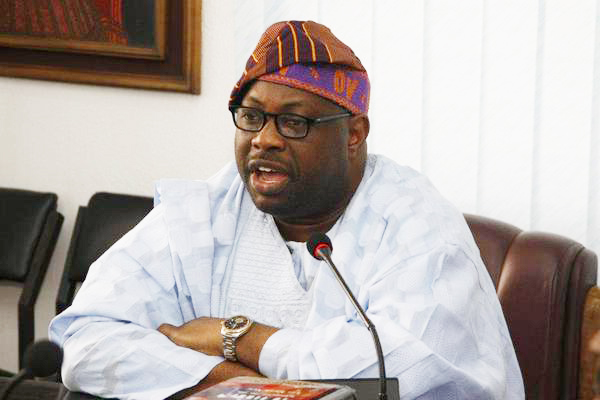
A chieftain of the African Democratic Congress (ADC), and Deputy Director of the Presidential Campaign Council, Chief Dele Momodu, has described former Vice-President Atiku Abubakar as the most nationally formidable and experienced among the leading contenders for the 2027 presidential election.
Momodu said Atiku’s experience at the national level distinguishes him from President Bola Tinubu and former Anambra State Governor, Peter Obi.
He stated this on Wednesday during an interview on Eagle 102.5 FM, Ilese-Ijebu, in Abeokuta.
“If you look at the antecedents of the three major candidates, between Atiku Abubakar and Peter Obi, you will see that Atiku is the most experienced. He has managed our country at the highest level,” he said.
Momodu traced Atiku’s political journey to the 1992 Social Democratic Party (SDP), presidential primary where he contested against late MKO Abiola and stepped down for him.
He said Atiku accepted the outcome without crisis even after he was not picked as Abiola’s running mate, describing it as a mark of true democratic temperament.
“He is the only one who started from around 1992, contested the SDP primary against Abiola and stepped down with uncommon equanimity. He did not make any noise,” Momodu said.
He noted that Atiku was among the founders of the Peoples Democratic Party, PDP, and served as Vice-President from 1999 to 2007.
Comparing Atiku with Obi, Momodu argued that while Obi’s best was demonstrated in Anambra, Atiku’s was at the presidency level managing the national economy.
“Peter Obi has tried his best in Anambra, while Atiku’s best is at the level of vice president controlling the economy of Nigeria. The difference is clear. He has matured in experience and exposure,” he said.
Momodu also said President Tinubu’s experience was largely limited to Lagos.
“What I’m trying to say is that Tinubu’s experience was limited to Lagos, and that is why when he became president, he thought Nigeria was Lagos. And he has found out now that Nigeria is not Lagos,” he said.
He argued that the current economic hardship under the present administration did not show prosperity, insisting Atiku remained better positioned to lead the country.
“Well, we are yet to see that prosperity, and if yesterday would determine today and tomorrow, it is obvious that Tinubu should retire now and let someone else do it,” Momodu added.
DailyPost
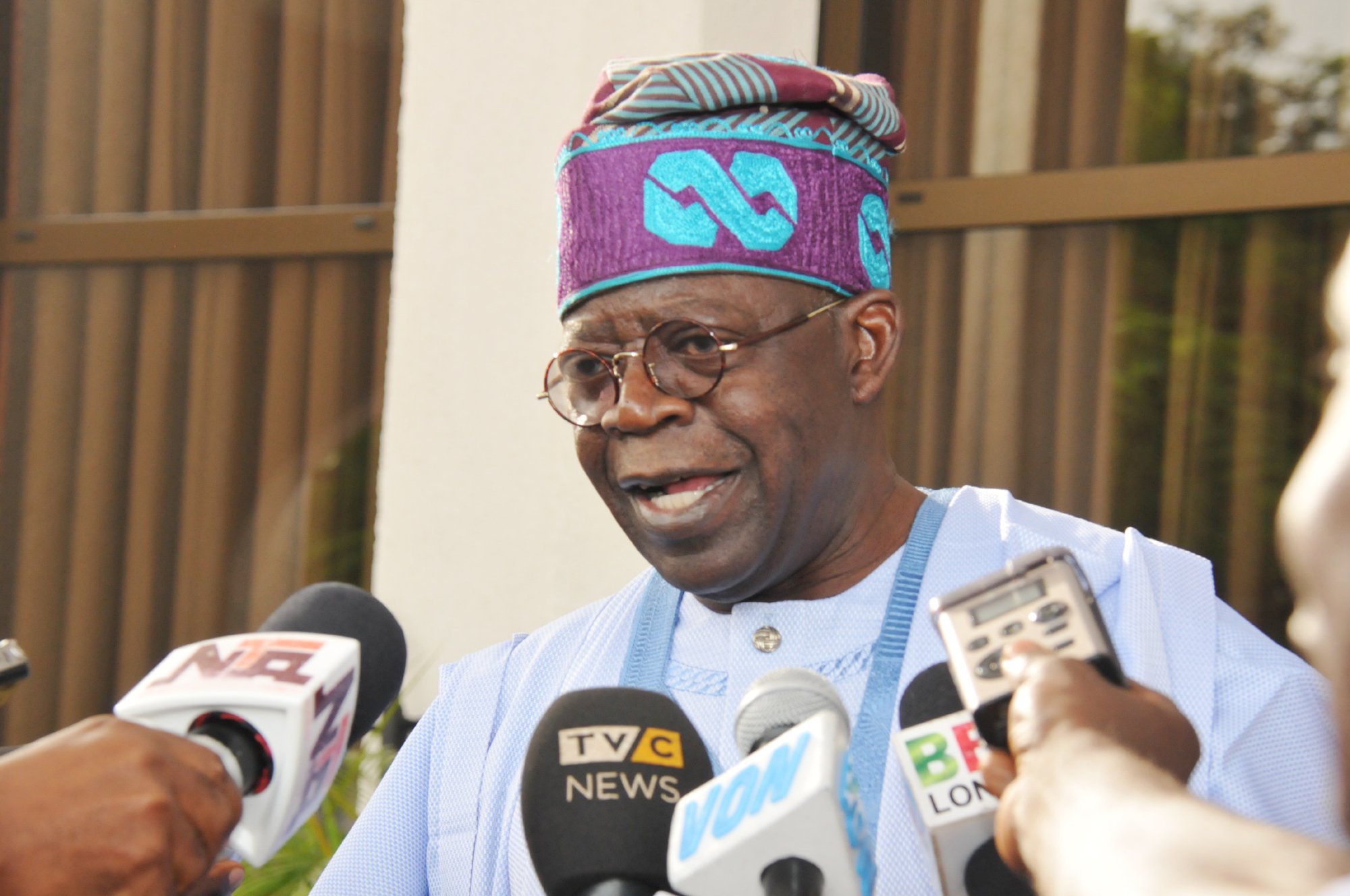
President Bola Tinubu says he has no regrets over the removal of petrol subsidy and other economic reforms introduced by his administration, insisting that Nigeria could not borrow its way to greatness.
Meanwhile, Minister of Finance and Coordinating Minister of the Economy, Taiwo Oyedele, has warned Nigerians against returning to petrol subsidy. He said the backtrack could trigger capital flight, undermining investor confidence and pushing the Naira to N3,000, N3,500 or even N4,000 per dollar.
But the Director of Media and Publicity of the African Democratic Congress (ADC) Presidential Campaign Council (PCC), Kola Ologbondiyan, challenged Oyedele to publish the economic model behind his warning that a return to fuel subsidy could push the naira to N4,000 per dollar.
The President spoke on Monday during the City Boys Movement retreat in Abuja, where he charged members of the group to mobilise support for his administration ahead of the 2027 general elections, insisting that the country’s future mattered more than the ambition of any individual candidate.
“No regrets,” Tinubu said, insisting that his administration would not be pushed back from its reform agenda.
He took a swipe at his political opponents, promising to restore the petrol subsidy, saying Nigeria could no longer afford to pay the fuel subsidy, and warning that reversing the policy would take the country back to an unsustainable economic path.
Defending his decision to remove the subsidy on his first day in office, Tinubu said the country was on the verge of financial collapse and could no longer afford the policy’s cost.
Tinubu also sought to reassure Nigerians about the direction of the economy, arguing that growth was steady and that the sacrifices associated with his reforms would ultimately offer citizens a future worth believing in.
Oyedele disclosed during a press briefing of the International Monetary Fund (IMF) and World Bank Annual Meetings in Bangkok, Thailand, yesterday, that investors had repeatedly questioned whether the government would abandon its reforms ahead of the next election cycle.
Ruling out the reversal of the government’s economic reforms, he maintained that any signal that Tinubu’s administration was contemplating or reinstating the subsidy would immediately affect financial markets, raise borrowing costs and worsen economic pressures on households.
“In all the meetings I have had, I came to a conclusion that the markets, including the domestic market, which you can read from the capital market, and the international market, have largely written off the opposition in Nigeria as unserious.
“If, for any reason, the President were to say we are merely considering the return of fuel subsidy, capital would react immediately, airfares would struggle, the naira would come under severe pressure, potentially moving towards 3,000, 3,500 or even 4,000.
The very fuel people want subsidised would become far more expensive in Naira terms,” Oyedele warned.
However, Ologbondiyan accused the Federal government of using fear to discourage debate on fuel subsidy, insisting that Nigerians deserve evidence, not alarming projections, on the potential economic consequences of restoring the policy.
Speaking to journalists, he described the minister’s warning as scaremongering and demanded that the government explain how it arrived at the projected exchange rate.
“The Minister of Finance is merely scaremongering. He cannot claim that a return to fuel subsidy will cause the naira to depreciate to N4,000 to the dollar without showing Nigerians the model behind that projection,” he said.
He questioned the reliance on investors’ concerns to oppose a subsidy’s return, challenging the government to identify the sources of the projections and disclose their calculations.
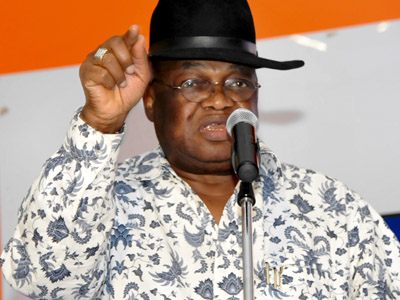
President Bola Tinubu has expressed sadness over the death of Ambassador Patrick Dele Cole, describing him as a distinguished diplomat, journalist, politician and public servant.
Cole died at 86.
In a statement on Saturday, Tinubu said Cole devoted his life to national service and brought distinction to his work in diplomacy, journalism and politics.
“His career reflected the enduring value of dialogue, tact, mutual respect and the pursuit of shared interests in advancing national development and international cooperation,” the President said.
Tinubu noted Cole’s contributions to Nigeria’s media landscape, particularly as Managing Director of the Daily Times, where he upheld the role of the press in holding public officials accountable, speaking truth to power and strengthening democratic governance.
“His legacy in journalism and public life remains an enduring part of our national story,” he said.
The President said at 86, Cole witnessed defining moments in Nigeria’s history and contributed to national development, adding that his life stands as a testament to experience, principled engagement and commitment to public good.
Tinubu extended condolences to Cole’s family, friends, professional associates and all whose lives he touched, praying that memories of his remarkable life will bring comfort and strength.
“May Almighty God grant Ambassador Cole eternal rest and give his family and all who mourn him the fortitude to bear this profound loss,” he said.


