
News
Capacity Building Critical to Efficient e-Border Governance, Says CGIS Nandap


- /home/rhoncare/pointblank.ng/wp-content/plugins/mvp-social-buttons/mvp-social-buttons.php on line 27
https://pointblank.ng/wp-content/uploads/2024/07/IMG-20240715-WA0099-716x600.jpg&description=Capacity Building Critical to Efficient e-Border Governance, Says CGIS Nandap', 'pinterestShare', 'width=750,height=350'); return false;" title="Pin This Post">
- Share
- Tweet /home/rhoncare/pointblank.ng/wp-content/plugins/mvp-social-buttons/mvp-social-buttons.php on line 69
https://pointblank.ng/wp-content/uploads/2024/07/IMG-20240715-WA0099-716x600.jpg&description=Capacity Building Critical to Efficient e-Border Governance, Says CGIS Nandap', 'pinterestShare', 'width=750,height=350'); return false;" title="Pin This Post">
The Comptroller General of the Nigerian Immigration Service (NIS), KN Nandap, has said that capacity building is a critical requirement for efficient e-border governance.
The CGIS made the remarks at the Passing Out Parade and Presidential Commissioning of 714 cadets of the 49th Superintendent Basic Course which took place at Immigration Training School, Kano (ITSK), according to a statement signed by Public Relations Officer, DCI Kenneth Udo, and made available to the National Association of Online Security News Publishers (NAOSNP).
In her address, the CGIS congratulated the graduands for successfully undergoing the pivotal training intended to enhance their capacity building in border governance, migration policies, intelligence gathering and teamwork. She reassured that, The NIS under her watch shall continue to give priority to capacity building to all cadres of NIS personnel with continuous engagement with our partners and stakeholders to sustain the tempo of training and the development of our human capital through the Modernisation of Nigeria Immigration Service (MoNIS) project and other platforms.
She reassured the graduands that they have made the right choice joining the Service and charged them to shun politics; be security conscious, dedicated and passionate about their duties.
Essentially, she expressed her unwavering commitment towards the full implementation of the e-border projects to facilitate real time surveillance and monitoring of expansive borders noting that the e-Gates project at International Airports, as well as the Advanced Passenger Information (API)/Passenger Name Record (PNR) will ensure effective, efficient and seamless passenger clearance systems at the Airports. She announced that the Command and Control/Data Centres at the Service Headquarters, Abuja is almost completed and would soon be commissioned.
The Comptroller General expressed the assurance that the rollout of the e-Enhanced Passport shall be sustained in all local Formations and Foreign Missions of the Service until 100% transition is achieved. She charged Heads of these Formations to make the automation of Passport application processes meant to curb sharp practices and improve service delivery with reduced human interface, more effective, efficient and user-friendly.
The CGIS further directs the Heads of Formations to vigorously support and make their respective Anti-Smuggling of Migrants Desks active and to get involved by intensifying efforts at reaching various public places like NYSC Orientation Camps, market squares, motor parks, Passport processing Centres with the message of the on-going Nationwide Sensitisation and enlightenment campaigns on the dangers of Irregular Migration which has glaring potentials to undermine the country’s national security.
The CGIS, reinstated her unshakable determination to improve the welfare of officers and men through timely promotions, provision of accessible and affordable housing and health schemes. She announced that the Management Team of the Service with Nigeria Immigration Cooperative Society (NIMCOS) are collaborating for the establishment of a Microfinance Bank that will create affordable and more convenient financial access to officers and men.
The Immigration Boss appreciated the Hon. Minister of Interior, Dr. Olubunmi Tunji-Ojo, for his innovative, dynamic and visionary leadership and support for the Service; the Executive Governor of Kano State Engr. Abba Kabir Yusuf, for always supporting the school, and implored the State Government to sustain the support to the premier institution; Zonal Coordinators, Comptrollers of Commands; representatives of other sister agencies, members of the Diplomatic Corps, Traditional and Religious leaders as well as the media for their presence.
In his remarks, the Hon. Minister of Interior, recognised the NIS officers as “the frontline officers who protect our borders, uphold our laws and promote the values of our country to the world”. He equally observed that the Commissioning/Passing out of the cadets “represents a sincere demonstration of government’s commitment to not only strengthen our security architecture but, also provide gainful employment to the teeming youth of our great country.” He said he has worked tirelessly to support the improvement of the welfare of Officers as well as the automation of the Service to meet postmodern standards and, to make the Service stand out amongst its counterparts anywhere in the world.
Therefore, the Minister charged the graduands to be professional and disciplined while on the field. He, also, implored all and sundry to support the Renewed Hope Agenda of the President and Commander in Chief of the Armed Forces, Bola Ahmed Tinubu, GCFR, for the country.
10. High point of the event was the commissioning and presentation of awards to deserving graduands.



President Bola Tinubu has extended his “working vacation” in Europe by a few days and is expected to return to Nigeria at the weekend, the Presidency said on Monday.
The announcement came as Vice President Kashim Shettima represents the President at the 81st United Nations General Assembly in New York, where he is scheduled to deliver Nigeria’s national statement.
Tinubu departed Nigeria on August 30 to begin his working vacation in London. After spending one week in the United Kingdom, he proceeded to Paris, France, where he held meetings with French President Emmanuel Macron and businessman Vincent Bolloré.
Bolloré’s media interests include Canal+, MultiChoice and Universal Music Group.
A statement signed on Monday by Bayo Onanuga, Special Adviser to the President on Information and Strategy, said Tinubu has remains in touch with developments at home and continued to direct the affairs of government despite being away from Nigeria.
One of the major decisions taken by the President during the period was his directive for an independent investigation into the deaths of 37 suspected illegal miners in Minna following their detention by the Nigeria Security and Civil Defence Corps.
The deaths had raised concerns over the circumstances surrounding the detention and treatment of the miners, prompting the President to order an independent probe.
Tinubu’s decision to extend his stay abroad means he will not personally attend the opening of the high-level segment of the UN General Assembly in New York. Shettima, who departed Abuja on September 20, is representing the President at the global gathering and will present Nigeria’s national statement.
The Presidency said the Vice President’s representation was part of the arrangements for Tinubu’s absence from the country.
With Shettima now in New York, the Secretary to the Government of the Federation, Senator George Akume, will continue to represent the President at some official functions.
The Presidency said Tinubu had also delegated the Vice President to represent him at official functions while he was away, while Akume had similarly stepped in at other engagements.
The President’s extended stay in Europe also comes amid increased political activities at home ahead of the 2027 general elections.
According to the Presidency, the Director-General of the Presidential Campaign Council, Senator Abubakar Yari, has been leading notable leaders of the ruling party in consultations with prominent traditional rulers across the country.
The consultations form part of ongoing political engagements as the administration moves towards the next electoral cycle.
The Presidency also reacted strongly to criticism over Tinubu’s decision not to attend the UN General Assembly personally.
It described as irresponsible what it called a “baseless insinuation” by former Vice President Atiku Abubakar and a United States-based lobbying firm headed by an ex-convict regarding the President’s non-attendance at the global gathering.
The Presidency maintained that Nigeria would be adequately represented by Shettima, who will deliver the country’s national statement.
Tinubu’s latest trip began as an official working vacation, during which the President combined his leave with selected diplomatic, business and governmental engagements.
His meeting with Macron in Paris provided an opportunity for discussions on bilateral relations, while his engagement with Bolloré focused on business and investment interests involving Nigeria.
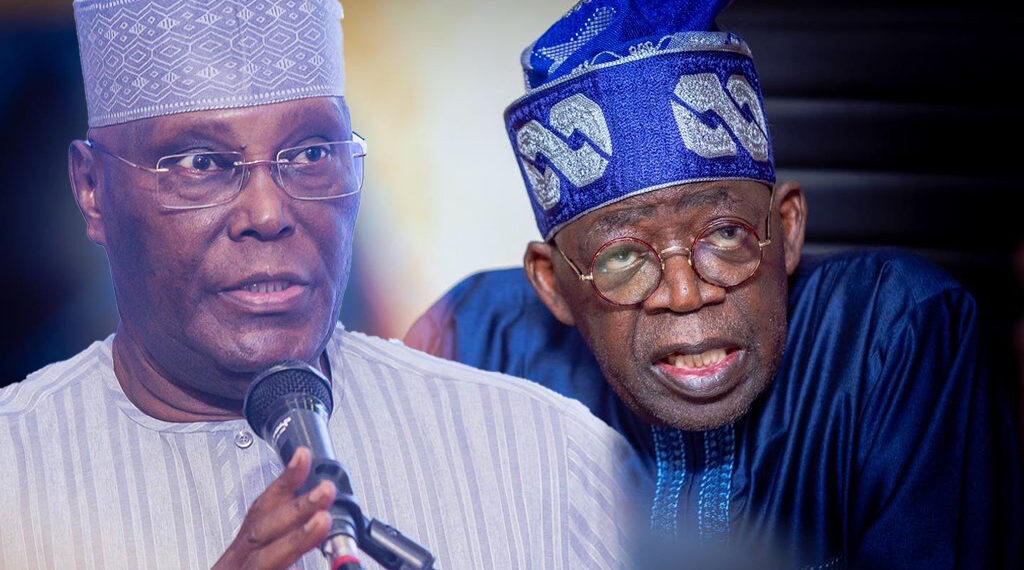
Former Vice President Atiku Abubakar has urged President Bola Tinubu to take immediate steps to reduce the cost of petrol, saying Nigerians are struggling with the combined impact of high energy, transportation and food prices.
Atiku made the call on Friday in Abuja during a press briefing on fuel prices, palliatives and the rising cost of living. His comments came amid renewed concerns over the effect of higher petrol prices on households and businesses.
The African Democratic Congress (ADC) presidential candidate said the removal of petrol subsidy in May 2023 placed additional pressure on families, workers, farmers and businesses.
He said the effect of higher petrol prices was not limited to motorists, as increased transportation and logistics costs had also pushed up the prices of food and other essential goods.
“When government makes energy expensive, it makes life expensive,” Atiku said.
The former vice president recalled that he had previously called for government intervention to reduce petrol prices, but said Tinubu had dismissed the proposal as showing “serious ignorance” of governance and the economy.
Atiku questioned whether the Nigeria Labour Congress (NLC), petroleum marketers, manufacturers and ordinary Nigerians who had raised concerns about rising costs could all be described as ignorant.
“When workers, producers, marketers and ordinary families are all raising the alarm, government must listen,” he said.
He said the government should be prepared to review its policies when their consequences become difficult for citizens to bear, adding that rising production costs were putting further pressure on manufacturers while families were finding it harder to afford basic goods.
Atiku also argued that government revenue and GDP figures did not necessarily reflect the economic reality facing ordinary Nigerians.
“If government receives more Naira while the citizen’s naira buys less food, less fuel, less electricity and less transportation, then bigger government revenues mean little to the family struggling to survive,” he said.
The ADC candidate urged Tinubu to use the remaining eight months of his first term to reduce the burden on Nigerians and consider any measure capable of lowering petrol prices, even if the proposal came from a political opponent.
“What matters to me is that Nigerians pay less,” Atiku said. “A sensible idea does not become a bad idea because it came from your opponent.”
He also offered to make his policy framework available to the Tinubu administration, saying Nigerians should not have to wait for a new government before benefiting from policies that could provide relief.
“If you need the framework, I will provide it. Implement it under your government. Give it whatever name you choose. Take the credit,” he said.
“I ask for only one thing: Let Nigerians breathe.”
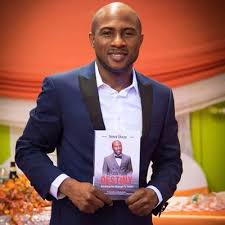
By Henry Ukazu
Dear Destiny Friends,
Passion and purpose are among the most debated topics in the human development space. It’s a grey area that has attracted a lot of attention. While some schools of thought believe it’s better to focus on passion, other schools of thought believe that it’s profitable for one to focus on a job that pays the bills.
According to the latter school of thought, passion doesn’t pay the bills. Well, depending on the schools of thought one subscribes to, I personally believe it pays more for one to pursue passion than profit, and I will explain in a minute.
I strongly believe passion is stronger than power because when one loves what one is doing, there’s an inherent strength that comes with it, but if one doesn’t like what they are doing, they’ll lack the moral strength to forge on.
Let me share a practical example with you. My late dad encouraged me to study Taxation Law at New York Law School, a major I didn’t like. He had the mindset that money rules the world, which I tend to believe because when money talks, the world “generally” seems to move around. That mindset and principle is relatable; however, it’s not applicable in other cases because there are some people or situations where money doesn’t move around.
My late dad believed it makes no sense for me to read a major and remain unemployable or poor. So, when I arrived in the United States, the economy was experiencing a recession, and there were no jobs at the time. So, while I was passionate about studying International Relations, Energy Law, or Communications Law, my late dad sat me down and said, based on the information he was receiving from his friends, these are great courses, but when I graduate, it will be hard to find a job because most people in those firms are laying off employees.
According to my late dad, his friends suggested that since I have a legal background, tax law is the only major I can study and be guaranteed a job because people and corporations will always file their tax returns. I initially objected to this advice because my brain is not wired for numbers. I really struggled to accept this advice because I hated numbers with passion.
My late dad would later tell me, you know we are from a humble background, and so we need money. My late dad would always say, “You wouldn’t want to study international law or communication, and the only thing you can do very well is speak English while remaining poor. One fact about my late dad was that he liked money to a stupor. According to him, after God, the most important thing in the world is money.
After much hesitation, I decided to study the major to make my late dad happy because I saw how happy he would be when I studied tax law. If truth be told, I wasn’t happy studying the major. I really struggled with the major. I managed to get a scholarship and graduated with a decent grade, but getting a job was challenging because employers could see that I didn’t like the major each time I went for an interview.
At the end of the day, I managed to get a job as a Case Manager for a private organization and later as the Legal Coordinator for the New York City Department of Correction. An important point to note here is that, after I left the tax firm, I was intentional about applying for jobs I was passionate about. Money to me was a secondary concern because I strongly believe that when you love what you do and you are good at it, money will surely find you.
I had to share this practical experience to give an insight into the importance of focusing on passion. Don’t get me wrong, money is good, but I personally feel there are more valuable things than money, and a perfect example is marrying a kind man as opposed to marrying a man with money, or marrying a lady with good character as opposed to marrying a lady with a good physique.
It’s instructive to note that when I began to focus on what I love to do, I had to spend time on honing my skills, developing myself by attending relevant training sessions and taking courses that would distinguish me from my contemporaries. It didn’t take long for me to receive recognition for my work. I was celebrated for being a trailblazing author of three books on television; I was interviewed by The New York Times in addition to meeting resourceful global leaders. In all sincerity, I doubt if I would have received accolades assuming I focused on taxation or doing what would give me money.
The moral of this analysis is that while profit is good, passion is much better because it will give one the necessary satisfaction and fulfilment they deserve. To understand how this works, one might make good money in a job but won’t be happy, but someone else might make little money and be happy in what they are doing. If research is done on what makes one happy, most people will likely say it is their passion or what they love to do that makes them happy as opposed to the job they do. It’s only a fragment of people who will attribute their happiness to the job they do, and that’s simply because they have truly figured out who they are or are probably happy and passionate about the work they do.
Let me explain a little: your profession is what you are trained to do as a doctor, lawyer, accountant, or engineer. Your vocation is what you are trained to do as a skilled worker or one with a 9-to-5 job, but your ministry is your calling, and that’s why you find your talent or gift and passion. So, one’s passion can be found in what they love to do.
When one’s profession is aligned with one’s vocation and ministry, then success is bound to be present because passion is at play.
It’s instructive to note that most of the great people I know in the world have become famous because they were doing what they love to do. I recently attended an award ceremony where my alma mater, Baruch College, celebrated alumni who have distinguished themselves. One of the award recipients, Ms. Doris Gonzalez, stated in her speech, “Of all the jobs I have had in my life, this is my best job. I really love my job”. I strongly believe there is a form of spiritual blessing and success that comes when one is happy doing what one is passionate about.
In conclusion, if one is desirous of succeeding in life, please endeavor to focus on your passion; if you can’t find it, explore what makes you happy. When you find what makes you happy, develop and monetize it, and in no distant time, opportunities and recognition will begin to triple in.
Henry Ukazu writes from New York. He works with the New York City Department of Correction as the Legal Coordinator. He’s the founder of Gloemi. He’s a Transformative Human Capacity and Mindset coach. He is also a public speaker, youth advocate, creative writer, and author of Design Your Destiny- Actualizing Your Birthright to Success, Unleash Your Destiny and The Six Pillars of Success. He can be reached via info@gloemi.com


