
Metro
Chrono-Strategy: How to Spot Your Moment and Make It Count


- /home/rhoncare/pointblank.ng/wp-content/plugins/mvp-social-buttons/mvp-social-buttons.php on line 27
https://pointblank.ng/wp-content/uploads/2025/08/DR.TOLULOPE-A.-ADEGOKE-AMBP-UN__-1-744x600.jpg&description=Chrono-Strategy: How to Spot Your Moment and Make It Count', 'pinterestShare', 'width=750,height=350'); return false;" title="Pin This Post">
- Share
- Tweet /home/rhoncare/pointblank.ng/wp-content/plugins/mvp-social-buttons/mvp-social-buttons.php on line 69
https://pointblank.ng/wp-content/uploads/2025/08/DR.TOLULOPE-A.-ADEGOKE-AMBP-UN__-1-744x600.jpg&description=Chrono-Strategy: How to Spot Your Moment and Make It Count', 'pinterestShare', 'width=750,height=350'); return false;" title="Pin This Post">
By Tolulope A. Adegoke, PhD
…Mastering Kairos for Global Transformation
“Don’t just chase the clock. Learn to read the seasons. Mastery isn’t controlling time; it’s recognizing your moment within it.” – Tolulope A. Adegoke, PhD.
Introduction: The Hidden Skill of Perfect Timing
As we turn the page into a new year, most of us are focused on time management—juggling calendars and chasing deadlines. That’s chronos: the measurable, ticking clock.
But there’s another kind of time that truly changes things. The ancient Greeks called it kairos—the opportune moment. It’s not about how fast you go, but about recognizing the exact right time to act. It’s that instant when preparation meets an open door.
History gives us a fascinating example: the ancient tribe known as the sons of Issachar. In sacred texts, they’re singled out for one remarkable skill: they “understood the times and knew what Israel should do.” They weren’t just observers; they were interpreters. They could read the political, social, and military climate and translate that understanding into decisive, timely action. They mastered kairos.
Today, that skill is more valuable than ever. Let’s explore how you, your team, and your leaders can move beyond managing minutes to mastering moments.
The Core Idea: Read the Seasons, Then Act
The lesson from Issachar is simple but profound: insight without action is just trivia. True advantage comes from connecting the dots between what’s happening and what to do about it.
· Chronos is your schedule. It asks, “Did you get it done?”
· Kairos is your timing. It asks, “Did you do the right thing at the perfect time?”
· The Issachar Mindset bridges the two. It’s the practice of discerning the season—is this a time to plant seeds quietly, or to harvest aggressively?—and having the courage to act accordingly.
The New Year is itself a shared kairos moment. It’s a cultural pause button that gives us all permission to stop, assess, and choose our direction with intention.
For You: Becoming a Modern-Day Issachar in Your Own Life
How do you develop an eye for your own pivotal moments? It starts with shifting your focus.
1. Audit Your Personal Seasons. Four times a year, take an honest look at your energy, opportunities, and challenges. Are you in a personal “winter” (a better time for planning, learning, and rest) or a “summer” (ripe for launching projects and pushing hard)? Stop fighting your season. Work with it.
2. Become a Curator of Clues. The sons of Issachar read the landscape. You can, too. Diversify your information diet. Follow smart people outside your field. Don’t just collect data; look for the one or two trends where your unique skills could suddenly become incredibly valuable. That’s where your kairos awaits.
3. Build in a “Discernment Pause.” When a big “opportunity” lands, don’t jump from reflex. Pause. Ask yourself: “Is this truly urgent, or is it actually important? Is this just a demand on my time (chronos), or is it a legitimate, one-time window (kairos) that could change my trajectory?” Issachar’s skill was knowing the difference.
4. Set “Kairos Intentions,” Not Just Goals. Frame your year around timing. Instead of “network more,” try: “In Q1, I will identify and connect with three key people in the emerging X field, before the space becomes overcrowded.” You’re not just stating a goal; you’re strategically placing it in its most effective season.
For Your Organization: Building a Culture That Sees Around Corners
The most resilient companies aren’t just fast; they’re timely. They create an environment where people can sense a shift and respond intelligently.
1. Make Foresight a Real Function. Move beyond just quarterly reports. Dedicate time (a meeting, a task force) to asking: “What are the weak signals in our world? What might they mean for us in 18 months?” The goal isn’t prediction; it’s preparation. Like Issachar’s tribe, you’re interpreting the signs.
2. Resource for Agility, Not Just Efficiency. Rigid annual budgets often miss fleeting opportunities. Create a small, flexible “opportunity fund” that empowered teams can access when they credibly say, “We see a window, and here’s our plan to seize it.”
3. Reward Discernment, Not Just Hustle. Promote and celebrate leaders who show good judgment about when to act. Sometimes, the smartest move is to wait, prepare, and strike when the moment is ripe. Analyze missed signals as learning opportunities, not failures.
4. Align with the Cultural Moment. Understand the broader season your customers are in. Launching a product that solves a newly felt pain point, or taking a genuine stand on a societal issue at the right time, shows you’re not just selling—you’re understanding.
For Leaders and Nations: Governing with a Sense of Moment
The highest stakes for understanding times and seasons lie in leadership and policy.
1. Create “Adaptive” Policies. Build frameworks that can evolve. Instead of a static law, design policies with built-in review triggers (e.g., “If renewable adoption hits X%, incentive Y adjusts”). This is governing for the kairos of technological or social tipping points.
2. Recognize Diplomatic Windows. Geopolitical opportunities are often brief—after an election, during a shared crisis. Maintaining agile, prepared diplomacy allows a nation to engage productively when the moment is right, not just when it’s convenient.
3. Invest in Foresight. Support non-partisan offices or commissions tasked with looking ahead. Their job is to ask, “What’s coming?” so the nation isn’t blindsided but can lead in the kairos moments of the future, from AI to public health.
4. Articulate the “Why Now.” Great leaders frame a compelling sense of moment. A call like “This is the decade we rebuild our infrastructure” or “This generation will close the skills gap” does more than set a goal—it creates a shared understanding of the season and mobilizes action.
A Call for the New Year: Understand, Then Do.
The legacy of the sons of Issachar isn’t a secret intelligence. It’s a method: Observe. Interpret. Act.
As we enter this New Year, let’s all commit to that practice.
· For individuals, it means looking up from your to-do list to ask if you’re doing the right things.
· For organizations, it means valuing discernment as highly as execution.
· For societies/Nations, it means having the wisdom to prepare for tomorrow while acting decisively today.
And let’s anchor our timing in ethics. Seizing the moment should make things better—for our teams, our communities, and our world. The goal isn’t just to be successful; it’s to be significant.
In the end, mastery isn’t about controlling time. It’s about recognizing your moment within it—and having the clarity and courage to step through. Here’s to a year of perfect timing.
Remember the timeless skill: to understand the times and know what to do. It’s the bridge between insight and impact.
Dr. Tolulope A. Adegoke is a globally recognized scholar-practitioner and thought leader at the nexus of security, governance, and strategic leadership. His work addresses complex institutional challenges, with a specialized focus on West African security dynamics, conflict resolution, and sustainable development.
He holds a PhD in History and International Studies and is credentialed as both a Distinguished Fellow Certified Management Consultant and a Fellow Certified Human Resource Management Professional. This dual expertise in academic rigor and high-level practice enables him to diagnose systemic failures and architect actionable, reform-oriented solutions for institutions and nations.


Metro
International Day of the Girl-Child: Pad Me A Girl Foundation Holds Menstrual Health Outreach in Ogun

The Pad Me A Girl Empowerment Foundation has taken its menstrual health campaign to Igbesa High School (Junior), in Ado-Odo/Ota Local Government Area of Ogun State, providing free sanitary pads, menstrual hygiene pamphlets, exercise books and pens to over 100 schoolgirls to promote menstrual health, dignity and education.
The outreach, held on Wednesday, October 21, commemorated the 2026 International Day of the Girl Child, whose global theme is “End Child Marriage and Invest in Girls’ Rights!”
The programme brought together girls from Junior Secondary School (JSS) 1 to 3 who participate in the school’s reading clubs for mentorship, reading activities and menstrual health education.
It was convened by Oyelami Yetunde Anuoluwapo and Blessing Kappo, teachers and Teach For Nigeria Fellows at the school, following an appeal for sanitary products, learning materials and health education support. The Foundation’s founder, Theresa Moses, responded by providing the requested items and facilitating an interactive session on menstrual hygiene management.
Speaking at the event, Moses said she was inspired by the girls’ determination and aspirations, stressing the need for sustained investment in their health, education and future.
“Invest in girls and Nigeria will rise. Every girl deserves dignity, education and the right to dream beyond child marriage. That is why we are here; to ensure no girl misses school because of her period,” she said.
She emphasised that access to menstrual hygiene products and accurate information helps girls manage their periods confidently and participate fully in school activities.
In a letter of appreciation, Oyelami and Kappo described the outreach as impactful and inspiring, noting that it enhanced the girls’ understanding of menstrual health, hygiene and self-confidence. They also said the support would help promote the students’ hygiene, school attendance and dignity.
“You did not just give pads; you gave our girls confidence and hope,” the teachers wrote on behalf of the school community, expressing gratitude to the Foundation and hope for future collaboration.
Mrs Amarachi Eze, Assistant Divisional Commissioner of the Nigerian Girl Guides Association, Ado-Odo/Ota, Ogun State Branch, also commended the Foundation for supporting the girls’ hygiene needs and development.
“We sincerely appreciate the Management of Pad Me A Girl Foundation for joining hands with the Association in supporting our girls on hygiene management. May God Almighty continue to uplift your foundation. Thanks for joining hands in the development of girls in our schools. Bravo,” she said.
The Foundation’s Media Coordinator, Mr Oluwatosin Simon Faleye, called on corporate organisations, non-governmental organisations and well-meaning Nigerians to support initiatives that address period poverty and help girls remain in school.
“For over a year, we have been committed to ending period poverty and keeping girls in school. We call on corporate organisations and well-meaning Nigerians to support this cause for the betterment of Nigeria,” Faleye said.
The celebration also featured a student drama presentation highlighting the effects of child marriage, alongside reading and mentorship activities designed to encourage the girls to understand their rights, value their education and pursue their aspirations.
The Foundation also acknowledged the continued support of its sponsors and partners, including Access Bank, Pro Star Sports International, BL Consulting, Vita Baites Foods, Checkers, Senator Ireti Kingibe, representing the Federal Capital Territory (FCT) in the 10th Nigerian National Assembly, the Senate Committee on Women Affairs (SCOWAS), as well as individuals and media organisations whose contributions have supported its broader mission of ending period poverty, promoting menstrual health education and empowering girls and women.
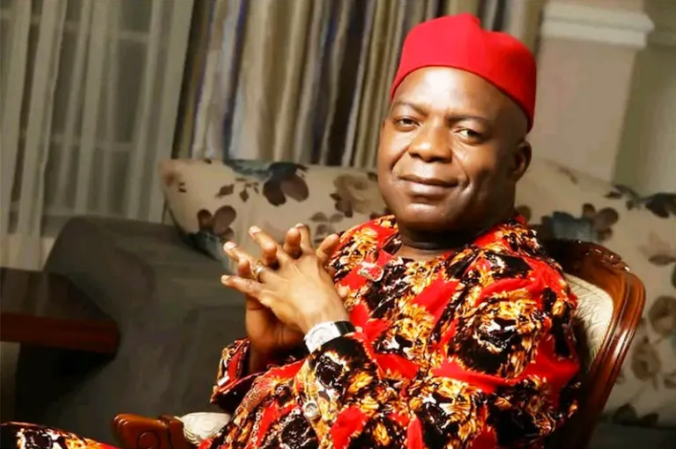
Abia State governor, Alex Otti, is set to flag off the reconstruction of Uratta Road and Old Express Road in Aba, two major routes which poor condition has disrupted transportation, commercial activities and access to residential communities for years.
The governor’s media aide, Ferdinand Ekeoma, in a statement on Wednesday, said that work on the roads has begun ahead of the scheduled official flag-off.
The two roads are considered important to Aba’s commercial and industrial activities, with Uratta Road connecting several adjoining streets to Port Harcourt Road and Old Express Road. At the same time, Old Express Road serves as a key route within the city’s industrial layout.
Ekeoma said the roads had suffered neglect for more than 24 years, leaving some sections impassable and forcing residents and businesses to contend with difficult transportation conditions.
According to the statement, Uratta Road provides access to more than 100 adjoining streets. Its poor condition has affected residents, traders and small-scale manufacturers who depend on the road to transport goods and access their businesses.
The statement said the road had become waterlogged and overgrown with weeds, discouraging commercial motorcycle and tricycle operators from using it.
Similarly, the deterioration of Old Express Road forced heavy-duty truck operators, fabric merchants, spare-parts dealers and small businesses to use longer routes, increasing transportation costs and affecting productivity.
The government said the road reconstruction is part of its broader effort to restore Aba’s infrastructure and strengthen the city’s commercial base.
Aba, one of southeastern Nigeria’s major commercial centres, hosts manufacturing clusters, markets, and small and medium-sized enterprises that depend heavily on functional roads to move raw materials and finished products.
The government said the reconstruction would improve market access, reduce transportation costs, facilitate the movement of goods, and support businesses operating along the affected corridors.
Ekeoma cited the reconstruction of Port Harcourt Road as an example of the administration’s infrastructure programme, noting that improved road access encouraged shops to reopen, attracted manufacturing activities and increased property rents along the corridor.
The government also said the new projects would complement other road interventions in Aba, including works on Ohanku and Obohia roads, as part of efforts to improve connectivity within the commercial city.
Beyond road construction, the administration said its projects include drainage systems, solar-powered streetlights, and pedestrian walkways, which it described as necessary to improve safety, accessibility, and flood resilience.
Ekeoma said Governor Otti views infrastructure development as an economic strategy rather than merely a construction programme, arguing that better roads would help businesses operate more efficiently and create employment opportunities.
He also quoted the governor as saying at an earlier church event that his administration is shifting attention from basic infrastructure improvements to healthcare, education, technology and industrialisation.
The governor, a former bank chief executive, was elected in 2023 on the Labour Party platform, defeating candidates from the major established parties in a state historically dominated by the Peoples’ Democratic Party.
Otti has remained in the Labour Party despite the defection of its 2023 presidential candidate, Peter Obi.
His administration has made rehabilitating Aba roads and public infrastructure central to its governance agenda, presenting the city’s recovery as essential to reviving economic activity across Abia State.

MILO Nigeria, in partnership with former Nigerian national team captain and MILO Brand Ambassador Ahmed Musa, has concluded the inaugural MILO × Ahmed Musa Sports Clinic and Tournament in Kano, providing 2,500 young footballers with professional coaching, mentorship and competitive football experience.
Over two weeks, participants took part in 10 coaching sessions and competed in matches under the guidance of Ahmed Musa and experienced coaches. The programme combined practical football training with lessons in teamwork, discipline, resilience and confidence, equipping participants with skills and values that extend beyond the pitch.
The initiative culminated in a tournament at the Ahmed Musa Sports Complex in Kano, where Khamis Football Academy emerged as champions of the inaugural edition. Participants also received cash prizes, certificates and football equipment.
Speaking on the initiative, Gilbert Tweneboah-Koduah, Category Lead, MILO, said: “At MILO, we believe sport is a powerful platform for young people to discover their abilities, build confidence and develop values that extend beyond the field of play. Our partnership with Ahmed Musa brings together MILO’s longstanding commitment to sports development and the experience of an athlete whose journey from grassroots football to the highest level of the game can inspire the next generation. By combining his experience with structured coaching and competition, this programme has given young footballers in Kano an opportunity to develop their skills, learn from experienced professionals and better understand the commitment required to pursue their aspirations.”
For the participants, the clinic offered an opportunity to learn from an athlete whose football journey began in northern Nigeria and progressed to the highest levels of the sport, making his experience a source of inspiration for aspiring players.
Commenting on the partnership, Ahmed Musa said: “Nigeria has incredible football talent, but talent alone is not enough. Young players need good coaching, regular competition and people who will guide them. I am proud to partner with MILO and share some of what football has taught me. My message to these players is simple: keep training, listen to your coaches and work hard every day to improve.”
Musa also called for greater investment in grassroots football, emphasizing the importance of giving young players access to quality coaching, structured development and regular competitive opportunities.
The MILO × Ahmed Musa Sports Clinic and Tournament builds on MILO’s longstanding commitment to youth development through sports in Nigeria. Through its school-based and grassroots sporting initiatives, MILO continues to create opportunities for young people to participate in sports, develop their abilities and embrace values that can support them both on and off the pitch.


