
Headlines
Constituency Projects: Is Buhari Guilty of Peddling Fake News?


- /home/rhoncare/pointblank.ng/wp-content/plugins/mvp-social-buttons/mvp-social-buttons.php on line 27
https://pointblank.ng/wp-content/uploads/2019/04/Buhari-1-1000x576.jpeg&description=Constituency Projects: Is Buhari Guilty of Peddling Fake News?', 'pinterestShare', 'width=750,height=350'); return false;" title="Pin This Post">
- Share
- Tweet /home/rhoncare/pointblank.ng/wp-content/plugins/mvp-social-buttons/mvp-social-buttons.php on line 69
https://pointblank.ng/wp-content/uploads/2019/04/Buhari-1-1000x576.jpeg&description=Constituency Projects: Is Buhari Guilty of Peddling Fake News?', 'pinterestShare', 'width=750,height=350'); return false;" title="Pin This Post">
By Eric Elezuo
As the Federal Government is coming down hard on fake news peddlers, even as the syndrome is causing untold crisis in the national life of most Nigerians, President Buhari may have joined the mass of persons guilty of committing the fake news blunder.
Recall that the President has brazenly accused members of the National Assembly of fraud when he stated that about Ten trillion naira has been budgeted for constituency projects, yet nothing to show for it, a statement a cross section of the lawmakers including the Speaker of the House of Representatives, Hon Femi Gbajabiamila, have denied.
The President made the accusation in Abuja at a National Summit on “Diminishing Corruption in the Public Service organised by the Independent and Corrupt Practices and other offences Commission (ICPC) in collaboration with the Office of the Secretary to the Government of the Federation (SGF).
Buhari had categorically said that “It is on record that in the past 10 years one trillion naira has been appropriated for constituency projects, yet the impact of such huge spending on the lives and welfare of ordinary Nigerians can hardly be seen.”
Stakeholders, political and legal advocates have wondered if President Buhari did not make the statement in error, in as much it was claimed to have emanated from the office of the ICPC. They however, agreed that the peddler of fake news is as guilty as the originator.
Earlier, a bill to regulate the use of Social Media as well as curb fake news on the internet has passed second reading at the Senate. The bill, ‘Protection from Internet Falsehood and Manipulations Bill, 2019,’ sponsored by Mohammed Musa was introduced in the Senate about two weeks ago.
Musa said the bill does not intend to gag the media but to check the spread of false information on the internet.
“It is rather an opportunity to address the growing threats which if left unchecked, can cause serious damage to our polity and disrupt peaceful existence,” he said. That seems to be exactly what the Buhari comment has done.
Not long ago also, proposed a bill which recommends death by hanging and life jail term for peddlers of hate speech makers, invariably relating to fake news.
Only a few days ago, the Senate, through the senator representing Niger North Senatorial district, Aliyu Sabi Abdullahi, recommended that culprits of any form of hate speech should be penalised to die by hanging if convicted.
The Senate also provided that any person found guilty of the criminal act should be accorded life jail sentence and or five years imprisonment, depending on the gravity of the hate speech.
These severe penalties are provided in the proposed bill to establish the National Commission for the Prohibition of Hate Speech which has passed first reading in Senate.
According to the Bill, “hate speeches are comments that insult people for their religion, ethnic, linguistic affiliation, racial contempt among others.”
By the establishment of the commission, if the bill is enacted, hate speech would become criminalised and the severe penalties shall be applied to offenders.
Also, the Bill, if enacted, would provide the offenders an option of fine to the huge sum of N10 million.
The Bill is expected to eradicate all manner of hate speeches peddled by individuals or organisations.
This would further ensure that hate speeches against ethnic nationalities or persons become a serious unpardonable crime.
In his reaction, Speaker Femi Gbajabiamila noted that the statement credited to the President, and emanated from a report from the Independent Corrupt Practices and other Related Offences Commission (ICPC) failed to distinguish between budgeted money and actual releases. He asked the commission and other related agencies to do due diligence in their investigation and not put the welfare of people at stake.
“I think it is a breach of our collective privilege as a house and not one person. My concern is the unintended consequences of words spoken. These are words emanating from a report by ICPC.
“There could be unintended consequences that could come out of it. You put people’s wellbeing at risk. I feel it is okay to use the National Assembly as the whipping boys. But it must be backed with facts. The fact is that there is the FoI (Freedom of Information) Act.
The Senate Minority Leader, Senator Emyinnaya Abaribe described Buhari’s statement as “erroneous.”
“We are not worried by the statement. The reason we are not worried is because we know that it was a statement that was erroneous, he said.
He noted that though the President’s utterance was a product of an ICPC report presented to him, there was still need for him to go through it, ask questions and make amendments before presenting it in the public domain, insinuating that having made the speech in the public made the utterance and as a result, the president is guilty of making erroneous and unconfirmed statement.
According to a legal practitioner, who craved anonymity, the President’s action is tantamount to agreement with the report, hence his reading it.
“If he had had any form of reservation, he would have questioned it,” he said.
Echoing Gbajabiamila’s position, Abaribe added, “Somebody must have written a speech and then put false information in the speech. I have done constituency projects and we have always said that they are not done by the Senators or members of House of Representatives.
“They are domiciled in the executive who execute the projects. If the President said he has not seen anything, he should ask his ministers and the agencies under him as the executive, as they are the people who have been executing these projects.”
A member of the All Progressives congress (APC) from Nasarawa State, who has become the Senate spokesperson, Godiya Akwashiki, dismissed the President’s accusation, saying it was mere comment since he had not written officially to the National Assembly about his concerns on the constituency projects.
He said the Senate would only react when President Buhari communicates his reservations over management of the Constituency Projects.
“Mr President has not written to the National Assembly officially on this matter. We have modes of communication and I want to believe if he has anything he writes to us, he will,” he explained.
Setting the records straight, House of Representatives Minority Leader Ndudi Elumelu from Delta State, explained that one trillion was actually budgeted but never released. So it was a disservice to the lawmakers for the President to tell the public about one trillion naira.
“Yes, in the last ten years, N1 trillion was actually made available by way of budgeting N100 billion annually for constituency projects. Truly, our constituent does not have value for such provisions.
“My worry and why I am bringing this up is that, yes I got N100 billion was budgeted annually, but actual releases were not up to 50 per cent. In actual sense, and even this year, we have not gotten releases of more than 40 per cent. I can conveniently tell you that only about 30 percent has been released.”
Citing Section 4 of the 1999 constitution as amended, the lawmaker stressed that “We don’t award contracts. I don’t know of any member who is a member of the tenders’ board. In effect, the National Assembly has nothing to do with the execution of any contract.
“It is painful that the agency that generated that information failed to state that while it is true that N1 trillion was budgeted in the last 10 years, this money has not been released.
“I am not happy because the information is capable of giving me a bad name before my community. The ICPC that wrote this report failed to tell the truth of how much was actually released.
“When you say N1 trillion is budgeted like the President said, if that money was released completely, there will be value commensurate to the money. I wonder why the ICPC man failed look at what was released. Why should ours be a subject of debate that they will tell Nigerians we received N1 trillion when that was budgeted, but not released.
“My message is that we should let them know that while N1 trillion was budgeted for constituency projects, by way of releases, we did not receive that because what was released was less than 40 per cent.”
Further breaking down the constituency projects budgetary allocation, the lawmaker representing Bende Federal constituency, Mr. Benjamin Kalu informed a lot of misinformation was contained in the ICPC report which Buhari presented copiously, noting that 372 projects in total where brought to accountability, out of which 255 projects were completed which represented 60 per cent. There were about 108 projects ongoing, representing 25 per cent of projects in review. Again, during the investigation, according to Kalu, only five projects, representing one per cent were abandoned. And only three projects did not commence at all. And then eight projects were recommended for prosecution while 34 projects went back to site when investigation started.
He asked: “why do this kind of reportage? Why was the whole analysis not published? Why did ICPC tell not Nigerians that only eight projects were recommended for prosecution, and only five projects did not commence? These are the details in the reports. This is what we mean when we are talking about fake news.
Kalu accused the ICPC of the same misinformation when in August, 2019 it was reported that N900 billion has been recovered from the National Assembly, only for the same ICPC to come back two months later to say it was not so. He condemned the trend with the graft agency.
“And who is the victims of this misinformation? The Nigerian public, the citizens. The reason behind the non completion of some of the projects was because the money was not released 100 per cent. What they do is called roll over. And that means releasing 30 or 40 per cent for a job of 100 per cent. There’s no way you will release 30 per cent and expect a job of 100 per cent.
Mr. Kalu pleaded that the National Assembly just like every other ministry, department and agency including the military should be benchmarked based on the money released to them, not the budgeted amount. He reminded President that it is the “irresponsibility of the executive” that creates whatever loophole noticed in incompletion of constituency projects.
He also noted, according to the President, that contractors, complicit civil servants and project sponsors are to be held responsible for lapses in projects, saying that of the three, two are under the control of the executives.
“The blame goes to the executives; they are the complicit civil servants; they are the ones who select, supervise and pay the contractors. Not the lawmakers who do not even stay in the biding rooms when it is done. There’s a lot of false information out there, and they put it upon the NASS.


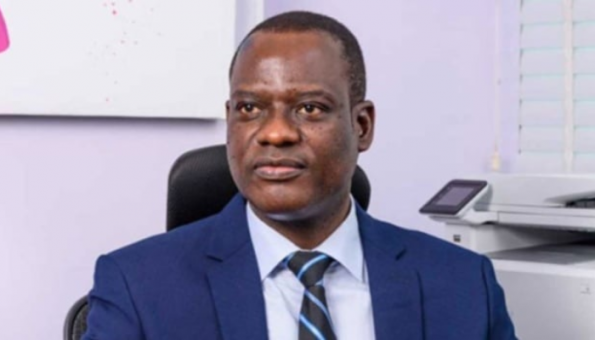
Minister of Finance and Coordinating Minister of the Economy, Taiwo Oyedele, has denied saying the Federal government will introduce a fuel tax when the economy stabilises and income levels improve.
In a post on X on Tuesday, Oyedele said his remarks during an interview with ARISE News was misrepresented, insisting that a “fuel tax is not on the table.”
However, during the interview with Rotus Odiri, ARISE News Business Correspondent, on the sidelines of the 2026 International Monetary Fund and World Bank annual meetings in Bangkok, Thailand, Oyedele said the tax would come when income levels improve enough for Nigerians to accommodate it.
He said taxes account for between 20 and 80 percent of pump prices in some countries, while many African countries impose between six and 10 different taxes on fuel products.
He said introducing fuel tax while petrol was still subsidised would have been counterproductive because government would effectively be paying the tax itself.
According to him, imposing the tax immediately after removal of petrol subsidy would be insensitive to Nigerians.
“The objective should be that instead of trying to suppress prices, which hasn’t worked for us, it hasn’t worked for any country in the world, not one. Instead of trying to suppress prices, think about how to grow income faster than prices rise,” Oyedele said.
“That’s how you bring prosperity and grow the middle class and that is exactly what we are doing as led by Mr. President himself.
“At the appropriate time, when the economy has stabilizes and income level will be able to accommodate it, those taxes will come. Not because we want to impose taxes,” he added.
In his Tuesday post, the minister reiterated that introducing a fuel tax at this time would be insensitive following removal of petrol subsidy, describing reports that government will introduce the levy when the economy stabilises as “fake news.”
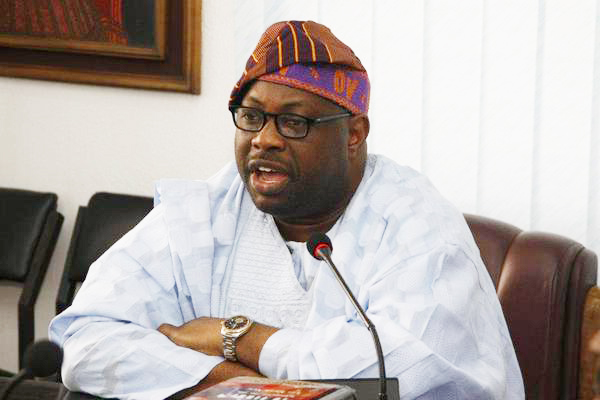
A chieftain of the African Democratic Congress (ADC), and Deputy Director of the Presidential Campaign Council, Chief Dele Momodu, has described former Vice-President Atiku Abubakar as the most nationally formidable and experienced among the leading contenders for the 2027 presidential election.
Momodu said Atiku’s experience at the national level distinguishes him from President Bola Tinubu and former Anambra State Governor, Peter Obi.
He stated this on Wednesday during an interview on Eagle 102.5 FM, Ilese-Ijebu, in Abeokuta.
“If you look at the antecedents of the three major candidates, between Atiku Abubakar and Peter Obi, you will see that Atiku is the most experienced. He has managed our country at the highest level,” he said.
Momodu traced Atiku’s political journey to the 1992 Social Democratic Party (SDP), presidential primary where he contested against late MKO Abiola and stepped down for him.
He said Atiku accepted the outcome without crisis even after he was not picked as Abiola’s running mate, describing it as a mark of true democratic temperament.
“He is the only one who started from around 1992, contested the SDP primary against Abiola and stepped down with uncommon equanimity. He did not make any noise,” Momodu said.
He noted that Atiku was among the founders of the Peoples Democratic Party, PDP, and served as Vice-President from 1999 to 2007.
Comparing Atiku with Obi, Momodu argued that while Obi’s best was demonstrated in Anambra, Atiku’s was at the presidency level managing the national economy.
“Peter Obi has tried his best in Anambra, while Atiku’s best is at the level of vice president controlling the economy of Nigeria. The difference is clear. He has matured in experience and exposure,” he said.
Momodu also said President Tinubu’s experience was largely limited to Lagos.
“What I’m trying to say is that Tinubu’s experience was limited to Lagos, and that is why when he became president, he thought Nigeria was Lagos. And he has found out now that Nigeria is not Lagos,” he said.
He argued that the current economic hardship under the present administration did not show prosperity, insisting Atiku remained better positioned to lead the country.
“Well, we are yet to see that prosperity, and if yesterday would determine today and tomorrow, it is obvious that Tinubu should retire now and let someone else do it,” Momodu added.
DailyPost
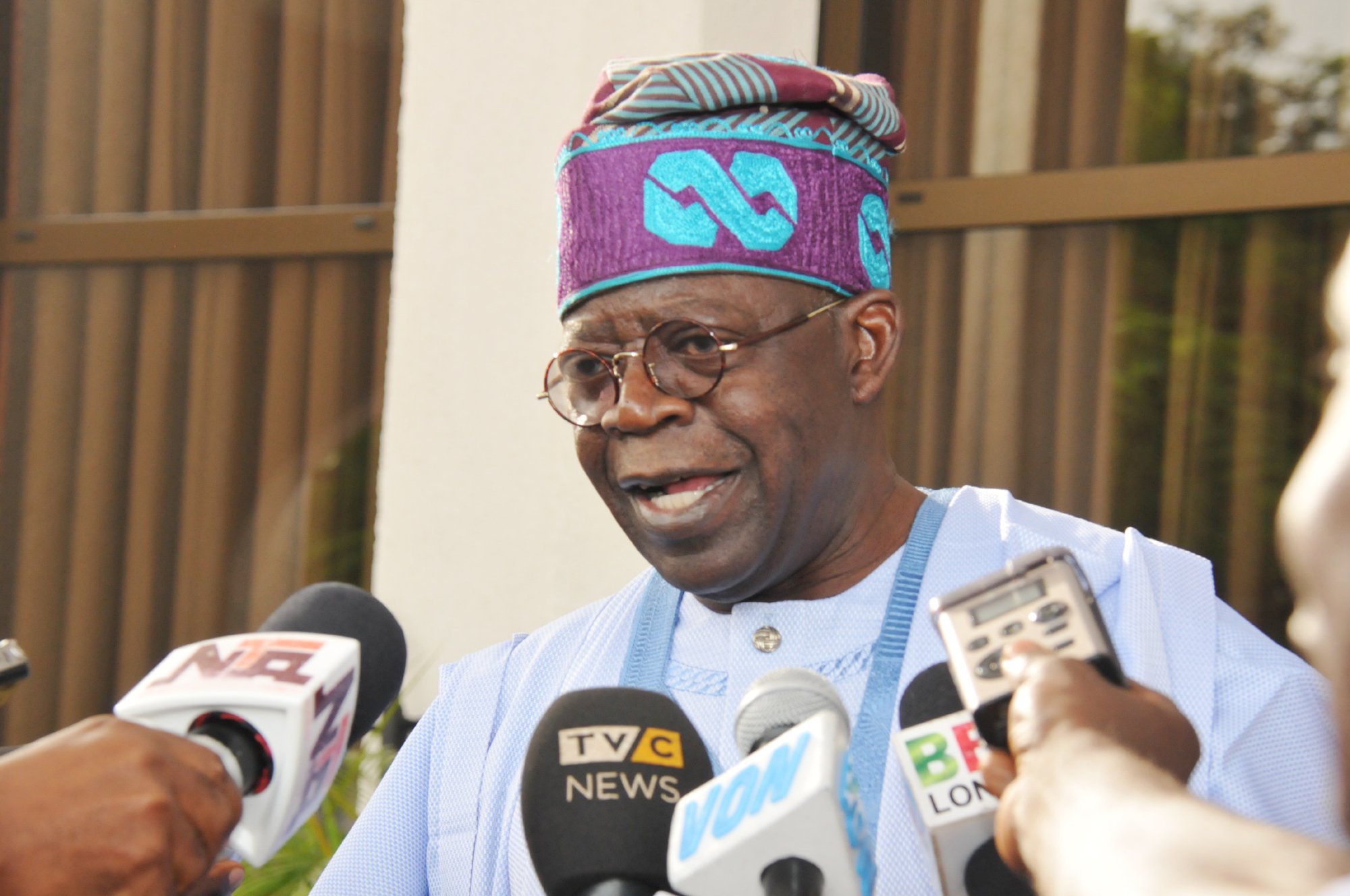
President Bola Tinubu says he has no regrets over the removal of petrol subsidy and other economic reforms introduced by his administration, insisting that Nigeria could not borrow its way to greatness.
Meanwhile, Minister of Finance and Coordinating Minister of the Economy, Taiwo Oyedele, has warned Nigerians against returning to petrol subsidy. He said the backtrack could trigger capital flight, undermining investor confidence and pushing the Naira to N3,000, N3,500 or even N4,000 per dollar.
But the Director of Media and Publicity of the African Democratic Congress (ADC) Presidential Campaign Council (PCC), Kola Ologbondiyan, challenged Oyedele to publish the economic model behind his warning that a return to fuel subsidy could push the naira to N4,000 per dollar.
The President spoke on Monday during the City Boys Movement retreat in Abuja, where he charged members of the group to mobilise support for his administration ahead of the 2027 general elections, insisting that the country’s future mattered more than the ambition of any individual candidate.
“No regrets,” Tinubu said, insisting that his administration would not be pushed back from its reform agenda.
He took a swipe at his political opponents, promising to restore the petrol subsidy, saying Nigeria could no longer afford to pay the fuel subsidy, and warning that reversing the policy would take the country back to an unsustainable economic path.
Defending his decision to remove the subsidy on his first day in office, Tinubu said the country was on the verge of financial collapse and could no longer afford the policy’s cost.
Tinubu also sought to reassure Nigerians about the direction of the economy, arguing that growth was steady and that the sacrifices associated with his reforms would ultimately offer citizens a future worth believing in.
Oyedele disclosed during a press briefing of the International Monetary Fund (IMF) and World Bank Annual Meetings in Bangkok, Thailand, yesterday, that investors had repeatedly questioned whether the government would abandon its reforms ahead of the next election cycle.
Ruling out the reversal of the government’s economic reforms, he maintained that any signal that Tinubu’s administration was contemplating or reinstating the subsidy would immediately affect financial markets, raise borrowing costs and worsen economic pressures on households.
“In all the meetings I have had, I came to a conclusion that the markets, including the domestic market, which you can read from the capital market, and the international market, have largely written off the opposition in Nigeria as unserious.
“If, for any reason, the President were to say we are merely considering the return of fuel subsidy, capital would react immediately, airfares would struggle, the naira would come under severe pressure, potentially moving towards 3,000, 3,500 or even 4,000.
The very fuel people want subsidised would become far more expensive in Naira terms,” Oyedele warned.
However, Ologbondiyan accused the Federal government of using fear to discourage debate on fuel subsidy, insisting that Nigerians deserve evidence, not alarming projections, on the potential economic consequences of restoring the policy.
Speaking to journalists, he described the minister’s warning as scaremongering and demanded that the government explain how it arrived at the projected exchange rate.
“The Minister of Finance is merely scaremongering. He cannot claim that a return to fuel subsidy will cause the naira to depreciate to N4,000 to the dollar without showing Nigerians the model behind that projection,” he said.
He questioned the reliance on investors’ concerns to oppose a subsidy’s return, challenging the government to identify the sources of the projections and disclose their calculations.


