
Business
Consumers Condemn Power Sector Privatisation As FG Hikes Electricity Tariff

- /home/rhoncare/pointblank.ng/wp-content/plugins/mvp-social-buttons/mvp-social-buttons.php on line 27
https://pointblank.ng/wp-content/uploads/2020/01/Electricity-800x600.jpg&description=Consumers Condemn Power Sector Privatisation As FG Hikes Electricity Tariff', 'pinterestShare', 'width=750,height=350'); return false;" title="Pin This Post">
- Share
- Tweet /home/rhoncare/pointblank.ng/wp-content/plugins/mvp-social-buttons/mvp-social-buttons.php on line 69
https://pointblank.ng/wp-content/uploads/2020/01/Electricity-800x600.jpg&description=Consumers Condemn Power Sector Privatisation As FG Hikes Electricity Tariff', 'pinterestShare', 'width=750,height=350'); return false;" title="Pin This Post">
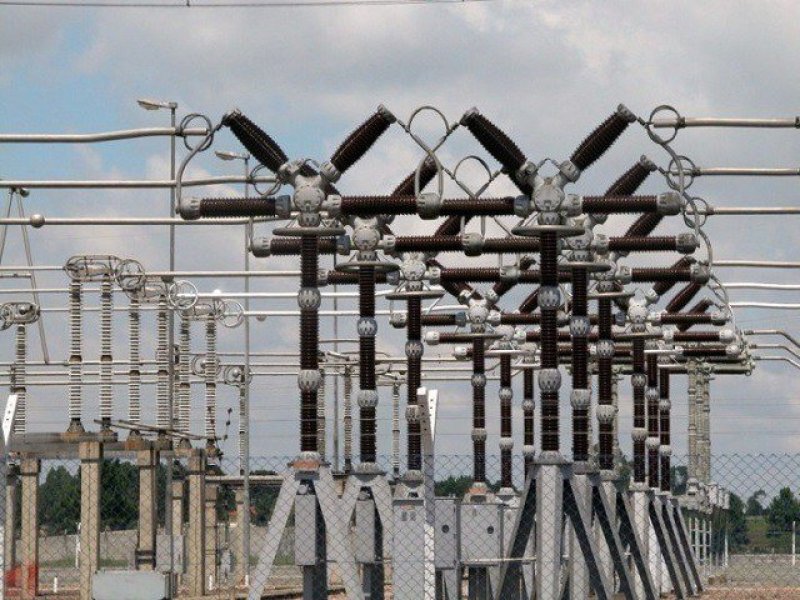
The Federal Government through its Nigerian Electricity Regulatory Commission on Thursday officially released different documents indicating the approved power tariff increase payable by consumers to various electricity distribution companies in Nigeria.
In different orders to the 11 Discos operating in Nigeria, the commission stated that the tariff hike was based on the extraordinary review of the Multi-Year Tariff Order, as it explained that the order took effect from January 1, 2022.
It further noted that the order shall only be subordinated to a new tariff review order as might be issued periodically by the NERC, but this hike in tariff by NERC was kicked against by different power consumer groups, as they called for the complete reversal of the sector’s privatisation.
The NERC provided myriads of reasons why it had to effect an upward review of the tariff payable to Discos, as figures from the individual approvals for each Disco showed that the commission hiked the amount to be paid by consumers for electricity beginning from February 2022.
In the Abuja Electricity Distribution Company, for instance, non-Maximum Demand power users in Band A had their tariff increased from N51.75/kWh in January this year to N56.28/kWh from February to December 2022.
Also, non-MD consumers in Band B had their tariff increased from N49.72/kWh to N54.13kWh, while the non-MD power users in Bands C and D had their tariff raised from N45.65/kWh to N50.65/kWh, and N29.70/kWh to N33.20/kWh respectively, under Abuja Disco.
For non-MD customers of AEDC in Band E, their tariff was raised from N29.38/kWh to N32.88/kWh.
In the service bands, the NERC explained that customers in Band A were those receiving a minimum of 20 hours of electricity daily, while those in Bands B, C, D and E include power users receiving 16 hours, 12 hours, eight hours, and four hours of power supply daily, respectively.
The documents for each Disco also showed that aside from non-MD customers, there were other categories of maximum demand power users classified as MD1 and MD2, but most of the tariffs of these categories of power users were also raised.
It was observed that aside from the AEDC, the tariff hike played out in other Discos, as the regulator raised the tariffs payable by consumers in the various franchise areas of the power distribution companies.
For Eko Electricity Distribution Company, it was observed that there was a marginal decrease in the amount payable by non-MD consumers in Band A, those in Band B had their tariff unchanged, while others in Bands C, D and E had their tariffs hiked.
Under Eko Disco, non-MD customers in Band A had their tariff reduced from N56.08/kWh in January to N55.55/kWh from February to December, while non-MD customers in Band B had theirs unchanged at N51.81/kWh.
For non-MD customers in Band C, D and E, their tariffs were raised from N42.44/kWh to N47.44/kWh, N28.63/kWh to N31.75/kWh, and N28.63/kWh to N31.71/kWh, respectively.
Taking the Port Harcourt Electricity Distribution Company as another example, it was observed that the approved end-user tariffs for all the bands for non-MD customers from A to E were hiked by the NERC.
Non-MD Band A customers of PHED had their tariff raised from N57.16/kWh in January to N60.67/kWh from February to December 2022, while the tariff of non-MD Band B customers was increased from N56.79/kWh to N59.64/kWh.
Non-MD customers in Bands C, D and E had their tariffs raised from N50.15/kWh to N55.15/kWh, N35.31/kWh to N38.81/kWh, and N35.08/kWh to N38.58/kWh, respectively.
It was also observed that customers in MD1 and MD2 in the various bands under the PHED had their tariffs also raised by the NERC, as similar scenarios played out in other Discos.
This came as power consumer groups condemned the hike in tariff by the NERC, describing it as unfortunate considering the fact that power supply had failed to improve across the country amidst the hardship nationwide.
An industry expert and legal practitioner, who doubles as President of the Nigeria Consumer Protection Network, Kunle Olubiyo, stated that the increase should be resisted and the privatisation of the sector reversed.
He said, “They did it in January and gave the licensees permission to surreptitiously increase the tariff and do mechanical configurations such that we are being shortchanged.
“The key performance indicators that they put forward which have to do with supply being contractual and service-based have not been met, they have failed on that. Yes, if they say inflation is high, do we get commensurate service as per what we pay?
“I was at Aso Drive on Monday here in the capital city of Abuja, they get supply for just three hours in a day. The supply to areas outside the city centre has been bad too. So if we can’t get power and there is a lot of blame game, what is the justification for tariff increase?”
Olubiyo stated that many customers on estimated billing had received up to 300 per cent hike in their electricity bills, as the capping methodology approved by the NERC had not been effective.
He wondered why the commission would be bold enough to release documents showing the approved tariff hike payable by customers to the Discos, as he called for the complete reversal of the power sector privatisation.
He said, “The NERC we have today is NERC for the Discos. We’ve reached a crossroads now and the next thing we expect from the Federal Government is to go for all the credit lines and clean up their books, those who are owing Nigerian banks or so, and make sure that this privatisation exercise is reversed.
“This is because this is not the end of it. Their new MYTO under the service-based tariff has given the Discos an open cheque to continue to increase tariffs without the basic principles of equity. We have two parties to this contract, the demand, and the supply sides.
“But NERC that we have is on the side of the market. They are not taking the demand side, but you must have demand for you to maintain supply. So for us what we want is an outright reversal of the privatisation, we are not saying review.”
Also speaking on the development, the National Secretary, Network of Electricity Consumers Advocacy of Nigeria, Uket Obonga, regretted that the tariff hike was approved by NERC despite the hardship in Nigeria.
“We are going to bombard them. It is official now that they have increased the electricity tariff even in this hardship. This is unacceptable. We cannot continue like this,” he stated.
Meanwhile, the NERC explained that pursuant to the Extraordinary Tariff Review Application and Performance Improvement Plan filed by Discos, the commission approved the MYTO 2020 Serviced Based Tariff effective from September 1, 2020.
It said this was to ensure that rates paid by customers were in alignment with the quality of service to customer clusters as measured by the daily average availability of power supply.
It said the objectives of the latest order on tariff hike were to reflect the impact of changes in the projected minor review variables for the period January to December 2021 for the determination of Cost-Reflective Tariffs, adjust the Discos’ capital expenditure for the years 2021 to 2026 in consideration of the approved PIP.
The commission said it was to ensure sustained improvement in reliability and quality of supply in line with Discos’ capital expenditures proposal and PIP commitment.
It said the order would ensure that tariffs payable by customers were commensurate and aligned with the quality and availability of power supply committed to customer clusters by Discos.
The NERC said the tariff order would ensure that prices charged by Discos were fair to customers and were sufficient to allow Discos to fully recover the efficient cost of operation, including a reasonable return on the capital invested in the business, pursuant to the provisions of sections 32(d) and 76 2(a) of Electric Power Sector Reform Act.
It further said the order would provide appropriate incentives to ensure continuous improvement in the performance of the Transmission Company of Nigeria Plc in reducing its network technical losses, among others.
The Punch


Access Bank Plc has said that a social media post announcing a shutdown of the bank’s operations, is false and misleading.
In a statement signed by the bank’s management, and made available to the media, the Bank insisted that the notice is the handiwork of mischief makers, who impersonated the bank’s official handle.
It advised members of the public to disregard the notice, and pay attention only to verified information from the verified accounts of the bank.
Below is the full statement:
“A message impersonating Access Bank’s official handle is currently circulating on social media and WhatsApp. It is false and misleading.
“We wish to reassure our customers, partners, stakeholders, and the public that Access Bank is safe, financially strong, and fully operational across all our subsidiaries. Our services continue to run seamlessly, and we remain committed to serving our customers with the highest standards of excellence.
“We are working closely with the relevant regulatory and law enforcement authorities to identify those responsible for creating and spreading this false information to cause panic and business disruption. Appropriate legal action will be taken in accordance with applicable laws and regulations.
“We also remind members of the public that creating, publishing, and disseminating false information capable of causing public alarm, damaging reputations, or undermining confidence in institutions constitutes an offence under Section 24 of the Cybercrimes (Prohibition, Prevention, etc.) (Amendment) Act, 2024.
“If you receive a false and misleading message, please do not share or forward it. Instead, disregard it and rely only on information communicated through Access Bank’s official and verified channels.
“We thank our customers, partners, and stakeholders for their continued trust and confidence in Access Bank.”
Business
Ecobank Nigeria Launches Scaling Up!!! Podcast to Champion African Entrepreneurship, Business Growth
Ecobank Nigeria has launched Scaling Up!!!, its flagship business storytelling podcast designed to inspire, educate and empower entrepreneurs, founders, business leaders and the next generation of African innovators through authentic conversations with some of the continent’s most accomplished business personalities.
The podcast, which will be available on Ecobank Nigeria’s official YouTube channel and other major digital streaming platforms, reinforces the Bank’s commitment to supporting businesses beyond banking by creating a platform where entrepreneurs can learn from the experiences of successful founders, creatives and industry leaders who have built thriving enterprises across diverse sectors.
Featuring compelling conversations on entrepreneurship, leadership, innovation, resilience and business growth, Scaling Up!!! offers practical lessons and real-life insights that aspiring and established entrepreneurs can apply in building sustainable businesses.
The inaugural season features an impressive lineup of distinguished guests, including beauty entrepreneur and Founder/CEO of Beauty by AD, Adeola Adeyemi (Diiadem); renowned filmmaker and Founder of Golden Effects Pictures, Kunle Afolayan; veteran music producer and Founder of Coded Tunes, ID Cabasa; luxury fashion entrepreneur Ejiro Amos Tafiri; celebrated commercial photographer Emmanuel Oyeleke; Co-founder and Lead Interior Designer of Siriano Limited, Adewunmi Adegbola; and Founder of Windsor Gallery and Nahous Creative Hub, Richard Vedelago.
Each episode explores the guests’ entrepreneurial journeys, highlighting the opportunities they embraced, the challenges they overcame and the strategies that enabled them to build enduring brands and successful businesses.
Speaking on the launch, Head, Marketing & Corporate Communications, Ecobank Nigeria, Austen Osokpor, said: “Scaling Up!!! reflects Ecobank’s belief that empowering entrepreneurs goes beyond providing financial solutions. Through authentic storytelling and insightful conversations, we are creating a platform where business owners can learn directly from people who have successfully navigated the realities of building sustainable enterprises. It is another way we are reinforcing our commitment to driving entrepreneurship, innovation and economic growth across Africa.”
Also speaking, Head, SMEs, Partnerships & Collaborations, Ecobank Nigeria, Omoboye Odu, said: “Entrepreneurs learn best from the experiences of those who have walked the journey before them. Scaling Up!!! provides practical insights, inspiration and valuable lessons that will help founders make better business decisions, overcome challenges and unlock new opportunities for growth. The podcast further strengthens Ecobank’s role as a trusted partner supporting SMEs at every stage of their entrepreneurial journey.”
Sharing the creative vision behind the initiative, the Producer of Scaling Up !!!, Jemimah Ugiagbe said: “Our goal was to create more than just another business podcast. We wanted honest, engaging and relatable conversations that reveal the realities behind success, the setbacks, the resilience, the bold decisions, and the lessons that every entrepreneur can learn from. Every episode is designed to leave listeners informed, inspired and motivated to build businesses that create lasting impact.”
The podcast further strengthens Ecobank Nigeria’s position as a trusted partner for entrepreneurs by providing a knowledge-sharing platform that extends beyond traditional banking services. Through meaningful conversations with accomplished founders and innovators, the Bank continues to demonstrate its commitment to fostering enterprise development, encouraging innovation and promoting sustainable economic growth across Africa.
Scaling Up!!! is targeted at SMEs, entrepreneurs, founders, startups, business executives, creatives, students and young professionals seeking practical business insights from some of Africa’s most respected industry leaders.
New episodes will be released regularly across Ecobank Nigeria’s YouTube channel and other major podcast streaming platforms, offering audiences thought-provoking conversations on entrepreneurship, leadership, innovation and business growth.
Wema Bank, Nigeria’s oldest indigenous bank and pioneer of Africa’s first fully digital bank, ALAT, has been named Nigeria’s Best Digital Bank for Consumers 2026 by Euromoney, one of the world’s most respected authorities on financial services and banking excellence.
The prestigious recognition affirms the Bank’s sustained leadership in digital innovation, customer experience and financial inclusion, reinforcing its position as one of Nigeria’s leading technology-driven financial institutions.
Presented annually, the Euromoney Awards for Excellence celebrate banks that are redefining financial services through innovation, measurable impact and outstanding customer value. In selecting Wema Bank for the award, Euromoney recognised the Bank’s successful digital transformation journey, its continuous innovation through ALAT, Africa’s first fully digital bank, and its unwavering commitment to delivering simpler, smarter and more accessible banking experiences for customers.
Commenting on the recognition, the Managing Director/Chief Executive Officer of Wema Bank, Moruf Oseni, said: “This award is a strong validation of the deliberate investments we have made over the years to build a truly digital bank that puts customers at the centre of everything we do. Innovation for us has never been about technology for its own sake. It has always been about creating solutions that make banking easier, faster, safer and more rewarding for every customer.
“From pioneering Africa’s first fully digital bank with ALAT to continuously evolving our digital capabilities, we have remained focused on anticipating customer needs and building experiences that create real value. We are honoured by this recognition from Euromoney and inspired to continue pushing the boundaries of innovation as we shape the future of banking in Nigeria,” he concluded.
A key milestone in Wema Bank’s digital transformation has been the evolution and upgraded version of ALAT, which introduced next-generation capabilities including voice banking, tap-to-pay functionality, personalised financial services and integrated investment opportunities through strategic partnerships. Together with faster digital onboarding, AI-powered fraud monitoring, intelligent customer personalisation and an expanding agency banking network, these innovations continue to enhance customer experience while extending financial services to more Nigerians.
Euromoney also recognised Wema Bank’s ability to leverage technology to build deeper customer relationships through data-driven personalisation, enabling customers to receive tailored recommendations across savings, investments and credit products based on their financial needs and behaviour.
For over eight decades, Wema Bank has remained at the forefront of innovation in Nigeria’s financial services industry. As the pioneer of Africa’s first fully digital bank, the Bank continues to redefine banking by combining technology, customer insight and innovation to deliver seamless, secure and inclusive financial solutions for individuals, businesses and communities.
The Euromoney recognition further reinforces Wema Bank’s commitment to building the future of banking through continuous innovation, operational excellence and customer-centric solutions that create lasting value.


