Connect with us

Business

Cooking Gas: FG Intervenes, Set to Crash Price

Published

on

At a meeting in Abuja, Ekpo told the producers that Nigeria has to find a way to surmount the challenges in the country’s domestic market, expressing President Bola Tinubu’s concerns over how unaffordable the product was becoming. The intervention is coming as the National Bureau of Statistics (NBS) in its latest report said in October, LPG prices rose by as much as 14 per cent for a 12.5 kg cylinder.

But a statement by the minister’s media aide Louis Ibah, on Sunday, said the intervention on the LPG issue, better known as cooking gas, followed the rise in recent months in the price of the product per kg from about N700 to above N900 in some parts of the country.Key challenges identified as responsible for LPG price increase, Ekpo said, include FX sourcing for imports and insufficient supply to the domestic market by producers.

The meeting, at the instance of the minister, was held at the NNPC Towers and had in attendance top officials of Chevron Nigeria Limited led by Sansay Narasimi.Others included: The Nigerian Midstream Downstream Petroleum Regulatory Authority (NMDPRA) led by its Chief Executive Officer, Farouk Ahmed and officials from the Nigerian National Petroleum Company Limited (NNPC).“Ekpo expressed the concerns of President Bola Tinubu over the astronomical increase in the price of cooking gas and the attendant hardship on majority of citizens,” the statement added.

The minister who noted that Nigeria is abundantly endowed with gas reserves, said the situation where some of the multinational firms were more concerned with gas exports without dedicating huge volumes for the domestic market was unacceptable and should be discouraged.

“With the exponential increase in the price of LPG, there is the need for the federal government to intervene and I am representing this at this moment. We acknowledge that some producers are exporting while we are faced with the challenges of importation.

“Public interest is the overriding interest all over the world for the government, the demand for LPG will increase as we approach December…you have a public service obligation to collaborate with the government to ensure security of gas supply.“We need to therefore bend backwards and find solutions, to ensure that we have sufficient supply and stability in-country and that Nigerians have gas,” said Ekpo.

The gas minister thereafter constituted a committee headed by the chief executive of NMDPRA with a mandate to come up with recommendations on how to boost supplies and crash LPG prices within a week.

However, the NBS in its latest report said the average retail price for refilling a 5kg cylinder of cooking gas increased by 8.89 per cent on a month-on-month basis from N4,189.96 recorded in September 2023 to N4,562.51 in October 2023.However, on a year-on-year basis, this increased by 1.76 per cent from N4,483.75 in October 2022, it added.On state profile analysis, Kano recorded the highest average price for refilling a 5kg of LPG, with N5,181.43, followed by Adamawa with N5,142.86, and Ogun with N5,093.75.

On the other hand, Ebonyi recorded the lowest price with N3,971.43, followed by Osun and Edo with N4,000.00 and N4,025.00 respectively.In addition, analysis by zone showed that the North-west recorded the highest average retail price for refilling a 5kg cylinder of LPG, with N4,738.20, followed by the North-central with N4,662.62, while the South-east recorded the lowest with N4,088.65.

Also, the average retail price for refilling a 12.5kg of cooking gas, increased by 14.04 per cent on a month-on-month basis from N9,247.40 in September 2023 to N10,545.87 in October 2023.

On a year-on-year basis, this rose by 4.93 per cent from N10,050.53 in October 2022. On state profile analysis, Edo recorded the highest average retail price for the refilling of a 12.5kg cylinder of cooking gas, with N12,536.88, followed by Jigawa with N12,050.00 and Delta with N11,987.50. Conversely, the lowest average price was recorded in Zamfara with N9,050.00, followed by Lagos and Oyo with N9,071.05 and N9,407.14 respectively.

Analysis by zone showed that the South-south recorded the highest average retail price for refilling a 12.5kg cylinder of cooking gas, with N11,480.60, followed by the North-central with N10,683.97, while the South-east recorded the lowest price with N9,847.42.

Continue Reading
Advertisement


Click to comment

Leave a Reply

Your email address will not be published. Required fields are marked *

Business

How TradeDepot is Connecting the Missing Links in Africa’s Retail Supply Chain

Published

on

From manufacturers and distributors to neighbourhood retailers, technology and investment are reshaping the systems that move products across African markets.

When a customer walks into a neighbourhood shop and finds exactly what they need, the transaction may appear simple. But behind that everyday purchase is a complex network of businesses, people and systems working together to make it happen.

Manufacturers produce the goods, distributors move them through supply channels, logistics providers handle transportation, and retailers ensure products reach consumers. Payment systems and financing also play important roles in keeping this commercial ecosystem running.

However, across many African markets, the infrastructure connecting these players remains fragmented, creating challenges that affect how businesses operate and how efficiently products reach consumers.

For small retailers, sourcing products can involve dealing with multiple intermediaries, navigating inefficient distribution networks and managing unpredictable supplies. Limited access to working capital can further complicate inventory management, making it difficult to keep essential products consistently available.

These challenges point to a bigger issue: the future of commerce is not just about selling more products or creating new shopping experiences. It is also about strengthening the infrastructure that makes buying, selling and distribution possible.

Technology is increasingly becoming part of the solution.

Digital platforms can connect retailers with manufacturers and distributors, simplify ordering processes and improve visibility across supply networks. When combined with efficient logistics and access to financing, these innovations can help businesses manage inventory, improve distribution and build stronger commercial relationships.

This is the space in which TradeDepot, a Nigerian technology company, is making its contribution. By using technology to connect small retailers with manufacturers and distributors, the company is helping address some of the structural challenges within traditional retail supply chains.

Its approach reflects a broader opportunity in Africa’s digital transformation: moving beyond solutions that simply improve the customer experience to innovations that strengthen the underlying systems supporting businesses, distribution networks and economic activity.

Investment also plays a critical role in making this transformation possible.

Through Boost Africa, the European Investment Bank (EIB) invested €10 million in Partech Africa Fund, which subsequently backed TradeDepot. The investment demonstrates how development finance and venture capital can support African technology companies working to address fundamental market challenges.

Beyond supporting individual businesses, such investments can contribute to the development of stronger commercial networks, improved infrastructure and innovative solutions that make entire economic value chains more efficient.

Ultimately, a thriving retail sector needs more than shops and customers. It needs reliable supply chains, efficient distribution networks, accessible financing and technology that connects every part of the journey.

Because the future of commerce will not be determined only by what businesses sell, but also by how effectively the systems behind those transactions work.

Boost Africa: From Capital to Impact.

Watch how TradeDepot is bringing commerce closer to communities through technology and the Boost Africa initiative:

Continue Reading

Business

WAIIS 2026: Elumelu Leads Private Sector Investment Drive in Sierra Leone

Published

on

Heirs Holdings, the pan-African investment group founded by African investor and philanthropist Tony O. Elumelu, CFR, will play a leading role at the inaugural West Africa Integration andĥ Investment Summit (WAIIS 2026), taking place November 16–18 in Sierra Leone.

As a Principal Partner of the Summit, the Group is bringing its senior business leadership, investment expertise and extensive operating experience across critical sectors of the African economy to advance the region’s integration and investment agenda.

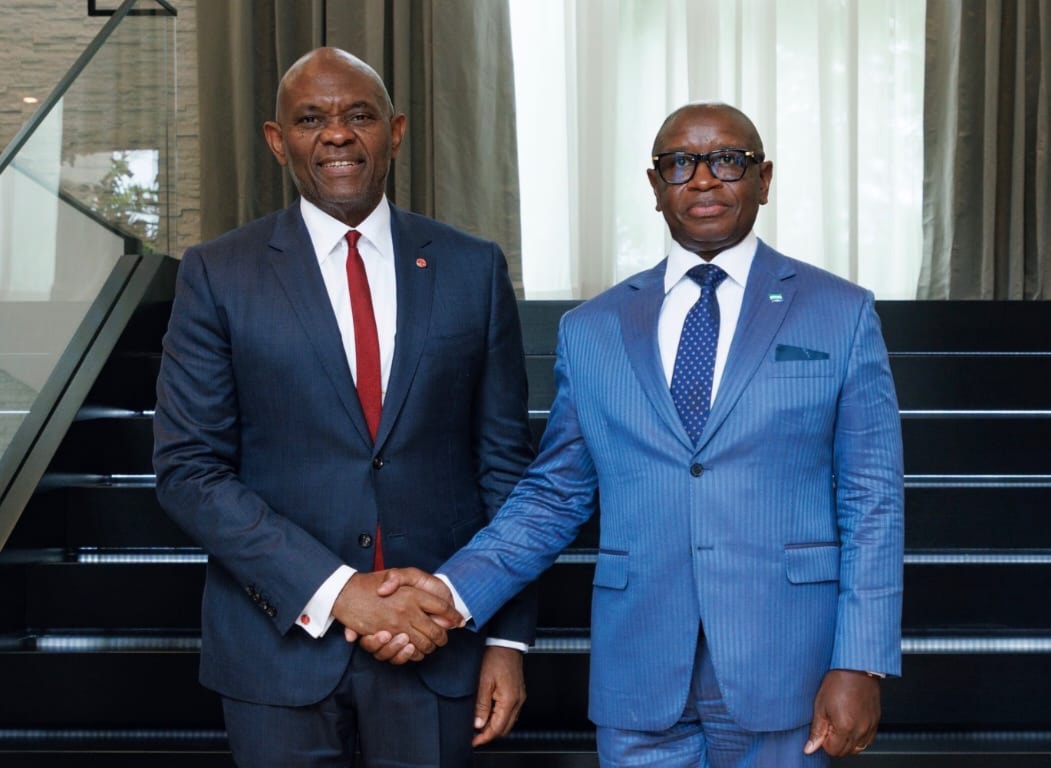
Mr Elumelu, Group Chairman of Heirs Holdings and a member of the Summit’s Private Sector Advisory Board, is leading private sector mobilisation for the event, convened under the leadership of His Excellency Julius Maada Bio, President of Sierra Leone.

He will be joined by senior executives from across the Group’s portfolio, including Obong Idiong, CEO of Heirs Technologies, who will speak at the Investment Opportunity Session on connecting West Africa’s markets through payments, data and digital networks and Peter Ikenga, CEO of Transcorp Power, who will co-chair the power session alongside Mamadou Sangafowa-Coulibaly, Côte d’Ivoire’s Minister of Mines, Oil and Energy.

The Summit brings together African Heads of State, policymakers, institutional investors, development finance institutions and business leaders to accelerate economic integration and unlock investment opportunities across West Africa.

A longstanding advocate of Africapitalism and a business turnaround expert, Elumelu champions the principle that Africa’s development must be driven by African entrepreneurs and businesses, with long-term private investment creating both economic and social wealth. His leadership at WAIIS reflects a conviction that regional integration must move beyond policy commitments to practical commercial partnerships, cross-border investment and the development of competitive African enterprises.

Heirs Holdings’ prominent role at WAIIS is reinforced by its scale, investment footprint and track record of building businesses across sectors critical to Africa’s economic transformation. As of 31 March 2026, the value of its portfolio companies stood at approximately US$15.08 billion. With investments and operations spanning 24 countries and a workforce of more than 40,000 people across the Group and its portfolio companies, Heirs Holdings is a significant pan-African private-sector investment platform.

For Heirs Holdings, West African integration represents a significant opportunity to expand the region’s economic potential and attractiveness to investors. A more connected region creates larger markets, strengthens intra-regional trade, facilitates the movement of capital, attracts investment, creates jobs, and enables African businesses to achieve greater scale and compete more effectively in the global economy.

As governments, investors and business leaders convene in Sierra Leone, Heirs Holdings reaffirms its commitment to working with public and private sector partners to turn regional integration into a commercial reality that will create lasting economic and social value across the continent.

Heirs Holdings is a leading pan-African investment company. Its investment portfolio spans the energy, power, banking, insurance and financial services, technology, real estate, hospitality and healthcare sectors, operating in twenty-four countries worldwide.

Heirs Holdings is inspired by Africapitalism, the belief that the private sector is the key enabler of economic and social wealth creation in Africa. Driven by this philosophy, Heirs Holdings invests for the long-term, bringing strategic capital, sector expertise, a track record of business success, and operational excellence to its portfolio companies.

Continue Reading

Business

From Wholesale Markets to Digital Platforms: How Technology is Transforming Small Business Commerce in Africa

Published

on

Digital commerce is changing how neighbourhood retailers source products, connect with suppliers and manage their businesses, creating new opportunities for small businesses across Africa.

For millions of small retailers across Africa, keeping a business running involves much more than selling products. Behind every successful neighbourhood shop is a constant effort to find reliable suppliers, compare prices, determine what customers need, manage orders and ensure essential products remain available on the shelves.

Yet, these everyday business activities have traditionally come with significant challenges.

Many small retailers still depend on frequent trips to wholesale markets, multiple intermediaries and fragmented supply arrangements to replenish their stocks. The process can be expensive, time-consuming and unpredictable, taking attention away from customers and limiting opportunities for business growth.

Technology is beginning to change that reality.

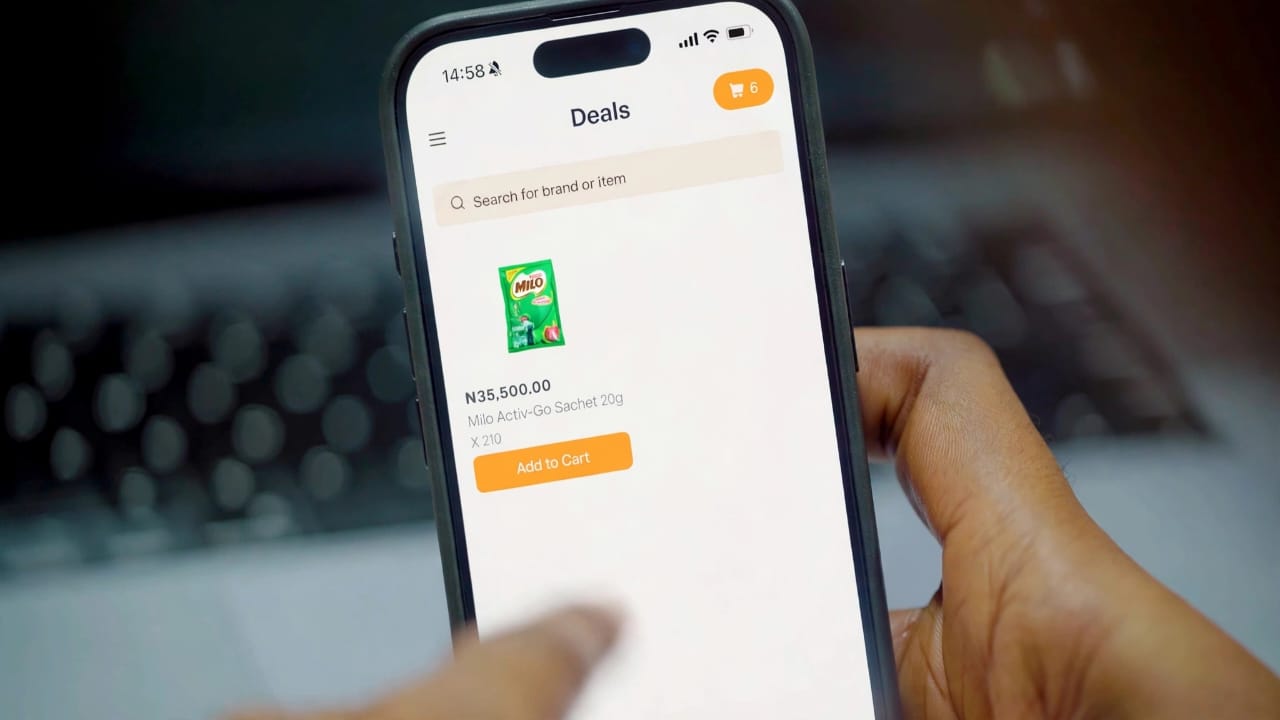
Digital commerce platforms are creating new ways for small businesses to discover products, connect directly with suppliers, place orders and manage purchasing more efficiently. With better access to product information and supply channels, retailers can make more informed decisions, reduce sourcing difficulties and respond more effectively to customer demand.

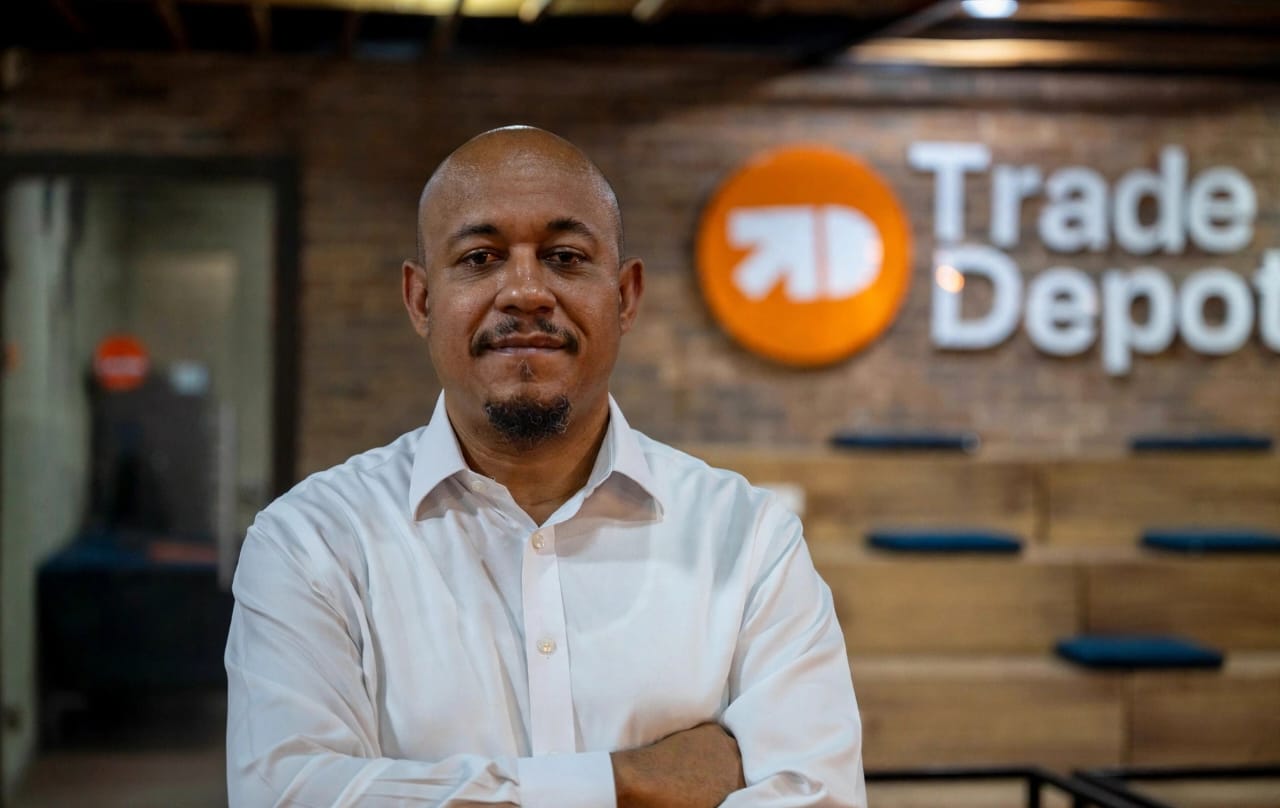
One company working to make this transformation possible is TradeDepot, a Nigerian technology company using digital solutions to connect small retailers with manufacturers and distributors.

Through its technology platform, TradeDepot is helping create more efficient channels for product sourcing and distribution, bringing suppliers and neighbourhood retailers closer together.

The significance of this development extends beyond the convenience of placing orders online. Improved access to products, more efficient purchasing processes and stronger supplier relationships can help small retailers maintain stock availability, serve customers better and build more sustainable businesses.

The transformation also highlights the role of investment in developing Africa’s technology ecosystem.

Through Boost Africa, the European Investment Bank (EIB) invested €10 million in Partech Africa Fund, which subsequently backed TradeDepot. The investment illustrates how development finance and venture capital can support African technology businesses building practical solutions to everyday commercial challenges.

As digital innovation continues to reshape commerce, the benefits are increasingly extending beyond large businesses and established retail chains to the small shops that serve communities every day.

Technology is not just changing how people shop. It is transforming how the businesses serving them source, sell and grow.

Boost Africa: From Capital to Impact.

Watch how TradeDepot is bringing commerce closer to communities through technology and the Boost Africa initiative:

Continue Reading