
News
Coronavirus Cases in Nigeria Hits 38,344 with 543 New Infections


- /home/rhoncare/pointblank.ng/wp-content/plugins/mvp-social-buttons/mvp-social-buttons.php on line 27
https://pointblank.ng/wp-content/uploads/2020/03/Ihekweazu.jpg&description=Coronavirus Cases in Nigeria Hits 38,344 with 543 New Infections', 'pinterestShare', 'width=750,height=350'); return false;" title="Pin This Post">
- Share
- Tweet /home/rhoncare/pointblank.ng/wp-content/plugins/mvp-social-buttons/mvp-social-buttons.php on line 69
https://pointblank.ng/wp-content/uploads/2020/03/Ihekweazu.jpg&description=Coronavirus Cases in Nigeria Hits 38,344 with 543 New Infections', 'pinterestShare', 'width=750,height=350'); return false;" title="Pin This Post">
Over 500 new coronavirus cases in Nigeria have raised the nationwide tally to 38,344, authorities announced on Wednesday.
According to the Nigeria Centre for Disease Control (NCDC), 543 more COVID-19 cases and eight fatalities were recorded in the country on Wednesday.
The new figure of infections shows a slight decrease from the 576 cases reported on Tuesday.
Nigeria has averaged over 500 cases per day in almost two weeks
The death toll in the country rose to 813 while a total of 15,815 patients have recovered from the virus.
There are 21,716 active case in Nigeria.
The NCDC said the new cases were reported in 15 states including “Lagos-180 FCT-86 Kaduna-56 Edo-47 Ondo-37 Kwara-35 Ogun-19 Rivers-19 Kano-17 Ebonyi-16 Enugu-16 Delta-7 Bayelsa-4 Bauchi-3 Abia-1.”
About 247, 825 people have been tested for the virus in a country of over 200 million people.
Lagos remains the epicenter of the disease with a total tally of 13,806 infections and 177 deaths. Almost 2, 000 patients have been discharged after treatment.
Nigeria’s commercial nerve is followed by the nation’s capital, Abuja, with 3, 297 infections, and 40 deaths. Oyo has since displaced Kano to become the third state with the largest caseload with 2, 219, and 20 deaths.
Zamfara reported a single case on Tuesday after going more than 50 days without an infection.
Health experts believe there is gross undercount of positive cases in Nigeria, questioning the government’s ability to increase its testing capacity especially after new symptoms of loss of senses of smell and taste emerged.
On April 28, the Nigerian government announced its target of testing at least two million people within the next three months.
The ambitious 90 days’ target will elapse on July 28, yet the country is yet to cover 20 per cent of the two million.


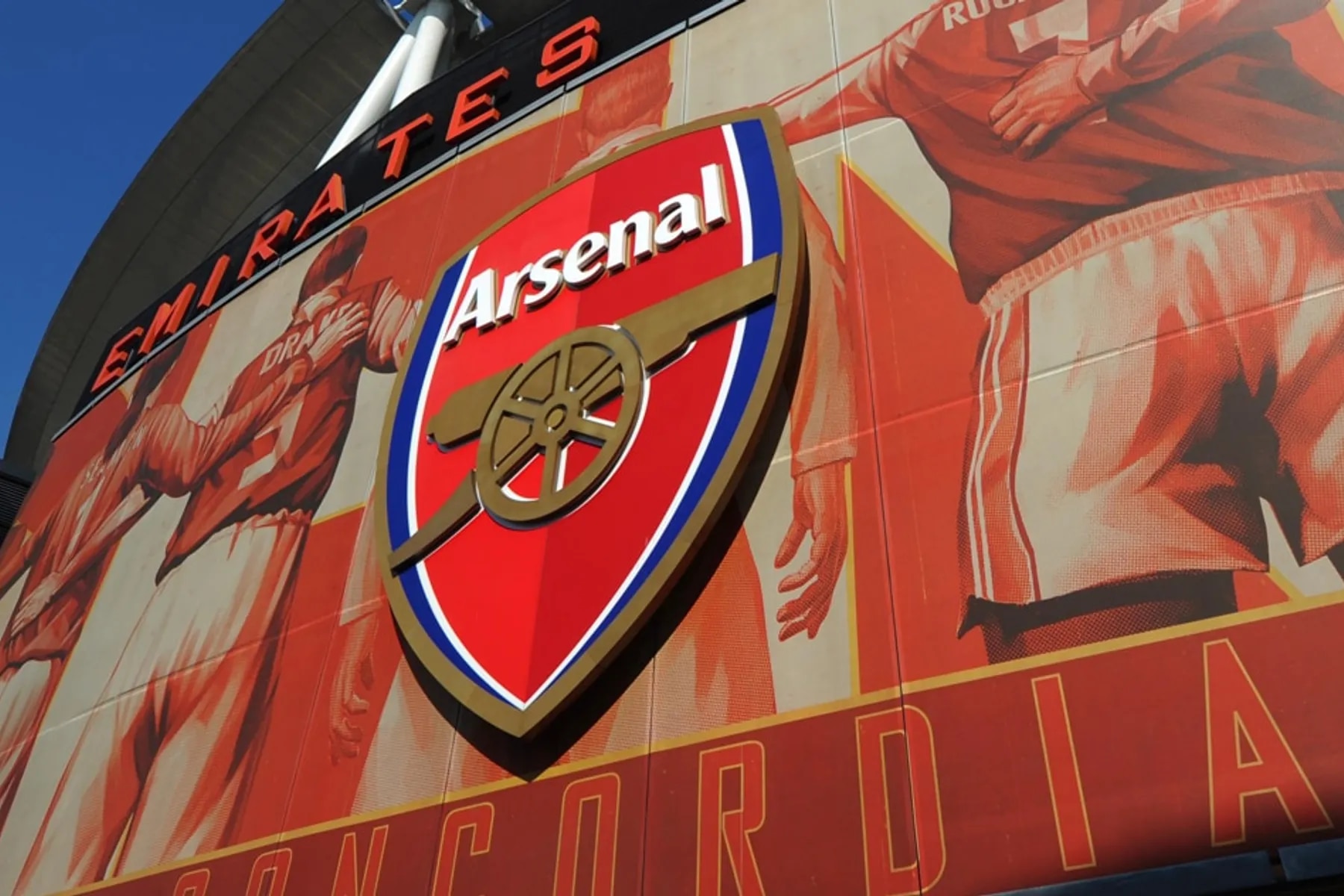
Arsenal Fans Club Nigeria is set to be officially unveiled in Abuja this weekend, as the organisation prepares to strengthen the club’s fan base and promote community development through football.
Amongst the high profile personalities lined up for the unveiling ceremony include, business leaders, celebrities and notable Arsenal supporters like former Gunner, Kanu Nwankwo, former Senate President Bukola Saraki, Emir Sanusi Lamido Sanusi, Senator Dino Melaye amongst others.
The unveiling will form part of a two-day programme beginning on Friday, October 16, with delegates from state and city chapters expected to converge on the nation’s capital for the club’s second Annual General Meeting (AGM).
According to a press release issued on Monday by the organisation, the celebrations will feature sporting activities, a community sanitation initiative and a formal launch event attended by prominent personalities and Arsenal supporters.
National President of Arsenal Fans Club Nigeria, Charles Ojugbana, said the organisation draws inspiration from the achievements of Nigerian-descent footballers, including former Super Eagles striker Kanu Nwankwo and current stars Bukayo Saka, Noni Madueke and Eberechi Eze.
The former General Secretary of the Nigeria Football Association (NFA) said the club aims to improve the football fan experience while expanding support for Arsenal across Nigeria.
Activities scheduled for Saturday include aerobic sessions and a novelty football match before members proceed to Wuse Market for a clean-up campaign.
As part of the outreach, the club plans to donate refuse bins and other sanitation materials to the market’s leadership, in line with its commitment to philanthropy and community development.
Arsenal Fans Club Nigeria operates through a governance structure comprising a Board of Trustees, a National Executive Committee and a General Assembly, which serves as the organisation’s highest decision-making body.
The club also disclosed plans to promote awareness of Down syndrome among children in March 2027, as part of activities to commemorate World Down Syndrome Day.
The programme expresses the organisation’s ambition to extend its activities beyond football fandom to charitable causes and support for vulnerable members of the society.

The Independent National Electoral Commission (INEC) has raised the alarm over a fraudulent publication circulating online concerning governorship candidates in six states ahead of the 2027 general elections.
The commission denied issuing the purported special announcement affecting Zamfara, Gombe, Delta, Plateau, Yobe and Kano states, warning Nigerians against being misled by the document.
In a public notice, INEC described the circulating publication as fake, stressing that it did not originate from the commission.
“The Commission wishes to categorically inform the general public that the publication is FAKE and did not originate from INEC,” the notice stated.
The electoral body urged Nigerians to disregard the publication and avoid sharing it, warning that the circulation of false electoral information could mislead the public.
INEC further clarified that it had not issued any special announcement concerning governorship candidates in the six affected states.
“The Commission further wishes to clarify that any information suggesting that INEC has issued a special announcement concerning governorship candidates in the aforementioned states is false,” it stated.
The commission advised political parties, candidates and members of the public to verify electoral information through its official website, news portal and verified social media accounts.
It also urged Nigerians to remain vigilant against fraudulent publications, particularly as preparations continue for the 2027 elections.
INEC reiterated its commitment to providing accurate electoral information and called on the public to rely exclusively on its official communication channels.

The Minister of Works, David Umahi, has defended the Federal Government’s decision to divert the Ondo section of the Lagos-Calabar Coastal Highway, saying the original route crossed terrain with pits more than 100 metres deep and would have significantly increased construction costs.
The minister said he was aware of petitions accusing him of diverting the route in Ondo State but maintained that the decision was justified.
“I am aware of petitions against me saying I diverted the Ondo section. I welcome that. That is how it is supposed to be because we are serving the public. You are subject to public scrutiny.
“But the important thing is whether you are doing the right thing or the wrong thing. We have no regret for decisions taken in Ondo,” he said.
According to Umahi, the original alignment passed through terrain with pits exceeding 100 metres in depth and lacked suitable sharp sand for up to 300 metres, making construction along the corridor considerably more expensive.
“You want me to pass through a terrain that you have over 100 metres of pits deep, and I have no defined sharp sand to 300 metres, and you expect the cost of one kilometre to be the same cost with a road passing through normal terrain?” he asked.
He said the ministry consequently undertook a detour and redesign to avoid the difficult terrain.
“We had to take a very serious engineering decision by making a detour, redesigning it to avoid such route. We are doing filling of over 10 metres, which is 30 feet plus, with sharp sand, and filling is almost concluded,” the minister said.
The diversion affects Sections 4A and 4B of the coastal highway, covering 67 kilometres, comprising 27 kilometres in Ogun State and about 40 kilometres in Ondo State. The section will terminate around the Ondo-Edo axis.
Providing an update on the wider project, Umahi said Section 1, a 47.47-kilometre stretch from Victoria Island, Lagos, had been completed and was ready for commissioning.
He added that the dual pavement on Section 2, which covers 55 kilometres and terminates at the Lagos-Ogun boundary, would be completed next month.
The minister said the flyovers, overpasses and underpasses on Section 2 had required extensive redesign, particularly around the Dangote Refinery and Lekki Deep Seaport.
He explained that an 86-metre-span bridge, with 43-metre counterforts, had been designed to accommodate refinery trucks and resolve a traffic conflict involving the deep-seaport train, the Dangote tax-credit road and the 25-kilometre Seventh Axial Road linking Epe to the Sagamu Expressway.
“We have redesigned a very beautiful flyover to resolve that conflict,” Umahi said.
At the Calabar end, he said Sections 3A and 3B, covering 65 kilometres, had achieved more than 30 per cent completion.
He added that work was ongoing on Section 5, an 82-kilometre dual carriageway in Akwa Ibom State, alongside an 88-kilometre link from Calabar to Ebidi Beach intended to connect with the Trans-Saharan route.
Umahi also disclosed that Tinubu had directed that the continuation of the coastal highway from Ondo into Edo State should follow the existing East-West Road rather than a new alignment.
Describing the directive as a major development, the minister said the existing road had been constructed without adequate consideration for climate change and rising flood risks.
He cited flooding at Ahoada about two weeks earlier, saying the permanent solution would involve raising sections of the road to protect it from current and projected flood levels.
“The permanent solution is the decision of Mr President to align the continuation through the East-West Road. We now have to raise the road in many locations by two metres to be above present and expected flood levels,” he said.
Source: Vanguard


