Connect with us

Headlines

Court Declares Shi’ites’ Movement Terrorist Group

Published

on

The Federal Government has obtained a court order to proscribe the  Shiites’ organisation formally referred to as the Islamic Movement in Nigeria.

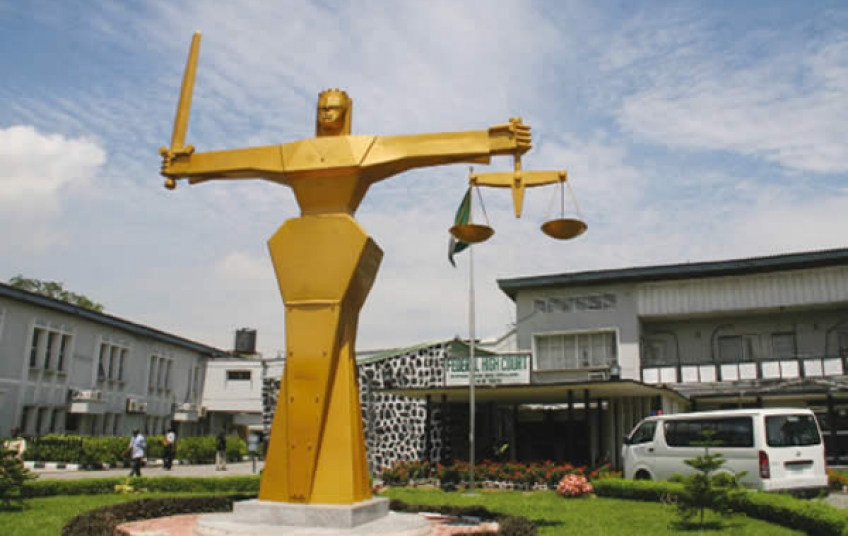
The Federal High Court in Abuja on Friday ordered the proscription of the Shiites’ movement as protests by the Islamic organisation rock Abuja.

Saturday PUNCH reports that Justice Nkeonye Maha issued the order in a ruling in which  she also designated the activities of the Shiite organisation in any part of Nigeria “as acts of terrorism and illegality.”

The court restrained “any person or group of persons” from participating in any form of activities involving or concerning the IMN “under any name or platform” in Nigeria.

To complete the process of the proscription of the group, the court ordered the Attorney-General of the Federation “to publish the order proscribing the respondent (Islamic Movement in Nigeria) in the official gazette and two national dailies.”

The judge gave the order following an ex parte application by the Federal Government.

A copy of the ex parte application marked FHC/ABJ/CS/876/2019 which was sighted by Saturday PUNCH on Friday, was filed in the name of the ‘Attorney-General of the Federation.’

Justice Maha granted the four prayers contained in the application shortly after the Solicitor-General of the Federation and Permanent Secretary, Federal Ministry of Justice, Mr Dayo Apata, argued the application on Friday.

The IMN was the sole respondent to the application but the group was not represented by a lawyer on Friday since it was an ex parte hearing.

Ruling on Friday, the court made “a declaration that the activities of the respondent (Islamic Movement in Nigeria) in any part of Nigeria amounts to acts of terrorism and illegality.”

The court said, “An order of this honourable court proscribing the existence and activities of the respondent (Islamic Movement in Nigeria) in any part of Nigeria, under whatever form or guise either in groups or as individuals by whatever names they are called.

“An order restraining any person or group of persons from participating in any manner whatsoever in any form of activities involving or concerning the prosecution of the collective intention or otherwise of the respondent (Islamic Movement in Nigeria) under any other name or platform howsoever called or described in any part of Nigeria.

“An order directing the applicant (the AGF) to publish the order proscribing the respondent (Islamic Movement in Nigeria) in the official gazette and two national dailies.”

The Federal Government had filed the application before the court on Thursday, barely 72 hours after a protest by members of the group in Abuja led to a bloody clash between them and the police.

The Deputy Commissioner of Police in charge of Operations, Federal Capital Territory Command, Usman  Umar, and a Channels Television journalist, Precious Owolabi, died in the clash with many others injured and property destroyed.

The Shiites have for over two years been regularly taking to the streets particularly in Abuja to demand the release of their leader, Sheikh Ibrahim El-Zakzaky, and his wife, Zeenat.

The couple has been in the custody of the Department of State Services since December 2015 after a bloody clash between members of the group and soldiers in the convoy of the Chief of Army Staff, Lt.-Gen. Tukur Buratai, in Zaria, Kaduna State.

In the application for the proscription of the group, the Federal Government accused the group of carrying out coordinated violent protests in the country.

It alleged that the “aggressive activities” of members of the group had led to the loss of lives and destruction of private and public property in the Federal Capital Territory and other cities in northern Nigeria.

The Assistant Commissioner of Police in charge of Operations in the FCT Command, Nyinnaya Adiogu, who deposed to the affidavit filed in support of the application, also alleged that the Shiites engaged in series of illegal activities,  “which are inimical to the corporate interest of the Federal Republic of Nigeria.”

Such activities, according to Adiogu, who said he was briefed by the Inspector-General of Police and the Solicitor-General of the Federation included setting up of a para-military guard called ‘HURRAS’.

The group was also accused of “nefarious activities”, murder, attacks on security agents and provocative preaching and hate speeches while working towards an agenda of creating an Islamic State in Nigeria.

The Punch

Continue Reading
Advertisement


Click to comment

Leave a Reply

Your email address will not be published. Required fields are marked *

Headlines

Tinubu Orders Arrest, Suspension of Three Perm Secs As ICPC Uncovers Another Fake Govt Agency

Published

on

President Bola Tinubu on Friday ordered the immediate arrest and suspension of three federal Permanent Secretaries over their alleged involvement in the operation of another fake agency uncovered by the Independent Corrupt Practices and Other Related Offences Commission (ICPC).

ICPC Chairman, Dr Musa Adamu Aliyu, who disclosed this to newsmen after briefing President Tinubu on the latest findings from the commission’s ongoing investigation into fictitious agencies and weaknesses in public sector processes named the affected Permanent Secretaries to include M S Danjuma, Engr Nadungu Gagare, and Richard Pheelangwah.

The Commision’s latest discovery is coming barely few weeks after exposing the fictitious Presidential Foreign Intervention Promotion Council (PFIPC).

According to Aliyu, the newly uncovered entity, operating as National Brands Development and Made-in-Nigeria Special Project Office, had allegedly secured office accommodation within the premises of the Office of the Secretary to the Government of the Federation (OSGF) without authorisation from the President.

The discovery, he said, was made during the broader investigation into the PFIPC, which President Tinubu had directed the ICPC to undertake.

The fake agency, according to ICPC boss, was promoted by Prince George Buchi Nwabueze, who allegedly operated under several variations of his name, including George Nathan Nwabueze, Honourable George Buchi Nwabueze, Prince George Buchi Nwabueze and George Buchi Nwabueze.

Aliyu disclosed that the commission was engaging relevant officials in the Office of the Secretary to the Government of the Federation to establish how the purported agency came to operate from government premises and to obtain other vital information required for the investigation.
“I have briefed Mr President comprehensively on these new developments. ICPC will continue with its investigation,” he said.

Following the fresh findings, Aliyu said President Tinubu had directed the immediate arrest of Prince George Buchi Nwabueze, as well as the immediate suspension of the three named permanent secretaries.

The commission is expected to establish the roles played by the suspended officials and other individuals in the emergence and operation of the purported agency.

Aliyu said the latest discovery underscored the need for tighter controls and greater scrutiny of government institutions and internal administrative processes.

He commended President Tinubu for ordering a wider policy audit of federal agencies and government processes, describing the initiative as a proactive measure to strengthen the governance system.

His said: “President Bola Tinubu must be commended for the proactive step of directing the policy audit of MDAs and internal government processes towards strengthening government governance system.”

The latest development has widened the scope of the ICPC’s investigation into the proliferation of fictitious government entities and alleged exploitation of official structures by individuals seeking to create the impression of government authority.
The commission’s investigation into the PFIPC was initiated after the purported agency came under scrutiny, with the President subsequently directing the ICPC to unravel those behind its operations and determine whether public officials facilitated its activities.

With the discovery of another purported agency operating from government premises, the ICPC probe is now expected to examine broader institutional weaknesses that may have enabled unauthorised entities to gain access to federal government facilities and present themselves as legitimate government bodies.

Continue Reading

Headlines

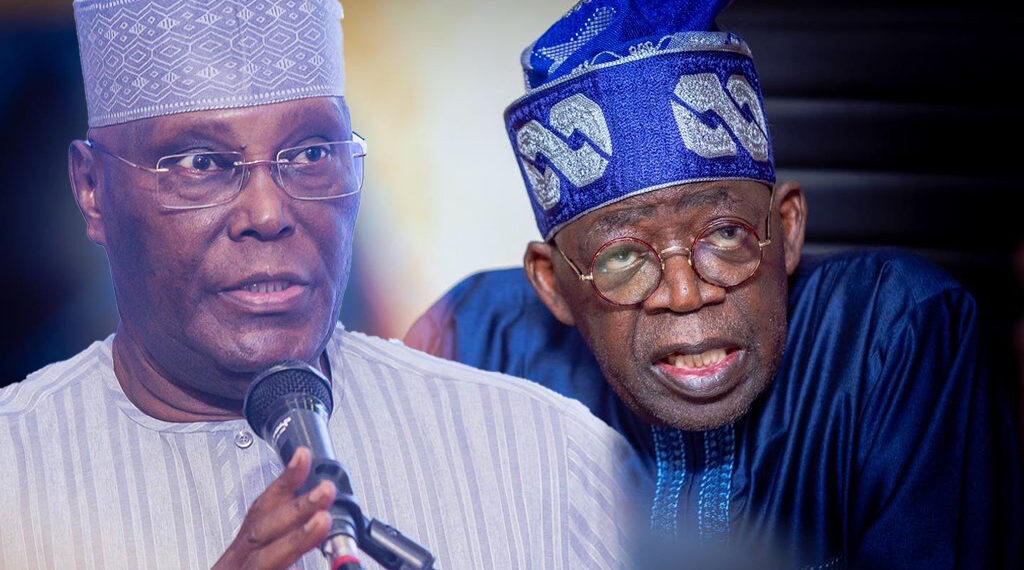
2027: Atiku Promises to Restore Fuel Subsidy If Elected President

Published

on

The African Democratic Congress (ADC) presidential candidate, Atiku Abubakar, has promised to restore the petrol subsidy if he wins the 2027 presidential election.

Atiku made the pledge during an interview on Wednesday while questioning the use of funds he said were saved following the removal of the subsidy.

He said the policy could have been beneficial to Nigerians if the savings had been properly accounted for and invested in areas such as poverty reduction and education.

“I did not oppose the removal of the oil subsidy, but where is the money? Where did it go? It was intended to reduce poverty and help children attend school. Where is the money now? It seems they are just stealing it,” Atiku said in Hausa.

“If elected, I will bring back the oil subsidy, and whoever stole the money must refund it.”

The former vice president said he would also consider the removal of the subsidy if the funds generated from the policy were transparently used to address the country’s development challenges.

“The government successfully removed the subsidy, but we do not know where the money went. If they had used the money for development, to solve security problems, for education, and to create opportunities for the youth, it would be different. If elected, I can remove the subsidy and use the money to do all these properly.”

President Bola Tinubu announced the removal of the petrol subsidy during his inaugural address on May 29, 2023, before assuming office.

Continue Reading

Headlines

I’m Not Afraid of Anybody, Cardinal Onaiyekan Replies Presidency

Published

on

The Catholic Archbishop Emeritus of Abuja, Cardinal John Onaiyekan, has fired back at the Presidency over its criticism of his public account of a meeting between Catholic bishops and President Bola Tinubu, declaring that he did not appear on national television to please the government and was not afraid of anyone.

The 82-year-old cleric said he appeared on Arise News to tell Nigerians what he believed was the truth about the issues discussed during the bishops’ engagement with the President, insisting that neither his age nor criticism from government officials would silence him.

Onaiyekan spoke in a video shared by Symfoni TV on Wednesday, weeks after the Presidency criticised his decision to publicly disclose aspects of the meeting between the Catholic Bishops’ Conference of Nigeria (CBCN) and Tinubu.

“I didn’t go to Arise to please the government, or to just please people, but to tell the truth. That’s all I stand for,” Onaiyekan said.

He also dismissed attacks against him on social media, saying he had no reason to engage those criticising him because other Nigerians had already responded on his behalf.

“I don’t have to respond to those attacking me on social media because other Nigerians have spoken on my behalf,” he said.

The cleric went further, declaring that he was not concerned about the possibility of being embarrassed or intimidated because of his advanced age.

“I cannot be embarrassed. I’m 82 years old; nobody can embarrass me. And I’m not afraid of anybody. Nobody, at this stage now, are they going to arrest me, carry me to where?” he declared.

Senior Special Assistant to President Bola Tinubu on Media and Publicity, Temitope Ajayi, who said his criticism of Cardinal John Onaiyekan was not intended to disrespect the cleric.

The controversy that followed a July 28 meeting between Tinubu and a delegation of the CBCN at the State House, Abuja.

The delegation was led by the CBCN President, Archbishop Matthew Man-Oso Ndagoso of Kaduna, and included Onaiyekan, Cardinal Peter Okpaleke, Bishop Matthew Kukah of Sokoto and other senior Catholic clerics.

During the meeting, the bishops raised a number of issues concerning the state of the nation, including economic hardship, insecurity, democracy, preparations for the 2027 elections, religious freedom and the return of mission schools.

Three days later, Onaiyekan appeared on Arise News and publicly recounted aspects of the engagement while speaking about the concerns expressed by the Catholic leadership over the condition of the country.

His comments subsequently attracted criticism from the Presidency. The President’s Senior Special Assistant on Media and Publicity, Temitope Ajayi, criticised the disclosure of details from the meeting, describing the engagement as a private interaction.

The Presidency’s reaction sparked a debate over the extent to which details of engagements between government and religious leaders should remain confidential, particularly when the discussions concern matters of public interest.

Onaiyekan, however, has maintained that his intervention was neither personal nor intended to embarrass the government. The cleric rejected any suggestion that he had presented a personal opinion during his television appearance.

According to him, the issues he discussed reflected the collective position of the Catholic bishops who participated in the engagement with the President.

“No, mind you, I didn’t talk on my own now. I spoke on behalf of my fellow bishops,” he said.

Onaiyekan disclosed that the bishops had prepared a joint statement containing the issues he subsequently discussed during the television interview.

“We drafted a statement which contained all that I said in the interview. So, all the bishops of Nigeria spoke that way. It was their voice I was echoing,” he stated.

Onaiyekan also emphasised that Catholic bishops remained entitled to speak within their respective dioceses about issues affecting Nigerians.

“I cannot speak on behalf of other religious leaders. Everybody has their own job to do, but many of the other religious leaders have supported us,” Onaiyekan said.

Onaiyekan also broadened his comments beyond the dispute with the Presidency, stressing that the economic difficulties confronting Nigerians could not be dismissed as a disagreement between the government and religious leaders.

He said the widespread poverty and suffering in the country affected everyone.

“When it comes to what is happening to Nigeria, the poverty, the suffering, we are all in the same boat now, abi?” he asked.

The cleric urged Nigerians not to take the country’s remaining space for public criticism and expression for granted.

“And we are still lucky in this Nigeria that we can still talk. We shouldn’t take that for granted. There are many countries in Africa where no bishop dares to talk like we do here,” he said

Meanwhile, Ajayi has sought to draw a line under the controversy, saying his earlier response to Onaiyekan was not intended to disrespect the Catholic cleric or the church.

Ajayi made the clarification during an interview on Arise TV on Thursday, days after criticising Onaiyekan for publicly discussing the details of the closed-door meeting between Tinubu and the CBCN.

The presidential aide said the matter had been resolved and insisted that there was no intention to disparage the respected cleric.

“Well, I think that episode has been closed. Cardinal Onaiyekan is a respected clergy and a statement in his own right,” Ajayi said.

He explained that his intervention was aimed at providing a different interpretation of the account given by the cardinal, rather than questioning his standing in the church or wider society.

“My response to him did not in any way disrespect him or disrespect his standing in the society and the church. He’s one of the leaders of the faith,” Ajayi said, adding that he only sought to offer another perspective on the account of the meeting between the bishops and the President.

“I only tried to provide a different perspective from his own account of the bishop’s encounter with the president, and I think that point has been made. And I think it’s not something we really want to dwell further on,” he said.

Continue Reading