
Headlines
COVID-19: 60 Million People Likely to Go into Extreme Poverty – World Bank


- /home/rhoncare/pointblank.ng/wp-content/plugins/mvp-social-buttons/mvp-social-buttons.php on line 27
https://pointblank.ng/wp-content/uploads/2020/01/World-Bank.jpg&description=COVID-19: 60 Million People Likely to Go into Extreme Poverty – World Bank', 'pinterestShare', 'width=750,height=350'); return false;" title="Pin This Post">
- Share
- Tweet /home/rhoncare/pointblank.ng/wp-content/plugins/mvp-social-buttons/mvp-social-buttons.php on line 69
https://pointblank.ng/wp-content/uploads/2020/01/World-Bank.jpg&description=COVID-19: 60 Million People Likely to Go into Extreme Poverty – World Bank', 'pinterestShare', 'width=750,height=350'); return false;" title="Pin This Post">
The World Bank Group has again raised an alarm that the growing impact of the coronavirus pandemic on the global economy and shutdown of many advanced economies could push as many as 60 million people into extreme poverty.
The World Bank Group President, David Malpass, said the situation erases much of the recent progress recorded in poverty alleviation around the world.
He said these prospects were what compelled the World Bank Group to move swiftly and decisively to establish emergency response mechanisms that allow donor groups and organisations to rapidly expand help programmes in 100 countries, home to 70 per cent of the world’s population.
To return to the path of global economic growth, Mr Malpass said the group’s goal must be rapid and flexible to tackle the health emergency.
He said the objective must also be to provide cash and other expandable support to protect the poor, maintain the private sector, and strengthen economic resilience and recovery.
Since March, the World Bank said, it delivered record levels of support to help countries protect the poor and vulnerable, reinforce health systems, maintain the private sector and bolster economic recovery.
“This assistance, the largest and fastest crisis response in the Bank Group’s history marks a milestone in implementing the Bank Group’s pledge to make available $160 billion in grants and financial support over a 15-month period to help developing countries respond to the health, social and economic impacts of COVID-19 and the economic shutdown in advanced countries,” it said on Tuesday.
Of the 100 countries, 39 are in Sub-Saharan Africa, with nearly one-third of the total projects located in fragile and conflict-affected situations, such as Afghanistan, Chad, Haiti, and Niger.
The group said the International Finance Corporation (IFC) and the Multilateral Investment Guarantee Agency (MIGA) have also fast-tracked support to businesses in developing countries, including trade finance and working capital to maintain private sectors, jobs and livelihoods.
Mr Malpass said the group’s support through grants, loans and equity investments would be supplemented by the suspension of bilateral debt service, as endorsed by the bank’s governors.
The eligible countries for International Development Agencies (IDA) that request a forbearance on their official bilateral debt payments, the World Bank President said, would have more financial resources to respond to the COVID-19 pandemic and fund critical, life-saving emergency responses.
“The bilateral debt-service suspension being offered will free up crucial resources for IDA countries to fund emergency responses to COVID-19,” Mr Malpass said.
“Nations should move quickly to substantially increase the transparency of all their governments’ financial commitments. This will increase the confidence in the investment climate and encourage more beneficial debt and investment in the future.”
The group’s operations in 100 countries aim to save lives, protect livelihoods, build resilience, and boost recovery by strengthening health systems, monitoring and prevention, particularly in low-income countries and in fragile and conflict-affected situations.
The health response programmes address emergency containment and mitigation needs for COVID-19, including strengthening countries’ health systems to treat severe cases and save lives.
The group also establishes and supports efforts in fragile and conflict-affected situations as a priority, given the rapidly growing number of cases in some of these countries.
The World Bank President said disbursement of financial supports are already ongoing to Senegal ($20 million) and Ghana ($35 million) including funding to strengthen disease surveillance systems, public health laboratories, and epidemiological capacity for early detection.
Again, the bank is also leveraging countries’ existing social protection systems to help families and businesses restore income, preserve livelihoods, and compensate for increasing prices and unexpected medical expenses.
These safety nets are needed to augment with safe, direct food distribution, accompanied by key information on nutrition, social distancing, and hygiene.
Premium Times



President Bola Tinubu has expressed sadness over the death of Ambassador Patrick Dele Cole, describing him as a distinguished diplomat, journalist, politician and public servant.
Cole died at 86.
In a statement on Saturday, Tinubu said Cole devoted his life to national service and brought distinction to his work in diplomacy, journalism and politics.
“His career reflected the enduring value of dialogue, tact, mutual respect and the pursuit of shared interests in advancing national development and international cooperation,” the President said.
Tinubu noted Cole’s contributions to Nigeria’s media landscape, particularly as Managing Director of the Daily Times, where he upheld the role of the press in holding public officials accountable, speaking truth to power and strengthening democratic governance.
“His legacy in journalism and public life remains an enduring part of our national story,” he said.
The President said at 86, Cole witnessed defining moments in Nigeria’s history and contributed to national development, adding that his life stands as a testament to experience, principled engagement and commitment to public good.
Tinubu extended condolences to Cole’s family, friends, professional associates and all whose lives he touched, praying that memories of his remarkable life will bring comfort and strength.
“May Almighty God grant Ambassador Cole eternal rest and give his family and all who mourn him the fortitude to bear this profound loss,” he said.

Director-General of the World Trade Organisation (WTO), Mrs. Ngozi Okonjo-Iweala, has said that her probe of an alleged $2.4bn subsidy fraud led to the abduction of her mother.
It would be recalled that the former Finance Minister’s mother, Kamene Okonjo, was kidnapped from her home in Ogwashi-Uku, Delta State, in December 2012.
In a recent interview with Bloomberg, Okonjo-Iweala said the abductors demanded that she resign as minister of finance and leave the country.
The WTO director-general served as Nigeria’s finance minister between 2011 and 2015 under former President Goodluck Jonathan.
She said the subsidy investigation began after her office noticed a sharp increase in claims submitted by petrol importers.
“So I went to the president and said, look, something is going on here. Could we audit the accounts? And he said, yes, go ahead. And we found about $2.4 billion worth of fraud. So, we refused to pay,” she recounted.
She said her mother was abducted shortly after the decision was announced, adding that her captors demanded her resignation as a condition for her release.
“I was told (by the kidnappers) that for her to be released, I should resign and leave the country,” she said.
The former minister described the incident as one of the most traumatic experiences of her life, saying her mother was held in a forest before escaping.
“She was held in the middle of a forest, and one night she escaped. She’s still alive. She’s 96 now,” Okonjo-Iweala said.
“It was a terrible, terrible five-day ordeal. I think the worst in my life.”
“I never dreamt my parents could ever be touched in this way, that people would be that evil,” she added.
Okonjo-Iweala said she considered resigning before her mother regained her freedom, but her father warned her against giving in to the abductors’ demands.
“He said, ‘We don’t give in to blackmail’. And he said, ‘You’ve got to carry on. You’ve got to go to work’,” she recalled.
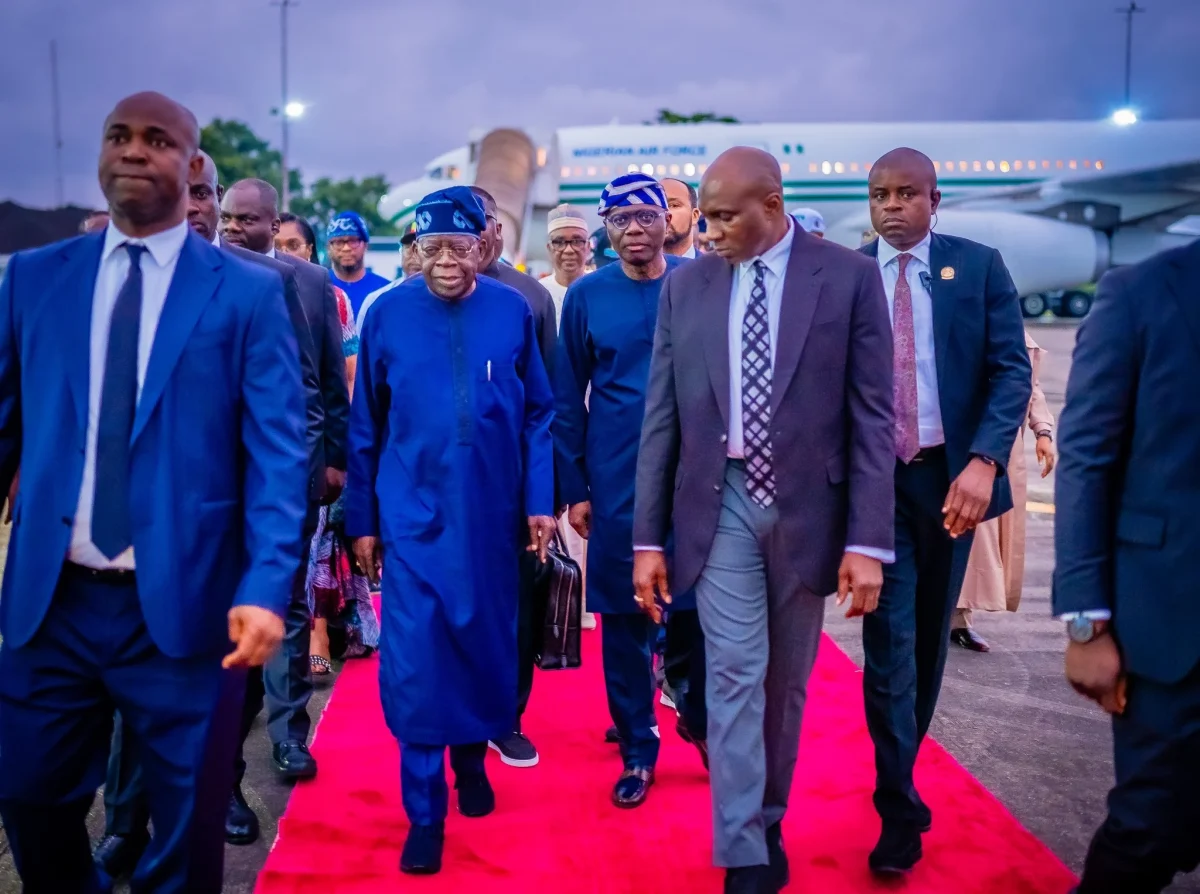
President Bola Tinubu has told members of the All Progressives Congress (APC) Presidential Campaign Council not to expect him to accompany them to every campaign event ahead of the 2027 general election, saying he must remain focused on governance and the country’s economic responsibilities.
Tinubu spoke on Wednesday during the inauguration of the APC Presidential Campaign Council in Abuja, where he urged members to take the party’s message to Nigerians across the states and local government areas while he continues to attend to matters of governance.
The president said he agreed with concerns that the demands of the campaign should not distract him from running the country, adding that Nigeria needs his attention at the moment.
“You’ve warned me not to allow the rigour of the campaign to distract me from governance, I hear you. I am in full agreement with your decision. Nigeria needs more attention now,” Tinubu said.
He told council members to excuse him from accompanying them to every campaign event, noting that his administration has bills to pay and international financial obligations to meet.
“So, you will excuse me from going everywhere with you, we have bills to pay. The American creditors cannot wait,” the President said.
Tinubu also said the government needs to attract investors who would commit to long-term investments in Nigeria and contribute to the future of the country’s children.
“We want those investors to come in, be here to stay, to invest for the future of our children,” he said.
The president, however, assured Nigerians that he would continue to engage them directly even as the campaign council took charge of mobilisation across the country.
“However, I will still make time to speak directly with Nigerians, even as you lead the campaign in the states and local government areas,” he said.
Tinubu described the inauguration of the council as more than a campaign activity, saying it represents a renewed commitment to Nigerians and the responsibilities of the ruling party.
“We have not gathered merely to inaugurate a council. We have gathered to renew a covenant. A covenant with Nigerian people and the historic responsibility they have entrusted to us as Nigeria’s governing party,” he said.
He added that the council is expected to communicate the administration’s vision, achievements and agenda to voters nationwide.
“This council will carry our vision, our records and our agenda to every Nigerian, and it will carry them to victory every ward of this country,” Tinubu said.
The president also commended APC members for completing the party’s congresses, recalling that some had predicted internal crises during the process.
He said the party has overcome the challenges and emerged united, crediting members for participating in the process from the ward level to the national leadership.
“They said there will be implosion. We passed through it. We did not fail. You didn’t let us down. We got here together,” he said.


