
Uncategorized
COVID-19: Nigeria Reports 64 New Cases, Total 1,337


- /home/rhoncare/pointblank.ng/wp-content/plugins/mvp-social-buttons/mvp-social-buttons.php on line 27
https://pointblank.ng/wp-content/uploads/2020/01/1800x1200_coronavirus_1-1000x600.jpg&description=COVID-19: Nigeria Reports 64 New Cases, Total 1,337', 'pinterestShare', 'width=750,height=350'); return false;" title="Pin This Post">
- Share
- Tweet /home/rhoncare/pointblank.ng/wp-content/plugins/mvp-social-buttons/mvp-social-buttons.php on line 69
https://pointblank.ng/wp-content/uploads/2020/01/1800x1200_coronavirus_1-1000x600.jpg&description=COVID-19: Nigeria Reports 64 New Cases, Total 1,337', 'pinterestShare', 'width=750,height=350'); return false;" title="Pin This Post">
Nigeria’s tally of confirmed COVID-19 cases rose to 1,337 on Monday, from 1, 273 reported on Sunday evening by the Nigeria Centre for Disease Control (NCDC).
The agency in a tweet Monday night said 64 new cases were reported in five states. These are Lagos, Federal Capital Territory (FCT), Borno, Taraba and Gombe.
It is the second day the number of confirmed cases would fall in the country.
Also, additional 16 people recovered from the disease were discharged on Monday.
The figure was released hours after President Muhammadu Buhari addressed the country on the new measures the government intends to adopt in containing the spread of the virus.
A breakdown of the latest update shows that 34 of the new cases were reported in Lagos, 15 in FCT, Borno – 11, while Taraba and Gombe have two apiece.
Lagos remains the epicentre for the outbreak in Nigeria.
NCDC said one case previously reported as a Lagos State case, is now reported as an FCT case. The total number of confirmed cases in Lagos is now at 764 and there are 157 in Abuja, the FCT.
Kano State has not reported any case in the past five days as testing was was discontinued there last week.
On Thursday, the health minister, Osagie Ehanire, said the Kano centre was temporarily closed because some staff of the laboratory were infected with COVID-19. He also comfirmed the centre ran short of some testing reagents.
The NCDC said as of 11:30 pm. April 27, there were 1,337 confirmed cases of COVID-19 reported in Nigeria. Of these, 255 infected people have recovered and have been discharged and 40 deaths have been recorded in 32 states and the FCT.
A breakdown of all the cases shows that Lagos State has so far reported 764 cases, followed by FCT – 157, Kano – 77, Borno – 41, Gombe – 37, Ogun – 35, Osun – 34, Katsina – 30, Edo – 25, Oyo -21, Kaduna – 15, Akwa Ibom – 12, Bauchi – 14, Kwara – 11, Sokoto – 10, Ekiti, Taraba and Ondo – 8, Delta – 6, Rivers – 6, Jigawa – 2, Enugu – 2, Niger – 2, Abia – 2, Zamfara – 2,. Benue, Anambra, Adamawa, Plateau, Bayelsa, Ebonyi, Kebbi and Imo have one case each.


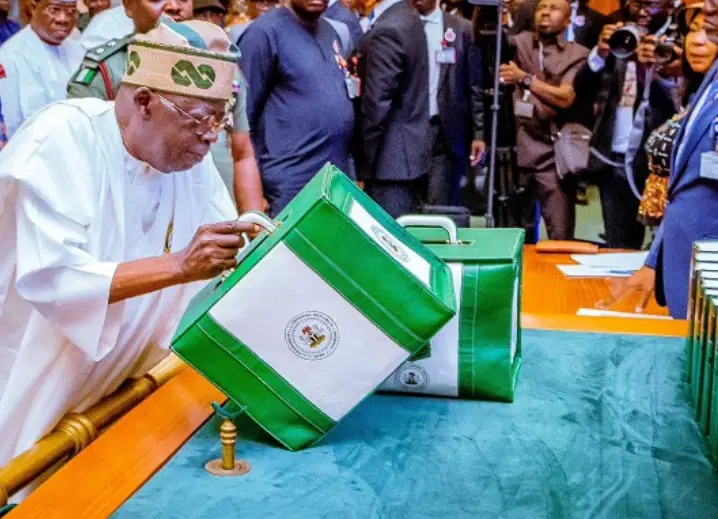
The Presidency has acknowledged, albeit inadvertently, that more Nigerians have been pushed into poverty under the administration of President Bola Tinubu, but said the situation is a consequence of the reforms being implemented by government.
The Presidency also faulted a report by The Economist on Nigerians’ dissatisfaction with Tinubu’s performance, describing it as watery and lacking substance.
On October 1, The Economist said President Tinubu might win the forthcoming 2027 polls despite public discontent.
The report, titled: ‘Nigerians dislike their president, but may re-elect him anyway’, identified a worsening security crisis, the biting effects of the economic reforms and popular political challengers as factors that could work against the president’s re-election bid.
Reacting to the report on Politics Today, a Channels TV programme on Wednesday, Special Adviser to President Tinubu on Policy Communication, Daniel Bwala, questioned the research methodology of the report.
Bwala said: “Let me say that The Economist’s theory, as published, is watery. It doesn’t have the substance. If you want to write an opinion piece, and especially when you want to rely on data, you want to make a claim on the data, the first thing you should do is to conduct a survey. There would be some people who don’t like him (Tinubu), but there are others who like him.
“In other words, in democracy you have to allow the two voices to speak. When you make a claim that Nigerians don’t like him (Tinubu) without also saying that there are a lot of people, for example, one million families whose children have benefited from Nigerian Education Loan Fund, NELFund, do you think they hate him? If you look at the agricultural sector in Nigeria, the kind of incentive and benefit they got, do you think they hate him? What about the incentive for the manufacturers in production?”
Asked whether more people had been thrown into poverty by the current administration, he said: “Do you know why? It is simply because we took a reform. There is no part of the world where reform comes with convenience. The population is 230 million, already at some stage of poverty. But we can’t make any progress until reform is carried out. None of the presidents that came before this president had the courage to do it because of fear.
“But the president said we can’t make any progress. So, he took that reform. Please let it be clear, even to the opposition. The reason why you have this number of poor people, and some of these doomsday analyses that people are giving, is because we undertook a reform. There is no part of the world where you start a reform like that, and there will not be discomfort. More people went down to poverty. I acknowledge it, I’m not doubting. But, there is a but to it. Since the reform started till today, we have made marked progress, which is what we have spent the last three years doing.”
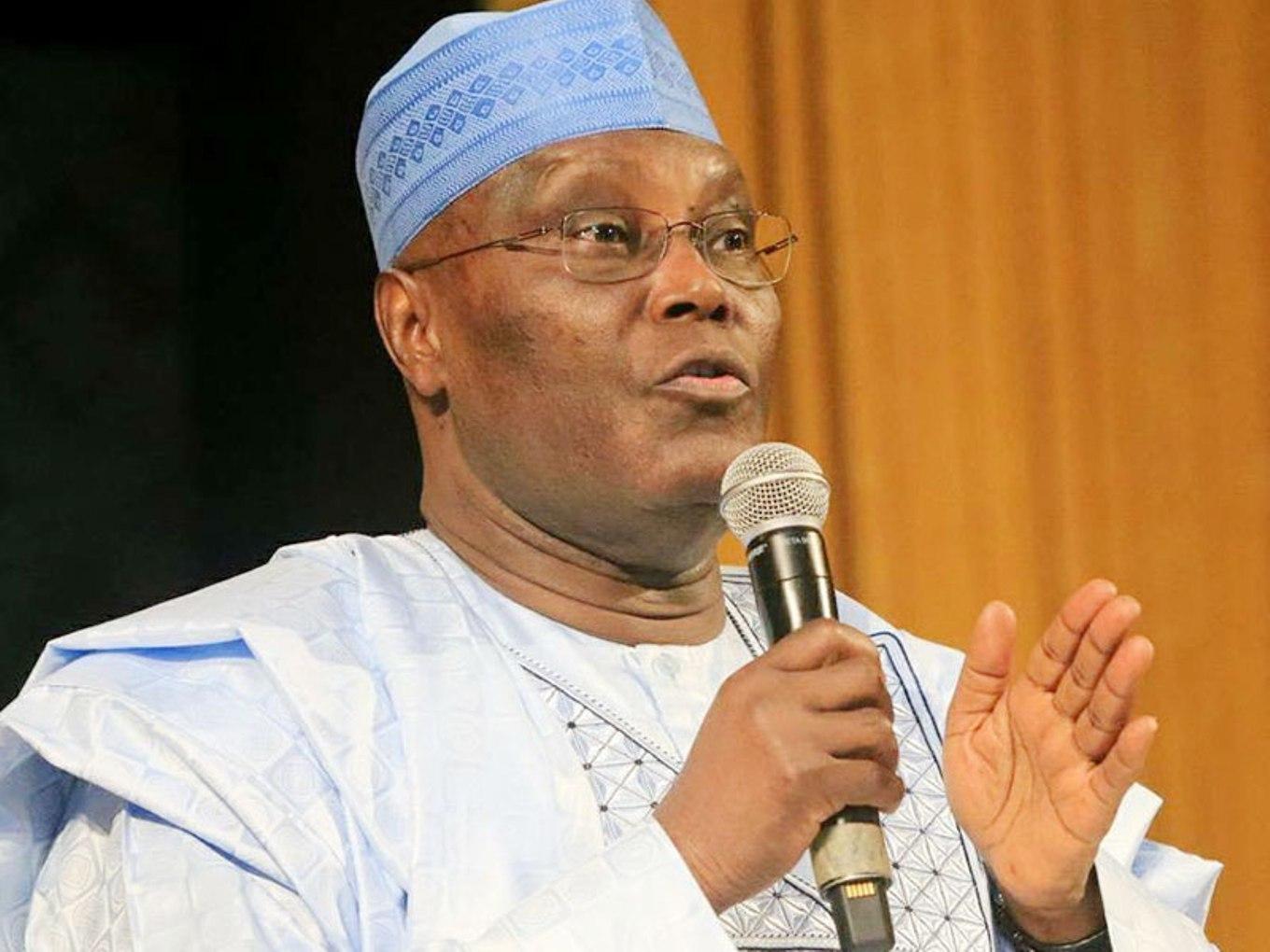
Former Vice President and ADC presidential candidate Atiku Abubakar has accused President Bola Tinubu of presiding over a collapse in agricultural export earnings while farmers struggle with insecurity and manufacturers confront punishing production costs. He said an administration that promised to build a productive economy has left Nigeria selling crops abroad without capturing enough of the processing jobs and value they can generate at home.
“Tinubu cannot call this reform when the people who grow our food and the businesses that should process it are being squeezed from both sides,” Atiku said.
In a statement issued by Phrank Shaibu, Director of Strategic Communication of the ADC Presidential Campaign Council, Atiku said the trade figures expose the scale of the failure. Nigeria’s agricultural trade swung from a ₦740.27 billion surplus in the first half of 2025 to a ₦56.13 billion deficit in the first half of 2026—a ₦796.40 billion reversal in one year. Agricultural exports fell by 33.3 per cent, far faster than imports, which also declined.
“The excuse that Nigerians simply imported too much will not stand. Tinubu’s government must answer for the collapse in what Nigeria sold to the world. The country is losing export earnings, and the President owes farmers, workers and businesses more than another speech about prosperity.
“What has his administration done to make it safer to farm, cheaper to move produce, easier to keep a processing plant running or more profitable to sell a finished Nigerian product abroad? Farmers cannot cultivate promises. Manufacturers cannot power factories with speeches. Workers cannot feed their families on assurances that prosperity is coming.”
Atiku said Nigeria’s leading agricultural exports still include cashew nuts in shell and cocoa beans, illustrating the value the country could retain by expanding domestic processing.
“We grow the crop. Someone else does more of the processing, builds a business around it and earns the larger return. Then Tinubu speaks of jobs while Nigerian factories struggle to compete. He has made production expensive and called the resulting hardship reform.
“A trade deficit alone does not explain every problem on our farms. But after more than three years in office, the President owns the decisions that have left farmers exposed and producers burdened. He cannot claim credit for every favourable statistic and disown a ₦796.40 billion reversal when the figures turn against him.”
Atiku said his proposed production subsidy for petroleum products refined in Nigeria follows the same principle: keep more production, work and value at home. The support would cover qualifying products from Nigerian refineries, including modular refineries. Imported products would not qualify. It would be capped, budgeted and independently audited, with measures to track whether savings reach consumers and businesses.
He said the Tinubu administration’s CNG initiative had failed abysmally as a relief measure: the cost of converting vehicles is beyond the reach of many poor Nigerians, conversion kits are difficult to access, and the buses presented as palliatives remain unavailable to many of the people who need them.
“Local refining is about more than the price at the petrol pump. Aviation fuel affects fares. LPG affects the cost of cooking. Petroleum products and feedstocks affect industries and the people they employ. Nigerians need practical relief they can actually access—not schemes whose costs and shortages put the promised benefits out of reach. The value of our resources must reach Nigerians beyond the refinery gate.
“My administration will begin restoring a transparent production subsidy from Day One. We will back farmers and processors with the same determination. Grow it here. Process it here. Refine it here. Create the jobs here. Make life affordable here.
“Tinubu’s record is becoming painfully clear: Nigeria supplies raw crops and crude oil while Nigerians pay dearly for finished goods. A government that cannot turn our resources into affordable products and decent jobs has failed the people it was elected to serve.”
Uncategorized
FBN vs GHL: Supreme Court Voids Appeal Court Judgment, Orders Immediate Handover of FPSO Tamara Tokoni Crude Oil to General Hydrocarbons
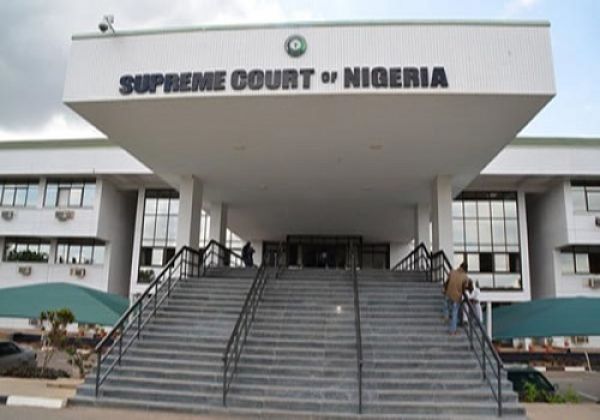
The long drawn legal tussle between FirstBank of Nigeria Limited and General Hydrocarbons Limited over the ownership of the crude oil aboard the FPSO Tamara Tokoni, may have come to a conclusive end as the Supreme Court of Nigeria delivered its judgment.
The Apex Court, on Friday, ordered the Chief Registrar of the Court of Appeal and the Admiralty Marshal to immediately hand over the crude oil aboard the FPSO Tamara Tokoni to General Hydrocarbons Limited (GHL), bringing to an end a legal dispute over the asset.
In a unanimous judgment delivered by a five-member panel of justices, the apex court held that the suit instituted by First Bank of Nigeria (FBN) was contractual in nature and not an admiralty matter.
The court consequently ruled that both the Federal High Court and the Court of Appeal lacked the jurisdiction to entertain the case.
The Supreme Court accordingly allowed the appeal filed by General Hydrocarbons Limited and set aside the judgment of the Court of Appeal, describing it as perverse.
Justice Abiru, who read the lead judgment, announced the unanimous decision of the panel comprising Justices Uwani Aba-Aji, Salawa, Agim, Uwa and Abiru.


