
Headlines
COVID-19: Nigeria to Vaccinate 109m Citizens in Two Years – Official

- /home/rhoncare/pointblank.ng/wp-content/plugins/mvp-social-buttons/mvp-social-buttons.php on line 27
https://pointblank.ng/wp-content/uploads/2021/01/Coronvirus.jpg&description=COVID-19: Nigeria to Vaccinate 109m Citizens in Two Years – Official', 'pinterestShare', 'width=750,height=350'); return false;" title="Pin This Post">
- Share
- Tweet /home/rhoncare/pointblank.ng/wp-content/plugins/mvp-social-buttons/mvp-social-buttons.php on line 69
https://pointblank.ng/wp-content/uploads/2021/01/Coronvirus.jpg&description=COVID-19: Nigeria to Vaccinate 109m Citizens in Two Years – Official', 'pinterestShare', 'width=750,height=350'); return false;" title="Pin This Post">
The Nigerian government has disclosed plans to vaccinate approximately 109 million people against COVID-19 over a period of two years.
The Executive Director of the National Primary Health Care Development Agency (NPHCDA), Faisal Shuaib, while speaking at Monday’s weekly briefing of the Presidential Task Force (PTF) on COVID-19, said only those eligible will be vaccinated.
He said the federal government plans to vaccinate all eligible population from 18 years and above, including pregnant women.
He, however, said the decision to vaccinate any pregnant woman will be made in consultation with her healthcare provider.
He said there will be considerations of whether she is at high risk of contracting the COVID-19 virus or not, based on guidance from the Strategic Advisory Group of Experts on Immunization (SAGE).
“She is likely to be at high risk for example, if she is a frontline health worker, a support staff or a first responder in the different spheres of the security architecture of our country,” Mr Shuaib said.
“After excluding those that are under 18 years old, we plan to vaccinate approximately 109 million Nigerians that will be eligible for COVID-19 vaccination over the course of two years.”
The Nigerian government is expected to begin the roll-out of approved COVID-19 vaccines by the end of February.
The country is expecting an initial 16 million doses of the Oxford- AstraZeneca COVID-19 vaccines through the Vaccines Global Assess Facility (COVAX) by the end of February.
An additional 500,000 doses of the AstraZeneca vaccines donated by telecom giant, MTN, will also be delivered to the country by the end of February, the minister of health, Osagie Ehanire, said at the briefing.
Mr Ehanire said efforts are ongoing to ensure the effective roll-out of the COVID-19 vaccines when they finally arrive.
He said the Vaccine Coordination Committee has been inaugurated to address diverse issues peculiar to COVID-19 vaccine acquisition by Nigeria.
“Their function is to advise on coordinating access to acquisition and distribution of vaccines when available, and on our immunization strategy.”
Mr Shuaib explained that those eligible to receive the vaccines have been identified using the World Health Organization(WHO) vaccine allocation framework and prioritization roadmap, as well as data from the Nigeria Center for Disease Control (NCDC).
“They are the frontline healthcare workers, support staff; including those that work in high-risk areas such as point of entry workers, rapid response teams, contact tracing teams, COVID-19 vaccination teams and strategic leadership,” Mr Shuaib said.
“People aged 50 years and above, People aged 18 – 49 years with significant co-morbidities and additional at-risk groups.”
Mr Shuaib said the Technical Working Group has developed a strategy of pre-registration and scheduling the target population to avoid over-crowding at vaccination posts.
He said the strategy called the TEACH approach will harness all the benefits of traditional, electronic, assisted and concomitant house-to-house registration to optimize the use of innovative technology.
“The TEACH approach entails: T: Traditional method of vaccinating target populations using desk review of available data sources, identifying the vaccination sites and rolling out.
“E: Electronic self-registration for health workers and the public; a link which provides an online form will be provided. A: Assisted electronic registration
“C: Concomitant e-registration during walk in to fixed sites/health facilities. H: House-to-House registration using volunteers for additional push to rapidly increase the e-registration,” he said.
He noted that a URL link will be rolled out this week for healthcare workers, to register and schedule them for the COVID-19 vaccination.
He said plans are ongoing to train and empower health care workers on administering these vaccines.
He explained that his agency will engage additional personnel in a bid to achieve the coverage level desired and also to ensure best practices in vaccine handling and management.
“The plan is to train healthcare workers, supervisors and monitors at all levels in the next one to two weeks,” Mr Shuaib said.
Premium Times



Jude Bellingham scored a dramatic extra-time winner as England overcame an unfortunate Norway to reach the semi-finals of the 2026 World Cup.
Bellingham slid home the winning goal in the first half of extra time after a second Norway goal was ruled out by the VAR for an Erling Haaland foul.
Andreas Schjelderup had given Norway the lead, but Bellingham equalised with a brilliant finish — although England were fortunate the goal stood after the ball struck the Spidercam during the build-up.
England rode their luck at times but will now face either Switzerland or old rivals Argentina as they seek to reach the World Cup final for the first time since 1966.
New York Times
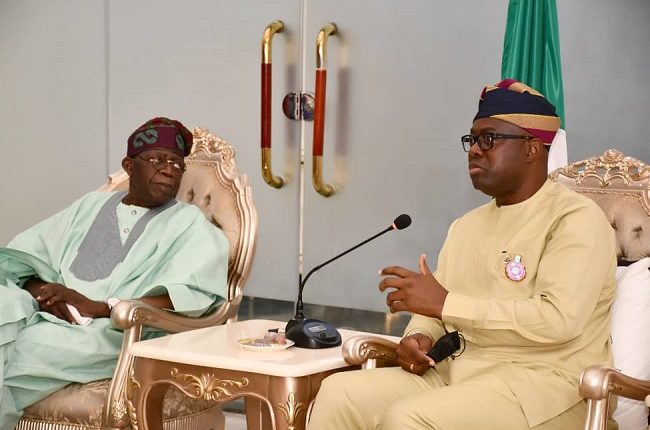
Oyo State Governor Seyi Makinde has expressed relief and joy over the release of the abducted schoolchildren and teachers in Oriire Local Government Area.
“It is such a big relief for all of us. Right now, I am overjoyed and can hardly say much,” the governor told Channels Television.
President Bola Tinubu has also expressed delight over the successful rescue of abducted children and teachers, commending the military, the DSS, and the Nigeria Police Force for ending their 56-day captivity.
The President said the security operation led to the arrest of eight suspected abductors while several others were neutralised, describing the outcome as a major relief for the victims, their families and the nation.
In a statement issued on Friday by his Special Adviser on Information and Strategy, Bayo Onanuga, Tinubu praised the security agencies for what he described as their tireless efforts in securing the victims’ release.
He also sympathised with the children, teachers and their families over the trauma they endured during the prolonged ordeal
The President further commended the Oyo State Government for its cooperation with the Federal Government throughout the rescue operation and urged the state to strengthen security around schools to prevent similar incidents.
President Tinubu also directed emergency response agencies to work with the Oyo State Government to provide the rescued children and teachers with all necessary medical care and relief support as they recover from the ordeal.
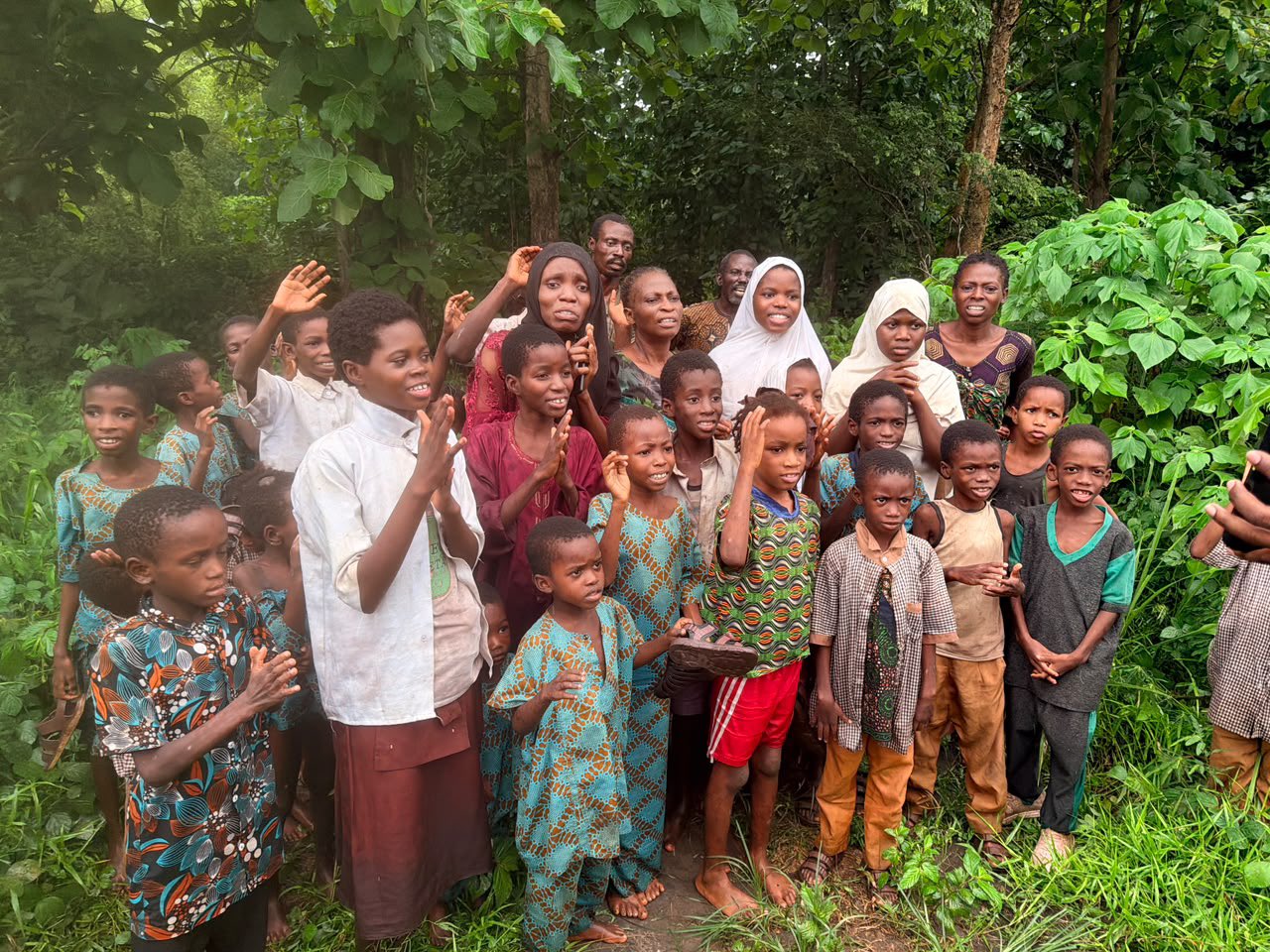
The schoolchildren and teachers kidnapped by suspected bandits in Oriire Local Government Area of Oyo State have been rescued after about 56 days in captivity.
According to a statement by presidential spokesperson, Bayo Onanuga, the victims were freed through the efforts of security agencies.
“Finally, all the kidnapped pupils and teachers in Oriire, Oyo State, have been rescued by our security agencies,” Onanuga said.
He disclosed that eight members of the kidnapping gang were arrested during the rescue operation and are now in the custody of the Department of State Services (DSS).
Onanuga said the rescue operation did not involve any exchange or concession to the kidnappers, noting that a notorious gang leader whose release had been demanded by the abductors remains in custody and is being prosecuted for his alleged crimes.
He added that security agencies would provide a full account of the operation soon.
“In the course of the rescue operation, eight of the kidnappers were arrested and are now in DSS custody, while some of them were neutralised. There was no quid pro quo in the rescue, as one of the terrorists, a kingpin whose release was demanded by the kidnappers, is being prosecuted for his atrocities. The security agencies will give full account soon,” he added.
In a video shared alongside the statement, a woman believed to be one of the rescued teachers was seen thanking President Bola Tinubu for securing their release. The schoolchildren were also seen eating biscuits and joining the teacher in chanting, “Thank you, sir,” at the end of her remarks.
“Hello sir, our father, we are grateful. Mr President, sir, we are grateful. We understand your commitment to our safety and we appreciate all you did for us. We could see your hand in this. Thank you very much. Every security operative tried so much, and that is why we are still alive today. We are very grateful to you. Thank you very much,” the teacher said.


