
News
COVID-19: Sample Collection by States Decline in August


- /home/rhoncare/pointblank.ng/wp-content/plugins/mvp-social-buttons/mvp-social-buttons.php on line 27
https://pointblank.ng/wp-content/uploads/2020/06/BOSS-MUSTAPHA-PTFCOVID19-960x600.jpg&description=COVID-19: Sample Collection by States Decline in August', 'pinterestShare', 'width=750,height=350'); return false;" title="Pin This Post">
- Share
- Tweet /home/rhoncare/pointblank.ng/wp-content/plugins/mvp-social-buttons/mvp-social-buttons.php on line 69
https://pointblank.ng/wp-content/uploads/2020/06/BOSS-MUSTAPHA-PTFCOVID19-960x600.jpg&description=COVID-19: Sample Collection by States Decline in August', 'pinterestShare', 'width=750,height=350'); return false;" title="Pin This Post">
The Nigeria Centre for Disease Control (NCDC) says sample collection for COVID-19 in the country declined in August.
A report made available to the News Agency of Nigeria (NAN) on Wednesday night by NCDC showed a decline in sample collection for six states from May to August.
The report indicated that all states analysed showed a significant decline in sample collection in August, with Federal Capital Territory (FCT) having the least sample collection.
“FCT had one of the leading COVID-19 testing performing locations in the country,’’ it said.
The public health agency noted that Plateau recently stepped up its testing.
“Plateau has the highest polymerase chain reaction (RT-PCR), laboratory capacity utilisation and operational efficiency in the country at the moment.’’
The NCDC said that Edo sample collection also declined significantly but appeared to be in recovery mode, as from July 8 to July 21.
The state collected 2,713 samples and from August 5 to 18, it collected 1,230 samples.
The agency stated that Lagos state accounted for 24 per cent of all COVID-19 tests in the country.
“Sample collection has declined significantly as data showed that from July 8 to July 21, a total of 22,714 samples were collected while 9,877 samples were collected from July 19 to September 1,’’ it said.
Oyo State had performed reasonably well in the past regarding COVID-19 testing but unfortunately, sample collection declined significantly of recent.
“Data from July 8 to July 21 showed 4,776 samples and July 19 to Sept. 1, showed 919 samples collected.
The health agency said that Kano State was a leading state for COVID-19 tests with five PCR laboratories and a low percentage of transmission.
“Kano accounts for over 10 per cent of all COVID-19 tests in the country.
“Unfortunately, the sample collection dropped significantly in August.
“July 8 to July 21 showed that 11,834 samples were collected while 1,364 samples were collected from July 19 to September 1.’’
Nigeria has been reporting fewer daily numbers of confirmed cases of Covid-19 in the past month.
NAN reports that on September 2, there were 216 new COVID-19 cases bringing the total number of reported cases to 54,463 in Nigeria.
A total of 42,438 patients have recovered and discharged while 1,027 deaths related to the virus were so far recorded.
(NAN)


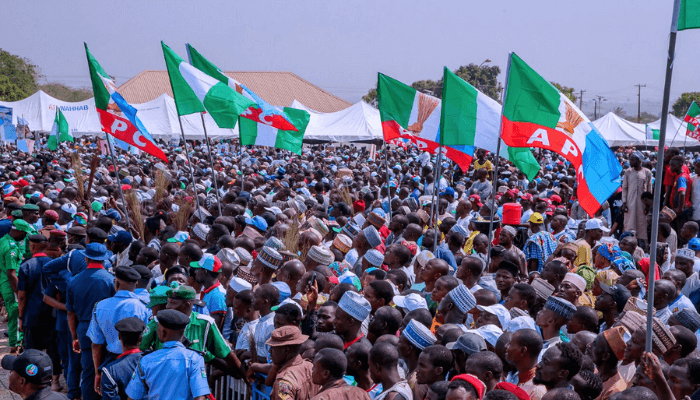
The African Democratic Congress Presidential Campaign Council (ADC-PCC) has described the All Progressives Congress (APC) Northwest zonal flag-off rally in Kaduna as a monumental disappointment, accusing the ruling party of relying on rented crowds, empty seats and recycled promises.
Reacting to the rally held at the Kaduna Township Stadium, the Director of Media and Publicity of the ADC-PCC, Kola Ologbondiyan, said an event intended to demonstrate the APC’s political strength across the Northwest had instead exposed what he described as the party’s declining public acceptance.
Ologbondiyan alleged that the APC mobilised people from the seven states of the Northwest and beyond, with payments reportedly ranging from ₦50,000 to ₦100,000 per person, yet the stadium, which he put at a capacity of 5,000, remained sparsely occupied.
“For a rally billed as the Northwest zonal flag-off, what we witnessed was a shameful spectacle. Despite the alleged mobilisation of crowds from across the zone and beyond, the stadium remained scantily filled, with empty seats everywhere,” he said.
He added that the turnout, which he described as disappointing, was compounded by what he called the unenthusiastic reception given to the speeches and messages of APC leaders.
The ADC-PCC Director also criticised President Bola Ahmed Tinubu’s reported commissioning of road projects at the event, describing the exercise as troubling and questioning the administration’s claims of performance.
Ologbondiyan further alleged that some attendees expressed dissatisfaction with the ruling party after leaving the stadium, chanting the Hausa phrase “Ba mu yi,” which he interpreted as a rejection of the APC and its policies.
“You can rent a crowd, but you cannot rent acceptance. Even if people attend a rally, that does not mean they have surrendered their convictions. The real test of public support is what Nigerians will decide at the ballot box,” he said.
The ADC-PCC accused the APC of returning to Kaduna with promises similar to those made during the 2015, 2019 and 2023 election cycles, arguing that the ruling party had failed to adequately account for its years in power.
It also faulted President Tinubu for, according to the council, shifting responsibility for the hardship facing Nigerians to opposition leaders rather than addressing the economic consequences of his administration’s policies.
Ologbondiyan particularly criticised the President’s position on fuel subsidy removal, which the ADC-PCC maintains has intensified the economic burden on households already struggling with rising living costs.
The council urged the APC to stop what it described as wasteful political jamborees, apologise to Nigerians over the prevailing economic difficulties and begin to prepare for an orderly transfer of power in 2027.
It maintained that the ADC represents a credible alternative for Nigerians seeking a change in leadership, promising that the electorate would use the next general election to express its dissatisfaction with the ruling party.
“The message from Kaduna is loud and clear: Nigerians are saying ‘Ba mu yi’ to the APC and Tinubu. Come 2027, they will speak even louder with their votes,” Ologbondiyan declared.
By Henry Ukazu
Dear Destiny Friends,
If you are asked, what’s your calling, what will be your response? If you are asked what your purpose on earth is, what will be your response? If you are asked who you are, what would be your response? These, no doubt, are interesting questions to decipher one’s calling.
Finding one’s calling is the best thing that can happen to anyone. According to one of my most cherished mentors, Dr. Yomi Garnett, the day you find your purpose is the day you become a millionaire. I couldn’t agree more with this saying because it is nothing but the gospel truth. This is because the best thing that can happen to anyone is knowing their calling.
According to Mark Twain, “The two most important days in your life are the day you are born, and the day you find out why. This is a fact. It’s quite unfortunate that many people are just existing as opposed to living. We were not created to exist, we were created to fill a vacuum, and we can only make an impact if we are intentionally answering our call.
Let’s circle back to the question I asked at the beginning of this article, what’s your calling? To answer this question, I would like you to approach it from a spiritual perspective. At creation, God called us to be something in the world, that’s why he gave us gifts and talents and told us to be fruitful and multiply.
Just like we all have names that our parents, friends, children, mentors, etc. call us. These names are reflections of what we mean to them or how they perceive us. Names are symbolic and have deep meanings if we apply reasoning to them. So, if we can answer the names we are called to earth, how about answering the name God called us at birth. I believe that’s the most important call or name we need to answer as human beings. When we answer the name God gave to us, the world will begin to respond to what we say because we have answered the mother’s call.
Why do I say this? Your purpose was made in heaven, but your calling is meant to be fulfilled on earth. It’s sad to see people answering different names they are not called. When God created you, there’s something he had in mind for you to accomplish or solve on earth, but it’s unfortunate that, due to life’s vicissitudes, some of us derail from the path God destined for us, and hence that’s the reason many of struggle because we are not working in the direction and pathway God designed for us to tread.
It should be known that your calling was not a conference call; the call was personal. If God wanted anyone to know your calling or purpose, he would have revealed it to anyone he wants, but he chose to reveal it to you, so the onus is on you to focus on it, follow it religiously and ultimately fulfill it because that’s the only way you can get fulfillment.
I also asked, what’s your purpose? Your purpose is the reason why you do whatever you are doing. In this context, your purpose is your why. According to Dr. Myles Munroe, “When the purpose of a thing is not known, abuse is inevitable.” Your purpose is the reason why you applied for a job, married your partner, started an NGO, a business, relocated/travelled, started school, or even wrote a book. There’s always a reason why we do something. That reason is the inspiration and motivation we need to forge when everything else fails.
Again, I ask you what’s your purpose? If you can’t figure out your purpose, I will strongly advise you to go to your creator (God) and ask him, what’s your purpose because he’s the person that created you. When people desire different interests in different majors, skills, profession, vocation, etc., it’s simply because someone puts the desire and interest inside them.
To understand how purpose works, there’s no problem on earth without a solution. The only problem without a solution is the problem the person with the solution hasn’t arrived.
Let me share a practical example on purpose. There was a story of an old man whose car (Ford) broke down in the middle of the road, all efforts to fix the car proved abortive. An old man was passing by and saw this man struggling to fix the car, he asked him, “What’s the problem?” The old man said, well, my car has refused to start. The stranger told the man to give a minute. The man initially refused saying who is this old man to fix what I have been working on for hours.
On second thought, he said, what will I lose if I give him a chance. He decided to listen to the old man who told him to give me a minute to check out the car. This stranger didn’t do much, he just touched a particular side of the engine and told the old man to start the car, and immediately the car cranked back to her life. The man was surprised and asked him, who are you? ” The stranger said, “I am Henry Ford, the owner of Ford Motors.
The moral of this story is, Henry Ford, the founder of Ford motors, knows his car more than everyone. So, if a mere mortal can know much, how much about the creator who will not know about our purpose?
When you find your purpose, you find your why, but when you find your why you must find your purpose.
The final question I asked: “Who are you? To answer these questions, I need you to focus on the inmate quality you are blessed with as opposed to what people think about you. What people think about you is your reputation, but who you are is your character. Some people associate titles to who they are. I think that’s the wrong interpretation. One might be a doctor, lawyer, Chief Operating Officer, professor, or even the governor or president, but that doesn’t make them good people with good traits, qualities, values and charismatic inmate abilities.
To lead one must have empathy, compassion, and heart of service. It is through these traits; one can see who a person really is and not the cloth of title they are showing the world.
So, to find one’s calling, here’s my sample suggestion: ask your creator (God), inquire what makes you happy, what you love to do, what do people compliment you on, what do you do with relative ease if you are woken from sleep? What is one thing you can do for free?
In conclusion, finding one’s calling is the best thing that can happen to anyone. The day you find your calling is the day you will begin to live your best life because you will begin to bless the world with your calling.
Henry Ukazu writes from New York. He works with the New York City Department of Correction as the Legal Coordinator. He’s the founder of Gloemi. He’s a Transformative Human Capacity and Mindset coach. He is also a public speaker, youth advocate, creative writer, and author of Design Your Destiny- Actualizing Your Birthright to Success, Unleash Your Destiny, and The Six Pillars of Success. He can be reached via info@gloemi.com
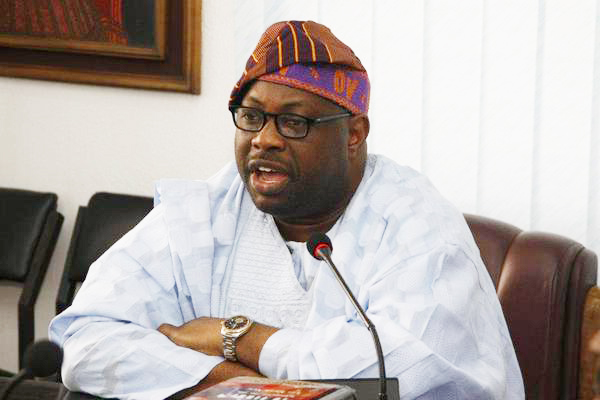
A chieftain of the African Democratic Congress (ADC), Chief Dele Momodu, has said no political permutation will save President Bola Tinubu in the 2027 presidential election, insisting that widespread hunger and hardship will determine the outcome.
Momodu stated this on Thursday during an appearance on Channels Television’s Politics Today, anchored by Seun Okinbaloye.
According to him, Nigerians across all regions and ethnic lines are united by economic hardship, which no amount of money or political calculation can overcome.
“The common factor now is the hunger in the land. No permutation can beat hunger. The Yorubas are suffering, the Hausas are suffering, the Igbos are suffering, everybody is suffering,” he said.
He argued that President Tinubu cannot buy the entire country, even if he was able to deploy money effectively in Lagos State politics in the past.
“Tinubu believes he can buy the whole of Nigeria, but my personal belief is that if he could buy the whole of Lagos, I doubt if he can use money to buy the whole of Nigeria,” Momodu stated.
The Ovation Publisher said Nigerians had become wiser and would collect any money offered to them during elections but still vote according to their conscience.
He cited the Osun State governorship election as a case study, noting that, despite the huge funds allegedly deployed, the people voted for Governor Ademola Adeleke.
“And a lot of people will take the money like they took it in Osun State. People’s eyes are wide open now. They brought a lot of money to Osun State, but they still lost the election to Ademola Adeleke,” he said.
Momodu also recalled that Tinubu lost Lagos State to Mr Peter Obi of the Labour Party in the 2023 presidential election, which he said proves that incumbency and financial muscle do not guarantee victory.
He maintained that President Tinubu would not win in 2027, claiming that many Nigerians could not imagine a second term for the administration.
“If you ask an average Nigerian today, do you trust Tinubu to conduct a free and fair election? 90 per cent will say no. Nobody trusts Tinubu, including his own supporters,” Momodu said.
On the detention of former Kaduna State Governor, Mallam Nasir El-Rufai, Momodu described him as a “prisoner of conscience” who is being persecuted because of his political influence.
“Nasir El-Rufai is a lion. They caged him because he is a lion. Even when a lion is caged, it is still a lion. They want him locked up until after 2027 because they fear his influence,” he said.
He disclosed that El-Rufai’s appointment as Deputy Chairman of the Atiku Abubakar Presidential Campaign Council was in honour of his sacrifice and resilience.
“It is a way of honouring his sacrifice because his travails are quite political in nature. That is why Nasir has become a prisoner of conscience. He is in the hands of a government that he helped to midwife,” Momodu added.
He said the 2027 election would be a referendum on hunger, hardship and governance, and not on political permutations.
Meanwhile, the Senior Special Assistant to the President on Digital Communications, Engagement and New Media Strategy, O’tega Ogra, has faulted Momodu’s comments.
Reacting to the interview, Ogra accused the opposition of embracing “perpetual negativity” and opposing government policies without objective assessment.
He said Momodu’s assertion ignored ongoing reforms and improvements recorded in key economic indicators, including foreign reserves, power generation and inflation management.
Ogra urged opposition figures to offer constructive criticism rather than painting a picture of total failure, stressing that President Tinubu would ultimately be judged by his reforms and track record.
The Tribune


