
Headlines
CSOs Move for Buhari’s Resignation As Insecurity Festers


- /home/rhoncare/pointblank.ng/wp-content/plugins/mvp-social-buttons/mvp-social-buttons.php on line 27
https://pointblank.ng/wp-content/uploads/2019/04/Buhari-1-1000x576.jpeg&description=CSOs Move for Buhari’s Resignation As Insecurity Festers', 'pinterestShare', 'width=750,height=350'); return false;" title="Pin This Post">
- Share
- Tweet /home/rhoncare/pointblank.ng/wp-content/plugins/mvp-social-buttons/mvp-social-buttons.php on line 69
https://pointblank.ng/wp-content/uploads/2019/04/Buhari-1-1000x576.jpeg&description=CSOs Move for Buhari’s Resignation As Insecurity Festers', 'pinterestShare', 'width=750,height=350'); return false;" title="Pin This Post">
A coalition of 127 CSOs under the Joint Action Civil Society Coalition/Nigeria Mourns Secretariat, yesterday, petitioned President Muhammadu Buhari to, as a matter of urgency, stop the escalating insecurity in the country. They further raised the alarm that the first quarter of 2021 has witnessed all-time high fatalities and atrocious incidences across the country.
The petition titled ‘State of the Nation: Stop the bleeding, end carnage now, called for the resignation of the President while urging all Nigerians to register their displeasure with the state of affairs across the country by participating in a series of mass actions from May 26, to commemorate the 4th National Day of Mourning and Remembrance of Victims of Mass Atrocities on May 28 and further boycott all Democracy Day activities on May 29, in protest of the deplorable state of insecurity in the country.
The statement reads in part: “Following a sharp increase of 43 per cent in mass atrocities, Nigeria has continued to experience a decline in security across the nation. In the first quarter of 2021 (January to March), we recorded an all-time quarterly high of almost 2,000 fatalities from mass atrocities incidents across the country. Last week, across the six geopolitical zones, there were escalated combustions of violence resulting in even more deaths.
“In our last joint statement issued in February 2021, we had catalogued the assortment of mass atrocities plaguing the country. We had also demanded that where the President fails to fulfil his constitutional duties, that he steps aside, or, that the National Assembly initiates impeachment proceedings against him on grounds of gross misconduct as provided for in Section 143 of the 1999 Constitution of the Federal Republic of Nigeria.
“We are appalled to note that despite our strongly-worded statement, President Buhari’s government has failed to heed our call to fulfil his role as Commander in Chief of the Armed Forces and Nigeria’s democratically elected President. We are therefore left with no other option than to take action to drive home our call to the government and pull the nation back from the path of destruction.”
The group listed among many others failure of the government to include: “Gross injustices by President Buhari’s government against the Nigerian people such that peaceful protesters are threatened and attacked by the government’s security agents while terrorists carrying out mass murder, rape, maiming and kidnapping of Nigerians are feted and granted ‘amnesty, which is tantamount to funding and supporting terrorists, encouraging murder and decimation of gallant troops; terrorist herder attacks on unarmed farming communities and reprisal attacks in the face of government inaction to bring the terrorist herdsmen to justice; large-scale terrorist attacks in the North West irresponsibly tagged by the government as ‘banditry’ in a bid to downplay their criminality; industrial-scale kidnappings across the country; inter-ethnic violence and menace of ethnic militia; and not ending impunity for abuse of power and sectionalism through appointments by balancing the need for competence with the federal character principle.”
Some of the CSOs under the network include: #DoNigeriaRight, Action Aid, Baobab for Women’s Human Rights, Bimbo Odukoya Foundation (BOF), Centre for Democracy and Development (CDD), West Africa, Centre for Human Rights & Civic Education (CHRICED), Civil Society Legislative Advocacy Centre (CISLAC), Connected Development (CODE), Corporate Accountability and Public Participation Africa (CAPPA), Enough is Enough (EiE) Nigeria, Justice for Peace and Development Initiative (JPDI), Legal Defence and Assistance Project (LEDAP) and Nigerian Feminist Forum.
Others are Resource Centre for Human Rights & Civic Education (CHRICED), Rule of Law and Accountability Advocacy Centre (RULAAC), SBM Intelligence, Women Advocates Research and Documentation Center (WARDC), World Impact Development Foundation (WIDEF) and Yiaga Africa.
This is coming after some hoodlums yesterday attacked the Ubani Market Police Station named after the former IGP, Mike Okiro, on the outskirts of Umuahia, Abia State capital and setting it ablaze around 9:00 a.m. The police station was established by the immediate past governor, Theodore Orji, to provide security for traders at the Ubani Ibeku market and other suburbs.
According to sources, no life was lost, though a police officer was injured while repelling the hoodlums. The incident left many users of Umuahia-Uzuakoli-Ohafia road stranded as the exchange of firepower between the gunmen and police lasted.
It was gathered that the hoodlums razed exhibit cars parked in the premises of the police station. Attempts to release suspects in police custody failed as operatives were said to have quickly evacuated suspects to other police stations within the capital city. They were only left with the car exhibits, some of which can’t be towed from the police facility.
The Guardian


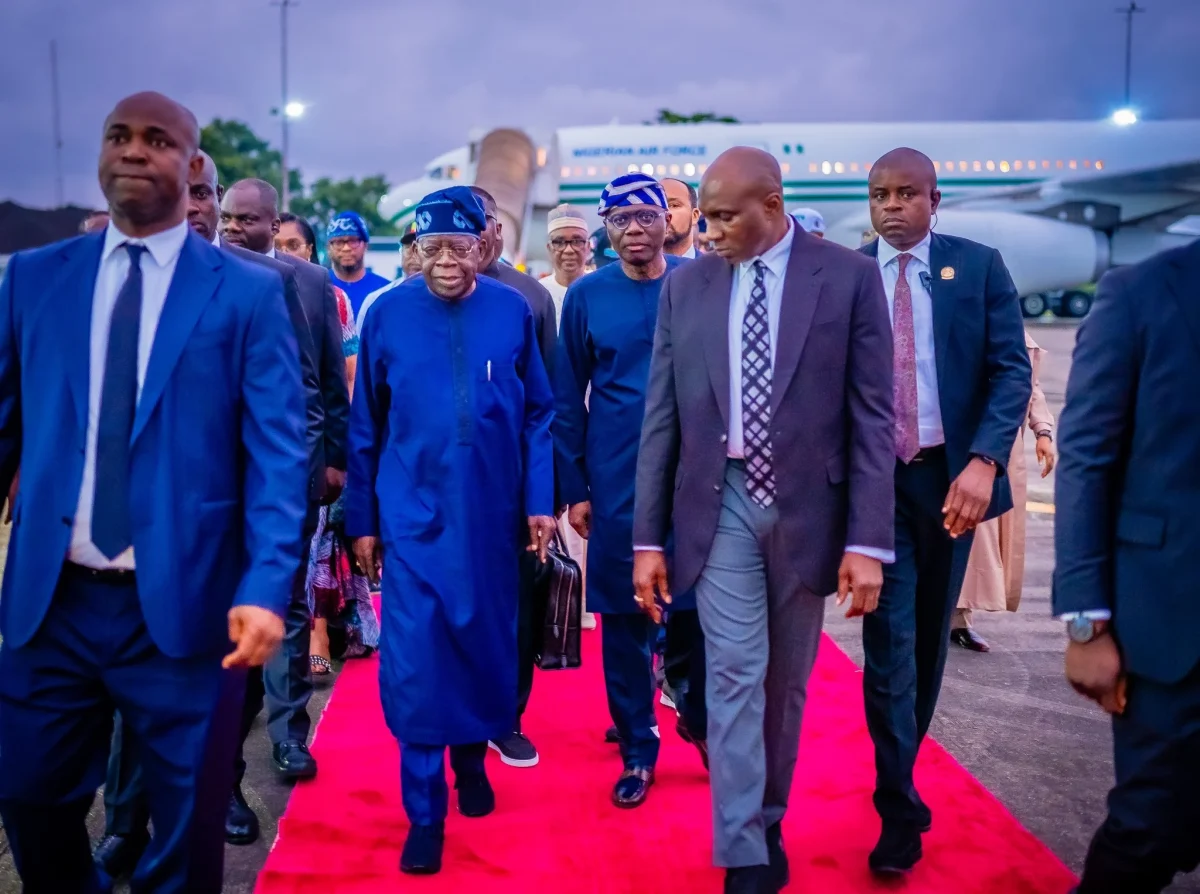
President Bola Tinubu has told members of the All Progressives Congress (APC) Presidential Campaign Council not to expect him to accompany them to every campaign event ahead of the 2027 general election, saying he must remain focused on governance and the country’s economic responsibilities.
Tinubu spoke on Wednesday during the inauguration of the APC Presidential Campaign Council in Abuja, where he urged members to take the party’s message to Nigerians across the states and local government areas while he continues to attend to matters of governance.
The president said he agreed with concerns that the demands of the campaign should not distract him from running the country, adding that Nigeria needs his attention at the moment.
“You’ve warned me not to allow the rigour of the campaign to distract me from governance, I hear you. I am in full agreement with your decision. Nigeria needs more attention now,” Tinubu said.
He told council members to excuse him from accompanying them to every campaign event, noting that his administration has bills to pay and international financial obligations to meet.
“So, you will excuse me from going everywhere with you, we have bills to pay. The American creditors cannot wait,” the President said.
Tinubu also said the government needs to attract investors who would commit to long-term investments in Nigeria and contribute to the future of the country’s children.
“We want those investors to come in, be here to stay, to invest for the future of our children,” he said.
The president, however, assured Nigerians that he would continue to engage them directly even as the campaign council took charge of mobilisation across the country.
“However, I will still make time to speak directly with Nigerians, even as you lead the campaign in the states and local government areas,” he said.
Tinubu described the inauguration of the council as more than a campaign activity, saying it represents a renewed commitment to Nigerians and the responsibilities of the ruling party.
“We have not gathered merely to inaugurate a council. We have gathered to renew a covenant. A covenant with Nigerian people and the historic responsibility they have entrusted to us as Nigeria’s governing party,” he said.
He added that the council is expected to communicate the administration’s vision, achievements and agenda to voters nationwide.
“This council will carry our vision, our records and our agenda to every Nigerian, and it will carry them to victory every ward of this country,” Tinubu said.
The president also commended APC members for completing the party’s congresses, recalling that some had predicted internal crises during the process.
He said the party has overcome the challenges and emerged united, crediting members for participating in the process from the ward level to the national leadership.
“They said there will be implosion. We passed through it. We did not fail. You didn’t let us down. We got here together,” he said.
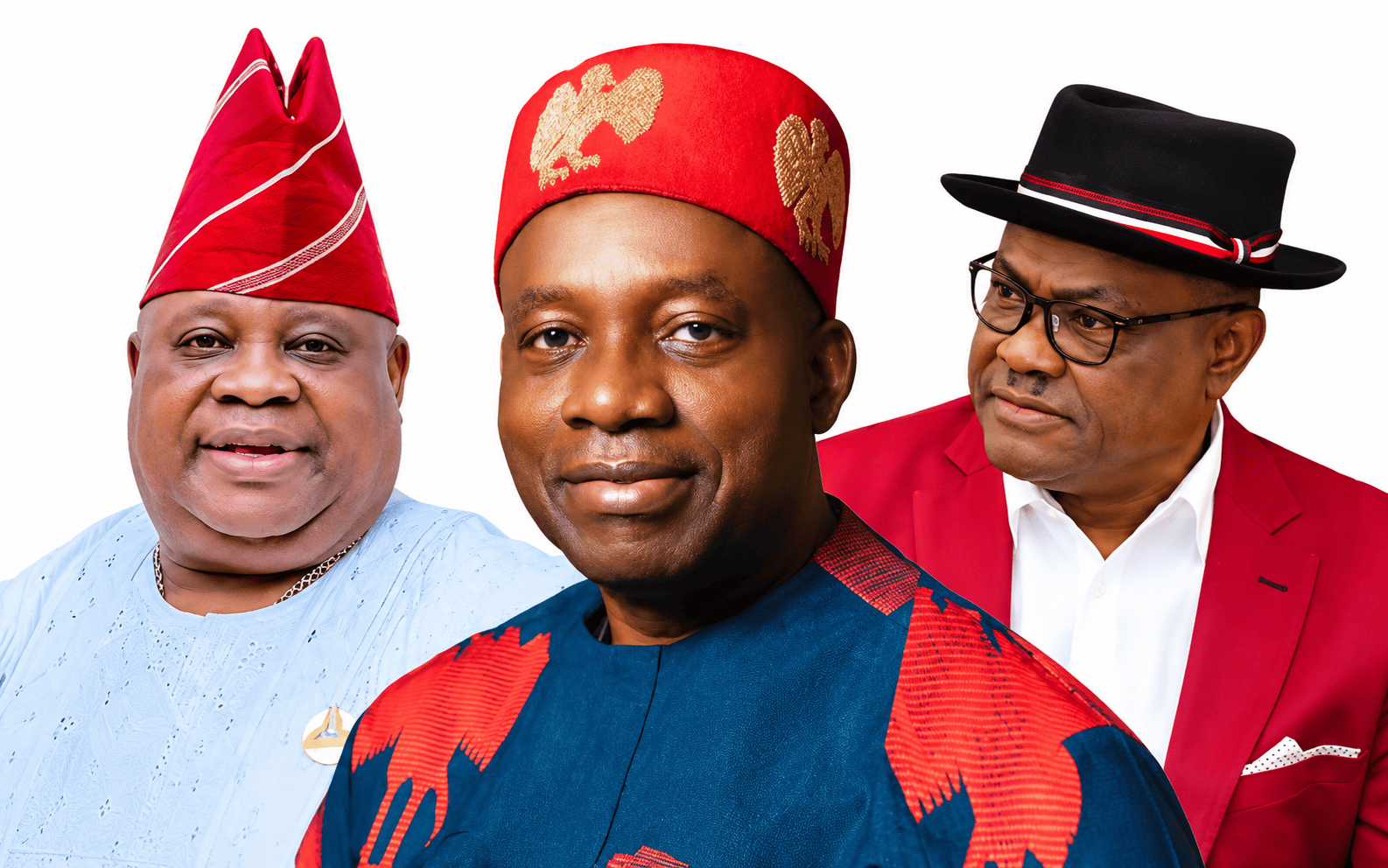
The All Progressives Congress (APC) has named Nyesom Wike, Minister of the Federal Capital Territory (FCT); Ademola Adeleke, Osun State governor; and Chukwuma Soludo, Anambra State governor, as campaign coordinators in its expanded presidential campaign council for the 2027 general election, despite their affiliations with other political parties.
Wike belongs to the Peoples’ Democratic Party (PDP), Soludo is a member of the All Progressives Grand Alliance (APGA), while Adeleke won re-election as Osun governor in 2026 under the Accord Party.
Under the new arrangement, Wike will coordinate the APC campaign in Rivers State and the FCT, Soludo will oversee Anambra, while Adeleke will coordinate the campaign in Osun.
The expanded list is scheduled for inauguration by President Bola Tinubu at the Presidential Villa in Abuja on Wednesday.
The APC initially released its campaign council list on August 22, naming Abdulaziz Yari, former Zamfara governor, as director-general. Senate President Godswill Akpabio, House of Representatives Speaker Tajudeen Abbas and Yobe Governor Mai Mala Buni were appointed deputy director-generals.
In the revised list, Akpabio, Abbas and Kwara Governor AbdulRahman AbdulRazaq are deputy vice-chairmen I, II and III, respectively, while Buni becomes deputy director-general I for the North.
The council also includes former governors and party chieftains as advisers, which include former APC national chairmen Adebisi Akande and Abdullahi Adamu; former Ogun State Governor Ibikunle Amosun; former Osun State Governor Iyiola Omisore; Senator Ibrahim Dankwambo; Senator George Akume; former Ogun State Governor Segun Osoba; and Wale Edun. Obafemi George is listed as an adviser on media.
The Directorate of Election Planning, Coordination, Monitoring and Mobilisation, established ahead of the 2027 general election, has Faleke as Deputy Director-General, with Stella Okotete and Engr. Abdullahi Garba Ramat serving as Secretary I and Secretary II, respectively. Audu Maikori is also listed as a secretary.
Other members of the directorate include Soares Omotola, Bashir Dabo, Sheriff Mohammed Usman, Jibrin Bancir, Ayoola Peter Olajolo, Abubakar Sadiq Sada and Princess Folasade Ogunbiyi.
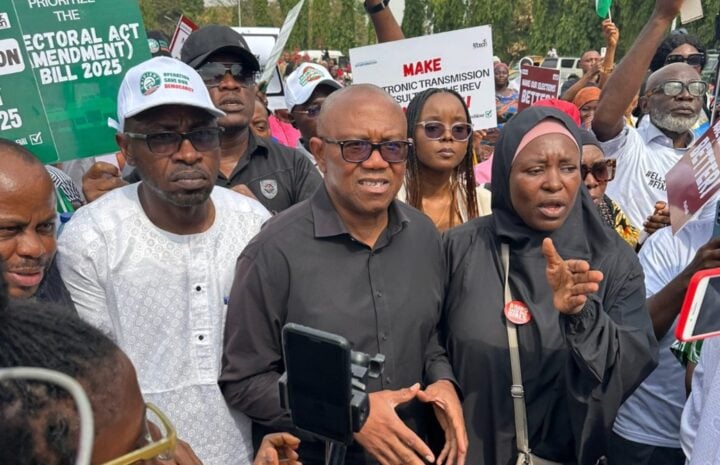
The Nigeria Democratic Congress (NDC) presidential candidate, Peter Obi, has questioned how the Federal government’s 30-day petrol price discount would reduce poverty, unemployment, insecurity and inequality in the country.
Obi raised the questions in a statement posted on his X platform on Sunday, describing the initiative as a reactive policy that substitutes political optics for sound economic planning.
He argued that the discount, which he said amounts to less than five per cent of petrol costs, is unlikely to address the wider economic challenges facing Nigerians.
“The announcement by the APC-led Federal government offering a 30-day discount on price of petrol to relieve the acute hardship and hunger caused Nigerians by its unplanned removal of subsidy can only be described as another very reactive and confused approach to governance that is now the culture of the Tinubu government,” he said.
Obi said he had delayed commenting on the policy to allow time to assess its outcome, but maintains that the measure has not demonstrated a sustainable approach to addressing the country’s economic difficulties.
He recalled that President Bola Tinubu removed the petrol subsidy on May 29, 2023, arguing that the decision was taken without adequate consultation or a proper assessment of its likely effects on the economy and the livelihoods of ordinary Nigerians.
According to Obi, the subsidy removal was followed by other policies, including the floating of the Naira and tax reforms, which he argued are being implemented without proper sequencing and coordination.
He also criticised the government’s handling of multiple budgets, arguing that the combined effect of the policies has contributed to inflation and rising costs of goods and services.
Obi attributed what he described as increasing multidimensional poverty, business closures, unemployment, insecurity, widening inequality and youth migration to the economic pressures arising from the policies.
He also said the policies had weakened the general well-being of Nigerians, insisting that the government should assess their impact before introducing temporary relief measures.
The former Anambra State governor called for a detailed and publicly available regulatory impact assessment of government policies, arguing that such an exercise would help identify their effects and guide necessary adjustments.
He said a government committed to sustainable economic growth should engage stakeholders and ordinary citizens in consultations to develop inclusive policies that improve living conditions and expand economic opportunities.
Questioning the objectives of the petrol discount, Obi asked whether it would increase productivity and exports or whether it was intended to determine if the subsidy should be restored.
“Will it reduce poverty, unemployment, insecurity, and inequality? Will it increase productivity and exports? Is it a test to ascertain if subsidy should be restored? Is it another political gambit in the face of threats of electoral loss in the 2027 election?” he asked.
“Too many questions, no answer!” the former Governor of Anambra State added.


