Business
Dangote Lists N300bn Series 1 & 2 Largest Bonds on NGX, FMDQ

- /home/rhoncare/pointblank.ng/wp-content/plugins/mvp-social-buttons/mvp-social-buttons.php on line 27
https://pointblank.ng/wp-content/uploads/2023/03/IMG-20230331-WA0008-1000x600.jpg&description=Dangote Lists N300bn Series 1 & 2 Largest Bonds on NGX, FMDQ', 'pinterestShare', 'width=750,height=350'); return false;" title="Pin This Post">
- Share
- Tweet /home/rhoncare/pointblank.ng/wp-content/plugins/mvp-social-buttons/mvp-social-buttons.php on line 69
https://pointblank.ng/wp-content/uploads/2023/03/IMG-20230331-WA0008-1000x600.jpg&description=Dangote Lists N300bn Series 1 & 2 Largest Bonds on NGX, FMDQ', 'pinterestShare', 'width=750,height=350'); return false;" title="Pin This Post">
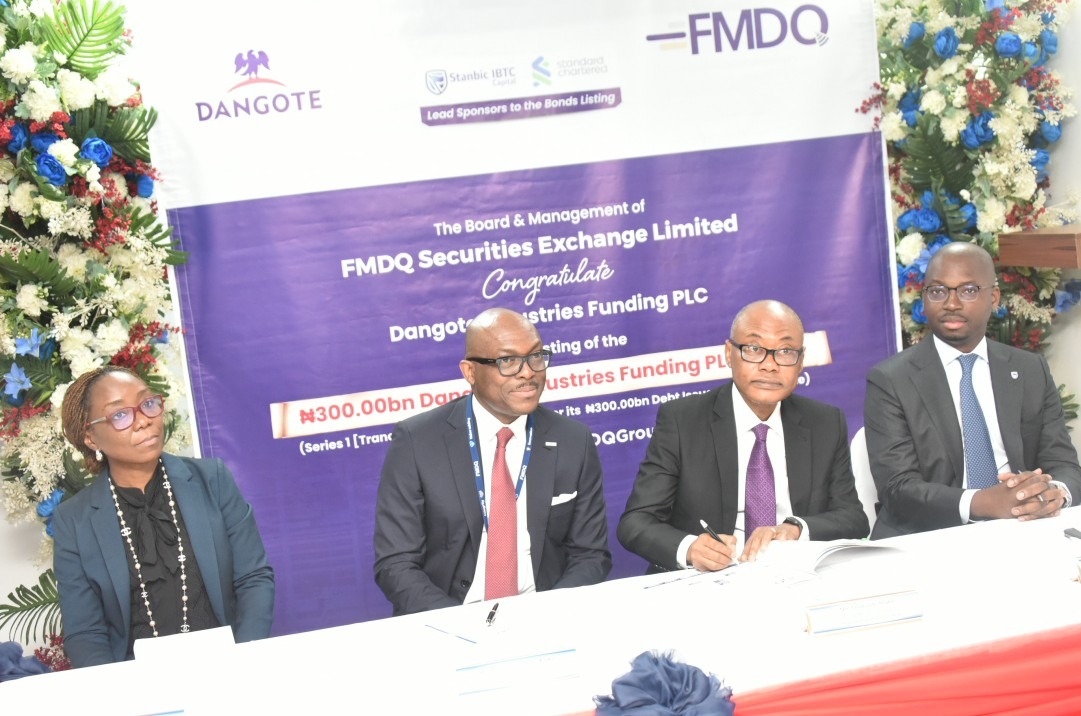
Dangote Industries Limited (DIL) has formally listed its N300 billion Series 1 and 2 bonds issued under the Dangote Industries Funding Plc during a grand listing ceremony at both the FMDQ and the Nigeria Exchange Limited (NGX) in Lagos.
Olakunle Alake, Group Managing Director of Dangote Industries Limited told investors during the listing ceremony that the bonds were primarily for part-financing the Group’s 650,000 bpd refinery project.
He explained that the decision of the Company to issue bonds to raise the required capital for part-financing the refinery project was to encourage the participation of Nigerians in the financing of the project. He noted that the bonds remains the largest aggregate local currency bond issuance within a calendar year by any corporate organization in the history of the capital markets.
Mr. Alake noted that following very rigorous internal assessment, the management concluded that tapping the local capital markets was inevitable, considering the sheer scale of the project being developed, as well as the existing market volatility.
He said that while the Dangote Group is not new at raising funds in the local capital markets, being a first-time issuer at the holding company level presented a fresh challenge for the Company. However, the challenge was one the management was willing to embrace to ensure the desired outcome was achieved.
According to him: “Today, we are delighted to have successfully completed the largest aggregate local currency bond issuance by a corporate in the Nigerian capital markets within a calendar year. The proceeds from the Series 1 and 2 bond issuances were dedicated to part-financing the Dangote Petroleum Refinery Project which is the initiative by the Group to establish an Integrated Petrochemical Complex, and the largest Single Train Petroleum Refinery in the World.”
Alake recalled that the DIL recorded another first through the N187 billion series 1 bonds (under the N300 billion programme), being the largest corporate bond ever issued in the history of the Nigerian capital markets and the management was pleased to have set the remarkable milestones, showcasing the depth, resilience and liquidity of the domestic capital markets, whilst reflecting the strong credit quality of the issuer, despite the current global market volatility.
He said: “The bonds issuances were well received by the market and recorded participation from a wide range of investors including domestic pension funds, asset managers, insurance companies, and high net-worth investors.
Indeed, the reception of the market was buoyed by the strategic importance of the project and its expected impact on the Nigerian economy. Overall, we strongly believe the success of the Series 1 and 2 bond issuances further demonstrates investor confidence in our credit story and the appreciation of the work done by the Group across several key sectors that are crucial to the development of Nigeria and the continent at large.”
Alake pointed out that his Company was not new in the business of listing securities on NGX. “We are therefore conversant with all the listing requirements and promise to be prompt and up to date in that regard. We count on the cooperation and support of NGX and the stockbrokers to meet this important investors’ objective.”
The DIL Group Managing Director assured that the company would remain resolute in the Nigerian and African story and continue to demonstrate commitment, as one of the foremost pan-African conglomerates, through investments in projects and initiatives that directly improve the quality of lives of Nigerians. “Indeed, these are very exciting times for us as a business, and so we would continue to welcome opportunities to work with stakeholders in the domestic capital markets towards accelerating the economic activities across Africa, whilst maximizing stakeholder returns.
Also speaking at the event, the lead Issuing House for series 1 of the bonds and the Chief Executive Officer, of Standard Chartered Capital & Advisory Nigeria Limited, Mrs. Yemisi Deji-Bejide, expressed appreciation of her organization to the management of the DIL for reposing so much confidence in Standard Chartered by entrusting it with the responsibility.
She said: “Every time we gather at FMDQ for the listing ceremony of an issuance by the Dangote Group, it is always a record milestone. Early in 2022, we issued a bond for Dangote Cement which was the largest corporate bond issuance at the time, and little did we know that a few months down the line, the Group will comfortably break that record.
Mrs. Deji-Bejide described the success of the transaction as a strong testament to the fact that Investors strongly believe in Dangote Group’s credit story and are willing to continue to support the growth of the business. Also, she said it demonstrated the depth of the Nigerian capital markets and resilience, despite all the volatility in the global markets and the macro headwinds.
“Lastly and most importantly, investors are keen to support impactful infrastructure projects in Nigeria, as the proceeds of the bond are being used to fund the largest single train refinery in the world”, Mrs. Deji-Bejide added.
Meanwhile, at the Nigeria Exchange Limited where the symbolic gong ceremony was held to commemorate the listing, the Group Managing Director for DIL, Mr. Alake, who was represented by the DIL Group Chief Finance Officer , Mallam Mustapha Ibrahim thanked the investor community for their support for the transaction as well as our various advisors and stakeholders.
He also commended the Nigeria Exchange Limited (NGX) for its unwavering support throughout this entire process of issuing and listing the bonds as well as their continued commitment towards deepening the Nigerian capital markets.


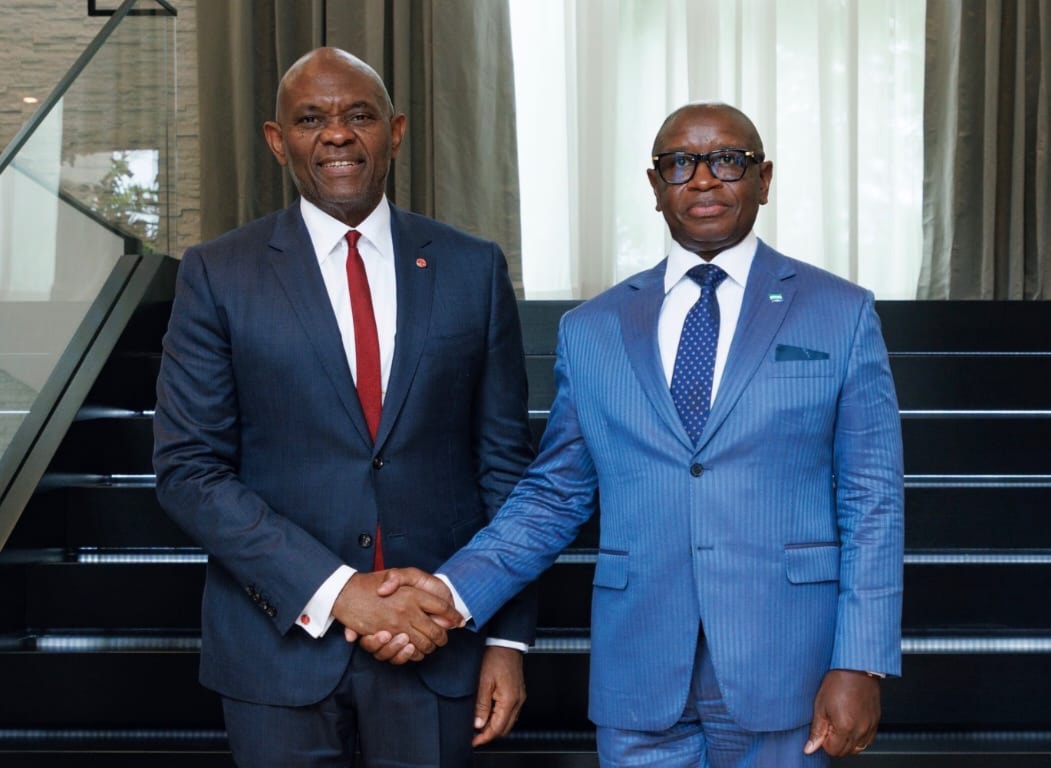
Heirs Holdings, the pan-African investment group founded by African investor and philanthropist Tony O. Elumelu, CFR, will play a leading role at the inaugural West Africa Integration andĥ Investment Summit (WAIIS 2026), taking place November 16–18 in Sierra Leone.
As a Principal Partner of the Summit, the Group is bringing its senior business leadership, investment expertise and extensive operating experience across critical sectors of the African economy to advance the region’s integration and investment agenda.
Mr Elumelu, Group Chairman of Heirs Holdings and a member of the Summit’s Private Sector Advisory Board, is leading private sector mobilisation for the event, convened under the leadership of His Excellency Julius Maada Bio, President of Sierra Leone.
He will be joined by senior executives from across the Group’s portfolio, including Obong Idiong, CEO of Heirs Technologies, who will speak at the Investment Opportunity Session on connecting West Africa’s markets through payments, data and digital networks and Peter Ikenga, CEO of Transcorp Power, who will co-chair the power session alongside Mamadou Sangafowa-Coulibaly, Côte d’Ivoire’s Minister of Mines, Oil and Energy.
The Summit brings together African Heads of State, policymakers, institutional investors, development finance institutions and business leaders to accelerate economic integration and unlock investment opportunities across West Africa.
A longstanding advocate of Africapitalism and a business turnaround expert, Elumelu champions the principle that Africa’s development must be driven by African entrepreneurs and businesses, with long-term private investment creating both economic and social wealth. His leadership at WAIIS reflects a conviction that regional integration must move beyond policy commitments to practical commercial partnerships, cross-border investment and the development of competitive African enterprises.
Heirs Holdings’ prominent role at WAIIS is reinforced by its scale, investment footprint and track record of building businesses across sectors critical to Africa’s economic transformation. As of 31 March 2026, the value of its portfolio companies stood at approximately US$15.08 billion. With investments and operations spanning 24 countries and a workforce of more than 40,000 people across the Group and its portfolio companies, Heirs Holdings is a significant pan-African private-sector investment platform.
For Heirs Holdings, West African integration represents a significant opportunity to expand the region’s economic potential and attractiveness to investors. A more connected region creates larger markets, strengthens intra-regional trade, facilitates the movement of capital, attracts investment, creates jobs, and enables African businesses to achieve greater scale and compete more effectively in the global economy.
As governments, investors and business leaders convene in Sierra Leone, Heirs Holdings reaffirms its commitment to working with public and private sector partners to turn regional integration into a commercial reality that will create lasting economic and social value across the continent.
Heirs Holdings is a leading pan-African investment company. Its investment portfolio spans the energy, power, banking, insurance and financial services, technology, real estate, hospitality and healthcare sectors, operating in twenty-four countries worldwide.
Heirs Holdings is inspired by Africapitalism, the belief that the private sector is the key enabler of economic and social wealth creation in Africa. Driven by this philosophy, Heirs Holdings invests for the long-term, bringing strategic capital, sector expertise, a track record of business success, and operational excellence to its portfolio companies.
Business
From Wholesale Markets to Digital Platforms: How Technology is Transforming Small Business Commerce in Africa
Digital commerce is changing how neighbourhood retailers source products, connect with suppliers and manage their businesses, creating new opportunities for small businesses across Africa.
For millions of small retailers across Africa, keeping a business running involves much more than selling products. Behind every successful neighbourhood shop is a constant effort to find reliable suppliers, compare prices, determine what customers need, manage orders and ensure essential products remain available on the shelves.
Yet, these everyday business activities have traditionally come with significant challenges.
Many small retailers still depend on frequent trips to wholesale markets, multiple intermediaries and fragmented supply arrangements to replenish their stocks. The process can be expensive, time-consuming and unpredictable, taking attention away from customers and limiting opportunities for business growth.
Technology is beginning to change that reality.
Digital commerce platforms are creating new ways for small businesses to discover products, connect directly with suppliers, place orders and manage purchasing more efficiently. With better access to product information and supply channels, retailers can make more informed decisions, reduce sourcing difficulties and respond more effectively to customer demand.
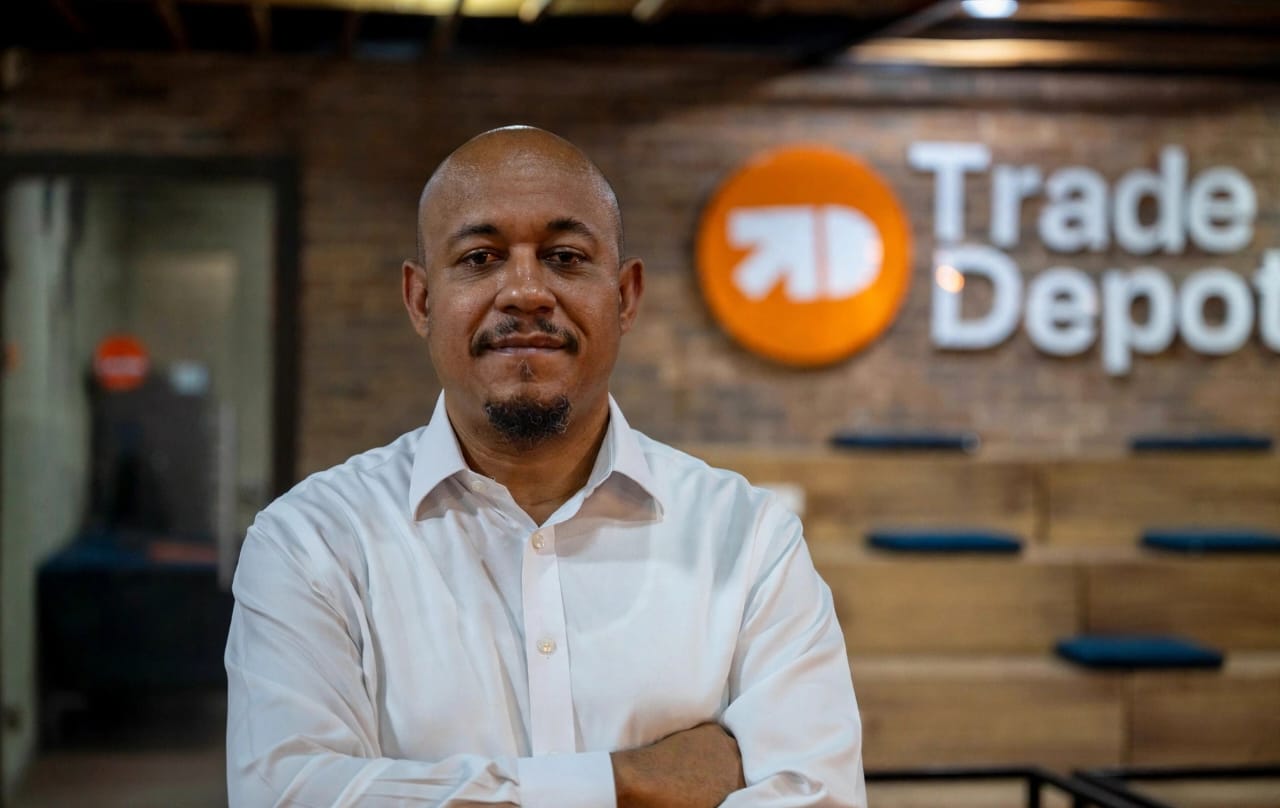
One company working to make this transformation possible is TradeDepot, a Nigerian technology company using digital solutions to connect small retailers with manufacturers and distributors.
Through its technology platform, TradeDepot is helping create more efficient channels for product sourcing and distribution, bringing suppliers and neighbourhood retailers closer together.
The significance of this development extends beyond the convenience of placing orders online. Improved access to products, more efficient purchasing processes and stronger supplier relationships can help small retailers maintain stock availability, serve customers better and build more sustainable businesses.
The transformation also highlights the role of investment in developing Africa’s technology ecosystem.
Through Boost Africa, the European Investment Bank (EIB) invested €10 million in Partech Africa Fund, which subsequently backed TradeDepot. The investment illustrates how development finance and venture capital can support African technology businesses building practical solutions to everyday commercial challenges.
As digital innovation continues to reshape commerce, the benefits are increasingly extending beyond large businesses and established retail chains to the small shops that serve communities every day.
Technology is not just changing how people shop. It is transforming how the businesses serving them source, sell and grow.
Boost Africa: From Capital to Impact.
Watch how TradeDepot is bringing commerce closer to communities through technology and the Boost Africa initiative:
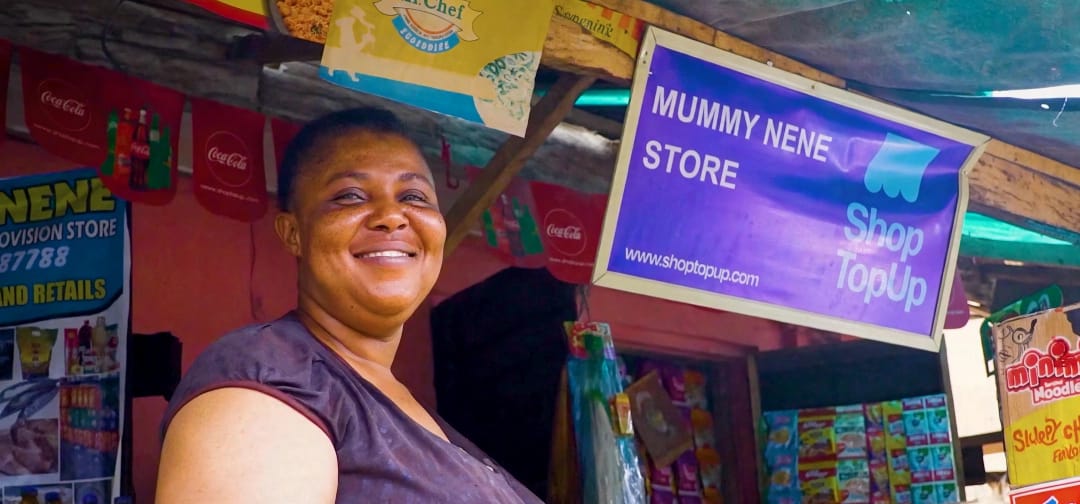
While conversations about the future of retail increasingly focus on supermarkets, shopping malls and online shopping platforms, millions of African consumers continue to rely on a more familiar and accessible business: the neighbourhood shop.
From small provision stores and corner shops to kiosks and informal retailers, these businesses remain an important part of everyday commerce, connecting communities to essential household products. However, behind their convenience lies a supply chain challenge that often limits their growth.
For many small retailers, sourcing products, managing inventory and securing enough working capital to keep their shelves stocked can be difficult. Fragmented distribution networks, multiple intermediaries and limited access to financing often make it harder for them to compete and expand.
Technology is beginning to offer a different possibility.
Digital platforms can simplify the way neighbourhood retailers purchase goods by connecting them more directly with manufacturers and distributors. They can streamline ordering, improve product availability and make inventory management more efficient.
Access to financial technology can further strengthen these businesses by helping eligible retailers secure the working capital required to replenish stock, respond to customer demand and grow sustainably.
One Nigerian technology company working to address these challenges is TradeDepot, which is using digital innovation to connect small retailers with manufacturers and distributors.
By making product sourcing and distribution more efficient, the company is helping to address some of the longstanding barriers facing small businesses in Africa’s retail sector.
However, scaling technology-driven solutions across a fragmented retail market requires more than innovation. It also demands significant investment.
This is where development finance and venture capital become important.
Through Boost Africa, the European Investment Bank (EIB) invested in Partech Africa Fund, a venture capital fund that subsequently backed TradeDepot. The investment illustrates how development finance can reach innovative African businesses through investment funds, providing capital to companies working to solve real economic challenges.
Boost Africa is a joint initiative of the European Investment Bank and the African Development Bank, with support from the European Union. The initiative supports African businesses and strengthens the continent’s entrepreneurial ecosystem by improving access to finance and opportunities for growth.
The wider significance of this investment goes beyond the technology platform itself. Strengthening neighbourhood retailers can contribute to more efficient supply chains, support small business growth and improve access to everyday consumer goods across communities.
For Africa, where small retailers remain central to local economies, the opportunity is substantial.
The future of retail may not necessarily involve replacing traditional neighbourhood shops with large supermarkets or online marketplaces. Instead, it could depend on equipping these existing businesses with better technology, stronger distribution networks and improved access to finance.
Ultimately, transforming retail may begin with something as familiar as the shop around the corner.
Boost Africa: From Capital to Impact.
Watch how TradeDepot is bringing commerce closer to communities through technology and investment