
Business
Dangote Refinery Capable of Solving Nigeria’s Forex Problems, Catalysing Economic Development, Says S&P Global

- /home/rhoncare/pointblank.ng/wp-content/plugins/mvp-social-buttons/mvp-social-buttons.php on line 27
https://pointblank.ng/wp-content/uploads/2019/05/Dangote.jpeg&description=Dangote Refinery Capable of Solving Nigeria’s Forex Problems, Catalysing Economic Development, Says S&P Global', 'pinterestShare', 'width=750,height=350'); return false;" title="Pin This Post">
- Share
- Tweet /home/rhoncare/pointblank.ng/wp-content/plugins/mvp-social-buttons/mvp-social-buttons.php on line 69
https://pointblank.ng/wp-content/uploads/2019/05/Dangote.jpeg&description=Dangote Refinery Capable of Solving Nigeria’s Forex Problems, Catalysing Economic Development, Says S&P Global', 'pinterestShare', 'width=750,height=350'); return false;" title="Pin This Post">
International financial analytics corporation, S&P Global, has described the 650,000 barrels per day (bpd) Dangote Oil Refinery and Petrochemicals company as capable of resolving Nigeria’s foreign exchange (forex) issue and its huge pressure on the local Naira currency, while also catalysing the country’s economic development.
S&P Global, headquartered in Manhattan, New York City, disclosed this during an onsite visit to the Dangote Refinery at Ibeju-Lekki, Lagos as part of its sovereign credit ratings assessment of Nigeria. The team from the international rating agency were accompanied by officials from the Federal Ministry of Finance.
S&P noted that the largest single-train refinery complex in the world would bolster Nigeria’s oil sector and, more importantly, also have a positive impact on its growing economy.
Director and Lead Analyst, Sovereign and International Public Finance Ratings, S&P Global Ratings, Ravi Bhatia, who led the delegation to Lagos, said Dangote refinery would transform Nigeria into a net exporter of petroleum products. He added that this transformation is expected to boost revenue generation and alleviate the current pressure on the country’s foreign exchange reserves.
“It is a very impressive facility, able to process 650,000 barrels a day, when in full capacity. It is the largest single-train refinery complex in the world. It came out quite quickly. Nigeria is a big exporter of crude but has issues with importing refined fuels. So, there is a gap in the market where crude can be refined in Nigeria, save money that way, and potentially save some foreign exchange. This will be positive for the economy in the medium term. It looks positive from our assessment,” Bhatia said after an over four-hour tour of the facility.
Also, in a chat with the media, Vice President of Oil and Gas at Dangote Industries Limited (DIL), Devakumar Edwin, who led the team during the tour of the facility, reiterated that by harnessing Africa’s abundant crude oil resources to produce refined products locally, the company aims to catalyse a virtuous cycle of industrial development, job creation, and economic prosperity. He also revealed that, as earlier promised, the company will start the production of premium motor spirit (PMS), this month (July).
Noting that products from the $20 billion facility are of high quality and meet international standards, Edwin said it can meet 100 per cent of Nigeria’s demand for petrol, diesel, kerosene, and aviation Jet, with surpluses available for export.
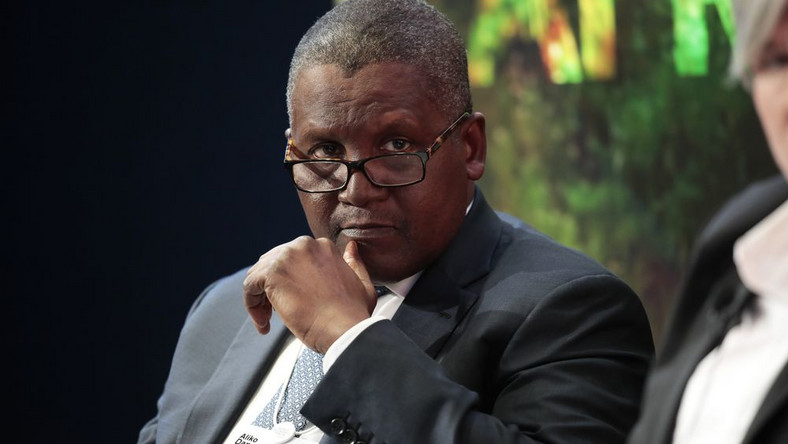
The S&P team commended the President of Dangote Industries Limited, Aliko Dangote, for integrating advanced technologies and quality control measures, including a state-of-the-art Central Control Unit ensuring smooth automation of operations.
Other members of the team of the international rating agency include the Associate Director, Sovereign Ratings, Maxmillian McGraw; Director, Corporate Ratings, Omegu Collocott; Senior Analyst, Bank Ratings, Charlotte Masvongo, and Director, Financial Services, Samira Mensah.
Currently operating at 350,000 barrels per day capacity, Edwin said the refinery is slated to scale up to at least 500,000 barrels per day capacity by July/August, commencing the refining of petrol and ultra-low sulphur diesel.
He noted that the refinery, designed to process a wide range of crudes including various African and Middle Eastern crudes, as well as US Light Oil, conforms to Euro V specifications. In addition, it is designed to comply with US EPA, European Union (EU) emission norms, the Department of Petroleum Resources (DPR) emission/effluent norms, and the African Refiners and Distribution Association (ARDA) standards.
While noting that most refineries were built by foreign companies, he said it is a thing of pride that a Nigerian company designed and built the world’s largest single-train refinery complex while acting directly as its own Engineering, Procurement, and Construction (EPC) contractor. The refinery also incorporates a self-sufficient marine facility capable of handling the world’s largest vessels.
“The refinery can produce the best quality products in the world, Euro V grade. It is one of the energy-efficient refineries and it is highly environmentally friendly. It is sophisticated with a high level of automation. The largest single train refinery in the world is 100 per cent designed, engineered, and constructed by a Nigerian company as EPC contractor,” he said.
Nigeria, one of the world’s leading oil-producing countries, exports all its crude oil for refining and subsequently imports refined products due to a lack of operational refineries. It is estimated that Nigeria imports at least 50 million litres of petrol per day to meet domestic demand.
According to data from the National Bureau of Statistics (NBS) in its Foreign Trade Statistics for the Fourth Quarter of 2023, Nigeria spent approximately N12 trillion on the importation of petroleum products in 2023, including premium motor spirit (PMS), commonly known as petrol. This figure marks an 18.68% increase compared to the N10 trillion spent on fuel imports in 2022.


Access Bank Plc has said that a social media post announcing a shutdown of the bank’s operations, is false and misleading.
In a statement signed by the bank’s management, and made available to the media, the Bank insisted that the notice is the handiwork of mischief makers, who impersonated the bank’s official handle.
It advised members of the public to disregard the notice, and pay attention only to verified information from the verified accounts of the bank.
Below is the full statement:
“A message impersonating Access Bank’s official handle is currently circulating on social media and WhatsApp. It is false and misleading.
“We wish to reassure our customers, partners, stakeholders, and the public that Access Bank is safe, financially strong, and fully operational across all our subsidiaries. Our services continue to run seamlessly, and we remain committed to serving our customers with the highest standards of excellence.
“We are working closely with the relevant regulatory and law enforcement authorities to identify those responsible for creating and spreading this false information to cause panic and business disruption. Appropriate legal action will be taken in accordance with applicable laws and regulations.
“We also remind members of the public that creating, publishing, and disseminating false information capable of causing public alarm, damaging reputations, or undermining confidence in institutions constitutes an offence under Section 24 of the Cybercrimes (Prohibition, Prevention, etc.) (Amendment) Act, 2024.
“If you receive a false and misleading message, please do not share or forward it. Instead, disregard it and rely only on information communicated through Access Bank’s official and verified channels.
“We thank our customers, partners, and stakeholders for their continued trust and confidence in Access Bank.”
Business
Ecobank Nigeria Launches Scaling Up!!! Podcast to Champion African Entrepreneurship, Business Growth
Ecobank Nigeria has launched Scaling Up!!!, its flagship business storytelling podcast designed to inspire, educate and empower entrepreneurs, founders, business leaders and the next generation of African innovators through authentic conversations with some of the continent’s most accomplished business personalities.
The podcast, which will be available on Ecobank Nigeria’s official YouTube channel and other major digital streaming platforms, reinforces the Bank’s commitment to supporting businesses beyond banking by creating a platform where entrepreneurs can learn from the experiences of successful founders, creatives and industry leaders who have built thriving enterprises across diverse sectors.
Featuring compelling conversations on entrepreneurship, leadership, innovation, resilience and business growth, Scaling Up!!! offers practical lessons and real-life insights that aspiring and established entrepreneurs can apply in building sustainable businesses.
The inaugural season features an impressive lineup of distinguished guests, including beauty entrepreneur and Founder/CEO of Beauty by AD, Adeola Adeyemi (Diiadem); renowned filmmaker and Founder of Golden Effects Pictures, Kunle Afolayan; veteran music producer and Founder of Coded Tunes, ID Cabasa; luxury fashion entrepreneur Ejiro Amos Tafiri; celebrated commercial photographer Emmanuel Oyeleke; Co-founder and Lead Interior Designer of Siriano Limited, Adewunmi Adegbola; and Founder of Windsor Gallery and Nahous Creative Hub, Richard Vedelago.
Each episode explores the guests’ entrepreneurial journeys, highlighting the opportunities they embraced, the challenges they overcame and the strategies that enabled them to build enduring brands and successful businesses.
Speaking on the launch, Head, Marketing & Corporate Communications, Ecobank Nigeria, Austen Osokpor, said: “Scaling Up!!! reflects Ecobank’s belief that empowering entrepreneurs goes beyond providing financial solutions. Through authentic storytelling and insightful conversations, we are creating a platform where business owners can learn directly from people who have successfully navigated the realities of building sustainable enterprises. It is another way we are reinforcing our commitment to driving entrepreneurship, innovation and economic growth across Africa.”
Also speaking, Head, SMEs, Partnerships & Collaborations, Ecobank Nigeria, Omoboye Odu, said: “Entrepreneurs learn best from the experiences of those who have walked the journey before them. Scaling Up!!! provides practical insights, inspiration and valuable lessons that will help founders make better business decisions, overcome challenges and unlock new opportunities for growth. The podcast further strengthens Ecobank’s role as a trusted partner supporting SMEs at every stage of their entrepreneurial journey.”
Sharing the creative vision behind the initiative, the Producer of Scaling Up !!!, Jemimah Ugiagbe said: “Our goal was to create more than just another business podcast. We wanted honest, engaging and relatable conversations that reveal the realities behind success, the setbacks, the resilience, the bold decisions, and the lessons that every entrepreneur can learn from. Every episode is designed to leave listeners informed, inspired and motivated to build businesses that create lasting impact.”
The podcast further strengthens Ecobank Nigeria’s position as a trusted partner for entrepreneurs by providing a knowledge-sharing platform that extends beyond traditional banking services. Through meaningful conversations with accomplished founders and innovators, the Bank continues to demonstrate its commitment to fostering enterprise development, encouraging innovation and promoting sustainable economic growth across Africa.
Scaling Up!!! is targeted at SMEs, entrepreneurs, founders, startups, business executives, creatives, students and young professionals seeking practical business insights from some of Africa’s most respected industry leaders.
New episodes will be released regularly across Ecobank Nigeria’s YouTube channel and other major podcast streaming platforms, offering audiences thought-provoking conversations on entrepreneurship, leadership, innovation and business growth.
Wema Bank, Nigeria’s oldest indigenous bank and pioneer of Africa’s first fully digital bank, ALAT, has been named Nigeria’s Best Digital Bank for Consumers 2026 by Euromoney, one of the world’s most respected authorities on financial services and banking excellence.
The prestigious recognition affirms the Bank’s sustained leadership in digital innovation, customer experience and financial inclusion, reinforcing its position as one of Nigeria’s leading technology-driven financial institutions.
Presented annually, the Euromoney Awards for Excellence celebrate banks that are redefining financial services through innovation, measurable impact and outstanding customer value. In selecting Wema Bank for the award, Euromoney recognised the Bank’s successful digital transformation journey, its continuous innovation through ALAT, Africa’s first fully digital bank, and its unwavering commitment to delivering simpler, smarter and more accessible banking experiences for customers.
Commenting on the recognition, the Managing Director/Chief Executive Officer of Wema Bank, Moruf Oseni, said: “This award is a strong validation of the deliberate investments we have made over the years to build a truly digital bank that puts customers at the centre of everything we do. Innovation for us has never been about technology for its own sake. It has always been about creating solutions that make banking easier, faster, safer and more rewarding for every customer.
“From pioneering Africa’s first fully digital bank with ALAT to continuously evolving our digital capabilities, we have remained focused on anticipating customer needs and building experiences that create real value. We are honoured by this recognition from Euromoney and inspired to continue pushing the boundaries of innovation as we shape the future of banking in Nigeria,” he concluded.
A key milestone in Wema Bank’s digital transformation has been the evolution and upgraded version of ALAT, which introduced next-generation capabilities including voice banking, tap-to-pay functionality, personalised financial services and integrated investment opportunities through strategic partnerships. Together with faster digital onboarding, AI-powered fraud monitoring, intelligent customer personalisation and an expanding agency banking network, these innovations continue to enhance customer experience while extending financial services to more Nigerians.
Euromoney also recognised Wema Bank’s ability to leverage technology to build deeper customer relationships through data-driven personalisation, enabling customers to receive tailored recommendations across savings, investments and credit products based on their financial needs and behaviour.
For over eight decades, Wema Bank has remained at the forefront of innovation in Nigeria’s financial services industry. As the pioneer of Africa’s first fully digital bank, the Bank continues to redefine banking by combining technology, customer insight and innovation to deliver seamless, secure and inclusive financial solutions for individuals, businesses and communities.
The Euromoney recognition further reinforces Wema Bank’s commitment to building the future of banking through continuous innovation, operational excellence and customer-centric solutions that create lasting value.


