
Metro
Delta CP Swoops on Dubious Elements, Promises to Make State Uncomfortable for Criminals

- /home/rhoncare/pointblank.ng/wp-content/plugins/mvp-social-buttons/mvp-social-buttons.php on line 27
https://pointblank.ng/wp-content/uploads/2021/03/IMG-20210320-WA0013-e1618554291940-819x600.jpg&description=Delta CP Swoops on Dubious Elements, Promises to Make State Uncomfortable for Criminals', 'pinterestShare', 'width=750,height=350'); return false;" title="Pin This Post">
- Share
- Tweet /home/rhoncare/pointblank.ng/wp-content/plugins/mvp-social-buttons/mvp-social-buttons.php on line 69
https://pointblank.ng/wp-content/uploads/2021/03/IMG-20210320-WA0013-e1618554291940-819x600.jpg&description=Delta CP Swoops on Dubious Elements, Promises to Make State Uncomfortable for Criminals', 'pinterestShare', 'width=750,height=350'); return false;" title="Pin This Post">
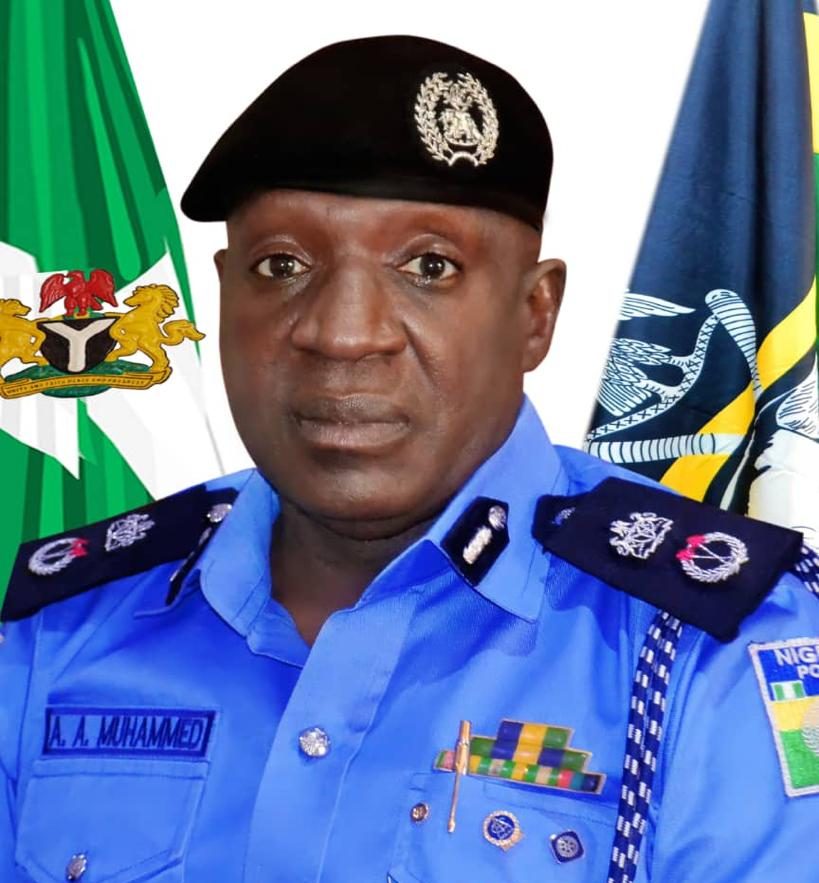
Delta State Commissioner of Police, CP Ari Muhammed Ali FCIA, PCS+ has unleashed terror on criminal elements in the state, promising to make the state uncomfortable for any evil minded person.
Ali, whose tenure kicked off not long ago, had on assumption of office, put the men and officers in high morals and red alert, and the fruits are already beginning to show with much clampdowns and arrests of unlawful elements terrorising the state through Illicit drug trafficking, and other crimes such as rape and kidnapping.
Among major breakthroughs the Command has made included the arrest of suspected cultists in some communities, bursting of armed robbery gang and operations and others.
In a statement signed by the Acting Police Public Relations Officer of the Command, DSP Edafe Bright, the Command itemised verifiable achievements as follows:
1. On the 18/3/2021 at about 1300hrs, sequel to ongoing leadership crises in Oviri-Olomu community and used suspected cultists in an attempt to murder indigenes of the community. The Divisional police officer Otu-Jeremi division, CSP Pius Eredei led patrol team to Oviri community in a bid to stop the crisis and restore peace and order in the community, through cultivation of informant and discrete investigation, one Edijala Oghenero ‘m’ 25yrs old and seventeen (17) others all suspected to be cultists were arrested. One (1) cut-to-size locally made gun, one (1) expanded and one (1) live cartridges, a battled axe, two (2) cutlasses and fetish items were recovered. Investigation is ongoing.
2. On the 17/3/2021 at about 1930hrs, a manhunt of some suspects that have been terrorizing the Delta state Command and neighboring states with kidnapping and armed robbery attacks, base on gathered intelligence, the commander eagle net SP Dimka mobilized Warri and Ughelli sectors of Eagle-Net teams which was led by DSP Inusa Danyaya to Delundi Hotel Otor-Udu in Udu LGA which led to arrest of one (1) Uduophori Emesiri ‘m’ age 43yrs of Marit close Otor-Udu. One (1) silver coloured automatic pump action, with four (4) live cartridges, three (3) expanded cartridges, a Lexus Jeep 330 black colour, Reg. No. KUJ 583 MS suspected to be stolen, (1) iphone, 11 Promo phone worth five hundred and fifty (N550,000), one redmi android phone worth four hundred thousand naira (N400,000). The suspect was also in possession of an Anti-Cult group I.D card which investigation later revealed as fake. Investigation is still ongoing.
3. On the 18/3/2021 at about 0345hrs, at new road junction Sapele, patrol team from Sapele Division on stop and search sighted a motorcyclist who on sighting the patrol team turned his motor cycle in an attempt to escape, the police men smartly went after him, the suspect highlighted from the motorcycle and ran into the bush, the suspect immediately ran into the bush and abandoned a bag, on searching the bag, a cut-to-size double barrel gun, a bag containing two identity card of Delta State Polytechnic Otefe Oghara, four ATM of various banks were recovered, the suspect also abandon one plasma TV tied on the motorcycle. Manhunt for the fleeing suspect is ongoing.
4. On the 18/3/2021 at about 0800hrs, one Etokwu Fidelis ‘m’ of No. 19 Obi Ikechukwu road Agbor reported at the Station that he was attacked with two bottles at Iregwa street Agbor-Obi by one Matthew Ifemecho ‘m’ who after the attack rushed to his house opposite the scene and brought a locally made short gun and shot at his motorcycles thereby causing damage to it. The divisional police officer Agbor immediately mobilized police men to the scene, and arrested the said suspect, one (1) locally made short gun was recovered from him, investigation is ongoing.
5. On the 18/3/2021 at about 2230hrs, based on intelligence gathering and credible information, the DPO Otor-Owhe division SP Nnamdi Chidi led patrol team to Oti-Oghor where one (1) Bright Anthony ‘m’ who specialized in stealing motorcycles was arrested. Suspect confessed that he steals motorcycles in Abraka and sells in Oti-Oghor. He further mentioned one Justice Atama as member of his syndicate which also led to his arrest and unregistered Qlink motorcycle was also recovered at the residence of one Victor ‘m’ surname unknown still at large which he bought from the said Bright Anthony. Effort is in progress to recover the other stolen motorcycles. And to arrest the fleeing suspect.
6. Use of hard drugs has been on major problem affecting Nigerian Youth, The divisional police officer Abraka division has been on the lookout for those that unlawfully sell these drugs to our youth with the goal to arrest and prosecute them. On the 17/3/2021 at about 1030hrs, After discrete investigation, intelligence gathering and surveillance by men of Abraka division, A team of detectives led by ASP Collins Onya of Abraka Division in conjunction with Abraka youths headed by their President one Efe Don Kigho, the team swift into action and arrested three (3) chemist owners: one Mr. Nmoye Kenneth ‘m’ 27yrs, Ofeh Collins ‘m’ 35yrs and Raymond Emeka ‘m’ 33yrs. The above suspects deal on the sales of hard drugs and currently arrested with prohibited drugs in large quantities , they include Tramadol, Rohypnol, Sioinol, Diazepam. Investigation is ongoing to arrest their accomplices.
7. On the 16/3/2021 at about 1030hrs, Mr. Larry Opori ‘m’ of No. 19 Akponena street reported that on the 2nd of February, 2021 one Jame Emmanuel Oludare during a chat with his brighter one Ebiwori Opori ‘m’ who is currently in prison custody Sokoto via facebook, said that the said Emmanuel Oludare introduced himself as a DSS officer that he can secure his release from prison with the sum of seven hundred and twenty thousand (N720, 000) which was transferred into his Access bank account No. 1425728133. He stated further that since then Oludare refused to pick his call. The divisional police officer mobilized men immediately to track down the said suspect, the suspect Jame Emmanuel Oludare ‘m’ was arrested.
Investigation is ongoing.



The Dangote Petroleum Refinery has increased its Premium Motor Spirit (PMS) aka petrol, gantry price by 6.7 per cent to N1,350 per litre from N1,265 per litre, effective September 12, 2026.
The refinery also raised its coastal price to N1,783,530 from N1,669,543, representing an increase of N113,987, or 6.8 per cent.
In a memo to customers, Dangote Petroleum Refinery announced the revised prices, saying:
“Dear valued customer, please find below the revised DPRP PMS gantry and coastal price which is effective 12th September 2026.”
The refinery also directed customers with existing loading arrangements to return their Automated Truck Certificates, ATCs, for repricing.
It said: “You are advised to return all ATCs for repricing and a new volume contract will be issued for immediate loading resumption.”
The latest adjustment is expected to increase the acquisition cost of petrol for marketers sourcing supplies from the refinery and could put upward pressure on pump prices.
The increase comes amid renewed volatility in the international crude oil market, with Brent crude recently trading above $100 per barrel.
Nigeria’s downstream petroleum market operates under deregulation, with petrol prices influenced by crude oil costs, refining expenses, foreign exchange, logistics and market forces.
Consequently, the new Dangote price is expected to trigger reviews by marketers, although the extent of any adjustment at filling stations will depend on transportation, distribution costs, competition and prevailing market conditions.
The Dangote refinery has emerged as a major supplier of locally refined petrol as Nigeria seeks to reduce its dependence on imported petroleum products.
The latest increase could therefore have implications for consumers and businesses if marketers pass the higher acquisition cost through to retail prices.
Marketers are now expected to adjust their purchase and selling prices in response to the new Dangote petrol rates.

The Osun State Police Command has arrested a woman after a vigilante member, identified as Sunday and popularly known as Apetu, died shortly after having a sexual encounter with her in Ile-Ife, Osun State.
A video circulated on social media showed the man in severe distress at Ooni Ilare Street, where he was heard pleading with the woman to give him urine.
The incident occurred on Sunday around 2:30pm in the Odi-Olokun area of Ile-Ife, after which the woman was taken into custody at the Moore Police Division.
According to a situation report attributed to the Nigeria Security and Civil Defence Corps, Apetu was found gasping, screaming and pleading with the woman while showing signs of severe physical distress after the encounter.
The report said the man eventually died from the incident, while his remains were deposited at the morgue of the Obafemi Awolowo University Teaching Hospitals Complex, Ile-Ife.
The cause of Apetu’s death has not been officially established, despite claims by some residents that he died from what they described as a “thunderbolt.”
Authorities have not confirmed the claim or established any link between the traditional belief and the man’s death.
The belief centres on a traditional claim that a person affected by a supposed “thunderbolt” spell could harm another person through sexual contact. However, the claim has not been established as a medical or scientific explanation for the death.
A senior officer of the Osun State Police Command said the command was aware of the reports circulating on social media but warned members of the public against spreading unverified information.
The incident has drawn attention in Ile-Ife because of the conflicting accounts surrounding the sudden death.
Authorities have urged residents to remain calm and allow the police and relevant medical authorities to establish the actual cause of death.
The Lagos State Police Command has confirmed a mob action which allegedly led to the death of one Basit Kolade.
The victim was allegedly attacked by a group of individuals following a road traffic incident at Freeman Street, Lagos Island, on Wednesday, 2nd September 2026, at about 10:40 p.m, a statement signed by the Public Relations Officer, SP Adebisi Abimbola, and made available to the National Association of Online Security News Publishers (NAOSNP), said.
The Police noted in the stateent as follows:
Preliminary investigation revealed that Basit Kolade was travelling with his spouse, from Ebute Metta towards Lagos Island in a black Lexus Jeep, with registration number KSF 115 JZ, when a motorcycle allegedly collided with the vehicle from behind.
An argument reportedly ensued between both of them. In the course of the incident, the vehicle allegedly reversed and hit the motorcycle, causing the rider and the motorcycle to fall. This reportedly attracted a group of individuals in the area, who allegedly attacked Basit with dangerous weapons. His spouse was rescued by some women in the vicinity, while Kolade was rushed to the Lagos Island General Hospital, where he was subsequently confirmed dead. The motorcycle rider who was allegedly hit in the incident is, however, alive and currently receiving medical treatment in a hospital.
Four (4) suspects have so far been arrested in connection with the attack. They are Khalid Rafiq ‘m’ 20 years; Gafar Rahim ‘m’ 21 years; Ibrahim Azeez ‘m’ 33 years; and Samos Momoh ‘m’ 21 years. Efforts are ongoing to identify and arrest other persons who allegedly participated in the attack.
The Command has commenced an investigation into the incident, which is being treated as a homicide case, and the matter has been transferred to the State Criminal Investigation Department (SCID), Panti, for further investigation and appropriate legal action.
The Command wishes to reiterate that the 1999 Constitution of the Federal Republic of Nigeria, as amended, guarantees every person the fundamental right to life under Section 33. The Constitution permits deprivation of life only in circumstances specifically recognised by law.
Similarly, under the Criminal Law of Lagos State, unlawful killing constitutes an offence of homicide. The law provides that unlawful killing may amount to murder or manslaughter depending on the circumstances. In particular, the provisions on murder cover unlawful killing with the intention to kill or cause grievous harm, with the law prescribing severe punishment upon conviction.
The Command therefore warns members of the public against mob action, jungle justice, and the resort to self-help under any circumstance. No individual or group has the legal authority to arrest, try, convict, or execute another person.
The warning is consistent with the directive of the Inspector-General of Police, IGP Olatunji Rilwan Disu, psc(+), NPM, who has directed Police Commands to treat cases involving mob action resulting in death as homicide and warned that persons who participate in, organise, incite, or support such attacks will face the full weight of the law.
The Command reiterates that suspicion or an allegation of wrongdoing does not confer on anyone the right to take the law into their own hands. Members of the public are urged to promptly report criminal incidents to the Police and allow the law to take its course.
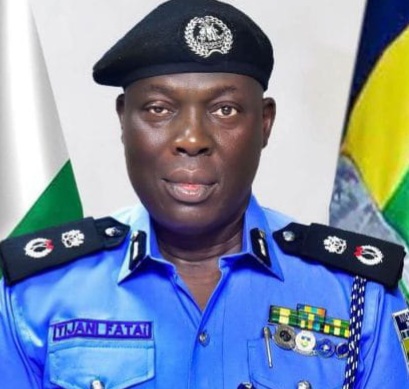
The Commissioner of Police, Lagos State Command, CP Tijani Fatai, psc, mnips, has directed that all persons found culpable in the incident be identified, arrested, and prosecuted in accordance with the law. He assures members of the public that the investigation will be thorough and professional, and that all persons found to have participated in the attack or otherwise contributed to the death will be made to face the law.


