
Metro
Democracy and Prosperity of Nigerian Citizenry: Foundations for Deciding a Fruitful Future


- /home/rhoncare/pointblank.ng/wp-content/plugins/mvp-social-buttons/mvp-social-buttons.php on line 27
https://pointblank.ng/wp-content/uploads/2025/08/DR.TOLULOPE-A.-ADEGOKE-AMBP-UN__-1-744x600.jpg&description=Democracy and Prosperity of Nigerian Citizenry: Foundations for Deciding a Fruitful Future', 'pinterestShare', 'width=750,height=350'); return false;" title="Pin This Post">
- Share
- Tweet /home/rhoncare/pointblank.ng/wp-content/plugins/mvp-social-buttons/mvp-social-buttons.php on line 69
https://pointblank.ng/wp-content/uploads/2025/08/DR.TOLULOPE-A.-ADEGOKE-AMBP-UN__-1-744x600.jpg&description=Democracy and Prosperity of Nigerian Citizenry: Foundations for Deciding a Fruitful Future', 'pinterestShare', 'width=750,height=350'); return false;" title="Pin This Post">
By Tolulope A. Adegoke PhD
Democracy, at its best, represents far more than periodic elections or formal institutions of government. It is a living covenant between the state and its people — one that promises participation, accountability, justice, transparency, and the genuine opportunity for collective advancement. In Nigeria, Africa’s most populous nation and a key actor on the global stage, the interplay between democracy and the prosperity of its citizens remains central to the nation’s future. When democracy is nurtured with sincerity and competence, it becomes a powerful driver of human development, economic growth, social cohesion, and national stability. When it falls short, it risks breeding disillusionment, inequality, and unrest. This write-up examines this vital relationship, reflecting on Nigeria’s democratic journey, its impact on citizen well-being, persistent obstacles, and realistic pathways toward a more secure, prosperous, and hopeful future for all Nigerians.
The Promise and Practice of Democracy in Nigeria
Nigeria’s return to civilian rule in 1999 ushered in the longest stretch of uninterrupted democratic governance in the country’s post-independence history. The 1999 Constitution, despite its imperfections, enshrines core principles such as separation of powers, fundamental human rights, federal character, and regular elections. For millions of Nigerians, democracy symbolises the chance to have a voice in shaping their destiny and to benefit from responsive governance.
True democratic prosperity goes beyond economic statistics. It encompasses improved access to quality education, healthcare, security, infrastructure, decent employment, and equal opportunities. When citizens experience tangible improvements in their daily lives as a result of democratic processes, public trust in institutions grows stronger. Conversely, when prosperity remains elusive for large segments of the population, democratic legitimacy weakens.
Nigeria has recorded notable achievements within its democratic framework. The liberalisation of the telecommunications sector, banking reforms, the rise of the creative economy (Nollywood, music, and digital content), and increasing participation in regional trade agreements such as the African Continental Free Trade Area (AfCFTA) all occurred in a democratic environment that enabled private enterprise and innovation.
Persistent Challenges on the Path to Prosperity
Despite these gains, significant gaps remain between democratic aspirations and lived realities. Nigeria continues to grapple with high rates of multidimensional poverty, youth unemployment, and widening inequality. Many citizens, particularly in rural areas and among vulnerable groups, feel disconnected from the dividends of democracy.
Key challenges include:
- Insecurity: Persistent threats from insurgency, banditry, kidnapping, and communal conflicts continue to destroy lives, displace communities, and discourage investment.
- Economic Structure: Over-reliance on oil revenue, weak industrial base, and limited value addition in agriculture and solid minerals constrain broad-based prosperity.
- Institutional Weaknesses: Corruption, uneven policy implementation, and limited coordination across government levels often undermine development efforts.
- Human Capital Deficits: Inadequate investment in education, healthcare, and skills development leaves many young Nigerians unprepared for the demands of a modern economy.
- Electoral and Governance Issues: Concerns about electoral integrity, political patronage, and policy inconsistency sometimes erode public confidence.
These issues are not unique to Nigeria. Many democracies worldwide, especially in developing contexts, face similar tensions between democratic ideals and developmental outcomes.
Practical Pathways to a Deciding and Fruitful Democratic Future
For democracy to truly assure prosperity for the Nigerian citizenry, deliberate and sustained actions are required across multiple fronts:
1. Strengthening Institutions and Accountability Independent and well-resourced institutions — particularly the judiciary, anti-corruption agencies, and electoral bodies — are essential. Transparent appointment processes, adequate funding, and robust oversight mechanisms can significantly reduce impunity and enhance public trust.
2. Inclusive Economic Transformation Nigeria must accelerate economic diversification by investing heavily in agriculture, technology, manufacturing, renewable energy, and the creative industries. Policies should deliberately target small and medium enterprises, women, and youth. Human capital development through quality education, vocational training, and digital skills must become a national priority.
3. Security as a Foundation for Prosperity A holistic security strategy that combines effective law enforcement with community engagement, intelligence-led operations, and massive socio-economic interventions in affected regions is vital. Addressing the root causes of conflict — poverty, unemployment, and marginalisation — is as important as tactical responses.
4. Youth and Women Empowerment With a predominantly youthful population, Nigeria’s greatest resource is its people. Deliberate investments in youth entrepreneurship, innovation hubs, sports, and leadership development can transform demographic pressure into a powerful dividend. Similarly, gender-inclusive policies that enhance women’s access to education, finance, and political participation will accelerate national progress.
5. Deepening Democratic Culture and Participation Civic education, responsible media, and active citizen engagement beyond election periods are crucial. Citizens must be empowered to demand accountability while contributing constructively to nation-building.
6. Leveraging Regional and Global Opportunities Nigeria should continue to play a leadership role in ECOWAS and the African Union while attracting responsible foreign investment and technology transfer. Successful democratic governance and economic progress in Nigeria can serve as a beacon for other African nations.
Relevance to the Wider-World
Nigeria’s democratic experience offers valuable lessons for other nations navigating the complex relationship between democracy and development. It demonstrates the resilience of democratic ideals even in challenging contexts, the power of a vibrant civil society, and the potential of a youthful population. At the same time, it highlights the universal truth that democracy must deliver tangible results to remain legitimate and sustainable.
Conclusion: Democracy as an Assurance of a Fruitful Future
Democracy remains the most credible pathway to sustainable prosperity for the Nigerian citizenry. While challenges persist, they should not overshadow the progress achieved or the immense potential that still lies ahead. The deciding factor for a fruitful future lies not in abandoning democracy, but in deepening, refining, and perfecting it.
This requires visionary and ethical leadership that prioritises the common good, active and responsible citizenship that demands accountability, and institutional reforms that translate democratic promises into tangible improvements in people’s lives. When democracy truly works for the people — delivering security, opportunity, justice, and dignity — it becomes the strongest assurance of a stable, prosperous, and hopeful future.
Nigeria stands at a critical crossroads. The choices made by leaders and citizens today will determine whether the promise of democracy translates into widespread prosperity or remains an unfulfilled aspiration. With courage, wisdom, collective commitment, and sustained effort, Nigeria can build a democracy that not only endures but genuinely serves the aspirations of its people — offering inspiration to many nations facing similar journeys around the world.
The future of the Nigerian citizenry can be brighter — if democracy is well defended, strengthened, and made to work for all.
Dr. Tolulope A. Adegoke, AMBP-UN is a globally recognized scholar-practitioner and thought leader at the nexus of security, governance, and strategic leadership. His mission is dedicated to advancing ethical governance, strategic human capital development, resilient nation building, and global peace. He can be reached via: tolulopeadegoke01@gmail.com, globalstageimpacts@gmail.com


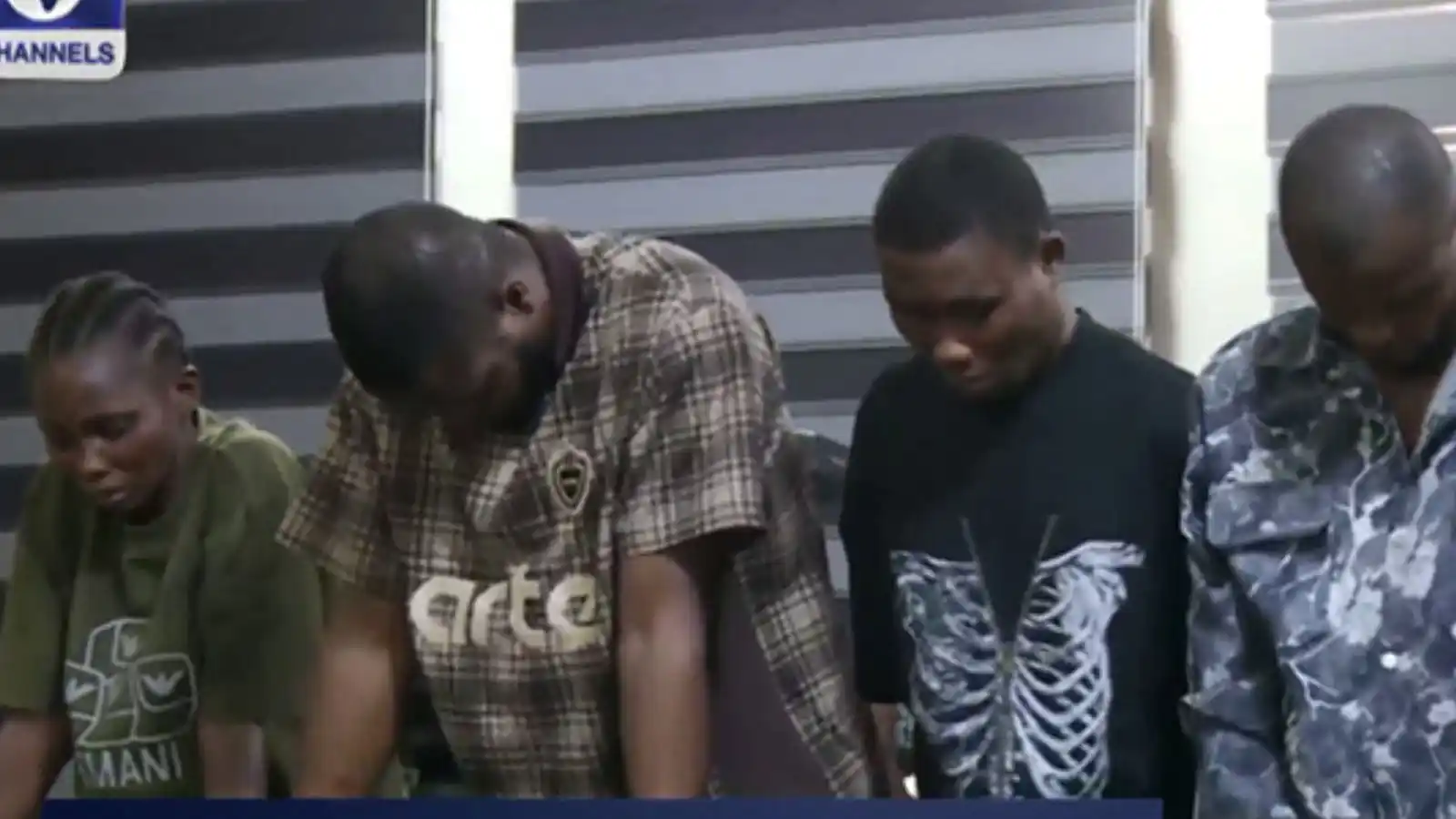
The Edo State Special Criminal Court has sentenced four men to death for their involvement in the kidnapping of a woman at the Vegetable Market along Airport Road in Benin City.
Justice Aigbona Momodu handed down the sentences after finding the defendants guilty on multiple counts connected to the kidnapping case.
The convicts are Marvellous Isaac, Wisdom Michael, Rufus Emete Michael and Gift Raphael.
Isaac and Michael were sentenced to death on counts two through nine. They also received separate prison terms on other counts, including seven years on count one, while Isaac was sentenced to 10 years on count 10 and life imprisonment on count 11.
Rufus Emete Michael was sentenced to death on counts two, three, four, six and seven, in addition to a seven-year prison term on count one.
The fourth defendant, Gift Raphael, was sentenced to death on counts two, four, six and eight and received seven years imprisonment on count one.
Delivering the sentences, Justice Momodu ordered that the death sentences be carried out by hanging or lethal injection, in accordance with the court’s judgment.
The court also ordered the forfeiture of a JoJef pump-action firearm and ammunition tendered as exhibits during the trial.
The firearm, identified as Exhibit M, along with two unused cartridges and two spent cartridges listed as Exhibits E and E1, was ordered to be handed over to the Edo State Police Armourer at the State Criminal Investigation Department for destruction.
Justice Momodu directed that the exhibits be transferred to the police through the Deputy Director of the Criminal Division and destroyed within 30 days.
The convictions bring to an end the trial arising from the abduction of the woman at the Vegetable Market along Airport Road, an incident that added to concerns over kidnapping and armed crime in Benin City.
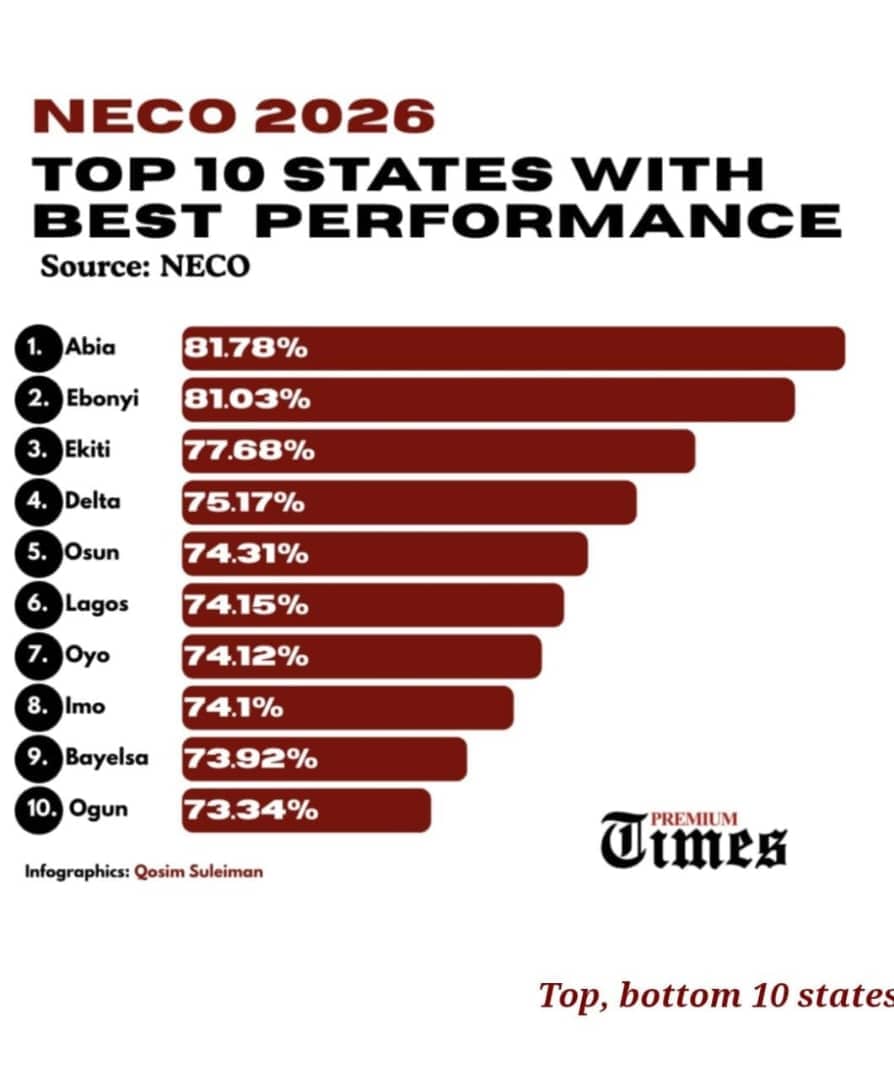
Osun State Governor, Senator Ademola Adeleke, has hailed the state’s strong performance in the 2026 National Examinations Council (NECO) Senior School Certificate Examination, describing the result as a positive reflection of ongoing efforts to reposition education in the state.
Osun placed fifth nationally in the 2026 NECO ranking, with 74.31 per cent of candidates recording at least five credits, including English Language and Mathematics.
While congratulating the students, teachers, parents, school administrators and other stakeholders, the governor noted that the state performance has been improving within a single digit rating for three consecutive years namely 2024, 2025 and 2026.
“Osun has moved from 33rd position in the 2022 NECO ranking to 5th in 2026, while improving its pass rate to 74.31 per cent. This is encouraging, and it shows that our sustained interventions in the education sector are yielding positive results,” the Governor said.
Governor Adeleke said the improved performance reflects his administration’s deliberate investment in the education sector, including the recruitment of additional teachers to strengthen the teaching workforce, while prioritising workers’ welfare and creating a more conducive environment for effective teaching and learning across public schools.
The Governor said the performance reinforces his administration’s determination to continue investing in education, noting that the objective is to build a system that gives every Osun child the knowledge, skills and opportunities needed to succeed.
“This result is encouraging, but we see it as a reason to do more. We will continue to invest in our schools, improve the learning environment, support our teachers and provide our students with the necessary tools to excel.
“We are building an education system that prepares our young people not only for examinations but for life,” the Governor said.
He assured that ongoing interventions in the education sector would be sustained and expanded, while urging students to remain committed to their studies.
His Excellency also commended teachers across the state for their dedication and sacrifices, assuring them that the administration would continue to prioritise measures that strengthen the education system and improve workers’ welfare.
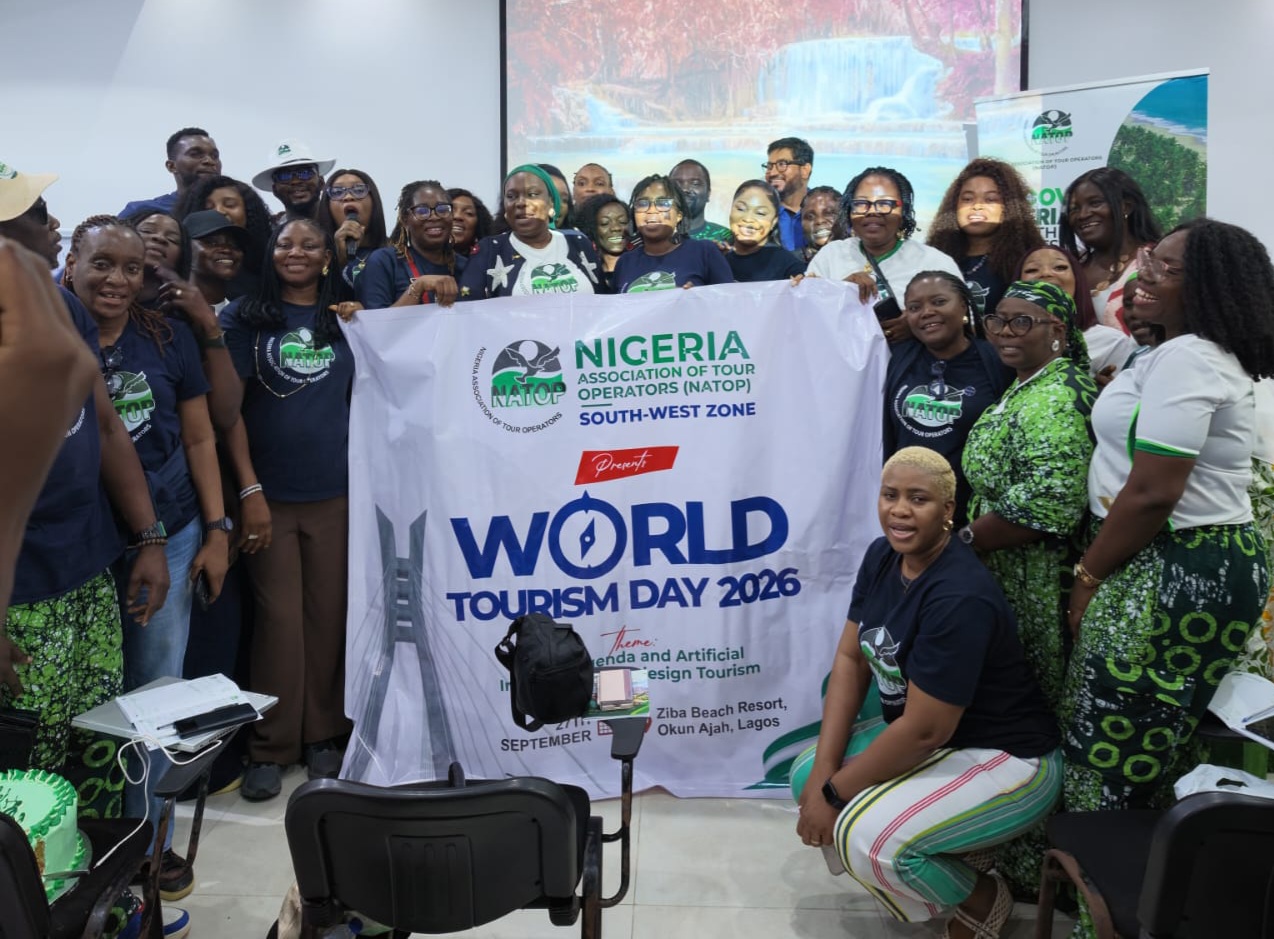
The Nigeria Association of Tour Operators (NATOP) marked the 2026 World Tourism Day with activities which capture capacity building, technology, destination promotion and domestic tourism, and celebration.
In the South West Zone, close to 200 tour operators gathered at Ziba Beach Resort, Lagos, for a special training focused on Artificial Intelligence and its application in tourism, equipping operators with digital tools to improve their businesses and destination marketing.
In Abuja, the FCT and Northern Zone, in collaboration with Naija Adventurers, staged a colourful Tourism Awareness Walk and Hike to the Centre of Nigeria.
The celebration also spread to the South-South Zone, where members marked the day with a destination tour, alongside activities to commemorate with the world tourism day celebrations.
In line with the theme for this year’s WTD celebration: ‘Digital agenda and artificial intelligence to redesign tourism’ the NATOP training on AI and application in tour operation at Ziba Beach Resort Lagos saw a large turnout of the members of the association.
The President of the association, Hajia Bolaji Mustapha explained that the idea for the location and training was to train members on how to do tour business, to know how to promote tourism digitally, using different AI tool and everything so that they will grow their businesses.
She said: “we follow the theme and, you know, blend with the old situation. Let’s do the training so that we attach it to the World Tourism Day with the theme that we have achieved something and also celebrate.”
She said the training will go a long way in helping the tour operators do greater content to digitally tell destination stories using AI, and also using the tool for expression.
Mustapha also explained why the association chose Ziba Beach Resort: “We always attach World Tourism Day to a tourism site. And definitely, if you look at this whole area and this community, that’s why we see that Ziba is a tourism site. We want to explore and of course. The resort newly launched its third phase. So, we will use this opportunity to look at their rooms, look at how we can sell this destination, to showcase it that the resort is actually in Nigeria, not Zanzibar. By using the place, we would kill two birds with one stones.
Facility tour of Ziba Beach Resort
“As tour operators who are willing to tell the good story of our Nigeria, we need to bring ourselves up to the speed, align with the digital revolution. Let everybody go digital. Because we also see the content creators are taking our business, we want to align it with what they do. We are the ones that understand the business and we’ll be able to tell the story better, so that anybody coming to Nigeria will be able to discover Nigeria with the experts.”
Also commenting on the celebration, the NATOP Vice President South West and chairman of the WTD Organizing Committee for the zone, Mrs. Wonuola Olatunde-Lamidi explained why NATOP South West’s usage of the 2026 WTD for training. She said many of the members still have a lot to learn about the tour business, and that some do not understand the foundation of the business, including how to create packages hence the need for the training.
Mrs. Olatunde-Lamidi spoke further: “Many don’t understand the foundation of what it is to create a tour package. And when you have people that are not well-trained in an industry, the industry will not grow. The kind of people that you also have will not have enough earning power to do many things. And because this is an industry that I have been in for 16 years, I run Diamonds and Pearls Travels with my husband. And I’ve seen Diamonds and Pearls Travels metamorphose into a company where people don’t just look at us as travel agents. We have become a Destination Management Company (DMC). We have become a trusted brand. We have become a company that when we talk about a destination, people want to go to that destination because of how we have portrayed the destination. And you may not realize that, as tour operators, you can actually decide where people go. You can make people go to a particular destination by marketing it, by letting them know the benefits of that destination.”
The tour operators had opportunity to tour the resort and unwind during the programme.


