
News
Digital Democracy: Corruption As Nigeria’s Biggest Challenge

- /home/rhoncare/pointblank.ng/wp-content/plugins/mvp-social-buttons/mvp-social-buttons.php on line 27
https://pointblank.ng/wp-content/uploads/2021/03/corruption.jpg&description=Digital Democracy: Corruption As Nigeria’s Biggest Challenge', 'pinterestShare', 'width=750,height=350'); return false;" title="Pin This Post">
- Share
- Tweet /home/rhoncare/pointblank.ng/wp-content/plugins/mvp-social-buttons/mvp-social-buttons.php on line 69
https://pointblank.ng/wp-content/uploads/2021/03/corruption.jpg&description=Digital Democracy: Corruption As Nigeria’s Biggest Challenge', 'pinterestShare', 'width=750,height=350'); return false;" title="Pin This Post">
By Joel Popoola
Another week, yet more horrific headlines for the people of Nigeria.
More kidnapping. More violence. More separatism. More threats against the free press.
And with that, yet more international criticism and concern.
Global economic analysts, Bloomberg this week joined a chorus of critical observers, warning investors that “Nigeria’s cratering economy may become Africa’s biggest threat”.
Bloomberg wrote:
“Endowed with some of the world’s biggest oil reserves, plenty of arable land and a young, tech-savvy population of 206 million that sets Africa’s music and fashion trends, Nigeria had the potential to break onto the global stage.
“Instead, policy missteps, entrenched corruption and an over-reliance on crude oil mean that a country that makes up a quarter of the continent’s economy risks becoming its biggest problem… a dangerous cauldron of ethnic tension, youth discontent and criminality.”
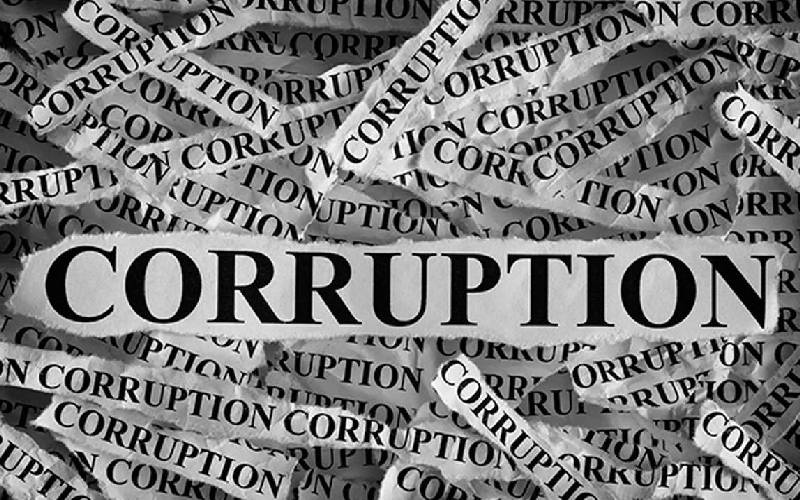
For all the challenges facing our nation we cannot lose sight of the fact that the biggest challenge of all remains corruption. Not just morally. Not just legally. Not just democratically. But economically.
The average score on the internationally recognised Corruption Perception Index is 43. Nigeria has score of 23.
As I write this, the Kano State Public Complaints and Anti-Corruption Commission has announced plans to prosecute a number of officials – including the Commissioner for Works and Infrastructure – for alleged fraud relating to millions of naira’s worth of spending on petrol and alleged contract racketeering relating to a hospital.
One recent estimate suggested that our nation may be losing N100 billion every year to tax-related fraud.
Nigeria is now officially the second most corrupt country in West Africa with Guinea-Bissau the only country more corrupt than us in our entire region.
This is all money that should be building a better Nigeria. Instead it is tearing down the ties that bind our people and our political institutions.
And in a globalised and interconnected world, things are just going to get worse.
Vice President Osinbajo this week highlighted how much corruption and a lack of transparency has hurt Nigeria’s negotiations with other countries and organizations.
And it is these sorts of relationships that will be key to delivering Nigeria to our rightful place as a prosperous and peaceful nation recognised on the global stage for our innovation and invention, not our instability and insecurity.
Just look at Facebook. Last autumn, the social media giant announced it was opening an office in Lagos to build a base from which to expand across Africa.
As a country and a continent we present a potentially significant market for international investors. By 2100, Africa’s population is likely to have tripled, and Nigeria will probably have become the second-most populated country in the world.
And we will benefit from the technology this investment will bring. Just this week, we’ve seen the African Facebook office confirm the development of an education-focused mobile app called Sabee, designed to connect learners and educators in online communities to make educational opportunities more accessible to everyone.
But if we remain synonymous with corruption and division, those investors and opportunities will not come. And when it does come, there remains a permanent risk that only a few people will benefit from it.
Building trust has to happen at an individual level. That is why the digital democracy campaign I lead has created an app to connect politicians and the people they serve.
Rate Your Leader puts electors and elected in direct person-to-person contact, allowing them to discuss the issues of the day as peers and equals, exchange important information, and collaborate to improve our communities.
Rate Your Leader’s abuse proof technology ensures all contact is courteous and civil and users can even score their elected officials on accessibility and transparency.
The Rate Your Leader app facilitates relationships of trust. The more people use it, the more trust there is in our political officials and the institutions they represent.
Corruption isn’t just bad for our democracy and our economy. It’s even bad for our health. As the authors of the Corruption Perception Index have stated, corruption “not only contributes to a continuing crisis of democracy” it also “undermines the global health response to Covid-19…(as it) undermines an equitable response to COVID-19 and other crises, highlighting the importance of transparency and anti-corruption measures in emergency situations.”
We face a series of unprecedented crises. Without more trust in ourselves and our institutions, we cannot begin to overcome them. Corruption makes that trust impossible.
Joel Popoola is a Nigerian tech entrepreneur, digital democracy campaigner and creator of the Rate Your Leader app. He can be reached via @JOPopoola


Ahead of the 2027 general elections, the Nigeria Democratic Congress (NDC) has accused the Independent National Electoral Commission (INEC) of removing some of its nominated candidates from the commission’s list and replacing them with names allegedly unknown to the party.
The National Chairman of the party, Senator Moses Cleopas Zuwoghe, made the allegation in a statement on Sunday, following INEC’s publication of candidates for the 2027 State Houses of Assembly elections.
Cleopas said the names published by INEC, particularly in Anambra State, suggested an attempt to undermine the party ahead of the elections and create disaffection among its supporters.
The NDC chairman specifically alleged that nine persons whose names were not authorised or submitted by the party had been listed as its candidates in various constituencies in Anambra State, the home state of the party’s presidential candidate, Peter Obi.
He called on the INEC Chairman to immediately investigate the development and determine how the names got onto the commission’s list.
Cleopas also urged INEC to extend the investigation to other states, including Benue and Imo, where he said the party had observed a similar pattern.
According to him, the development had embarrassed the party, its leadership and its genuine candidates, while creating disaffection among its supporters in Nigeria and the Diaspora.
“We, as a party, are also carrying out our own independent investigation, the preliminary findings of which are already pointing to the complicity of INEC officials in foisting names purporting to be our candidates, but who are not from us,” he alleged.
He said the party’s investigation indicated that the uploading process was being used to intimidate and embarrass the NDC.
The party listed the following persons as names allegedly published by INEC as its candidates in Anambra:
Onitsha South 1 — Umennaajiego Jude Ezenwa
Onitsha South 2 — Akpotue Obinna Chibuike
Orumba North — Nwankwo Chiemerie
Anaocha 1 — Maduagwu Eric K
Idemili North — Ngoebisi Obinna
Njikoka 1 — Isintume Charles
Nnewi South — Nwachukwu Nonso
Nnewi South 2 — Okeke Ifeanyi Akunne
Ayamelum — Nnonyelu Samson E
Dunukofia — Azotani Chuks Francis
Cleopas, however, said the party is particularly concerned about the process through which the names were uploaded and published.
He said after the conclusion of the party’s primaries and appeal process, stakeholders from Anambra, the party leadership, representatives of Obi and the appeals panel agreed on a final list of candidates.
According to him, the list was signed off by the relevant stakeholders before being uploaded to the INEC portal using the code provided to the party by the electoral commission.
He alleged that INEC officials subsequently kept nine of the names on “Pending” status, claiming that the names were already in the commission’s system based on submissions by officials who monitored the party’s primaries.
Cleopas said the NDC formally challenged the names and submitted the identities of candidates it said were legitimately nominated by the party, but INEC allegedly declined to replace the disputed names.
He further alleged that INEC subsequently collected Form EC-9 directly from the persons whose names were in dispute and uploaded the forms without going through the party.
“To further confirm that there was a predetermined effort on the part of INEC to impose the said nine candidates on the party, and embarrass both NDC and Mr. Peter Obi, INEC went behind the NDC to collect the Form EC-9 directly from the candidates, bypassing the party, and uploading same,” he alleged.
Cleopas argued that where there was a discrepancy between names submitted by a political party and information received by INEC from its monitoring teams, the commission should have left the affected positions vacant pending clarification, rather than publish names the party said it did not nominate.
“At the very worst, INEC could have left us with no candidates for those positions, if they knew they were unwilling to engage us in addressing any perceived anomaly,” he said.
The NDC chairman accused INEC of creating a pattern in which opposition parties were allegedly prevented from uploading their preferred candidates while other names were introduced into their candidate lists.
He vowed that the party would pursue the matter through all available legal channels and seek to have what it described as its authentic candidates restored.
“We are moving to approach the court of competent jurisdiction to seek redress and restore our authentic candidates. The general public and our millions of supporters should note that these are not our candidates,” he said.
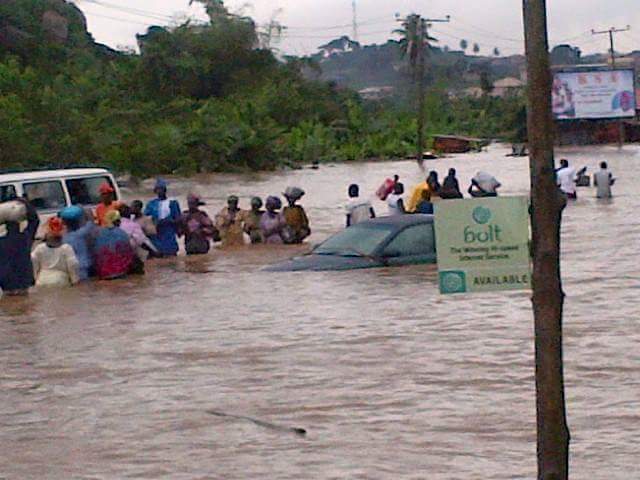
Nepal said Sunday it had begun burying some of the hundreds of bodies recovered after devastating floods, after taking DNA samples and marking them so families can later retrieve them.
The dead are traditionally cremated on funeral pyres in Hindu-majority Nepal, so the burials are viewed as long-term storage until families can retrieve them.
Foreign Secretary Amrit Bahadur Rai told reporters that all those buried were carefully recorded, but also appealed for international support, saying Nepal needed “more than a thousand” freezer units to store bodies.
The announcement of the burials came as Nepal’s disaster ministry increased its toll again on Sunday to 752 bodies recovered and 2,502 people missing.
That list includes 589 foreigners unaccounted for.
Chinese state media earlier confirmed 16 dead in Tibet and 546 people missing following Wednesday’s disaster, taking the overall toll to 768 dead and 3,048 unaccounted for.
“Following standard and accepted protocols, such as those of ICRC (Red Cross), the mortal remains of the dead, especially those not recognisable… have been temporarily buried,” Rai told reporters.
“Medical teams took DNA samples from every victim prior to the burial so that families can match-reference later, and would be allowed to exhume for necessary rituals.”
Nepal has called for freezer storage units and DNA testing kits, as it is overwhelmed with the number of bodies to store safely.
“We have requested different countries for freezers; we will need more than a thousand,” Rai added.
“Many dead bodies have been collected, and they have started decomposing. To preserve public health, we had to bury the decomposing bodies,” he added.
AFP
By Henry Ukazu
Dear Destiny Friends,
Everyone loves influence. Everyone wants to be a person of influence. Everyone wants to be relevant. Everyone wants to be celebrated. Everyone likes attention, appreciation, approval, and admiration. All these are products of influence.
The question I need you to ask yourself is, are you a person of influence? Are you influencing anyone? Do you have a positive or negative influence on your children, spouse, friends, mentors/mentee, or even strangers? Take a minute to listen to yourself.
When we talk about influence, uninformed minds just think influence is only about money, power, authority, or even being a mentor. Influence is far from it. We are all influencers in one way or another. Many people have influenced us in different ways, some positive, some negative. Similarly, we have also influenced many people in good and bad ways.
But today, I’m here to share with you what influence is about and the positive ways one can be a person of influence. Influence comes in different ways: as a politician, you are influencing people; as a leader, you are influencing policy; as a youth advocate, mentor, teacher, pastor, and employee, you are influencing somebody in one way or the other.
Do you know you can influence someone with your lifestyle? Yes, the way you talk, write, lead, dress, eat, exercise, preach the word of God, do your job, serve people, train your children, etc., are all part of influence. Influence is powerful. It has a way of permeating someone without them knowing. I believe that’s why my late mother would always say, if you are hanging out with a friend, only take the good part and leave the bad part.
We currently live in the 21st century, where the internet leads. The internet is regarded as the fifth estate for a reason, because it empowers networked individuals and alternative media to hold traditional institutions, governments, and mainstream media accountable. Everyone and almost everything is on the internet; however, sometimes, the information we get on the internet is regarded as fake because it’s unverified.
In some quarters, the internet has been regarded as a bad influence on the younger generation because of the limited restrictions and the negative information it has exposed their minds to think in a particular way. Some other schools of thought have opined that the internet has done more good than harm due to the knowledge it has exposed their minds to, as opposed to the information being peddled by some other schools of thought. Regardless of the aisle one belongs to, the internet truly has its pros and cons, especially as it relates to influence.
The big question one needs to answer is what influence is. According to Nosakhare Tune Oni – A Pan-African Strategist, leadership and business coach, “influence is when people trust your judgment enough to act on it. It is when someone calls you before making an important decision. When your recommendation opens a door. When your name carries weight in a room, you’re not even in. When people are willing to put their reputation behind yours. That’s influence.
Let’s take a minute to dwell on those lines again. Has anyone played any of such roles in your life? If yes, that’s the best definition of influence in a nutshell. Influence is not about quantity, but quality. The quality of people in your life is more valuable than the quantity of people one’s life. Do you know we don’t really need battalions of friends, whether online or in person, but just one person of influence can be a game-changer. According to Les Brown, a leadership coach, we need only quality people.
Do you know we are everywhere and nowhere at the same time? Do you also know that we can be everywhere and still have very little influence? Influence is about knowing your value and the right people who appreciate the value you bring. Do you know one can be a person of value to the wrong person or audience?
Influence is about having followers who believe and follow your teaching. We can have visibility with little or no influence. One may have 100,000 followers. We may trend on Facebook, Instagram, X, TikTok, LinkedIn, or even WhatsApp. Your name is a household name. That is visibility.
Let me give you a practical example. If you have a large crowd of people following you online or in person. The critical question one must ask oneself is: why are they following me? Are they following me because of my ideology, my talent/gift, academic process, position, profession, vocation, skill, or jokes? If they follow you because of the ideology you represent, you are a person of influence. If they are following you because of your jokes, you may be a content creator or comedian with little or no value in influencing them to do or not do certain things. Real influence provokes action.
According to Nosakhare Tune Oni, influence is built differently from attention. Attention can be bought. Influence must be earned. You can manufacture visibility with advertising, controversy, or constant posting. But you cannot manufacture trust that easily. It comes from consistently being useful. Keeping your word. Knowing what you’re talking about. Showing up when it matters. Building relationships before you need them.
And creating value for people without constantly asking, “What’s in it for me?”
Do you know a person with 1,000 followers and deep trust within a particular industry may have more real influence than someone with 100,000 followers who nobody listens to. So, I don’t think the goal should simply be: “How many people know me?” A better question is: “How much does my presence actually change things?” Because visibility gets you noticed. Value gets you remembered. Trust gets you listened to, but influence is what happens when people trust your value enough to move.
As I prepare to conclude, please take a minute to ask yourself: are you a person of influence? Do you have influence? What positive influence have you had on people or anyone? Today, I want you to be a man/lady of influence like Martin Luther King Jnr, Mother Theresea, Evangelist Ebuka Obi, President Nelson Mandela, Elon Musk, Bill Gates, Mark Zuckerberg, Dr. Kola Adesina, Dr. Joe Abah, Dr. Dele Momodu, Barr. Henry Ukazu and Miss Ginika Dike.
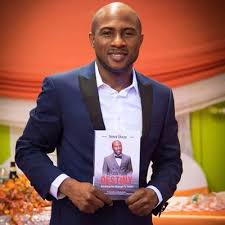
Henry Ukazu writes from New York. He works with the New York City Department of Correction as the Legal Coordinator. He’s the founder of Gloemi. He’s a Transformative Human Capacity and Mindset coach. He is also a public speaker, youth advocate, creative writer, and author of Design Your Destiny- Actualizing Your Birthright to Success, Unleash Your Destiny, and The Six Pillars of Success. He can be reached via info@gloemi.com


