
Headlines
Don’t Dare Nigerians, NLC Warns Tinubu over Fuel Subsidy Crisis


- /home/rhoncare/pointblank.ng/wp-content/plugins/mvp-social-buttons/mvp-social-buttons.php on line 27
https://pointblank.ng/wp-content/uploads/2019/05/NLC-1000x598.jpg&description=Don’t Dare Nigerians, NLC Warns Tinubu over Fuel Subsidy Crisis', 'pinterestShare', 'width=750,height=350'); return false;" title="Pin This Post">
- Share
- Tweet /home/rhoncare/pointblank.ng/wp-content/plugins/mvp-social-buttons/mvp-social-buttons.php on line 69
https://pointblank.ng/wp-content/uploads/2019/05/NLC-1000x598.jpg&description=Don’t Dare Nigerians, NLC Warns Tinubu over Fuel Subsidy Crisis', 'pinterestShare', 'width=750,height=350'); return false;" title="Pin This Post">
The Nigeria Labour Congress (NLC), on Tuesday, expressed displeasure over the pronouncement by President Bola Tinubu that the subsidy on petrol is gone, without consulting relevant stakeholders and putting in place adequate measures to cushion its effect on the citizens.
The NLC, through a statement by its President Comrade Joe Ajaero, noted with regret that a few hours after the pronouncement, some marketers shut down their filling stations, and immediately there was a price hike in some places.
While describing the action as insensitive, the NLC President said it has brought tears and sorrow to millions of Nigerians instead of the renewed hope, which the administration has promised.
He also said that Tinubu’s pronouncement has devalued the quality of the lives of Nigerians by over 300 per cent and counting.
The statement read: “We at the Nigeria Labour Congress are outraged by the pronouncement of President Bola Tinubu removing ‘fuel subsidy without due consultations with critical stakeholders or without putting in place palliative measures to cushion the harsh effects of the ‘subsidy removal’.
“Within hours of his pronouncement, the nation went into a tailspin due to a combination of service shutdowns and product price hikes, in some places representing over 300 per cent price adjustment.
“By his insensitive decision, President Tinubu on his inauguration day brought tears and sorrow to millions of Nigerians instead of hope. He equally devalued the quality of their lives by over 300 per cent and counting.
“It is no heroism to commit against the people this level of cruelty at any time, let alone on an inauguration day. If he is expecting a medal for taking this decision, he would certainly be disappointed to receive curses for the people of Nigeria consider this decision not only a slight but a big betrayal.
“On our part, we are staunchly opposed to this decision and are demanding and immediate withdrawal of this policy.”
NLC argued that the pronouncement has ripple effects on the economic well-being of the people
He said, “The implications of this decision are grave for our security and well-being.
“We wonder if President Tinubu gave a thought to why his predecessors in office refused to implement this highly injurious policy decision.
“We also wonder if he also forgot the words he penned down on January 8, 2012, but issued on January 11, 2012.
“We have chosen to reproduce substantial parts of the statement for the benefit of those who did not have the opportunity of reading it then.
“As Nigerians gathered with family and friends to celebrate the New Year, the federal government was baking a national cake wrapped in the scheme that would instantly make the New Year a bitter one.
“Barely had the public weaned itself from last year when government dropped a historic surprise on an unsuspecting nation. PPPRA issued a statement abolishing the fuel subsidy. By this sly piece of paper, the federal government breached the social contract with the people.
“This government….has turned its back on the collective will. By bureaucratic fiat, government made the most fateful economic decision any administration has made since the inception of the Fourth Republic and it has done so with an arrogant wave of the hand as if issuing a minor regulation. Because of the terrible substance of the decision and the haughty style of its enactment, the people feel betrayed and angry.
“At this moment, we know not to where this anger will lead. In good conscience, we pray against violence. Also in good conscience, it is the duty of every citizen to peacefully demonstrate and record their opposition to this draconian measure that is swiftly crippling the economy more than it will ever cure it.
“By taking this step, the government has tossed the people into the depths of the midnight sea. Government demands the people swim to safety under their own power, claiming the attendant hardship will build character and add efficiency to the national economy. It is easy to make these claims when one is dry and onshore.
“Government would have us believe that every hardship it manufactures for the people to endure is a good thing. This is a lie. The hardships they thrust upon the poor often bear no other purpose than to keep them poor. This is such a time…..
“Though someday, Nigeria will have to remove the subsidy, the time to do it is not now. This subsidy removal is ill-timed and violates the condition precedent necessary before such a decision is made. First, the government needs to clean up and throw away the salad of corruption in the NNPC.
“Then, proceed to lay the foundation for a mass transit system in the railways and road network with long-term bonds and fully develop the energy sector towards revitalizing Nigeria’s economy and easing the burden any subsidy removal may have on the people.
“But we know this is about more than the fuel subsidy. It is about the government’s ideas on the role of money in bettering the lives of people, about the relationship between the government and the people and about the primary objective of the government’s interaction with the economy. It is about whom, among Nigeria’s various social classes, does government most values.
“This is why the public reaction has been heated. It is not so much that people have to spend more money. It is because people feel short-changed and sold out.
“… What this government claims to be economic decisions are essentially political ones. As there is progressive politics, there is progressive economics. As there is elitist politics, there is elitist economics. It all depends on what and who in society the government would rather favour. The Jonathan tax represents a new standard of elitism.
“This whole issue boils down to whether the government believes the general public is worth a certain level of expenditure…
“However, because the distance between the government and the people is far and the genuine level of affection is low, the government sees no utility in continuing to spend the current level of money on the people. In their mind, the people are not worth the money.
“Government sees more value in “saving” money than in saving the hard-pressed masses…
” If the government thrashed the fuel subsidy based on considerations that it will run out of naira then it based its decision on a factor that has not been relevant since the time of the Biafran war.
“…. Since In a fiat money system, the problem with the fuel subsidy is not impending insolvency as the government asserts. The serious constraint is inflation. Here we must ask whether the payment is so inflationary as to distort the economy. We have been making the payment for years and inflation has not wrecked the economy. This historic evidence refutes the imminent disaster claimed by the government.
“In advancing the argument that subsidy would lead to imminent bankruptcy, government reveals its lack of trustworthiness on important matters of fact….
“Nigerians have a collective stake in the ownership of our oil resource held in trust by the government of the day. What we need then is the effective management of this scarce resource that will beget long-term prosperity to the suffering people of Nigeria and not the present racket in which those in power abuse access and control of NNPC and oil revenue to warehouse money to fund their election campaigns.
“This brings us to another inconsistency. On one hand, the government states the expenditure is unsustainable yet on the other it claims the amount now earmarked for the subsidy will be used to fund other people-oriented programs. However, the two assertions cannot exist at the same time. If the subsidy is bankrupting us, then reallocating funds to different programs will be no less harmful. A bankrupting expenditure retains this quality whether used for a subsidy or another purpose. Earmarking the funds to something else will not change the fiscal impact. If the government is sincere about using the funds for other programs, then it must be insincere about the threatened insolvency.
“The concern about the government saving naira is purely superfluous. Officials cry that Nigeria will become like Greece. Those who say this disqualify themselves from high office by their own words. Greece sits in a terrible situation because it forfeited its own currency. Thus, it cannot print itself out of insolvency and it must save or earn euro to pay its bills. Because Nigeria issues its own currency, it does not face the same constraint.
“Again, Nigeria’s problem with the subsidy is not insolvency. Therefore, to go from subsidy to nothing is not wise economics for it “saves” government nothing. What it does is produce real havoc and misery for the majority of the people while the governing elite worship their mistaken fiscal rectitude.
“Ironically, by acting like the old gold standard fiscal constraints are real, this government will incur the very thing it seeks to avoid. It will subject Nigeria to a crushing economic contraction.
“The difference between us and the Greeks will be that their situation is the inevitable result of being a weak member in a monetary union dominated by a strong economy, while our downturn will be a discretionary one artificially induced by the backwardness of our policymakers…
“Again, we must rid ourselves of the old notion that government saving and budgetary surpluses are inherently good and that deficits are always bad. For government to save naira, that means it brings in more than it pays out. Where does this influx come from? It comes from you and me, the private sector. If the federal government saves more, it means the private sector will have less. Government surplus means private sector contraction. This shows that the administration has its priorities confused. It acts as if the people are there to help government run itself.
“The more beneficial relationship is that government should be giving people the help needed to better live their lives. The government’s position is akin to a wealthy parent demanding his young children bring home more food for him to consume than the parent gives them to eat. We would deride any parent for such meanness. Yet, this government believes this conduct is wise and prudent.
“Another argument government has presented is that removal of the subsidy will stabilize the exchange rate. This makes no sense. True, since marketers convert much of the naira from selling petrol gained into dollars, there is downward pressure on the exchange rate and foreign reserves. However, this pressure is not a byproduct of the subsidy.
“It is a byproduct of importation. With the subsidy lifted, the marketers will earn the same or more from the sale of petrol. For there to be less pressure on the exchange rate would mean the marketers would seek to exchange significantly less of the same amount of naira into dollars simply because the subsidy was removed.
“There is no logical basis to assume the new Jonathan tax will have the behavioral impact of causing importers to want to hold more naira. The downward pressure on our currency and reserves will not change simply because the imported items are no longer subsidized. In fact, the higher rate of inflation caused by the removal may make importers keener to change naira into dollars. Thus, the real challenge in this regard is for government to pave the way to increased domestic production.
“There is another “philosophical mystery” in the government’s position. They state the subsidy must be removed to end the unjust enrichment of the importing cabal. There is a major problem with this assertion. If this is truly a subsidy, there should be no unjust enrichment.
“A subsidy is created to allow the general public to pay a lesser price while sellers earn the prevailing market price. Subsidy removal should not increase or decrease the amount earned per litre by the suppliers. If the amount earned by the suppliers will diminish materially, what government had been operating was in part a pro-importer price support mechanism on top of the consumer-friendly subsidy. If this is the case, government could have abolished the unneeded price support while retaining the consumer subsidy.
“More to the point, government has failed to show how the system it plans to use will be protected from the undue influence and unfair dealings of those who benefited from the discarded subsidy regime. Because it is capital intensive by its very nature, this sector of the economy is susceptible to control by a few powerful companies.
“Most of the players will remain the same except that a few cronies of the administration will be allowed entrance into the lucrative game. Sending the economy into the gutter is a steep cost to pay just so a few friends can.
“Government claims the subsidy removal will create jobs. This is misleading. The stronger truth is that it will destroy more jobs than it creates. For every job it creates in the capital intensive petroleum sector, it will terminate several jobs in the rest of the labor intensive economy. Subsidy removal will increase costs across the board. However, salaries will not increase.
“This means demand for goods will lessen as will sales volumes and overall economic activity. The removal will have a recessionary impact on the economy as a whole. While some will benefit from the removal, most will experience setback.
“What is doubtless is that the Jonathan tax will increase the price of petrol, transportation and most consumer items. With fuel prices increasing twofold or more, transportation costs will roughly double. Prices of food staples will increase between 25-50 percent. Yet this is more than about cost figures.
“Most people’s incomes are low and stagnant. They have no way to augment revenue and little room to lower expenses for they know no luxuries; they are already tapped out. The only alternative they have is to fend as best they can, knowing they must somehow again subtract something from their already bare existence.
” There will be less food, less medicine, and less school across the land. More children will cry in hunger and more parents will cry at their children’s despair. This is what government has done. Poor and middle class consumers will spend the same amount to buy much less.
“The volume of economic activity will drop like a stone tossed from a high building. This means real levels of demand will sink. The middle class to which our small businessmen belong will find their profit margins squeezed because they will face higher costs and reduced sales volumes.
” These small firms employ vast numbers of Nigerians. They will be hard pressed to maintain current employment levels given the higher costs and lower revenues they will face. Because the middle class businessman will be pinched, those who depend on the businessmen for employment will be heavily pressed.
“States that earn significant revenue from internally generated funds will find their positions damaged. Internally generated revenue will decline because of the pressure on general economic activity. The Jonathan tax will push Nigeria toward an inflation-recession combination punch worse than the one that has Europe reeling.
“This tax has doomed Nigeria to extra hardship for years to come while the promised benefits of deregulation will never be substantially realized.
” People will starve and families crumble while federal officials praise themselves for “saving money.” The purported savings amount to nothing more than an accounting entry on the government ledger board. They bear no indication of the real state of the economy or of the great harm done the people by this miserly step.
“As stated before, the threat of bankruptcy is nothing more than a ghost of something long dead. The real consideration is not whether this sum should be spent but whether it is better spent on the subsidy or on other programs. Nigerians do not need to be wedded to the subsidy. It is not the subsidy that gives life to the social compact; the amount of the expenditure is the better litmus.
“When attempting to douse popular sentiment, government pretended that the social contract would remain intact because government would spend the money saved from the subsidy on other programs. This would be nice if supported by action. If government were sincere in this regard, it would have used an entirely different strategy…”
“In light of the foregoing, we advise Tinubu to respect his owe postulations and economic theories instead of daring the people. It could be a costly gamble.”


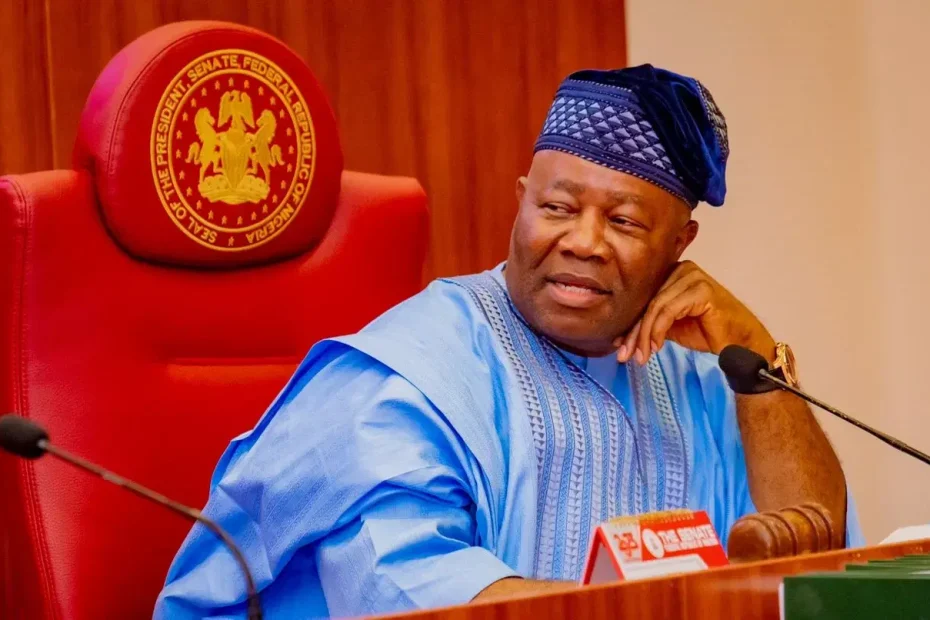
President of the Senate, Godswill Akpabio has dismissed calls for President Bola Tinubu to hand over power to Vice President Kashim Shettima, saying there is no leadership vacuum despite the President’s continued working vacation abroad.
Speaking on Tuesday, in Akwa Ibom State, while commissioning road projects executed by Governor Umo Eno, Akpabio addressed public concern over Tinubu’s three-week holiday, which was recently extended by one week. He insisted the President remains fully in office and continues to carry out his constitutional duties.
“I am the Senate President, and I am not the acting President of Nigeria, because President Tinubu is still in power. He is on a working leave, and there is no absence in Aso Rock. The world is a global village, and one can give instructions over the internet. So, why are people complaining?” he retorted.
Akpabio emphasized that only his office can declare a presidential vacancy and that no such condition currently exists. “Right now, there is no vacancy. Asiwaju Tinubu is still in power, and he is still running the affairs of Nigeria,” he added.
To underscore the President’s continued engagement, Akpabio disclosed of recent diplomatic contacts, including communications with French President Emmanuel Macron.
His remarks may have finally put to bed, unnecessary concerns raised by critics who claim the extended absence has hindered governance. Invoking modern communication, Akpabio argued a “remote” presidency can still function effectively.
The Presidency has not provided a formal return date for President Tinubu. Akpabio’s comments, however, signal a united stance within the ruling All Progressives Congress (APC) aimed at quelling speculation about a leadership crisis.
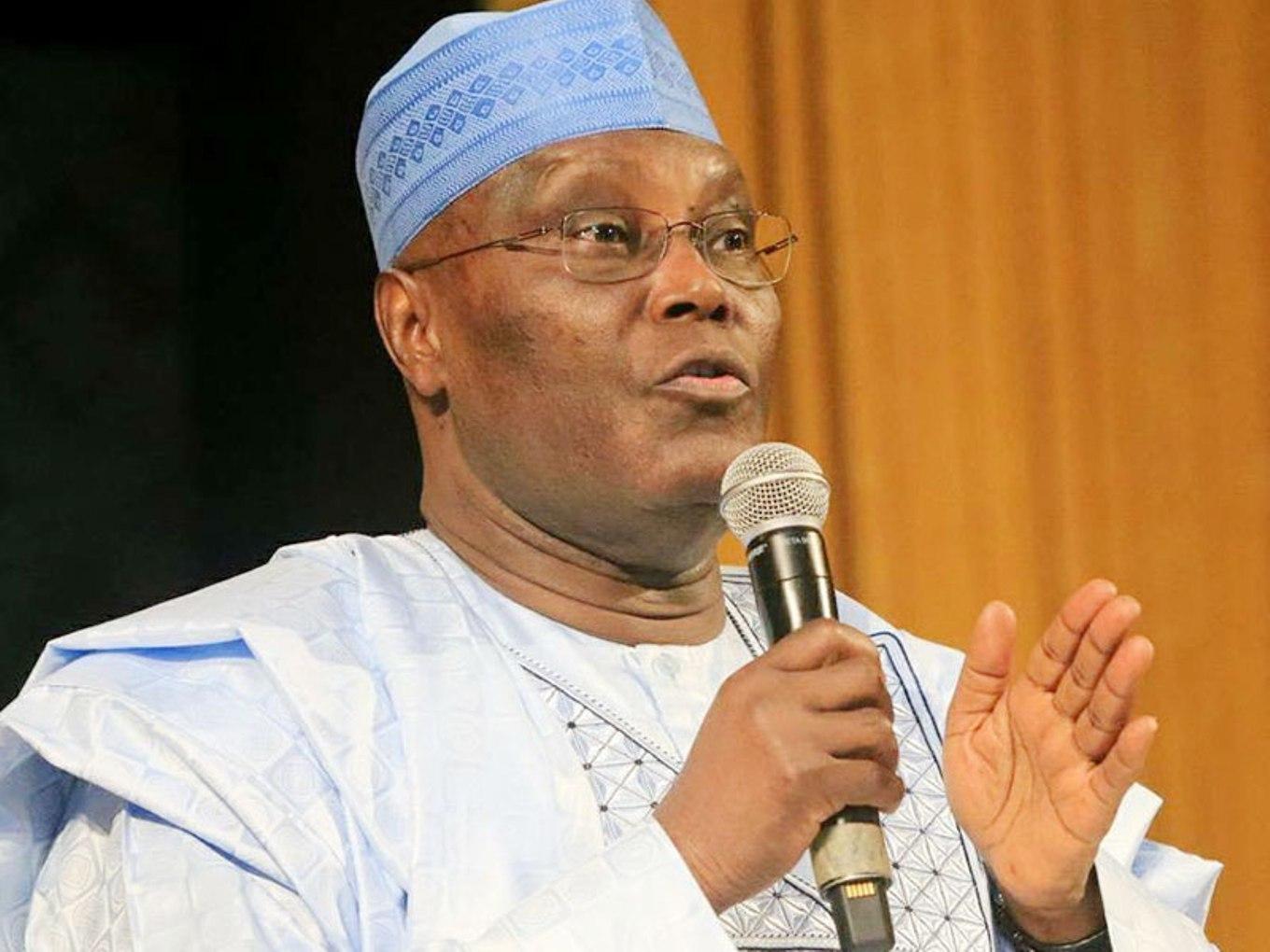
Former Vice President Atiku Abubakar has asked the Presidency and the National Assembly to clarify who is constitutionally exercising the powers of President Bola Ahmed Tinubu following the expiration of the 21-day period announced for the President’s annual vacation.
Recall that Tinubu left Nigeria on August 30 for a three-week annual vacation in Europe. The President’s absence coincided with Vice President Kashim Shettima’s official engagements outside the country, including his current representation of Nigeria at the 81st United Nations General Assembly in New York.
In a personally signed statement on Monday, Atiku argued that the expiration of the 21-day period had raised questions under Section 145 of the 1999 Constitution regarding the transfer of presidential powers.
Section 145(1) provides for the President to transmit a written declaration to the President of the Senate and the Speaker of the House of Representatives when proceeding on vacation extending beyond a specified period or when otherwise unable to perform the functions of his office.
Atiku said Nigerians had not been shown any such declaration transferring presidential functions to Shettima.
“President Tinubu left Nigeria on 30 August. The Presidency publicly announced a three-week vacation. Yet, to date, Nigerians have not been shown any constitutional letter transmitting presidential authority to Vice President Kashim Shettima.
“The 21 days have now elapsed. If such a letter exists, the Presidency should publish it immediately,” Atiku said.
The 2027 African Democratic Congress (ADC) presidential candidate, said the constitutional provision also addresses a situation where the President fails to transmit the required declaration.
He referred to Section 145(2), which provides that where the President is unable or fails to transmit the declaration within 21 days, the National Assembly can, by a simple majority in each chamber, mandate the Vice President to perform the functions of President as Acting President.
Atiku therefore asked the National Assembly to explain whether the constitutional procedure had been activated.
“If it does not, then the constitutional mechanism contemplated by Section 145(2) has been triggered, and the National Assembly owes Nigerians an explanation as to why it has not acted.
“This is not a matter of political convenience. It is a matter of constitutional order,” he said.
Atiku further drew attention to Shettima’s presence in New York, where he is leading Nigeria’s delegation to the 81st United Nations General Assembly based on the President’s directive.
Atiku said the situation raised a question about who was exercising presidential authority in Nigeria and under what constitutional instrument.
“So again: who is exercising presidential authority in Nigeria today, and under what constitutional instrument?” he asked.
The former Vice President also criticised what he described as reliance on informal indications of presidential activity while the President remains abroad.
“Nigeria cannot be governed by assumptions. It cannot be governed by presidential social-media posts from Europe.
“It cannot be governed by photographs from private dinners at the Élysée Palace.
“It cannot be governed on autopilot,” he said.
Atiku also said President Tinubu should be in the country at a time like this, linking his concerns to recent domestic developments in the country, including the deaths of 37 Nigerians in the custody of the Nigeria Security and Civil Defence Corps in Minna.
He said the incident had led to investigations, suspensions and calls for independent scrutiny.
He also raised concerns about petrol prices, claiming that the product was selling for as much as ₦1,500 per litre in some parts of the country.
“These are not ordinary times. Yet the President is abroad. The Vice President is abroad.
“The Senate President is abroad. And Nigerians have not been told, in the clear constitutional language required of a serious democracy, who is exercising the powers of the President,” Atiku said.
Atiku acknowledged the diplomatic significance of Tinubu’s private dinner with French President Emmanuel Macron in Paris but argued that Nigeria’s governance responsibilities could not be suspended while the President was abroad.
“President Tinubu’s private dinner with President Emmanuel Macron in Paris may serve diplomatic purposes. But Nigeria itself cannot be placed on vacation.
“The Constitution does not recognise a ‘working vacation’ as an alternative system of presidential succession.
“It provides a procedure. That procedure must be obeyed,” he argued.
Atiku consequently called on the Presidency to disclose whether Tinubu transmitted the declaration required under Section 145(1) before leaving Nigeria.
He also asked the President of the Senate and the Speaker of the House of Representatives to state whether they received such a communication.
“If no declaration was transmitted within the constitutionally stipulated period, the National Assembly must explain why the procedure provided by Section 145(2) has not been activated,” he said.
Atiku concluded that the issue was bigger than the President’s personal movements, arguing that Nigerians were entitled to know who was constitutionally responsible for the exercise of presidential powers.
“Nigeria is bigger than any President.
“At a time of severe economic hardship, rising energy costs, security challenges and the shocking deaths of citizens in government custody, the country deserves visible, accountable and constitutionally grounded leadership.
“The question will not disappear: Who, constitutionally, is in charge of Nigeria?” Atiku questioned.
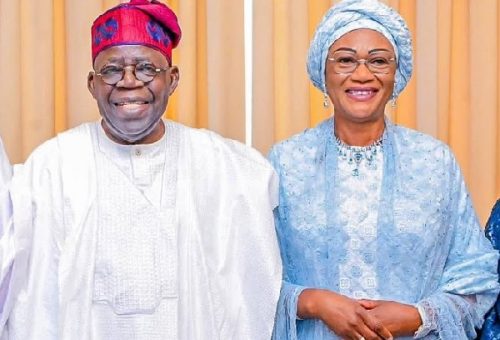
President Bola Tinubu has celebrated his wife, Oluremi, on her 66th birthday, describing her as his “truest friend and confidante”.
In a birthday tribute to the First Lady on his verified X handle on Monday, Tinubu praised her patience, courage, compassion and unwavering support throughout their years together.
The President, who described Oluremi as the woman who had stood by him through different seasons of his life, said she had shared his burdens and provided counsel during difficult moments.
“Today, I celebrate the woman who has walked beside me with patience, grace and uncommon courage. Àwọn àgbà sọ pé, ‘Ìyàwó rere ni adé ọkọ rẹ̀.’ A good wife is her husband’s crown,” he said.
Tinubu said Oluremi had given practical meaning to the biblical description of a virtuous woman, adding that she had remained a source of strength and understanding to him.
“The burdens that were mine to bear often found their way onto your shoulders. The thoughts I could not put into words somehow found their way to you.
“In difficult times, when the future was uncertain, you stayed calm beside me and prayed with me,” he stated.
The President described the First Lady as his “truest friend and confidante”, saying she was never afraid to offer him honest counsel.
“I call you my truest friend and confidante because you speak the truth plainly, even on the days I would rather not hear it,” Tinubu said.
He also praised Oluremi for her role in raising their children and grandchildren, saying her values of faith and kindness had shaped the family.
“Our home bears the lasting imprint of your devotion. Our children and grandchildren have grown beneath the shelter of your prayers. They carry your values of faith and kindness wherever life takes them,” he said.
Tinubu also highlighted the First Lady’s humanitarian activities, recalling her work through the New Era Foundation and the Renewed Hope Initiative.
“Nigerians know you for your compassion, kindness, generosity of spirit and steadfast faith. I have watched you touch lives quietly and consistently, offering hope and support to those in need,” he said.
He added that her initiatives had supported young people, widows, elderly citizens and women farmers across the country.
“From the New Era Foundation during our years in the saddle in Lagos to the Renewed Hope Initiative today, your care has reached many young boys and girls, widows, elderly citizens, and women farmers across the country,” the President stated.
Tinubu also acknowledged Oluremi’s advocacy for people affected by tuberculosis and other diseases, describing her as a compassionate advocate and determined champion.
He said her compassion transcended ethnic, regional and religious boundaries.
“For you, compassion has never recognised the boundaries of tribe, region or religion,” he said.
Reflecting on their years together, Tinubu said their shared experiences, including difficult decisions and sacrifices, had strengthened their relationship.
“A long journey teaches a man the true value of a good partner. We have travelled a long road together. I think of the difficult decisions we talked through for hours and the sacrifices no one else saw.
“Laughter and prayer carried us through many of them,” he said.
The President said he would choose Oluremi again if given the opportunity to relive his life.
“If life returned me to the beginning, I would choose the same road that led me to you. Through every mile, my heart has always remained at home with you,” Tinubu said.
The President wished the First Lady many more years in good health and happiness.
“Happy 66th birthday, my darling Oluremi. I pray that God Almighty will grant you many more years in good health and joy,” he said.


