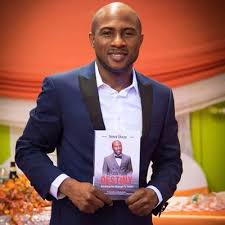
By Henry Ukazu
Dear Destiny Friends,
If you are asked, what’s your calling, what will be your response? If you are asked what your purpose on earth is, what will be your response? If you are asked who you are, what would be your response? These, no doubt, are interesting questions to decipher one’s calling.
Finding one’s calling is the best thing that can happen to anyone. According to one of my most cherished mentors, Dr. Yomi Garnett, the day you find your purpose is the day you become a millionaire. I couldn’t agree more with this saying because it is nothing but the gospel truth. This is because the best thing that can happen to anyone is knowing their calling.
According to Mark Twain, “The two most important days in your life are the day you are born, and the day you find out why. This is a fact. It’s quite unfortunate that many people are just existing as opposed to living. We were not created to exist, we were created to fill a vacuum, and we can only make an impact if we are intentionally answering our call.
Let’s circle back to the question I asked at the beginning of this article, what’s your calling? To answer this question, I would like you to approach it from a spiritual perspective. At creation, God called us to be something in the world, that’s why he gave us gifts and talents and told us to be fruitful and multiply.
Just like we all have names that our parents, friends, children, mentors, etc. call us. These names are reflections of what we mean to them or how they perceive us. Names are symbolic and have deep meanings if we apply reasoning to them. So, if we can answer the names we are called to earth, how about answering the name God called us at birth. I believe that’s the most important call or name we need to answer as human beings. When we answer the name God gave to us, the world will begin to respond to what we say because we have answered the mother’s call.
Why do I say this? Your purpose was made in heaven, but your calling is meant to be fulfilled on earth. It’s sad to see people answering different names they are not called. When God created you, there’s something he had in mind for you to accomplish or solve on earth, but it’s unfortunate that, due to life’s vicissitudes, some of us derail from the path God destined for us, and hence that’s the reason many of struggle because we are not working in the direction and pathway God designed for us to tread.
It should be known that your calling was not a conference call; the call was personal. If God wanted anyone to know your calling or purpose, he would have revealed it to anyone he wants, but he chose to reveal it to you, so the onus is on you to focus on it, follow it religiously and ultimately fulfill it because that’s the only way you can get fulfillment.
I also asked, what’s your purpose? Your purpose is the reason why you do whatever you are doing. In this context, your purpose is your why. According to Dr. Myles Munroe, “When the purpose of a thing is not known, abuse is inevitable.” Your purpose is the reason why you applied for a job, married your partner, started an NGO, a business, relocated/travelled, started school, or even wrote a book. There’s always a reason why we do something. That reason is the inspiration and motivation we need to forge when everything else fails.
Again, I ask you what’s your purpose? If you can’t figure out your purpose, I will strongly advise you to go to your creator (God) and ask him, what’s your purpose because he’s the person that created you. When people desire different interests in different majors, skills, profession, vocation, etc., it’s simply because someone puts the desire and interest inside them.
To understand how purpose works, there’s no problem on earth without a solution. The only problem without a solution is the problem the person with the solution hasn’t arrived.
Let me share a practical example on purpose. There was a story of an old man whose car (Ford) broke down in the middle of the road, all efforts to fix the car proved abortive. An old man was passing by and saw this man struggling to fix the car, he asked him, “What’s the problem?” The old man said, well, my car has refused to start. The stranger told the man to give a minute. The man initially refused saying who is this old man to fix what I have been working on for hours.
On second thought, he said, what will I lose if I give him a chance. He decided to listen to the old man who told him to give me a minute to check out the car. This stranger didn’t do much, he just touched a particular side of the engine and told the old man to start the car, and immediately the car cranked back to her life. The man was surprised and asked him, who are you? ” The stranger said, “I am Henry Ford, the owner of Ford Motors.
The moral of this story is, Henry Ford, the founder of Ford motors, knows his car more than everyone. So, if a mere mortal can know much, how much about the creator who will not know about our purpose?
When you find your purpose, you find your why, but when you find your why you must find your purpose.
The final question I asked: “Who are you? To answer these questions, I need you to focus on the inmate quality you are blessed with as opposed to what people think about you. What people think about you is your reputation, but who you are is your character. Some people associate titles to who they are. I think that’s the wrong interpretation. One might be a doctor, lawyer, Chief Operating Officer, professor, or even the governor or president, but that doesn’t make them good people with good traits, qualities, values and charismatic inmate abilities.
To lead one must have empathy, compassion, and heart of service. It is through these traits; one can see who a person really is and not the cloth of title they are showing the world.
So, to find one’s calling, here’s my sample suggestion: ask your creator (God), inquire what makes you happy, what you love to do, what do people compliment you on, what do you do with relative ease if you are woken from sleep? What is one thing you can do for free?
In conclusion, finding one’s calling is the best thing that can happen to anyone. The day you find your calling is the day you will begin to live your best life because you will begin to bless the world with your calling.
Henry Ukazu writes from New York. He works with the New York City Department of Correction as the Legal Coordinator. He’s the founder of Gloemi. He’s a Transformative Human Capacity and Mindset coach. He is also a public speaker, youth advocate, creative writer, and author of Design Your Destiny- Actualizing Your Birthright to Success, Unleash Your Destiny, and The Six Pillars of Success. He can be reached via info@gloemi.com