Business
Double Honours As Fidelity Bank, Onyeali-Ikpe Win at 2026 BAFI Awards

- /home/rhoncare/pointblank.ng/wp-content/plugins/mvp-social-buttons/mvp-social-buttons.php on line 27
https://pointblank.ng/wp-content/uploads/2021/12/fidelity-bank.jpg&description=Double Honours As Fidelity Bank, Onyeali-Ikpe Win at 2026 BAFI Awards', 'pinterestShare', 'width=750,height=350'); return false;" title="Pin This Post">
- Share
- Tweet /home/rhoncare/pointblank.ng/wp-content/plugins/mvp-social-buttons/mvp-social-buttons.php on line 69
https://pointblank.ng/wp-content/uploads/2021/12/fidelity-bank.jpg&description=Double Honours As Fidelity Bank, Onyeali-Ikpe Win at 2026 BAFI Awards', 'pinterestShare', 'width=750,height=350'); return false;" title="Pin This Post">
Fidelity Bank Plc has won two honours at the 2026 BusinessDay Banks and Other Financial Institutions (BAFI) Awards.
The bank’s Managing Director and Chief Executive Officer, Dr Nneka Onyeali-Ikpe, received the Award for Excellence in Banking Leadership, while Fidelity Bank was named Best Bank in Oil and Gas Financing.
The awards were presented at the 14th BAFI Awards held recently at the Civic Centre, Victoria Island, Lagos.
According to BusinessDay Media Limited, the leadership award recognises banking executives who have delivered institutional growth, strengthened shareholder value, promoted innovation and inclusion, and contributed to the development of Nigeria’s financial services sector.
Onyeali-Ikpe thanked the organisers and dedicated the award to Fidelity Bank’s customers, board, management and employees.
“I am deeply honoured to receive the Award for Excellence in Banking Leadership. I sincerely thank BusinessDay Media Limited for this recognition and dedicate it to our valued customers, whose trust and support have strengthened and inspired me throughout my career.
“The African philosophy of Ubuntu teaches us, ‘I am because we are.’ In that spirit, this honour also belongs to the board, management and staff of Fidelity Bank Plc, whose dedication and professionalism continue to drive our vision of a stronger, more innovative and customer-focused financial institution,” she said.
Onyeali-Ikpe has more than three decades of banking experience spanning retail, corporate and commercial banking, treasury and business development. Since becoming the Chief Executive Officer, she has led Fidelity Bank through sustained growth and an expansion of its international operations, including the acquisition of the former Union Bank UK, now FidBank UK Limited.
The Best Bank in Oil and Gas Financing award recognised Fidelity Bank’s support for projects across Nigeria’s energy value chain.
The bank financed the development of an onshore crude oil export terminal at the Otakikpo Marginal Field in Rivers State. It also supported the Pinnacle Oil and Gas Terminal in Lekki and part-financed a 23,000-cubic-metre liquefied petroleum gas carrier for Temile Development Company Limited.
Fidelity Bank also participated in the $3bn SNEPCo Contractor Finance Facility, which provides naira and dollar financing to indigenous contractors working on SNEPCo projects.
The projects are expected to strengthen local participation, petroleum product distribution, gas availability and critical energy infrastructure.
The two awards underscore Fidelity Bank’s growing profile in the financial services industry and its role in financing sectors critical to Nigeria’s economic development.


Business
Beyond University Degrees: How ChipMango is Preparing African Engineers for Global Tech Industry
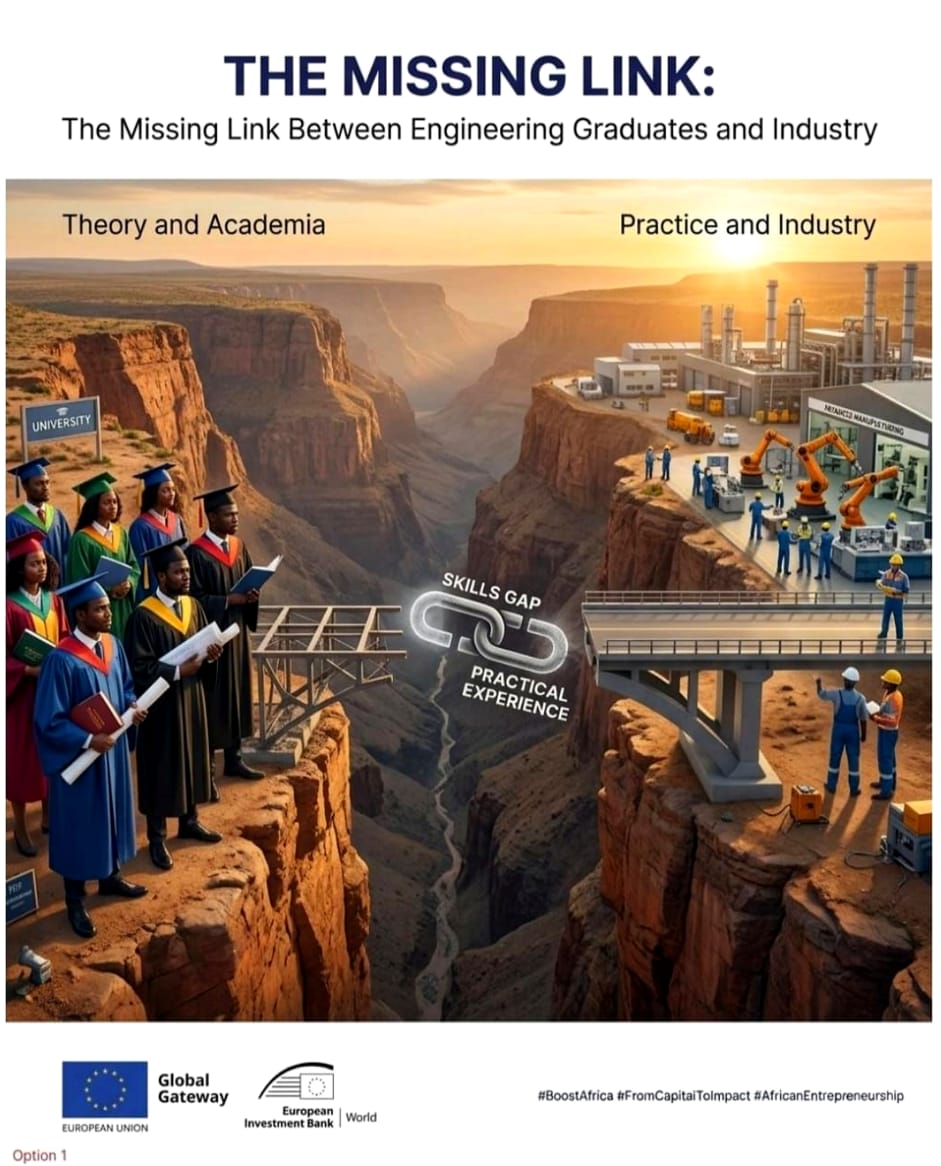
A university degree is a starting point, but practical industry experience can make all the difference.
Nigerian technology company ChipMango is bridging the gap through specialised semiconductor training and real-world chip design and verification projects, preparing African engineers for opportunities in the global technology industry.
Through Boost Africa, the EIB, AfDB and EU are strengthening the investment ecosystem supporting innovative African businesses.
Watch the video to discover how ChipMango is connecting engineering talent to real industry opportunities.
Watch the video:

American multinational technology conglomerate – Microsoft – has confirmed that its services have been fully restored following a worldwide outage that disrupted access to several of its products, including Outlook, Teams and Copilot, across more than 70 countries.
The technology company announced early Saturday that it had completed work to resolve the underlying technical problem, assuring customers that the affected services were operating normally again.
The outage, which began on Thursday, affected businesses, government institutions and individual users, with more than 430 million people worldwide relying on the products involved.
Microsoft attributed the disruption to a problem introduced during a “network capacity upgrade”. The company also ruled out a cyber-attack or an artificial intelligence agent as the cause and apologised to customers for the incident.
The widespread disruption exposed the dependence of businesses and essential public services on a handful of major technology providers, with experts describing the incident as a “stark reminder” of the risks associated with that reliance.
Several countries reported significant disruptions as the technical problems persisted for almost 24 hours before services began recovering on Friday afternoon UK time.
Peter Pentz, a winemaker in South Africa, said the outage had brought virtually every aspect of his business to a “standstill”.
He explained that communication relating to his winery’s exports had been disrupted, while essential production activities were suspended because the Cape West Coast-based business depended on Microsoft’s systems for some of its daily operations.
The outage also affected individuals with important personal transactions to complete.
Georgia, from Staffordshire in England, said she had been preparing to complete her first house purchase after waiting eight months for the process to reach its final stage. However, the Microsoft disruption threatened to delay the transaction.
“The solicitor mentioned there may be a delay due to not being able to contact other agencies,” she said.
“We’re not the only one completing today – there are hundreds of houses and for them to ring everyone in time is unfeasible.”
BBC
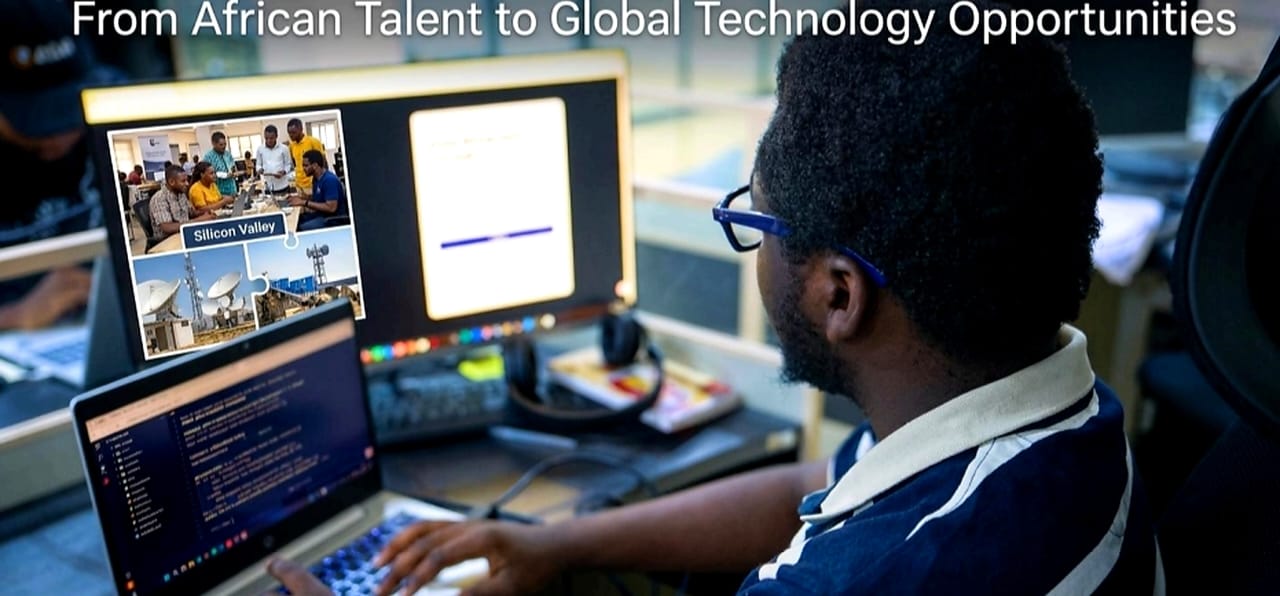
Africa has the engineering talent. The challenge is connecting it to global technology opportunities.
Nigerian company ChipMango is bridging this gap through specialised training and practical semiconductor design projects, creating pathways for African engineers to participate in the global chip industry.
Through Boost Africa, the EIB, AfDB and EU are strengthening the investment ecosystem supporting innovative African businesses.
Watch the video to discover how ChipMango is turning African engineering talent into global opportunities.