
Headlines
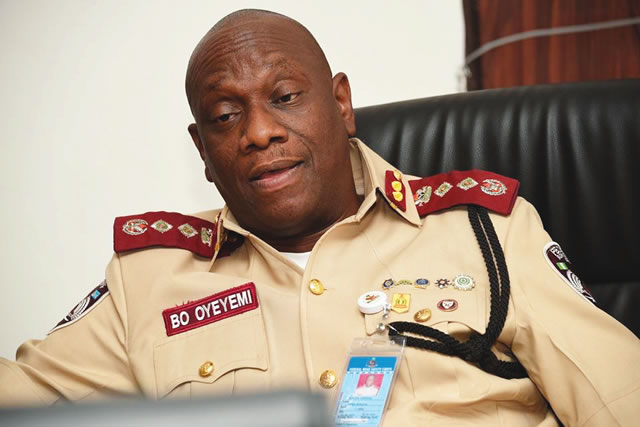
Drive Safely, Stay Safe into 2021, Oyeyemi Urges Nigerians

- /home/rhoncare/pointblank.ng/wp-content/plugins/mvp-social-buttons/mvp-social-buttons.php on line 27
https://pointblank.ng/wp-content/uploads/2020/12/Dr.-Boboye-Oyeyemi.jpg&description=Drive Safely, Stay Safe into 2021, Oyeyemi Urges Nigerians', 'pinterestShare', 'width=750,height=350'); return false;" title="Pin This Post">
- Share
- Tweet /home/rhoncare/pointblank.ng/wp-content/plugins/mvp-social-buttons/mvp-social-buttons.php on line 69
https://pointblank.ng/wp-content/uploads/2020/12/Dr.-Boboye-Oyeyemi.jpg&description=Drive Safely, Stay Safe into 2021, Oyeyemi Urges Nigerians', 'pinterestShare', 'width=750,height=350'); return false;" title="Pin This Post">
The Corps Marshal of the Federal Road Safety Corps(FRSC), Dr Boboye Oyeyemi has urged Nigerians to drive safely and stay safe as they enter into the new year, saying all bad driving habits should be discarded while the good lessons learnt and practiced during the outgoing year should be sustained with commitment to ensuring personal safety and health of the individuals. This was contained in the new year message to Nigerians by the Corps Marshal of FRSC as part of the ongoing sensitisation efforts by the Corps to curtail the spread of COVID-19 and ensuring public safety through adherence to traffic rules and regulations.
According to a press release signed by the Corps Public Education Officer, Assistant Corps Marshal Bisi Kazeem, the Corps Marshal expressed gratitude to the Almighty God for the grace of protection and guidance given to the nation in the face of the various health, safety and security challenges experienced in the outgoing year. He therefore, appealed for sustained consciousness by people to overcome the challenges in the new year.
The Corps Marshal particularly enjoined members of the public not to violate the guidelines put in place by the Presidential Task Force on COVID-19, stressing the need for people to regularly wash their hands with soap, wear face masks and observe social distancing. These he said, remain the best preventive measures against the infectious disease threatening the entire world through the second wave of the pandemic. “We must remain vigilant in all that we do, to avoid a situation where our actions and inactions could contribute to the spread of the dreaded disease,” he stated.
Bisi further disclosed that though the Corps Marshal is pleased with the conduct of most drivers during the recent Christmas celebration which made the rate and fatalities of road traffic crashes manageable, he however cautioned that if such good habits were not sustained in the new year, there could be a resurgence of crash situation which could undermine the gains made from the special patrol. “Every Nigerian must remain committed to tackling the challenges which road safety and COVID-19 pose to the nation’s health, safely, security and wellbeing by doing what is right at all times,” he further stated.
On the most common factors responsible for fatal crashes during the Christmas celebration, the Corps Marshal restated his earlier observations on the pervasiveness of speeding as a causative factor, noting that Commanding Officers have been given a marching order to force down the rate of speed induced crashes through aggressive enforcement of the laws on speed limiting devices.”The discovery that some Nigerians are still flouting the law on use of speed limiting devices in their vehicles resulting in the upsurge in speed related crashes recorded during the special patrol was unfortunate. But I want to assure all road users that such abdication of responsibility by the drivers would not be tolerated in the new year, “he warns.
Oyeyemi commended all the stakeholders that joined the road safety campaigns during the festive periods to make the roads safer, adding that road safety remains a shared responsibility which no single organisation can tackle all alone without support and collaboration of relevant stakeholders. He specially expressed gratitude to President Muhammadu Buhari, GCFR for rendering all necessary moral and logistics support for the success of the campaigns with particular reference to prompt approval by the Federal Government to the third edition of the Nigeria Road Safety Strategy Document which will increase the impetus of road safety sensitisation programmes in the new year.
The FRSC Corps Marshal called on all Nigerians to embrace the ongoing safer road campaign and make it an all round success for quick socioeconomic development of the nation. He also reminded Nigerians that it’s only the living that can celebrate, stressing that speeding must be contained by all means, despite its thrilling effects.
While admonishing Nigerians on their personal responsibility to the campaigns to make the roads safer, Oyeyemi further urged the people to remain active by always observing the traffic rules and regulations and reporting road and other emergencies promptly to the FRSC toll free line: 122 or the studios of the National Traffic Radio-107.1fm through the telephone lines:08052998090 or 09067000015 for prompt response.
As he wishes all Nigerians safer and prosperous new year, the Corps Marshal assures the nation that FRSC will continue to be vigilant in safeguarding the roads throughout the new year and beyond for safety and security of the people. He further appealed to all to abide by the safety measures put in place to guarantee safety and security of all members of the public.


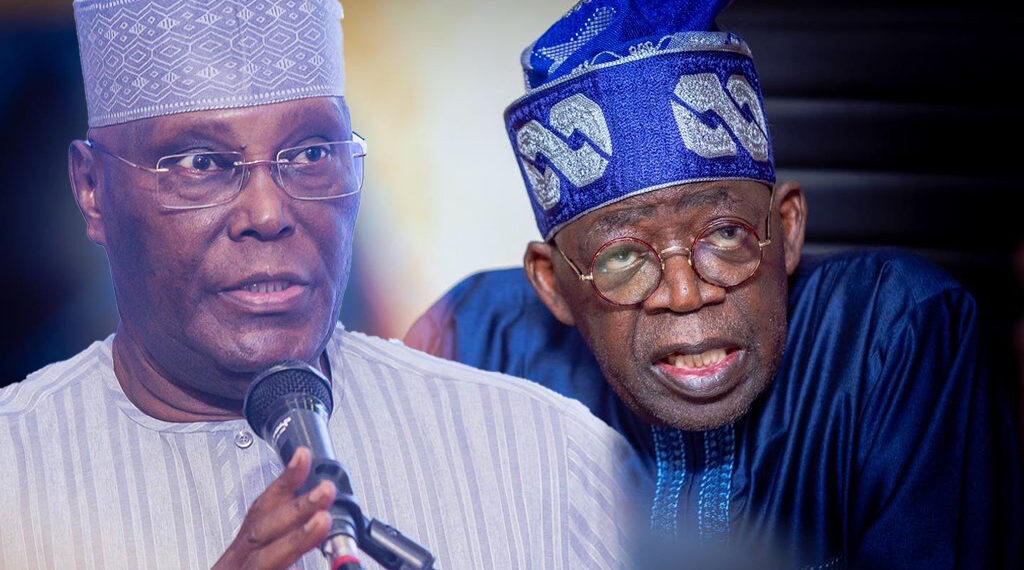
Former Vice President Abubakar has asked President Bola Tinubu to give a full account of Nigeria’s borrowing and debt profile and address the hardship faced by Nigerians following the removal of the fuel subsidy.
Atiku said this in a statement issued by Phrank Shaibu, Director of Strategic Communications of the African Democratic Congress (ADC) Presidential Campaign Council.
He said after more than three years of reforms, Nigerians are facing higher food, transport and energy bills, with public debt recorded at N166.79 trillion as at June 30, 2026, according to the Debt Management Office (DMO, compared to N49.85 trillion in March 2023.
“A government that says more money is coming in must explain why it keeps borrowing and why the people paying for its policies cannot see the promised gains,” Atiku said.
The ADC presidential candidate asked the President to identify old debt newly recorded, foreign debt whose naira value rose with the exchange rate, and every new loan contracted since assumption of office, as well as what has been repaid and outstanding.
Atiku said the debt question cannot be separated from the lived reality of ordinary Nigerians, noting that while government reports improving macroeconomic outcomes, many citizens struggle with the cost of living.
He said the true test of economic policy is whether Nigerians can afford food, transportation, housing, education, healthcare and electricity.
He cited an IMF assessment in June 2026, which said reforms improved macroeconomic outcomes but acknowledged conditions remained difficult, estimating poverty at 63 per cent under the national poverty line and saying 27 million Nigerians faced food insecurity in the latter part of 2025, with a warning that higher fuel, food and transport costs could worsen poverty.
He also cited recent fuel price pressures, with petrol selling around N1,400 per litre in Lagos and Abuja and as high as N1,500 in parts of northern Nigeria in September, while diesel exceeded N2,000 per litre.
Atiku said the cost of servicing debt has become a major concern, citing BudgIT report that quarter of 2025, debt service reached N12.52 trillion against N18.63 trillion revenue — 67.2 per cent.
He noted the 2026 fiscal framework provides for about N68.32 trillion expenditure against projected revenue of N36.87 trillion, leaving deficit of roughly N31.45 trillion.
He recalled President Tinubu’s remarks at Africa Forward Summit in Nairobi in May that Nigeria expected to spend about $11.6 billion on debt service in 2026, describing the amount as nearly half of projected revenue.
Atiku also demanded disclosure concerning DMO’s external debt-service schedule for second quarter of 2026, where $39.25 million was recorded as ‘other charges’ between April and June 2026, including $22.5 million against First Abu Dhabi Bank Total Return Swap and about $8.97 million against Deutsche Bank AG.
He asked for clarification on what the $22.5 million charge was for, which agreement authorised it, original facility, how much was drawn and obligations outstanding.
He also asked for reconciliation of Treasury Bill borrowing, noting DMO reported N19.48 trillion outstanding Nigerian Treasury Bills at 30 June 2026, and urged the government to publish what subsequently matured, redeemed, rolled over and what constituted new borrowing.
Atiku said the administration should apologise to families facing hardship and account for revenues and borrowing.
“An apology is not too much to ask from a government under whose watch many Nigerians have been pushed into deeper economic distress,” he said.
“Good economics must ultimately improve human life. If government revenue rises while families become poorer, Nigerians have right to demand full account.”
- He urged the Federal government to reconcile borrowing, explain charges, show what sacrifice has produced and focus on making life affordable.

Nigeria’s President, Bola Ahmed Tinubu, has reportedly postponed his return to the country.
TheCable reports that the president’s travel plans changed at the last minute.
Tinubu was expected to return to Nigeria today after spending weeks in Europe on a working vacation.
He was expected to arrive in Lagos, where he would remain for up to a week before proceeding to Abuja, the nation’s capital.
However, the president’s itinerary has been revised, with his return to Nigeria now expected on Tuesday.
Tinubu left Nigeria on August 30 for London, where he began what the presidency described as a three-week working vacation as part of his annual leave.
After spending about a week in the United Kingdom, the president travelled to Paris, France.
During his stay in Paris, Tinubu met with French President Emmanuel Macron and businessman Vincent Bolloré.
The presidency announced on September 21 that the president had extended his stay abroad by a few days and was expected to return to Nigeria at the weekend.
According to the presidency, Tinubu remained in touch with officials at home and continued to oversee government affairs while abroad.
Vice-President Kashim Shettima represented him at some official functions during his absence.
However, Shettima travelled to New York on September 20 to represent Nigeria at the 81st United Nations General Assembly.
The latest change to Tinubu’s return schedule comes amid questions over his prolonged absence from the country.
His extended stay abroad has led to a constitutional debate, with some opposition figures questioning whether presidential powers should have been transferred to Shettima after 21 days.
Section 145 of the 1999 Constitution states that a president proceeding on vacation shall transmit a written declaration to the Senate President and the Speaker of the House of Representatives, after which the vice-president assumes the functions of the president in an acting capacity.
Senate President, Godswill Akpabio, said on Tuesday that there was no vacancy in Aso Rock, adding that Tinubu remained in charge of the country’s affairs despite being outside Nigeria.
President Bola Tinubu says his administration had identified mistakes made by previous governments, appealing to Nigerians for more time to address those lapses
Tinubu made the appeal on Friday through the Speaker of the House of Representatives, Tajudeen Abbas, during a special prayer session at the National Mosque in Abuja to mark Nigeria’s 66th Independence Anniversary.
Tinubu said peace and development are gradually returning to the country.
“This anniversary—the 66th—by all accounts signifies Nigeria has come of age,” he said.
“The person of 66 years cannot be called a child anymore. Nigeria has become mature, even though when we reflect on the journey from independence to date, we may say it was a mixed journey.
“Nigeria was bedeviled with a lot of issues in the past and opportunities as well. But we thank Almighty Allah for granting us the life and the peace for us to witness this very historic event today.
“My message to the country on behalf of the Mr. President, the Senate President and all members of the National Assembly is that the citizens should not lose hope. Peace is coming back to this country. Development is coming back to this country. Things will get better as we progress in this democracy.
“More importantly, citizens should look at the focus of the government of today, that the mistakes of the past—the cumulative mistakes and the missed opportunities of the past—are being corrected in this particular administration.
“And I want to categorically make it clear that Nigeria is on the right path; that there is light at the end of the tunnel, and that Nigerians have finished making sacrifices for this country to be great again.
“We should give this government more opportunity for it to come back and finish the good work [it has started].”
Senior government officials, including Barau Jibrin, Deputy Senate President; State governors; National Assembly members; ministers; George Akume, Secretary to the Government of the Federation; and military chiefs, attended the event.


