
News
DSS and Accusations of Disobedience to Court Orders: Setting the Records Right


- /home/rhoncare/pointblank.ng/wp-content/plugins/mvp-social-buttons/mvp-social-buttons.php on line 27
https://pointblank.ng/wp-content/uploads/2019/08/DSS.jpg&description=DSS and Accusations of Disobedience to Court Orders: Setting the Records Right', 'pinterestShare', 'width=750,height=350'); return false;" title="Pin This Post">
- Share
- Tweet /home/rhoncare/pointblank.ng/wp-content/plugins/mvp-social-buttons/mvp-social-buttons.php on line 69
https://pointblank.ng/wp-content/uploads/2019/08/DSS.jpg&description=DSS and Accusations of Disobedience to Court Orders: Setting the Records Right', 'pinterestShare', 'width=750,height=350'); return false;" title="Pin This Post">
By Peter N. Afunanya
Recently, the media is awash with various commentaries about DSS disobedience to Court Orders. These accusations, as wrong as they are, have peaked in the Emefiele saga. It may interest the public and indeed the avowed critics of the Service to note the following incidents and timelines to show that it has religiously obeyed Court orders in respect of the case and even others.
In 2022, the Service commenced the investigation of Mr Godwin Emefiele on suspicion of Terrorism Financing, Money Laundering among others and subsequently applied to the Federal High Court, Abuja for his arrest and detention. But the Chief Judge objected to the order and clearly stated that the Service did not need an order to investigate or arrest him. Emefiele was to later obtain a restraining order issued by Justice MA Hassan of the FCT High Court against the Service. Instructively, the DSS obeyed this Order and did not arrest or detain Emefiele.
However, on 9th June, 2023, Emefiele was suspended as CBN Governor by the President. Based on new information and suspected criminal infractions, the Service, as expected by law, arrested and detained him using a Magisterial Order. On 10th July, 2023, Justice Hamza Mu’azu of the FCT High Court, while recognising that the DSS had every legal right to arrest, detain and investigate Emefiele, ordered for his release or prosecution within seven days. The Service expeditiously and expressly complied with the order and charged him for illegal possession of firearms and ammunitions being one of the criminal suspicions. The Muazu Order had, by implication, extended Emefiele’s detention by seven days with effect from 10th July, 2023 when the initial detention order had expired.
Within the same period, Justice Bello Kawu of the same FCT High Court, while dismissing reliefs sought by Peter Abang, Counsel to Emefiele on 14th July, 2023 ordered for the release or prosecution of Emefiele within 48 hours. However, the Service had complied with the seven days ultimatum issued by Justice Muazu. In obedience to rule of law, Emefiele was arraigned before Justice Nicholas Oweibo of the Federal High Court, Ikoyi, Lagos, on 25th July, 2023 for illegal possession of arms and ammunition. The Service had long issued a press statement over the incident that happened at the Court between its staff and those of Nigerian Correctional Service (NCoS) and pledged to investigate it. Though the investigation is ongoing, the preliminary findings are quite shocking considering the ignoble roles played by some public officials.
As normal with criminal investigations, security agencies re-arrest suspects when there is adequate suspicion of commission of a crime or as may be revealed by an ongoing investigation. Emefiele was re-arrested on the basis of this. Even though the re-arrest was tainted by the overzealousness of personnel of the Service and NCoS, it was nonetheless legally procedural.
Later, the Service applied for an Exparte Order at the FCT High Court presided by Justice Edward Okpe (and not Justice Mu’azu as erroneously and massively reported in the media) to detain Emefiele for 14 days. Against the established rules regarding exparte applications, a lawyer suddenly appeared in the Court for Emefiele. While the Judge did not outrightly reject the DSS request, he struck out the motion upon its withdrawal by the Service counsel. But this is not without his guidance. Earlier, the Judge had drawn the attention of the Counsels to Section 293 of Administration of Criminal Justice Act (ACJA) which also recognises the Magistrate Court as a competent Court that can first be approached for an order for custody of a suspect under investigation. In other words, the Service, having taken the hint of the Court, took the right steps. What transpired at the Court was, thereafter, variously misrepresented by some mischief makers. Part of the disinformation is to the effect that the Court “struck out the application and stated that it was an abuse of judicial process”. That was not what the Court said. What Justice Okpe said was “the Applicant having withdrawn the application, same is hereby struck out”. That was all. The Court records are there. But purveyors of fake news distorted the message to suit their intent; just to make the Service look bad – a sort of giving the dog a bad name in order to hang it.
Many had gone to town with stories of DSS fragrant disobedience to Court Orders especially in view of the last episodes at the High Courts in Lagos and Abuja. With what played out at the Court on 27th July 2023 under Justice Okpe, the Service immediately applied and obtained a detention Order from a Magistrate Court. So, Emefiele is legally detained. For reasons that the Emefiele case is subjudice, the Service will restrain from making further comments on the subject matter.
For either lack of knowledge or deliberate act to ignore the truth, there has been sustained bashing of the Service and its leadership in the media and public spaces. It is ironical that the same people who condemn media trial are daily taking the Service through the same. The actual points are however, not lost on the Service. It is aware of the depth of the orchestrations and even deeper plot to incite the judiciary against it.
Targeting DSS DG, YM Bichi, for insidious media attacks is needless. Any DGSS, even if brought from heaven among the angels, will discharge the DSS mandate. There isn’t a time in our national sojourn for greatness that key organs of government will cease to exist or not needed. The DSS, like the CIA, FBI among others, is a major and positive instrument of State administration and management. It is essential for statecraft, governance, stability and public order. Scraping it as being canvassed by the uninformed is unreasonable. It is indeed obvious the DSS is misunderstood. It is obvious there is a mob action against the Service. Allow the DSS be. Allow Bichi, a fine gentleman officer, be. Support DSS. Support Nigeria. As in the national anthem, Arise, O Compatriots.
Some critics have made varied insinuations including abusing the Service, its leadership and completely distorting the significant historical role of the Service in nation building. Others have said it is wobbling and of no relevance. Laughable. The DSS is not tottering. It is standing and firmly too. Even the worst of its critics knows that the Service has played (and still plays) stabilising roles for the nation. Its loyalty and patriotism are incomparable. The Service is a stabilising force for the country’s democracy. Same for the indivisibility and indissolubility of Nigeria’s sovereignty. Only a collaborative support from stakeholders will strengthen this. The Service does not claim to know it all; a reason it allows for constructive criticism and makes out time to explain itself in line with transparency and democratic accountability.
Whether on Emefiele, Bawa or Kanu, the Service has obeyed judicial orders and handled the cases procedurally and in accordance with the rule of law. Critics are encouraged to be a bit more discerning and up their research capabilities. Doing so will reveal that the Service obeys orders. The Court of Appeal judgement on Kanu is recommended for detailed study. Maybe, we can decipher the difference between Discharged and Acquitted and what the use of either or both mean in the final order of a Judge. The DSS is an ardent respecter of the law. Anyone may argue this but it is true. It is in this regard that it has applied for either a stay or notice of appeal on some of the matters. One who does not obey the laws will not resort to legal procedures like the DSS has done.
Let those seeking justice not intimidate the Judges or derail law enforcement efforts. Judges deliver justice without fear or favour and should be allowed to discharge their duties honourably. For the umpteenth time, the Service reiterates its unequivocal stance on rule of law and respect for the judiciary. This position remains unchanging despite the futile attempts to paint it otherwise.
Peter N. Afunanya Ph.D, fsi is the Public Relations Officer, Department of State Services (DSS), National Headquarters
Abuja.



Ahead of the 2027 general elections, the Nigeria Democratic Congress (NDC) has accused the Independent National Electoral Commission (INEC) of removing some of its nominated candidates from the commission’s list and replacing them with names allegedly unknown to the party.
The National Chairman of the party, Senator Moses Cleopas Zuwoghe, made the allegation in a statement on Sunday, following INEC’s publication of candidates for the 2027 State Houses of Assembly elections.
Cleopas said the names published by INEC, particularly in Anambra State, suggested an attempt to undermine the party ahead of the elections and create disaffection among its supporters.
The NDC chairman specifically alleged that nine persons whose names were not authorised or submitted by the party had been listed as its candidates in various constituencies in Anambra State, the home state of the party’s presidential candidate, Peter Obi.
He called on the INEC Chairman to immediately investigate the development and determine how the names got onto the commission’s list.
Cleopas also urged INEC to extend the investigation to other states, including Benue and Imo, where he said the party had observed a similar pattern.
According to him, the development had embarrassed the party, its leadership and its genuine candidates, while creating disaffection among its supporters in Nigeria and the Diaspora.
“We, as a party, are also carrying out our own independent investigation, the preliminary findings of which are already pointing to the complicity of INEC officials in foisting names purporting to be our candidates, but who are not from us,” he alleged.
He said the party’s investigation indicated that the uploading process was being used to intimidate and embarrass the NDC.
The party listed the following persons as names allegedly published by INEC as its candidates in Anambra:
Onitsha South 1 — Umennaajiego Jude Ezenwa
Onitsha South 2 — Akpotue Obinna Chibuike
Orumba North — Nwankwo Chiemerie
Anaocha 1 — Maduagwu Eric K
Idemili North — Ngoebisi Obinna
Njikoka 1 — Isintume Charles
Nnewi South — Nwachukwu Nonso
Nnewi South 2 — Okeke Ifeanyi Akunne
Ayamelum — Nnonyelu Samson E
Dunukofia — Azotani Chuks Francis
Cleopas, however, said the party is particularly concerned about the process through which the names were uploaded and published.
He said after the conclusion of the party’s primaries and appeal process, stakeholders from Anambra, the party leadership, representatives of Obi and the appeals panel agreed on a final list of candidates.
According to him, the list was signed off by the relevant stakeholders before being uploaded to the INEC portal using the code provided to the party by the electoral commission.
He alleged that INEC officials subsequently kept nine of the names on “Pending” status, claiming that the names were already in the commission’s system based on submissions by officials who monitored the party’s primaries.
Cleopas said the NDC formally challenged the names and submitted the identities of candidates it said were legitimately nominated by the party, but INEC allegedly declined to replace the disputed names.
He further alleged that INEC subsequently collected Form EC-9 directly from the persons whose names were in dispute and uploaded the forms without going through the party.
“To further confirm that there was a predetermined effort on the part of INEC to impose the said nine candidates on the party, and embarrass both NDC and Mr. Peter Obi, INEC went behind the NDC to collect the Form EC-9 directly from the candidates, bypassing the party, and uploading same,” he alleged.
Cleopas argued that where there was a discrepancy between names submitted by a political party and information received by INEC from its monitoring teams, the commission should have left the affected positions vacant pending clarification, rather than publish names the party said it did not nominate.
“At the very worst, INEC could have left us with no candidates for those positions, if they knew they were unwilling to engage us in addressing any perceived anomaly,” he said.
The NDC chairman accused INEC of creating a pattern in which opposition parties were allegedly prevented from uploading their preferred candidates while other names were introduced into their candidate lists.
He vowed that the party would pursue the matter through all available legal channels and seek to have what it described as its authentic candidates restored.
“We are moving to approach the court of competent jurisdiction to seek redress and restore our authentic candidates. The general public and our millions of supporters should note that these are not our candidates,” he said.

Nepal said Sunday it had begun burying some of the hundreds of bodies recovered after devastating floods, after taking DNA samples and marking them so families can later retrieve them.
The dead are traditionally cremated on funeral pyres in Hindu-majority Nepal, so the burials are viewed as long-term storage until families can retrieve them.
Foreign Secretary Amrit Bahadur Rai told reporters that all those buried were carefully recorded, but also appealed for international support, saying Nepal needed “more than a thousand” freezer units to store bodies.
The announcement of the burials came as Nepal’s disaster ministry increased its toll again on Sunday to 752 bodies recovered and 2,502 people missing.
That list includes 589 foreigners unaccounted for.
Chinese state media earlier confirmed 16 dead in Tibet and 546 people missing following Wednesday’s disaster, taking the overall toll to 768 dead and 3,048 unaccounted for.
“Following standard and accepted protocols, such as those of ICRC (Red Cross), the mortal remains of the dead, especially those not recognisable… have been temporarily buried,” Rai told reporters.
“Medical teams took DNA samples from every victim prior to the burial so that families can match-reference later, and would be allowed to exhume for necessary rituals.”
Nepal has called for freezer storage units and DNA testing kits, as it is overwhelmed with the number of bodies to store safely.
“We have requested different countries for freezers; we will need more than a thousand,” Rai added.
“Many dead bodies have been collected, and they have started decomposing. To preserve public health, we had to bury the decomposing bodies,” he added.
AFP
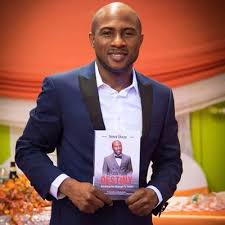
By Henry Ukazu
Dear Destiny Friends,
Everyone loves influence. Everyone wants to be a person of influence. Everyone wants to be relevant. Everyone wants to be celebrated. Everyone likes attention, appreciation, approval, and admiration. All these are products of influence.
The question I need you to ask yourself is, are you a person of influence? Are you influencing anyone? Do you have a positive or negative influence on your children, spouse, friends, mentors/mentee, or even strangers? Take a minute to listen to yourself.
When we talk about influence, uninformed minds just think influence is only about money, power, authority, or even being a mentor. Influence is far from it. We are all influencers in one way or another. Many people have influenced us in different ways, some positive, some negative. Similarly, we have also influenced many people in good and bad ways.
But today, I’m here to share with you what influence is about and the positive ways one can be a person of influence. Influence comes in different ways: as a politician, you are influencing people; as a leader, you are influencing policy; as a youth advocate, mentor, teacher, pastor, and employee, you are influencing somebody in one way or the other.
Do you know you can influence someone with your lifestyle? Yes, the way you talk, write, lead, dress, eat, exercise, preach the word of God, do your job, serve people, train your children, etc., are all part of influence. Influence is powerful. It has a way of permeating someone without them knowing. I believe that’s why my late mother would always say, if you are hanging out with a friend, only take the good part and leave the bad part.
We currently live in the 21st century, where the internet leads. The internet is regarded as the fifth estate for a reason, because it empowers networked individuals and alternative media to hold traditional institutions, governments, and mainstream media accountable. Everyone and almost everything is on the internet; however, sometimes, the information we get on the internet is regarded as fake because it’s unverified.
In some quarters, the internet has been regarded as a bad influence on the younger generation because of the limited restrictions and the negative information it has exposed their minds to think in a particular way. Some other schools of thought have opined that the internet has done more good than harm due to the knowledge it has exposed their minds to, as opposed to the information being peddled by some other schools of thought. Regardless of the aisle one belongs to, the internet truly has its pros and cons, especially as it relates to influence.
The big question one needs to answer is what influence is. According to Nosakhare Tune Oni – A Pan-African Strategist, leadership and business coach, “influence is when people trust your judgment enough to act on it. It is when someone calls you before making an important decision. When your recommendation opens a door. When your name carries weight in a room, you’re not even in. When people are willing to put their reputation behind yours. That’s influence.
Let’s take a minute to dwell on those lines again. Has anyone played any of such roles in your life? If yes, that’s the best definition of influence in a nutshell. Influence is not about quantity, but quality. The quality of people in your life is more valuable than the quantity of people one’s life. Do you know we don’t really need battalions of friends, whether online or in person, but just one person of influence can be a game-changer. According to Les Brown, a leadership coach, we need only quality people.
Do you know we are everywhere and nowhere at the same time? Do you also know that we can be everywhere and still have very little influence? Influence is about knowing your value and the right people who appreciate the value you bring. Do you know one can be a person of value to the wrong person or audience?
Influence is about having followers who believe and follow your teaching. We can have visibility with little or no influence. One may have 100,000 followers. We may trend on Facebook, Instagram, X, TikTok, LinkedIn, or even WhatsApp. Your name is a household name. That is visibility.
Let me give you a practical example. If you have a large crowd of people following you online or in person. The critical question one must ask oneself is: why are they following me? Are they following me because of my ideology, my talent/gift, academic process, position, profession, vocation, skill, or jokes? If they follow you because of the ideology you represent, you are a person of influence. If they are following you because of your jokes, you may be a content creator or comedian with little or no value in influencing them to do or not do certain things. Real influence provokes action.
According to Nosakhare Tune Oni, influence is built differently from attention. Attention can be bought. Influence must be earned. You can manufacture visibility with advertising, controversy, or constant posting. But you cannot manufacture trust that easily. It comes from consistently being useful. Keeping your word. Knowing what you’re talking about. Showing up when it matters. Building relationships before you need them.
And creating value for people without constantly asking, “What’s in it for me?”
Do you know a person with 1,000 followers and deep trust within a particular industry may have more real influence than someone with 100,000 followers who nobody listens to. So, I don’t think the goal should simply be: “How many people know me?” A better question is: “How much does my presence actually change things?” Because visibility gets you noticed. Value gets you remembered. Trust gets you listened to, but influence is what happens when people trust your value enough to move.
As I prepare to conclude, please take a minute to ask yourself: are you a person of influence? Do you have influence? What positive influence have you had on people or anyone? Today, I want you to be a man/lady of influence like Martin Luther King Jnr, Mother Theresea, Evangelist Ebuka Obi, President Nelson Mandela, Elon Musk, Bill Gates, Mark Zuckerberg, Dr. Kola Adesina, Dr. Joe Abah, Dr. Dele Momodu, Barr. Henry Ukazu and Miss Ginika Dike.
Henry Ukazu writes from New York. He works with the New York City Department of Correction as the Legal Coordinator. He’s the founder of Gloemi. He’s a Transformative Human Capacity and Mindset coach. He is also a public speaker, youth advocate, creative writer, and author of Design Your Destiny- Actualizing Your Birthright to Success, Unleash Your Destiny, and The Six Pillars of Success. He can be reached via info@gloemi.com


