
Personality in Focus
Ebenezer Obey: Between Music and Philosophy: Celebrating a Living Legend


- /home/rhoncare/pointblank.ng/wp-content/plugins/mvp-social-buttons/mvp-social-buttons.php on line 27
https://pointblank.ng/wp-content/uploads/2019/08/IMG-20190822-WA0032-780x600.jpg&description=Ebenezer Obey: Between Music and Philosophy: Celebrating a Living Legend', 'pinterestShare', 'width=750,height=350'); return false;" title="Pin This Post">
- Share
- Tweet /home/rhoncare/pointblank.ng/wp-content/plugins/mvp-social-buttons/mvp-social-buttons.php on line 69
https://pointblank.ng/wp-content/uploads/2019/08/IMG-20190822-WA0032-780x600.jpg&description=Ebenezer Obey: Between Music and Philosophy: Celebrating a Living Legend', 'pinterestShare', 'width=750,height=350'); return false;" title="Pin This Post">
By Femi Kehinde
In a society where we celebrate the dead, at the expense of the living, it is desirable to celebrate the living, who had impacted into our lives and essence.
In the music industry, Ebenezer Olasupo Remilekun Aremu Fabiyi-Obey, is worthy of mention and deserving of accolades and encomiums.
Ebenezer Obey-Fabiyi did not create JuJu music, but he and some of his friendly competitors, gave JuJu music its soul, breath and life.
Juju is a popular Nigerian music, derived from traditional Yoruba percussions. The name comes from the Yoruba word- JuJu or jiju- meaning- throwing or something being thrown.
Juju music is played in clubs, taverns, halls and at parties across Nigeria and its neighbouring countries of Republic of Benin, most especially the Yoruba speaking parts of Ajase-Ipo, Cotonou ,Ghana, the Gambia, Senegal etc.
Juju was believed to have been created and popularised by Abdul Rafiu Adekunle king, popularly known as Tunde King who waxed his first JuJu Album in 1937, followed by some other itinerant musicians, most especially, the blind minstrel-Kokoro. Ayinde Bakare, also waxed his Juju album in 1937.
Life beamed into JuJu music, with the entry of Ernest Olatunde Thomas (Tunde Nightingale), an Ibadan native. Tunde Nightengale and His Agba Jolly Ochestra, held regular performances, at the West African Club, Ibadan. He pioneered Sowambe dance (is it there?) possibly, a reference to the beads (Ileke), usually worn on the waist of dancing women. Despite sounding like a Nightingale, he always kept a live bird in his house. Fatai Rolling dollars, from Ede, but lived in Lagos, Dele Ojo, Ayinde Bakare, Adeolu Akinsanya (Baba eto) and his Western Toppers Band, Victor Olaiya, IK (Isaac Kehinde) Dairo and his Morning Star Ochestra, later known as Blue Sports Band, were early pathfinders. H
HoweverEbenezer Obey and Sunny Ade, made this genre, the most popular music by bringing in spectacular innovations.
JuJu was popular then, in places like Lagos, Abeokuta and Ibadan
In the immigrant neighborhood of Ekotedo, Adamasingba, Mokola in Ibadan and the Lagos city centres- in their tavarns, dance halls, night clubs , hotels and brothels, JuJu began to compete heavily with the imported highlife from Ghana.
This was the music, that Ebenezer Obey, popularised and took to a greater height, from the level of its forebears, and from obscurity to prominence.
Human Life is certainly propelled by interests, talents luck, opportunities and the ability to discover a deposited latent power. Ebenezer, made a quick discovery of a life, that would be dominated by music. Ebenezer, was born on the 3rd of April 1942, as Ebenezer Remilekun Aremu Olasupo Fabiyi in Idogo, in Egbado division of present day Ogun State, to Abigail Oyindamola Abeke Toriola Fabiyi an owu woman, from Ago Owu, Abeokuta and his father- Nathaniel Olaseewo Fabiyi, an Egba man, also from Keesi in Abeokuta.
The circumstances surrounding his birth, was quite interesting, amazing and divinely inspired. Abigail his mother, was earlier married for over 20 years to her first husband, without the fruits of the womb, that is, without a child. She had travelled round the northern part of Nigeria with her husband, as a wife, of a Senior Station Manager (SSM), with the Nigerian Railways, before they finally settled in Lagos. The family of the first husband, at a family meeting, proclaimed her a barren woman, and advised her to seek her fortune elsewhere. This shocking news was almost a death sentence, being suddenly discharged, from a man she had married for over 20 years. The family however acknowledged, that she was a good woman, but what does a good woman do, without the fruit of the womb? She was distraught and melancholic. But a man of God had told her, that Gods mercy endures forever and that she would eventually be blessed with her own children.
She left Lagos for Idogo, an agrarian community and Railways train station, in Egbado, present day Ogun State, whose produce from the Idogo community, usually crashes prices of agricultural commodities, food stuffs, vegetables, yams etc. in mainland Lagos, on market days, whenever the Idogo train (Oko Idogo) smiles into Lagos. In melancholy, she moved to Idogo, to stay with her elder brothers, who were farmers.
Around this period, Ebenezer’s father, a carpenter and also a farmer, had also relocated to Idogo, from Lagos. It was in Idogo that Nathaniel Fabiyi met Abigail, his friends sister. Jovial and rich in Egba dialect, he had jokingly proclaimed himself, husband of Abigail and that he was aware of her story. He further prophesied, that Abigail would give birth to both male and female children for him. To her, it was infra, (infra dignitatem), for an ex-wife of a Senior Railways Station Manager, to marry a carpenter. But nonetheless, they became husband and wife, and she gave birth to her first child- Obey’s elder sister, and because this miraculous delivery was a product of Gods grace, she pleaded with Fabiyi, that the child should be called- Grace (Anuoluwamipo) Olasumbo Fabiyi…
Grace was almost 80 years, when she died.
The birth of Grace heralded another bouncing baby boy, that was instantly named- Ebenezer- (God has helped me thus far )- (titi de yi, l’ oluwa ran mi lowo de), with the permission of her husband, who also gave him additional names- Olasupo, Remilekun, Aremu.
In Idogo, they lived in a rented apartment- the first storey building in Idogo. Coincidentally, Fabiyi was the carpenter that roofed the house. Shortly after Ebenezer’s birth, Fabiyi disappeared into Lagos again, where he already had two other wives, and could not surface into the Idogo community, until after 7 years. As a matter of fact, Ebenezer did not meet his father, until he was 7 years old.
In this intervening period, Abigail was making tremendous success in her clothes selling business (Iya Alaso). She decided to build her own house in Idogo, and her neighbour, who assisted her, became her next husband and this union, gave birth to her third child- that was named Clement Oluseye Olusegun Akanni Kembi, who died in November 2018, at the age of 73.
In parenthesis and sweet juxtaposition, Zulikat Wuraola Abiola, was the mother of Moshood kashimawo Olawale Abiola, an Egba woman. She got married to a man in Ikirun, in present day Osun state, and for several years, the marriage could not bear fruits and she was also pronounced a barren woman. She was advised to move back to her home town- Abeokuta, to seek a new pasture.
In Abeokuta, she was introduced to Salawu Abiola, who had also suffered 22 “abikus” that is, none of the 22 children stayed. Salawu, then of advanced age, heard of Wuraola’s case too, and decided to marry her, at least, if for nothing else, but companionship. Wuraola instantly became pregnant and gave birth to a bouncing baby boy, that was given an “abiku” name- kashimawo- let’s see if this one would stay.
Kaahimawo stayed and was only given further names- Moshood Olawale, when he was 13 years, having been assured, that this one would stay. Kashimawo, like Ebenezer, also became hugely successful. They eventually became brothers and soul mates. M.K.O became a business partner and perhaps, mentor of Ebenezer’s music and both bought over Decca West Africa Ltd.
Salawu in his life time, was always happy, that the very first time, that he would enter an aircraft, it was Kashimawo’s aircraft.
Ebenezer grew up in Idogo and Idogo discovered him and his musical talents.
Ebenezer went to Methodist Primary School, Idogo and later finished at the Methodist secondary Modern school, Asero, Abeokuta, in 1958.
In the primary school, he was a band leader. He was a member of the choir in his church- Methodist Church, Idogo.
Obey and his friends, later formed the Idogo boys and girls’ club and also Ifelodun Mambo Orchestra in 1957, that finally gave birth to Royal Mambo Orchestra. Abigail saw these musical talents in Ebenezer and dissuaded him from taking to music as a career, but that she would rather encourage him to become a lawyer or a doctor(Ise ti mama miba mi da moran ki nse) The mother told him that in their own family, people sing their praises and not vise versa – “Kiki ni won ma nki wa Ni’le wa, awa kii ki eniyan.” After much pleadings, Abigail gave Ebenezer her blessings, according to her- nobody knows tomorrow. (Mama lo so wipe, ko se ni keni, to mo ojo ola).
In school, Ebenezer, being a class monitor, was nick named “Obey…” i.e. Obey first, before complain, being his usual admonition, when punishing a rebellious student. The name- “Obey”, then stuck. With the added name- Ebenezer Obey, he relocated to Lagos.
In Lagos, he got a job as a clerk on a monthly wage of three pounds (£3) and lived in Bolade Oshodi Lagos. He was able to buy a guitar. He was at this time, already calling himself a star and afuture star.
It was in Bolade Oshodi, that he saw two itinerant singers-Akinyomi Savage and Bamgbose Jumoda, whom he later helped to secure an amplifier, for a show and also became a part time member of their band, with a rewarding patronage of two pounds (£2) per show and five shillings every day for feeding. It was through J.O Araba, an Agidigbo musician, that he met Fatai Rolling dollars, a minstrel and roving guitarist. This relationship led to the formation of the Fatai Rolling Dollars band, which obey helped to put together. In 1964, he formed his own band- Ebenezer Obey and his International Brothers Band and started with Samson Ogunlade, Vasco Da-gama, Salawu, Oke Aminu and others.
Obey had difficulties in getting a musical promoter/label. After much hassles, he signed on with DECCA WEST Africa limited in Abibu Oki, Lagos.
He married Juliana Olaide Olufade, his heartthrob, in 1963. Juliana, died on the 23rd of August, 2011 and left with several children and grandchildren. However, because of Obey’s insistence that he was a star and a future star, the MD of Decca West Africa- Mr. C.K Kres, showed interest in Obeys music and career.
The first album “Ewa wo ohun oju ri” sold 506 copies, in 1964, after the MD of DECCA, had ordered for 25 copies to enable Ebenezer Obey secure future patronage, by hitting the target of 500 copies. He actually sold 481 copies.
His second album- “Olomi Gbo Temi” (my dearest wife, listen to me) “baby mi, jowo jeka Jo ma gbadun, Aya to mo yayi lo nsefe Oko re, telegan ba ntan e, ko ma ma see gba,” was a slight improvement. His third album- “Palongo, which he also released in 1965, gave him breakthrough and commercial success.
As a result of this commercial success, Obey began experimenting with Yoruba percussion style, expanding the band by adding more drum kits, guitars and talking drums.
Obey’s musical dexterity, lies in weaving intricate Yoruba axioms, idioms and proverbs, into danceable music. Obey started with small Albums (SLPs) and later brought in big Albums(BLPs) that had sold 500,000 copies and received a gold award, and also 1 million copies that also received platinum award.
After the London trip, and in the early 70s, Obey changed the name of the band from International brothers, to inter Reformers band and his fans named him- “Chief commander Ebenezer Obey.”
In 1966, when chief Awolowo came back from prison, after the military take over, he had an album- “Awolowo, Baba wa ti de,” to welcome Chief Obafemi Awolowo. In 1987, when Chief Obafemi Awolowo died, he released an album, to mark his exit- Aaa a o ma se, ile njeniyan” what a great loss!
In 1968, Obey had a hit album- “Ore mi e se Pele Pele.” He also released- “Gbe be mi oluwa, olowo laiye mo,”- Answer my prayers oh Lord and followed with further commercially successful Albums, and in 1970- Ala taja ba la,” 1971- Ija Pari” to mark the end of the Civil War, 1972- Aiye Wa a Toro”, 1973- The Horse, the man and his son, 1974- “Eko Ila”, 1975- Mukulu Muke maa jo” Etc, further entrenched his foothold in the music industry.
Obey had said of his music- “my lyrics are beneficial to society, either in form of prayers or good wishes, and furthermore, that his lyrics are meaningful “with moral lessons and philosophy”
Obey’s music, also brought in his trail, petty envies and jealousy.
He was said to have drank “lukudi” (a fetish local preparation, for wealth)- Ogun Owo and that he had undergone surgery, when a mysterious bird flew out of his tummy.
In London, on a musical tour, he was said to have planted Marijuana (Igbo) in his musical instruments. He had a rich musical band, comprising of- Samson Ogunlade, Vasco Da-Gama, Oke Aminu (who died on Saturday, the 25th of August, 1972, in Lagos, in a motor cycle (vespa), accident. He had left for his house, to change his clothes, to the uniform outfit, worn by other members of the band. Obey was a stickler for band discipline. He died on his way back to join the show.)
Mitui Kekere, Gabriel Adedeji, Giwa Ojo Arigidi, Matthew Baba Legba, Akanbi Oloye, Monday John, Bode Akiwowo, were also band members.
Obey does praise singing of people_- inclusive of non Yoruba people- (Michael inegbese, Alhaji Danjuma in Agege, Osawaru Igbinedion, Alhaji shehu Arikose in Ajase-Ipo, (Republic of Benin) Samuel Ogundele Adedoyin, Abiola Ogundokun, Chief. MKO Abiola,- in three different Albums, and a host of others, which also served as advertisement, for his fans.
Remo carpets, Teju foams, for Tejoosho, adverts for Datsun motors- Datsun 120, 140, 160, 180, for Alhaji Arishekola Alao, Lawyer Omoni, Yinka Rhodes and praise singing of Board Members- Odunaike insurance controller, Adewuyi Barrister Folly Tairu, Bode Osinusi, Chief Samuel Okunowo, Bisi Lola Edionsere, Henry Fajemirokun and a host of others. In these praise singing, he had also, philosophical muses- Owu alantakun, ko seni ti o le fi ranso (nobody can sew clothes with cobwebs)
“kini mama Alaso nta to yegba Dani abi ewure nje lace ni”- i.e.- what is a cloth seller, doing with cane or does goats eat clothes?
And that God gives wealth- “Nibi ta lagbara gbe tin sise, to nse wahala, aro ti o le dide a si ma rise.”
In his album, “ketekete”- the man the son and the horse- he had also philosophically advised- you can never please the world!
He had also advised people not to bury their talents- ma se ri talent re mo le and gave examples of footballers- Teslim Thunder Balogun, Haruna Ilerika, Althlete Deji Obayemi and lady Athlete- Dupe osikoya. He had advised his fans to take it easy. Ore mi, ese Pele Pele- Easy does it and- “so re ni wan”- be careful of being extremely generous. He had also in his 1983 hit album, emphasized and encouraged hardwork- saa maa sise gba ti gbogbo eniyan ko re jo kaluku ni baba pase fun pe sii se, looni
In “oro Kan ni mo fe bi yin?”- he had asked of choice, between parents and the wife- (ninu obi eni, pelu aya eni, ewo lo se Pataki to se koko?)
Obey’s vote was for the parents.
In his philosophical preference, in eniyan ti mofe ran ju”, he had given preference to Iya, Baba, iyawo, omo… i.e. mother, father, wife and children in that order of importance…
Obey does enormous praise singing and Christian praise worships.
He sings- “Baba wa tin be ni orun, (Our Father who hath in heaven) in sweet melody, Oluwa ni agbara mi,(The Lord is my strength)Oluwa ni o, oluso aguntan mi, emi, ki yoo sala I ni o (the Lord is my shephard) and “a njade lo loni” as an early morning prayerful wishes, Mo ma yin oluwa titi laiye” (I will praise the Lord forever) and a number of inspiring gospel songs.
Obey also does Miliki- “e sa ma Miliki o-, ko ma rotate, lo o were were, ko ma circulate lo o were were…”
He does daily prayers, he sings love, he sang the Paulina story in the Bar beach Lagos, episode.
Paulina was a ravishing beautiful lady, whom he saw at the Bar beach in Marina. He sang- “Mori Sisi Kan ni marina to ni nkaloo…”
O
“Obey said-I was love struck, I lifted her off her feet, singing about her bewitching beauty.
Obey also sang of the sexual innuendo in – “Ina ma wa tan o, Akanbi, 2ce O pe mi wole o… o tilekun mo mi, o ti lekun mo mi ofaro idi mi, terepa ba doyun o, Obey lo loyun oo jare…”
The lady said, he asked me inside, asked me to put off my clothes, and to these, obey said- “when I was a youth, I behaved as a youth.”
Yes, Obey sang praises of Olanrewaju Omo Badmus- Larry publicity and Estate consultant- Fatai Irawo.In 1972, the music legend, celebrated Olabisi Ajala in his 8th Album- Board Members. He had also celebrated the Association of Brothers-UP ASSO.
Obey sang the praises of Olabisi Ajala in the Album-
“Ajala travel all over the world (2ce) Ajala travel (2ce) Ajala travel(2ce) Ajala travels all over the world, alajala mi Omo olola, Ala Ajala mi Oko Alhaja shade, Alhaja los’obokun fun alajala, emi Meje o, emi Meje.”
After a successful music career, yearnings to serve God in HIS vine yard, became real and apparent and this call was spiritually confirmed by the late Arch Bishop Benson Idahosa.
At the peak of Obey’s musical career, he heeded Gods call and for 17 years, he was completely out of secular music and was now majorly, involved in the Decross evangelical ministry. He was in the ministry and he never looked back.
He had troubled and challenging moments. He lost a factory in Ota, Ogun state that produced cassettes. The company was into debts and he had to sell three of his houses, to offset the mortgage. He bought shares and stocks, that went bad.
There was then, another interface in Obey’s life. He had a programme in London, with the late Myles Munroe, where they both ministered.
There was a concert after the ministration. On the day of the concert according to Ebenezer Obey- “when I was performing, a lot of people turned out and thoroughly enjoyed the atmosphere. So after my performance, he collected the microphone from me and told me that music is my ministry. He said God told him to inform me not to quit music, because that is my ministry. He said it was what God had wanted me to do. He further advised me to preach less, but sing more, that I should preach through music. I prayed about it and that was how we started special appearances. That was when I began to charge fees ranging from N2.5 million and above and before I knew it, I had made millions. I would take a million for my ministry and the remaining would be shared between me and the band. When you listen to GOD HE would always provide for you.”
Obey had a chequered and distinguished career.
He said- “whenever I hear my music being played, it is like looking into the mirror. Whenever I hear my voice, I tell myself, that is me sounding, that is me singing.”
Obey said of his musical adventure- I am the musician that has the largest number of music tracks, of music released. I agree with the research.”
His versatility in music composition, has certainly endeared him to the world, as one of the best music composers.
Despite the disability of not singing in a universal language, those who do not understand Yoruba, still find it easy, to dance to his music and the melody- e waa gbo melody mo tun gbe melody mi dee”-Come and listen to melody, I have come with my melody.
According to him- “if you do not understand the language, once you hear the melody, you start to nod your head and move your hand, that means the music has entered your body.”
Ebenezer Obey is currently a Professor of music at the Ogun State University, Ago-Iwoye, a recipient of the National award and Doctor of philosophy at the Oral Roberts University, USA.
Life, certainly defines roles, labyrinths and its contours, and has defined that of Ebenezer Obey as a singer, band leader, composer, guitarist, philosopher and a man after Gods own heart. The album celebrating his 70th birthday in 2012, – “Obey at 70”, was also a master piece, after a very long absence.
Ebenezer Olasupo Remilekun Aremu Fabiyi-Obey, stand up and take your EVERGREEN medal… at 77. May you continue to enjoy your life, in good and robust health and continuous prosperity.
ARTICLE BY:-
HON. (BARR.) FEMI KEHINDE
FORMER MEMBER, HOUSE OF REPRESENTATIVES,
NATIONAL ASSEMBLY, ABUJA,
REPRESENTING AYEDIRE/IWO/OLAOLUWA FEDERAL CONSTITUENCY OF OSUN STATE (1999-2003)
&
PRINCIPAL PARTNER, FEMI KEHINDE & CO (SOLICITORS)
IBADAN OFFICE- NO 84, IWO ROAD, IBADAN.
LAGOS OFFICE- PLOT A, OLUWALOGBON MOTORS BUILDING,
OBAFEMI AWOLOWO WAY,
IKEJA,
LAGOS.
ABUJA OFFICE-
NO 8, SUEZ CRESCENT,
IBRAHIM ABACHA ESTATE,
WUSE ZONE 4,
ABUJA,
FCT.


Personality in Focus
Glo Celebrates Igwe Nnaemeka Achebe with Royal Banquet As 2026 Ofala Festival Ends
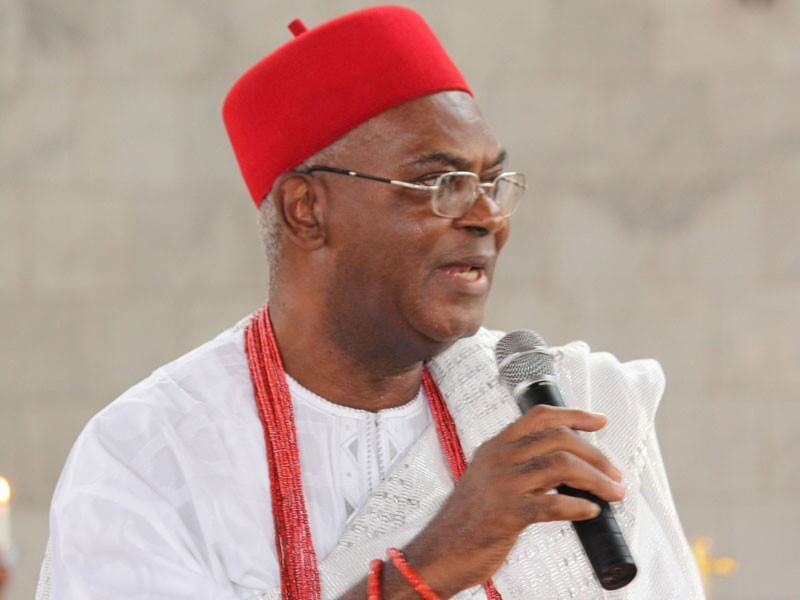
Globacom brought the 2026 Ofala Festival to a magnificent close on Wednesday with a royal banquet in honour of the Obi of Onitsha, His Majesty Igwe Alfred Nnaemeka Achebe.
The elegant gathering, attended by the monarch, members of his cabinet, Globacom’s trade partners and high-net-worth customers, marked the grand finale of the festival sponsored by the telecommunications and digital solutions company.
Speaking at the occasion, Globacom’s Divisional Head, South-East, Mike Ehumadu, said the event underscored the enduring significance of partnerships between corporate organisations and traditional institutions in preserving Nigeria’s cultural legacy and sustaining the traditions that give communities their distinctive identity.
He congratulated Igwe Achebe, the Ofala Festival organising committee and the people of Onitsha on the successful celebration of the 2026 edition, reaffirming Globacom’s commitment to initiatives that celebrate Nigeria’s cultural diversity, strengthen community bonds and project the country’s rich heritage to a wider international audience.
The evening unfolded as a vibrant tapestry of music, comedy and cultural entertainment. Guests were treated to performances from Aniweta Mazeli, Boy o Boy and the Groove Band, while comedian MC Ezegetive infused the gathering with laughter. The performers brought their artistry to bear on the occasion, enriching its atmosphere and creating cherished moments for the royal household, community leaders and other distinguished guests.
In further recognition of the competitive spirit, discipline and communal solidarity displayed by the various Onitsha age grades during the festival, Globacom rewarded winners of the different competitions with cash prizes and trophies. The gesture acknowledged not merely their achievements but also the collective pride and sense of belonging that animate the Ofala tradition. It also presented hundreds of bags of special Basmati rice to all the members of the different age grade associations.
Globacom’s sustained association with Ofala exemplifies the capacity of purposeful private-sector investment to preserve cultural heritage while broadening the social and economic benefits of traditional festivals.

President Bola Ahmed Tinubu has reaffirmed his commitment to supporting the growth of Nigeria’s tourism and hospitality industry following a meeting with the Director-General and Chief Executive Officer of the National Institute for Hospitality and Tourism (NIHOTOUR), Aare Abisoye Fagade, FNHT, FRPA, FIMC.
During the meeting, Aare Fagade briefed the President on ongoing reforms across the tourism, hospitality and travel sector, focusing on professional standards, skills development and the implementation of the NIHOTOUR Act 2022 to strengthen service quality, accountability and industry competitiveness.
As part of the engagement, the NIHOTOUR Director-General presented President Tinubu with the Grand Fellow of National Hospitality and Tourism (GFNHT), the highest singular honour in Nigeria’s tourism sector, conferred by NIHOTOUR.
The President’s pledge of continued support underscores the importance of tourism as a driver of economic diversification, job creation, investment and enterprise development.
Speaking on the significance of the meeting, Aare Fagade said tourism must be recognised not merely as leisure and recreation, but as an economic sector capable of creating opportunities for Nigerians and contributing meaningfully to national prosperity.
He noted that NIHOTOUR’s reforms are designed to strengthen professional competence, improve industry standards and establish a credible regulatory environment in which businesses can thrive and investment can grow.
“Our responsibility is to build the professional and institutional foundations that will enable Nigeria’s tourism potential to translate into jobs, investment and sustainable economic growth. The President’s continued support is important to advancing these reforms and positioning the sector for greater national impact,” Fagade said.
The engagement aligns with the objectives of President Tinubu’s Renewed Hope Agenda, particularly economic diversification, employment generation and the development of productive non-oil sectors.
NIHOTOUR reaffirmed its commitment to working with government and private-sector stakeholders to build a more professional, competitive and globally recognised tourism industry that delivers lasting value to Nigerians.
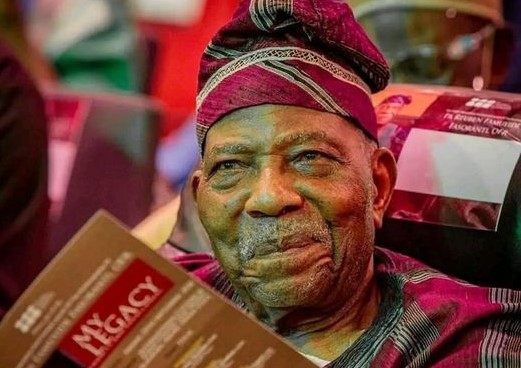
The national leader of the Pan Yoruba social-political organisation, Pa Reuben Famuyide Fasoranti, is dead.
The revered elder statesman and Afenifere chieftain passed away at the age of 100, which he celebrated May 11, 2026.
Born on May 11, 1926, in Uso, Ondo State, Pa Fasoranti was one of the major twines holding together the Yoruba nation and a bridge linking the politics of the First Republic to the present democratic order in the South West and in the country.
His political trajectory was rooted in progressivism and Yoruba ideals, having imbibed the political philosophy of Chief Obafemi Awolowo through th Action Group and later the Unity Party of Nigeria.
During the Second Republic, he served as Commissioner of Finance in the old Ondo State between 1979 and 1983. He later rose to become the leader of Afenifere following the death of Chief Abraham Adesanya, his predecessor.
A foremost Yoruba leader, Pa Fasoranti was one of the NADECO leaders whom the regime of the late General Sani Abacha attempted to assassinate in 1996.
He is regarded as symbol of the never-dying spirit of resistance against forces of tyranny and oppression with his politics never about himself but the advancement of his people, philosophy upheld by his resilience in the face of visible danger and personal losses, including the killing of his daughter by herders on the Benin-Ore road some years ago.
A teacher by training, he attended Ondo Boys’ High School, Yaba Higher College in Lagos, and the University College, Ibadan, where he bagged a higher degree in English/Geography.
He taught at his alma mater, Ondo Boys’ High School, and later served as Principal of Oyemekun Grammar School and Iju-Itaogbolu Grammar School. His dedication to education persisted after retirement, as evidenced by his establishment of Omolere Nursery and Primary School and Akure High School.
“His counsel, fatherly guidance and principled stand on issues of justice and good governance will be sorely missed. He lived a fulfilled life and left indelible footprints of honour and legacy for generations to come,” the Governor stated.
Meanwhile, Governor Lucky Aiyedatiwa, has described the late patriarch as a beacon of wisdom, integrity and selfless service whose century-long life was marked by uncommon commitment to the development of Ondo State, Yorubaland and Nigeria at large.
He said, “On behalf of the Government and the good people of Ondo State, I commiserate with the Fasoranti family, the people of Akure Kingdom and the entire State over this great loss. May his gentle soul rest in perfect peace.”
Until his death, Pa Fasoranti remained a towering figure in Yoruba politics and a strong advocate for the unity of the Yoruba people, the supremacy of Yoruba ideals and the betterment of the lot of his people.
He is survived by his children and grandchildren, as well as a legacy of service, integrity and leadership.
The Guardian


