
Metro
Ebonyi and Tales of Violent, Mysterious Deaths


- /home/rhoncare/pointblank.ng/wp-content/plugins/mvp-social-buttons/mvp-social-buttons.php on line 27
https://pointblank.ng/wp-content/uploads/2019/06/Murder.jpeg&description=Ebonyi and Tales of Violent, Mysterious Deaths', 'pinterestShare', 'width=750,height=350'); return false;" title="Pin This Post">
- Share
- Tweet /home/rhoncare/pointblank.ng/wp-content/plugins/mvp-social-buttons/mvp-social-buttons.php on line 69
https://pointblank.ng/wp-content/uploads/2019/06/Murder.jpeg&description=Ebonyi and Tales of Violent, Mysterious Deaths', 'pinterestShare', 'width=750,height=350'); return false;" title="Pin This Post">
By Eric Elezuo
As many that has been to Ebonyi State, especially the capital, Abakiliki, has had one term of endearment or another to describe the governor, Mr. Dave Umahi, for his wonderful works and foresightedness. However, in the midst of the sure footed development sweeping through the state, a lot of uncanny scenarios are reported on a daily basis of violent deaths, sometimes involving very close members against one another.
Earlier in the week, the lifeless body of a nursing mother, one Mama Ebuka, was found inside a gutter in Abakaliki, the Ebonyi State capital.
It was gathered that the woman, until her death, was nursing a two-week-old girl, whom she gave birth to on January 1, 2020.
Mama Ebuka’s partially burnt body was found inside a gutter around the Enugu North Transport Company park at the VANCO area of Abakaliki.
Investigation revealed that the woman, who was a Catholic, left home for Mass on Sunday, but did not return.
The incident, it was learnt, led her husband to report his wife’s disappearance at the state police headquarters.
Over the weekend, it was reported that a widow, Nkechi Ezaka Ucha, and her lover, Ifeanyi Nwokwu, were discovered to have been killed by an unknown assailant with their corpses locked inside a room to decomposing stage.
The incident, which happened in Umuezeoka Umueze Ezza-Effium in Ohaukwu Local Government Area of Ebonyi State, threw the area into panic as it was suspected that their killing was linked to infidelity.
Nkechi and Ifeanyi’s decomposing bodies were discovered by neighbours following fowl stench emanating from the man’s room, where they were locked.
An insider described the development as worrisome, saying it was not the first time such ugly incident will occur in the community.
Hear him: “Sometimes last year, a similar incident happened where armed robbers killed a young man in this same Umuezeoka Umueze community and till now the perpetrators of this heinous crime have not been brought to book.
“The spate of killing and armed robbery activities in Umuezeoka Umueze in Effium Autonomous Community has reached an alarming proportion.
“So many of our illustrious sons and daughters can no longer visit home because of the fear of the unknown.
“Our aged fathers and mothers have been living at the mercy of this terror men.
“I am pleading with the Inspector General of Police, Mohammed Adamu, and Ebonyi State Government to please come to our aid as our people can no longer sleep at home and those of us who are in the cities cannot come home because of cases of similar nature.”
Funnily enough, the killing spree is not limited to Umuezeoka Umueze community.
It was also reported mid December that a 29-year-old man, one late Boniface Nwoha, a native of Amike Aba community in Ebonyi local government area of Ebonyi State was killed by unknown gunmen. It was learnt that he was murdered at a drinking joint where he had gone for relaxation.
It was gathered that the victim had a quarrel with some persons in his residence at Amike Aba, which resulted to fight and wounding of some persons.
When contacted, a family member of the deceased who spoke unanimity, said he received a call around 9:25pm from an unknown person who informed him of the incident, but before he could get to the location, men of the Nigeria Police Force had already taken his corpse away.
He accused one Ekpenyi of masterminding the killing, adding that the suspect was a leader of the gang that attacked his brother.
In addition, a 38-year-old man, Simon Ozibo, was remanded in a correctional facility for murdering his mother, Mrs Felicia Ozibo.
It was gathered that the suspect committed the crime on Thursday, November 14, 2019, at Iziogo community in the Izzi Local Government Area of the state.
The accused allegedly murdered his mother in the presence of his wife with a cutlass and shovel when she came to his house to visit him.
In his confessional statement, Simon said he had always seen her as being responsible for his ugly experience in life.
He added that he was in the habit of smoking India hemp, but maintained that on the day of the incident, he was not under the influence of drugs and alcohol.
The accused was arraigned on one count of murder.
The police prosecutor, Eze Ndubuako, told the court that the offence was punishable under Section 319(1) of the Criminal Code, Cap. 33, Vol. 1, Laws of Ebonyi State of Nigeria, 2009.
In yet another development, a 16-year-old boy, Ifeanyichukwu Ejeh, living in Ndiogodo Idoko village, Ishieke community clubbed his father, Michael Ejeh to death.
Ifeanyichukwu, who is an SS2 student of Community Secondary School, Mbeke in the area, was said to have hit the father severally with a pestle when the father was asleep shortly after a misunderstanding between them over N1,000 money given to the boy to buy things and cook for the family but which he allegedly used to settle financial requirements in his school.
He thereby committed an offence punishable under section 319(1) cap 33 vol. 1 laws of Ebonyi State of Nigeria. Ifeanyi was arraigned in charge No MAB/105/2017 before an Abakaliki Magistarte court.
While in the dock, the boy, who pleaded for leniency, blamed his act on a spirit attack. He said he was reading his book in their compound when something suddenly came over him and asked him to kill his father.
He said he regained his senses after committing the crime and saw his father laying in a pool of his own blood.
But wife of the deceased, Mrs Mary Ejeh a Cross River-based business woman, who admitted she was not around when the incident occurred, said the deceased gave N1, 000 to the suspect for cooking but he used it for his school expenses which annoyed the father, leading to a heated argument between the deceased and his son.
As if that wasn’t enough, a 26-year-old man, Christian Nweke, was remanded in a correctional facility for beheading a two-year-old boy, Onyedikachi Nwali.
The suspect allegedly beheaded the two-year-old boy and drank his blood, while the mother went to fetch water from the stream.
It was learnt that the suspect, who confessed to the crime, was a barber in Onitsha, Anambra State, and was allegedly suffering from chest pains, until he was brought to the Church of Christ Mission, Ugbaenyim Ezza, Umuhuali community, in the Ishielu Local Government Area of Ebonyi State, where the boy and his parents were seeking spiritual help.
Asked if he was a ritualist or sent to kill and suck the blood of the boy for money rituals, the suspect said, “No. I’m not a ritualist. Nobody sent me to kill anybody. But I noticed that since the prophetess of this prayer ministry prayed for me, a lot of things have changed and I no longer reason right.”
It was alleged that the suspect committed the crime on December 13, 2019, at the premises of the Church of Christ Mission, Ugbaenyim Ezza.
Mr Chinasa Ogbaga, a native of Egwuagu Okpuitumo Community in the Abakaliki Local Government Area of Ebonyi State, is not left out in the malady of mindless killings as he was said to have butchered his two children and left one half-dead.
The accused person, who was said to have committed the act on a Saturday night when villagers and other family members had gone to bed, allegedly took the children to the bush one after the other and slaughtered them.
Names of the two slain children were given as Chikamso Ogbaga, a six-year-old boy and Chizaram Ogbaga, four-year-old girl, while the third, who was lucky to have been rescued half dead, is Emmanuel Ogbaga, a two-year-old boy.
The list of the mindless killings is endless. Do we talk about one Chimezie who killed his father because of cooked yam or the woman who murdered her two children or even the five who were not only killed but beheaded.
The police unfortunately seems helpless in most situation as their function has been confined to confirming the incident as the state Police Public Relations Officer, DSP Loveth Odah, and her boss, the Police Commissioner have been known to answer in recent times.
“We are aware of the matter and the police are investigating it,” has become the language after every bizarre act of blood letting.
Time is now for the police to wake up to their security duties.


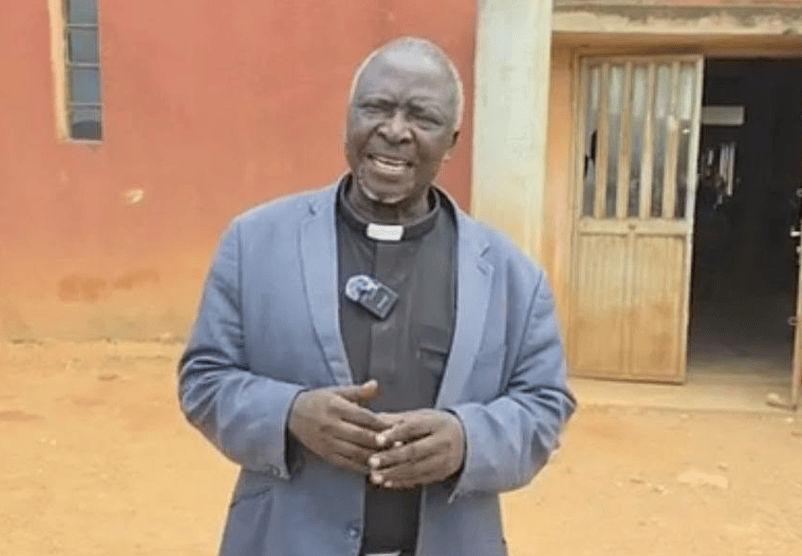
The Regional Chairman of Church of Christ in Nations (COCIN), Barkin Ladi Local Government Area of Plateau State, Rev. Ezekiel Dachomo, has denied reports that he prayed for the re-election of President Bola Tinubu and Vice President Kashim Shettima in the 2027 presidential election.
Dachomo, who is currently in Israel on what he described as his first International Christian Advocacy Tour, said his visit was aimed at drawing the attention of world leaders to the plight of Christians in Plateau.
The cleric made the clarification in a social media post on Monday night following reports that he had prayed for the success of the All Progressives Congress (APC) presidential ticket and expressed support for the Muslim-Muslim ticket.
Dachomo said his earlier post, in which he prayed for Nigeria, had been misconstrued as an endorsement of Tinubu and Shettima ahead of the 2027 election.
According to him, there was nowhere in the post where he prayed for the President and Vice-President to win the election.
“People are trying to frame me, saying I prayed for a Muslim-Muslim ticket. But I did not, and I will never pray for a Muslim-Muslim ticket because Nigeria belongs to both Muslims and Christians,” he said.
Dachomo said his prayers were for the well-being and success of Nigeria and its citizens, irrespective of their religious affiliations.
“I pray for both Muslims and Christians in Nigeria. I pray for Nigeria to succeed. If you truly want to come to God, come with a clean heart,” he added.
The cleric further stated, “I did not pray for President Tinubu and Vice President Shettima to win in 2027. My prayers have always been for Nigeria to succeed.”
Dachomo’s clarification came amid reactions to his ongoing advocacy tour in Israel, where he is seeking international attention to security challenges and what he described as the persecution of Christians in Plateau.
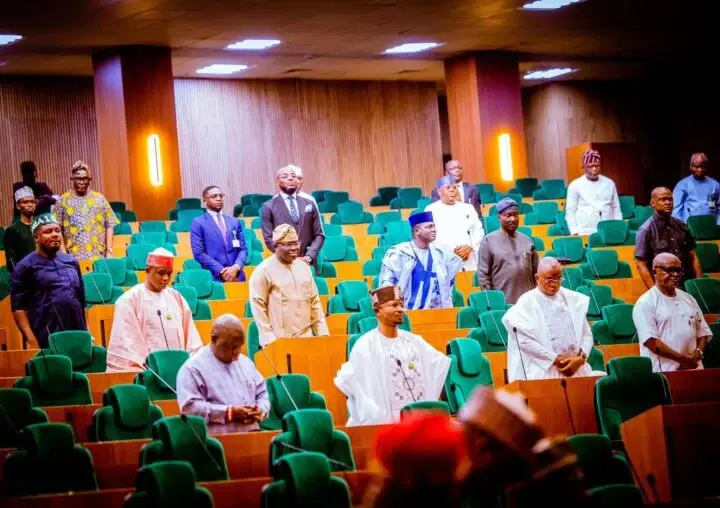
Ahead of the 2027 election, the House of Representatives Committee on Electoral Matters has urged the Independent National Electoral Commission (INEC) to disqualify candidates whose names are not contained in political party registers, as stipulated by the Electoral Act 2026.
In a statement on Tuesday, the Chairman of the committee, Bayo Balogun, drew the commission’s attention to a Supreme Court ruling on Sections 77(5), 77(6) and 77(7) and called for their full enforcement across all political parties.
Balogun, a member of the All Progressives Congress, APC, said that pending legal proceedings concerning the interpretation, constitutionality and enforceability of the sections had been resolved by virtue of the Supreme Court judgment.
The lawmaker recalled that the Supreme Court, on September 24, 2026, restored the provisions after setting aside the Court of Appeal judgment that had declared them unconstitutional.
According to him, the apex court held that the provisions were not inconsistent with the 1999 Constitution.
Balogun explained that Section 77(5) provides that only members whose names are contained in the membership register submitted to INEC are eligible to vote or be voted for at party primaries, congresses and conventions.
He said that Section 77(6) requires political parties to use the register submitted to the electoral umpire for such exercises.
Balogun urged INEC to proceed without further delay to enforce Sections 77(4) to 77(6) in the administration and monitoring of political parties and their electoral activities.
He further urged the commission to audit the membership registers and candidates submitted by political parties to establish whether the names of the candidates are contained in the registers earlier submitted to INEC in compliance with Section 77(5).
“This will be a litmus test for the commission – any culpable political party and candidates should be disqualified.
“Diligent enforcement of the provision would help prevent disputes and reduce the volume of litigation that could arise from alleged irregularities or non-compliance with Sections 77(4) to 77(6) of the Electoral Act,” Balogun said.
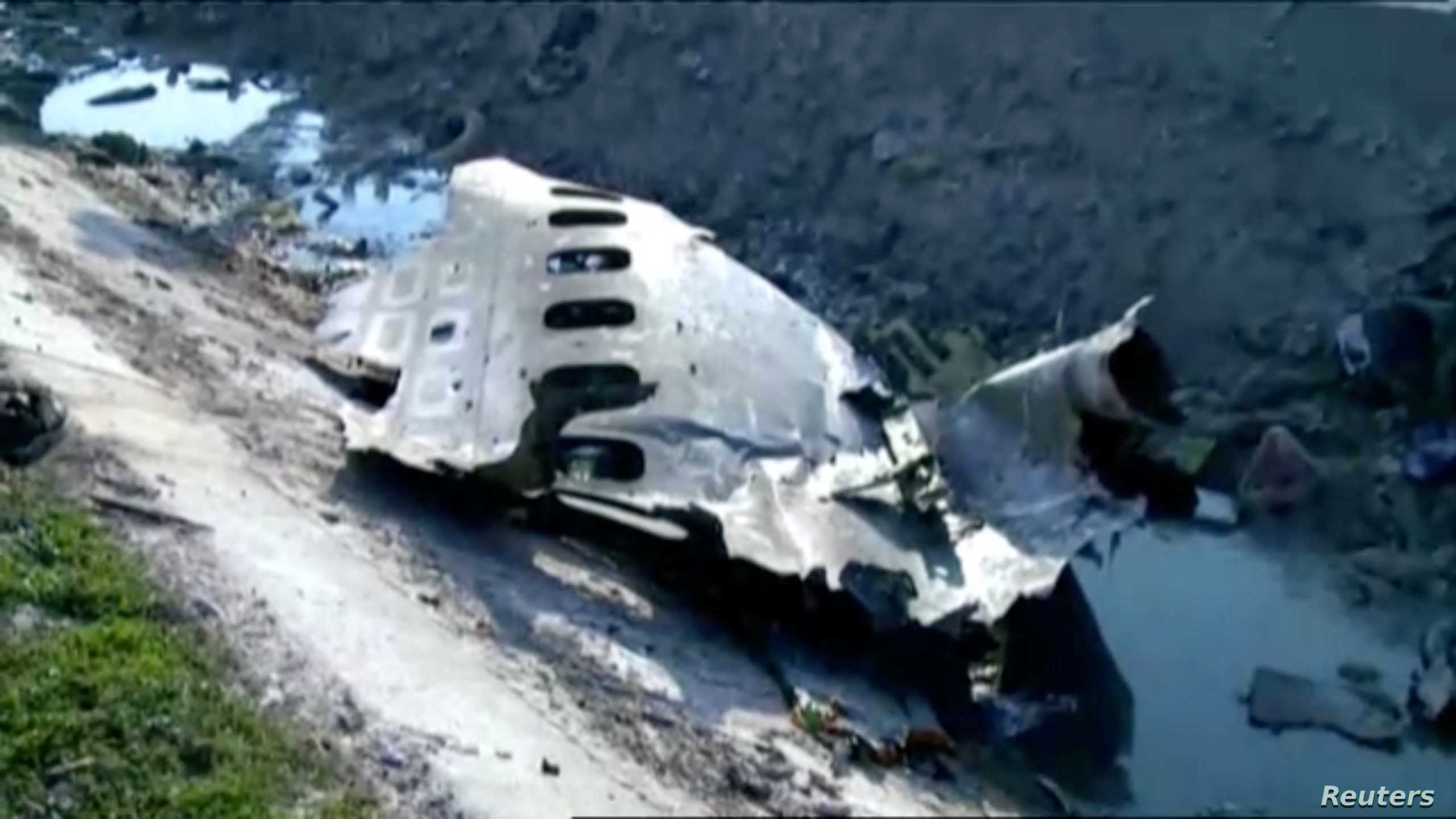
An helicopter crashed into a swamp near Naval Base in Igbokoda, the headquarters of Ilaje Local Government Area of Ondo State, on Monday.
The incident occurred at about 11.00a.m during heavy down pour, throwing the coastal community into panic.
The number of people on board of the helicopter was yet to be officially confirmed, while the condition of possible survivors cannot be confirmed.
Confirming the incident, Maurice Oripenaiye, the Chairman of the local government, told the News Agency of Nigeria (NAN) in a telephone interview that he could not ascertain the number of the victims.
Oripenaye also said he was yet to ascertain the identity of the crashed helicopter and the passengers.
“It happened during the heavy rainfall at about 11.00a.m. I cannot confirm the number of the people on board. I have deployed some youths to the area for rescue purpose,” he told NAN.
Similarly, the Police Command in Ondo State while confirming the crash, said details surrounding the incident were still emerging.
The command in a statement by its spokesperson, Abayomi Jimoh, a deputy superintendent of police, in Akure, said efforts were ongoing to establish the full circumstances surrounding the crash.
“The command urges members of the public, particularly residents of Igbokoda and adjoining communities, to remain calm and refrain from circulating unverified information.
“The public will be duly informed as soon as further credible information becomes available,” it stated.
(NAN)


